Quick answer
Good hydraulic cylinder brands are set apart by five concrete points: the chrome plating and straightness of the rod, the bore finish after honing, the weld quality at the mounting eyes, the seal-kit design, and the dimensional match to the original cylinder. Genuine machine-maker cylinders, quality aftermarket, and cheap copies differ mainly in material, machining and tolerance, not in appearance. In most leak cases, what needs replacing is the seal kit, not the whole ram.
When a ram on the boom or arm starts weeping oil, the real question is not which brand to buy, but what inside makes one ram outlast another. Good hydraulic cylinder brands are set apart by five concrete points: the chrome plating and straightness of the rod, the bore finish after honing, the weld quality at the mounting eyes, the seal-kit design, and the dimensional match to the original cylinder. Genuine machine-maker cylinders, quality aftermarket, and cheap copies differ mainly in material, machining and tolerance, not in appearance. What follows walks through each point in the order a technician checks them when a cylinder is in hand, and explains why most leak jobs need only a new seal kit.
What Sets A Good Cylinder Apart From A Poor One?
A ram has only a few main assemblies, but each has to take high pressure over and over plus knocks on site. The rod slides in and out tens of thousands of times, the tube holds pressure, the seals block oil, and the eyes carry the whole digging force through the pins. Quality lives in what material each of those is made from, how well it is machined, and whether the tolerance is held tight or loose. Two rams that look identical outside can differ widely in life, because the difference sits inside the plating, in the roundness of the bore, and in the profile of the seal. To grasp each part before comparing, our guide on hydraulic cylinder construction describes the details and their roles in full.
Cylinder Rod: Chrome Plating And Straightness Decide Life
The rod is the exposed part and takes the most wear. The core is usually CK45 or an alloy steel, surface-hardened by induction, then coated with hard chrome to resist wear and rust. Plating quality comes down to three things: even thickness, adhesion to the steel base, and how porous the layer is.
The failure mechanism is easy to picture. A thin or porous layer lets moisture reach the steel base and rust pits form right under the chrome. As the rod slides, the seal lip rides over that pit and is nicked bit by bit until it tears, and oil starts to weep along the rod. A thick, even, well-bonded, low-porosity layer keeps the surface flat longer, so the seal lives longer too.
Rod straightness matters as much as the plating. A rod that is bent, even slightly, puts a side load on the guide bushing and rod seal every stroke. That side load wears the seal more on one side, and you will see oil weeping on one side with a lengthwise scratch on the rod. A straight rod keeps the load coaxial, so the seal wears evenly and slowly. This is why a copy rod that is not straightened correctly often leaks early even with fresh seals.
The Cylinder Bore And Finish After Honing
The bore is where the piston runs and pressure is held. After boring, the tube is honed to create a fine crosshatch on the surface. That crosshatch holds a thin oil film that lets the piston seal and wear ring glide without scraping metal. The finish has to be just right: too smooth and it cannot hold the oil film, too rough and it wears the piston seal fast.
Bore roundness and taper are worth checking. If the bore is oval or tapered along its length, the piston seal is tight in places and loose in others, and oil bypasses the piston to the other chamber. Outwardly the ram drifts under load, cannot hold the bucket when stopped, or feels weak while the pump is still strong. A cylinder with a correctly honed, round bore holds pressure steadily across the whole stroke.
How The Welds At The Eyes Carry Load
The mounting eyes and the cylinder base transfer the whole digging force into the structure through the pins. They take cyclic load, vibration and impact, so the welds here must be full and even. A poor weld, or a brittle heat-affected zone around it, cracks from the weld toe over time in service. The first crack is tiny and hard to see, but it grows with every digging cycle.
The pin bore and bushing in the eye must be concentric. Off-center bores make the pin bear unevenly, wear the bushing fast, and let the ram wobble in work. When inspecting a cylinder, an experienced technician always studies the weld around the eye and the roundness of the pin bore, because this is where copies cut the most corners in ways the eye easily misses.
The Seal Kit: Small Parts That Decide Tightness
The seal kit is what blocks oil directly, and also what fails first. A full kit has the piston seal, rod seal, wiper, buffer seal, wear rings, o-rings and back-up rings. Each has a role: the piston seal blocks oil past the piston, the rod seal blocks oil out along the rod, the wiper keeps grit from riding the rod inside, and the wear rings keep rod and piston off the metal.
Material and profile decide seal life. Rod seals often use PU for wear resistance; piston seals often use PTFE with an o-ring for pressure and low friction; the rings are NBR or FKM depending on oil temperature and type. The seal profile, material hardness and groove dimensions all have to match for the seal to stay tight and last. To understand how a kit is assembled and fitted in the right order, see cylinder seal kits.
Why PET Seals Come First
For cylinder seal kits, we favour PET Seals before considering anything else. The material handles heat and pressure steadily, the sizes match the grooves correctly, and it resists early hardening under continuous work in the sun. A correctly sized kit seals right away and lasts, avoiding a reopen of the ram after a few weeks. When ordering, browse the hydraulic seals range to get the right kit for your rod and bore diameters.
Choosing seals is part of choosing a brand, so if you are weighing seal sources, our guide on hydraulic seal brands goes deeper into material criteria and how to tell a good seal.
Dimensional Match To The Original Cylinder
However well a cylinder is made, if it does not fit the machine it is worthless. The dimensional match covers bore diameter, rod diameter, stroke, pin-eye diameter and spacing, port thread, and seal-groove sizes. Miss one of these and the ram will not seat on the pins, will not connect to the hoses, or the kit will not suit the grooves.
This is where genuine machine-maker parts have a natural edge, because they are drawn to the original. Good aftermarket parts also reach this match when the maker measures correctly and holds tolerance. Cheap copies often drift slightly at the pin bore or seal groove, forcing the technician to ream or shim, which wastes effort and cuts durability. Before ordering a cylinder ram, always verify these dimensions against the exact machine model.
Hydraulic Cylinder Brands: Genuine, Quality Aftermarket Or Copy?
The market has three clear groups, and reading each correctly helps you choose by real need rather than by advertising. This is also the moment to ask how much durability and how much budget you have.
The genuine machine-maker group is the ram supplied by the machine builder, to the original drawing, with factory-standard tolerance and material. Machine builders such as Kobelco publish technical documents for each machine line, so the genuine ram fits perfectly. In return, the price is high and it sometimes has to be ordered.
The quality aftermarket group is the ram made by a dedicated cylinder maker, measured to the original and controlling material, machining and tolerance well. This group balances durability and price and is usually more available. The key is picking a serious maker, because within this same group quality still varies.
The cheap copy group replicates the shape but cuts corners where the eye cannot see: thin plating, poor core steel, a roughly bored tube, incomplete eye welds. It can look glossy outside, but it often weeps early and bends the rod fast. This guide is not out to knock a specific brand, only to point out where the difference lies so you can judge for yourself.
Table: Comparing The Three Cylinder Groups
| Criterion | Genuine machine-maker | Quality aftermarket | Cheap copy |
|---|---|---|---|
| Rod chrome plating | Thick, even, well-bonded | Well controlled | Thin, prone to pitting |
| Bore honing | To standard | To standard if maker is serious | Rough, prone to oval |
| Eye welds | Full, concentric | Steady | Often cut short |
| Dimensional match | Perfect | Close to original | Usually slightly off |
| Price and supply | High, sometimes waited | Balanced, more available | Cheap, available but short-lived |
The table is a guide. In practice a serious aftermarket maker can produce a ram close to genuine in life, while a nicely labelled ram can still be a corner-cutting copy.
5 Quality Criteria For Choosing A Cylinder Brand
Boiling the points above into a checklist you can carry when buying:
- The rod chrome is thick, even, well-bonded, low-porosity, with no rust pits.
- The rod is straight, not bent, not wobbling when rolled on a flat surface.
- The bore is correctly honed, round, holding pressure steadily across the stroke.
- The eye welds are full and concentric, the pin bore round and not off-center.
- The seal kit is the right material and suits the grooves, matching the original dimensions.
These five apply to any ram, whatever the brand. Choosing by them, you avoid the trap of judging the outside and missing the quality inside.
Why You Usually Replace The Seal Kit, Not The Whole Ram
This point saves the most money. When a ram weeps, the most common cause is a seal that has hardened or torn, not a failed body. The body, rod and bore are usually still good if the rod is not bent and the bore is not deeply scored. In that case, a new seal kit is enough, far cheaper than replacing the whole ram.
Only when the rod is bent, the plating has flaked in patches, or the bore is deeply scored and oval do you consider replacing the rod, re-honing the bore, or replacing the whole unit. The right way to decide is to open and inspect: measure rod straightness, scope the bore, look at the plating. If those three still pass, a fresh seal kit finishes it. This is also why a quality cylinder is worth it long term: a durable body means you replace only seals many times over instead of buying a new ram.
Signs A Cylinder Needs Attention
A few familiar signs flag a ram to check. Oil weeping along the rod after each stroke means the rod seal is weak. A ram that drifts, not holding the bucket when stopped, usually points to a leaking piston seal or an oval bore. A lengthwise scratch or rust pit appearing on the rod signals the plating is going. An odd noise or a jerky motion in and out can be a worn wear ring letting the rod touch metal.
Catching these early lets you change seals before the rod and bore are harmed. Left late, a small weep can drag the rod down with it, and the cost climbs several times over.
A Quick Check When You Receive A Cylinder
On receiving a ram, you can check a lot by eye and hand before fitting. Roll the rod on a flat surface to see if it is bent or wobbles. Run a light along the rod for pits, flaked plating or scratches. Look into the bore for the honing pattern and finish, seeking scores or rust spots. Study the weld around the eyes and the roundness of the pin bore. Check that the supplied seal kit is the right material and the right groove sizes.
A few minutes of inspection at delivery saves a whole session of refitting over a ram that does not pass. If a ram is off at the pin bore or the port thread, return it rather than trying to ream it to fit.
Fitting And Run-In After Replacement
Once fitted, do not force heavy work right away. New seals need a few light cycles to seat and build an oil film on the rod. Bleed the air first, run the rod through its full stroke a few times at light load, then raise it gradually. This run-in is brief but protects the new kit and catches any remaining weep early.
Using the right oil and keeping it clean matters as much as good seals. Dirty oil carries abrasive particles through the seal and bore, ruining the whole ram even with new seals. Good filtration and the right oil grade, for example ISO VG46 or VG68 as recommended, keep the freshly fitted kit at its proper life.
Warranty And Traceability
A trustworthy brand stands behind its product with a clear warranty and traceable origin. A warranty is not just a promise but the way a supplier commits to material and machining quality. When buying, ask the warranty terms for the body and for the seal kit, since these two often differ. Our guide on hydraulic parts warranty explains the common terms and how to protect your claim if something goes wrong.
Traceability lets you know where the ram and kit came from and what material they are made of. A serious supplier can provide this. It is part of choosing right.
How To Choose A Cylinder Supplier
Choosing the supplier matters as much as choosing the brand. A good one advises the right model, verifies dimensions before selling, and tells you honestly when a ram must be waited on. They keep common seal kits in stock, because that is what customers most often need in a hurry. They also make it clear when only the seals need changing and when the whole ram should go, rather than pushing a new unit for speed.
For the full picture of hydraulic parts brands and how to judge them, the brands section is a good place to start.
Bucket, Arm And Boom Cylinders: Different When Choosing
The three rams on an excavator take different loads, so the priority among the criteria shifts a little. The bucket cylinder takes the most impact and shock load, so eye-weld soundness and rod durability come first. The arm cylinder has a long stroke, so rod straightness and bore roundness matter to avoid side load. The boom cylinder carries large static load when holding, so piston-seal tightness against drift is the point to watch closely.
Knowing the mounting position lets you focus on the right criterion instead of judging everything evenly. Wherever it sits, the five core criteria still hold; only the order of priority shifts with the load.
If you have a weeping ram right now, the most sensible step is to open it and measure rod straightness and scope the bore before deciding to buy new, because a correctly sized seal kit is very likely all it takes to get the machine back to the site.
Key takeaways
- Cylinder quality lives in rod chrome, straightness, bore honing, eye welds and the seal kit.
- A bent rod or thin porous plating causes early leaks even with fresh seals.
- Dimensional match to the original cylinder matters as much as machining quality.
- Genuine, quality aftermarket and copy groups differ in material and tolerance.
- Most leak jobs need only a new seal kit, not a whole new ram.
- Favour PET Seals for the kit and check the rod and bore before deciding to buy new.
Written by
Hoàng Anh Dũng
Hoàng Anh Dũng tracks sourcing, pricing and brands for heavy-equipment parts. He writes about what drives price, buying smart and telling apart part origins and quality.
Related parts
The exact parts discussed above — send your machine model or pump code to match.
Related products
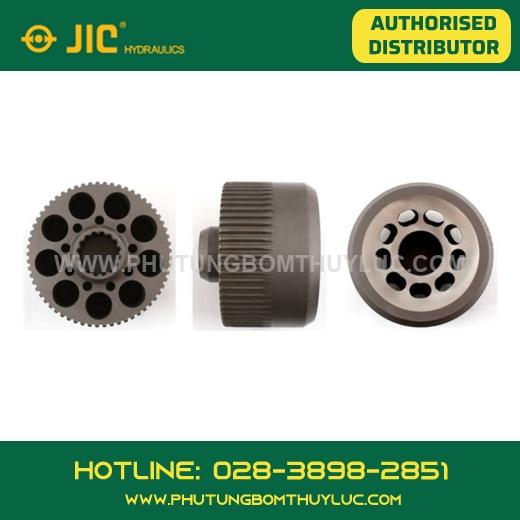 Kawasaki · DNBCylinder block – Kawasaki DNB50DNB50On requestView · get a quote
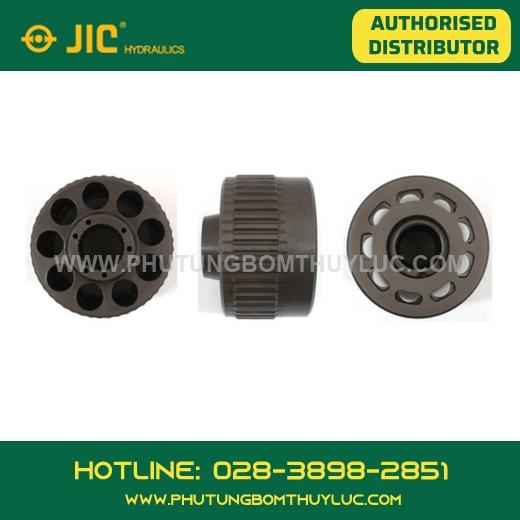 Kawasaki · DNBCylinder block – Kawasaki DNB808DNB808On requestView · get a quote
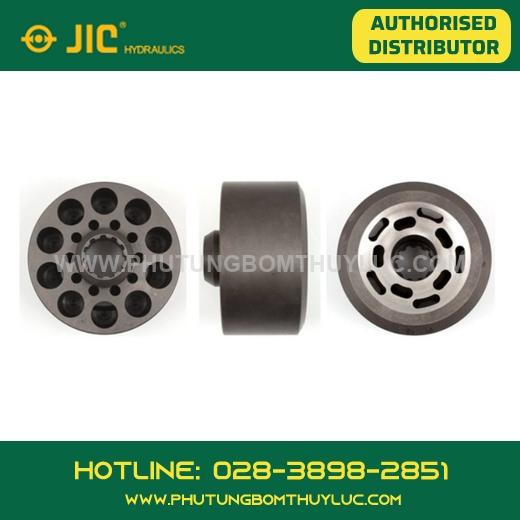 Kawasaki · K3SPCylinder block – Kawasaki K3SP36K3SP36On requestView · get a quote
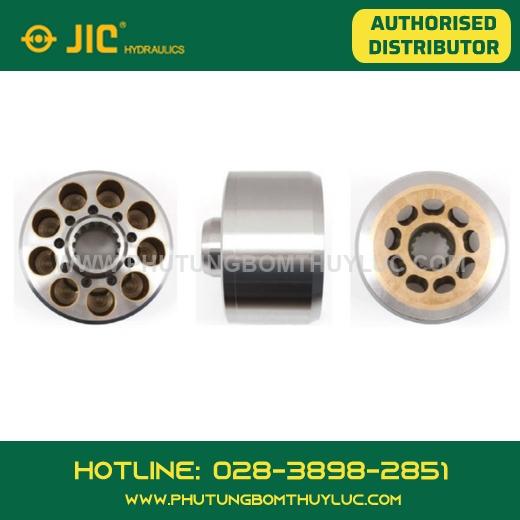 Kawasaki · K3VCylinder block – Kawasaki K3V112DTK3V112DTOn requestView · get a quote