Quick answer
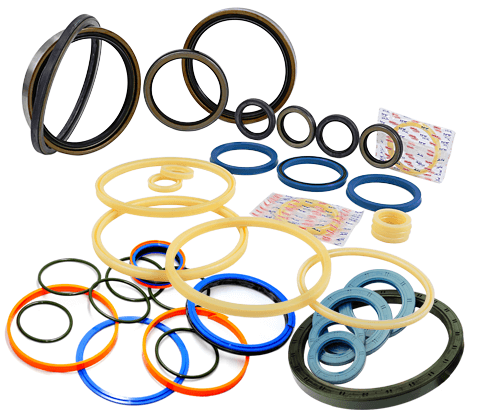
Choosing a hydraulic seal brand should rest on each maker's real strength and the working environment, not on rumour. NOK sticks close to Japanese machines and is strong on ram and pump seals; SKF is strong on oil seals and rotary shafts; makers like Kastas and Trelleborg do good aftermarket parts. What decides seal life is the right material (NBR, PU, Viton, PTFE), a clear source, and a careful fit.
When you pick a hydraulic seal brand, what you really buy is consistent material and an accurate mould, not the name printed on the box. NOK and SKF are the two names Vietnamese mechanics reach for most, and each is strong in a different area: NOK sticks close to Japanese machines, while SKF is strong on bearings paired with shaft seals. This guide states plainly the differences in material, durability, and how to choose seals by working environment, with no hype and no scare numbers.
Which hydraulic seal brand can you trust?
No single brand is best for every position. A trustworthy hydraulic seal brand is one with even rubber batches, crisp mould edges, and a supply you can buy long term without the quality bouncing around. Experienced mechanics feel the sealing lip, study the ribs, and smell the rubber before they trust the label.
A name only holds value when a steady supply comes with it. A good brand bought from a stray, unknown lot still fails early.
NOK: the familiar name on Japanese machines
NOK is a Japanese seal maker tied to excavators, loaders, and pump units like the K3V and K5V. On many original cylinder and pump assemblies, NOK is the factory-fitted seal, so when you replace with the correct NOK part, the size and rubber hardness usually match right away with little trimming.
NOK's strength is uniformity. For the same part number, batches made far apart still install the same way. For a mechanic, that predictability matters more than any advertising.
SKF: strong on bearings with shaft seals
SKF is best known for bearings, but its oil seals and shaft seals are widely used too. SKF is strong at rotating positions such as shaft ends and axle seals, where the sealing lip must handle long-running rotary friction. According to the technical documentation from SKF, each lip design is rated for a specific sliding-speed range and lubrication mode, so choosing the right design matters more than choosing the brand.
For the high-pressure cylinder seals of an excavator ram, NOK and a few dedicated hydraulic-seal makers are often preferred. Pick a brand for what it is genuinely good at, and do not force one name to do everything.
Other brands worth considering
Beyond those two, the market has several serious hydraulic seal makers. Kastas, Hallite, Trelleborg, and Dichtomatik all offer ranges for cylinders and pumps, each with its own material character. Some run slightly harder rubber suited to high pressure, others softer rubber that conforms to lightly scored surfaces.
For common machines, what matters is a steady supply and someone who advises the right position. A lesser-known brand with the correct material and size still runs better than a famous one fitted in the wrong place.
Seal materials: how NBR, PU, Viton, and PTFE differ
Material decides most of a seal's life. NBR rubber is familiar, handles mineral oil well, is easy on the wallet, and suits most ordinary positions. Poly-urethane (PU) is tough and wear-resistant, often used for piston seals and wiper seals on heavily loaded cylinders.
Viton (FKM) handles heat and synthetic oil better, suiting spots where oil stays hot for long. PTFE is slick, low-friction, and often paired at guide rings and some rotary shaft lips. Choose the wrong material and even a premium seal hardens and cracks early.
Genuine seals versus aftermarket seals
A genuine seal is the one specified by the maker of the pump or cylinder assembly; it usually fits right away and stays consistent. An aftermarket seal is made by an independent seal maker to an equivalent size, usually cheaper and from a wider supply.
Good aftermarket parts are not inferior, as long as the material and tolerance are right. Trouble only starts when a bargain-hunter buys soft rubber that weeps oil within weeks. If you need a full kit and on-site advice, look at hydraulic seal parts chosen for your exact assembly.
How do you choose seals by working environment?
This question matters more than the brand choice. Before picking a seal, look at three things at the fitting position: heat, dust, and the type of motion. An excavator ram soaking in mud and water all day needs a strong wiper and wear-resistant rubber. A pump running hot continuously needs a more heat-resistant material.
Just answer three short questions: does the oil stay hot for long, is the environment dusty or sandy, and does the shaft sit still or rotate. Those three answers lead you to the right material and seal type faster than any spec sheet.
Oil temperature and seal life
Hot oil is a seal's quiet enemy. Rubber held at high heat for a long time hardens, loses its spring, then develops fine cracks at the sealing lip. If the machine often runs heavy loads in midday sun with a weak cooler, seals decline fast no matter the brand.
An easy sign is oil turning dark with a faint burnt smell. When you see that, fix the cooling first, then blame the seal. For spots where oil stays hot, favour a heat-resistant material such as Viton.
Pressure, load, and seal deformation
The piston seal inside a ram takes a huge push each time it lifts and lowers. If the sealing lip is too soft, high pressure squeezes the rubber into the clearance gap, a failure called extrusion. The seal then tears at the lip, oil slips past, and the ram creeps down.
High-pressure spots need reasonably hard rubber and usually a back-up ring supporting the seal. That is why piston seals and wiper seals often use tough PU instead of soft NBR.
Dust, water, and the role of the wiper seal
The wiper seal sits at the outermost point of the rod and scrapes off mud and grit before the rod retracts. It is the first line of defence. When the wiper fails, dirt slips in, scores the rod, and quickly kills the inner sealing element.
Machines working underwater, in mud, or in stone dust need a strong wiper and a rod with good plating left. In many cases where the inner seal is replaced again and again yet still leaks, the root cause is a wiper that hardened long ago.
How cylinder seals differ from pump seals
A cylinder ram seal takes linear motion, constantly changing pressure, and a dirty environment. Seals inside a pump or motor take rotary motion, steadier high pressure, and a cleaner setting. The two groups demand different materials and lip designs.
So do not patch a ram with a pump seal, or the reverse, just because it fits the bore. To understand the strip-down of a cylinder assembly, see replacing cylinder seals before you start.
Signs a seal is about to fail on the machine
Seals rarely die suddenly; they warn you if you watch. A ram creeping under load, oil seeping around the rod neck, or a damp oil mark that keeps returning are early nudges. When the rod retracts trailing a shiny film of oil, the wiper is already weak.
Listening and touch tell a lot too. A rod that squeals going in and out, or an assembly running unusually hot, usually means the seal is rubbing wrong. Catch it early and you spare the whole assembly.
Why does a newly fitted seal still leak?
In many cases a premium seal is fitted yet still leaks, and the seal is rarely the fault. The usual culprits are a scored or pitted rod, burrs left on the mating face, or a crooked fit that tears the lip during installation. However good the rubber, it loses to a lengthwise scratch on the rod.
Another cause is choosing the wrong material for hot oil, or fitting without the back-up ring. To rule out doubt about the seal's origin, check spotting genuine NOK seals and re-inspect the part in your hand.
A quick comparison of seal brands
The table below sums up the strengths mechanics commonly see, to help you narrow the field quickly rather than as a hard rule.
| Brand | Strong at | Often seen on |
|---|---|---|
| NOK | Ram seals, pump seals on Japanese machines | Excavators, K3V and K5V units |
| SKF | Oil seals, rotary shaft seals | Shaft ends, swing units, axles |
| Kastas | Wide aftermarket hydraulic seals | Common cylinders across many models |
| Hallite / Trelleborg | High-pressure seals, back-up rings | Heavy-duty rams, large construction gear |
This table is only for orientation. A specific position still requires checking the actual size and material.
Fake and counterfeit NOK seals
Because NOK is so common, counterfeits wearing the NOK name are common too. Fakes often give themselves away with faint printed ribs, oddly glossy rubber, a harsh smell, and a sealing lip cut without sharpness. They run for a short while, then harden stiff.
The surest path is buying from a source with clear origin that stands behind a warranty. If in doubt, compare the packaging and the seal in detail against a genuine-part guide before pressing it into the machine.
Storing seals in the warehouse
A seal is rubber, and it ages even lying still. Left in hot sun, near an electric motor giving off ozone, or hung on a hook that warps the ring, a seal hardens and deforms before you ever use it. Many seal sets die in storage, not on the machine.
Keep seals cool, dark, dry, laid flat in a sealed bag, and use them first-in, first-out. Handle this cheap item carelessly and you waste money for nothing.
Buying a full kit or single pieces
When overhauling a cylinder or pump assembly, buying a full kit with every sealing element, wiper, back-up ring, and gasket avoids petty shortages. A same-brand kit also matches its own tolerances better. Stripping halfway and finding one small ring missing costs a whole day of labour waiting.
Buying single pieces only fits when you are sure exactly one part needs replacing and the rest of the assembly is still good. For an overhaul, a full kit is nearly always worth more.
Choosing seals by machine model and age
Common Japanese models usually have the correct NOK seal on hand, so favour it for peace of mind. For rare models or assemblies that were previously modified, measure the real dimensions again and do not trust old numbers. Some assemblies already had a wrong-size seal fitted by a previous mechanic, so fresh measurement is the safe move.
Record the pump and cylinder assembly codes and the old seal measurements before stripping. This small habit lets you buy right next time and skip costly trial and error.
When should you switch to another brand?
If one brand keeps giving seals that harden early even when you fit them correctly, that is the time to try another brand with the same material. Sometimes the issue is the lot, sometimes the rubber character simply does not suit your environment. Switch under control, one position at a time, and watch the result rather than swapping everything at once.
Keep the removed old seals to compare wear. The way a seal wears tells you what the machine is doing wrong, and that holds for any brand.
Cost and long-term value
Seal prices vary by brand, material, and supply, drifting with market conditions. But the seal cost is nearly always small next to the labour of stripping and the days a machine sits idle. Saving a little on the seal only to redo the job is a loss.
Choosing the right material, the right source, and fitting it correctly is the real saving. The cheapest job is the one you do not have to do twice.
Wrapping up how to choose and buy
Choose a hydraulic seal brand by the maker's real strength and by the working environment, not by rumour. Look at heat, dust, and motion type first, then the name. Buy from a clear source, store it properly, fit it carefully, and any seal will give you the life it should.
If you need advice for your exact assembly and material, browse the range of hydraulic seals from Viet Trung Hai, and give the ram or pump assembly code to get a quick, tailored pick.
Key takeaways
- Choose a hydraulic seal brand by the maker's strength, not by rumour.
- NOK sticks close to Japanese machines and K3V, K5V units; SKF is strong on oil seals and rotary shafts.
- Material decides life: NBR for ordinary spots, PU for wear, Viton for hot oil.
- Before choosing a seal, check heat, dust, and motion type at the fitting position.
- A new seal that still leaks usually means a scored rod or crooked fit, rarely the seal itself.
- A clear source and proper storage matter as much as the seal quality.
Written by
Hoàng Anh Dũng
Hoàng Anh Dũng tracks sourcing, pricing and brands for heavy-equipment parts. He writes about what drives price, buying smart and telling apart part origins and quality.
Related parts
The exact parts discussed above — send your machine model or pump code to match.