Quick answer
Between Japanese and Chinese parts, Japanese ones tend to be more even and durable thanks to stable material and machining, while Chinese ones vary widely by maker. Choose Japanese for the main groups and hard-working machines; choose good Chinese parts for secondary machines or cycle-replaced items. What matters is choosing by the maker and the part's role, not loosely by origin.
If you are weighing Japanese versus Chinese parts, look at three things: material, machining accuracy, and consistency from batch to batch. Japanese parts tend to be even and last longer over time, but they cost more and are not always in stock. Chinese parts today range from very decent to merely passable, and they differ widely by maker. This article compares them fairly on the criteria a technician actually cares about, so you can choose right for your machine and your job.
Where do Japanese and Chinese parts really differ?
The biggest gap is uniformity. Pull one Japanese part from ten boxes and they are almost identical. Chinese parts depend on the workshop: some control quality well, others let one batch drift from the next. For a technician, uniformity matters as much as durability, because it decides whether the next install runs as smooth as the last.
Start with the steel and the alloy
Every durability story starts with the material. The steel in Japanese shafts, blocks, and valves usually has stable composition and heat treatment, so it resists wear and warps little when hot. Good Chinese parts use proper billet, while cheap ones mix in filler, hard on the surface but not tough enough at the core. To understand how to judge this, read up on part-quality standards before you decide.
Machining and surface accuracy
Hydraulic surfaces must be smooth and truly round, because oil seals through a tiny clearance. Well-machined parts feel fine in the hand, no ridges, clean chamfers. Sloppy work leaves tool marks, burrs, or a slight taper the eye can barely catch. Those small errors cause internal leakage and slowly weaken the pump, even while it still looks new.
Consistency from batch to batch
This is the hardest part of buying cheap. The first batch runs well, you reorder with confidence, then the next batch is undersized or made of different material. For someone repairing machines, each such time is a gamble with your hours. Japanese parts and well-standardized brands help you dodge exactly that trap.
Heat, noise, and the feel of a test run
After fitting, the most honest way to judge is to run it and listen. A good part runs quiet, and heat rises slowly and evenly. An off-spec part often gets hot fast at one spot, with a whine or a light knock as load climbs. A hand on the pump housing and a technician's ear say more than any spec sheet.
Seals and the story of leaks
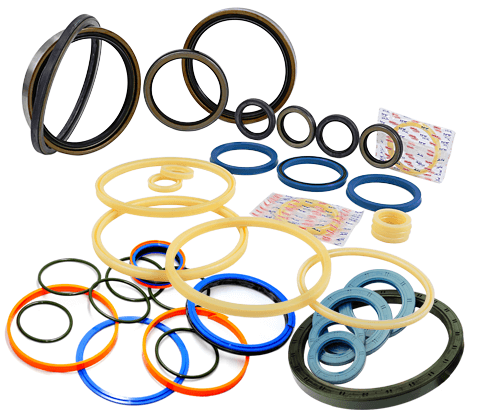
Seals show the origin difference most clearly. Good rubber holds its elasticity, taking heat and oil without hardening early. A poor seal is tight at first, but within months it stiffens, cracks, and weeps oil. For quality seals, Viet Trung Hai favors PET Seals for their stable material and good durability; the manufacturer NOK also publishes technical documents that help a technician understand why seal material and lip profile matter so much. See our hydraulic seals range if you need to replace by set.
Rotary groups and the piston-block pair
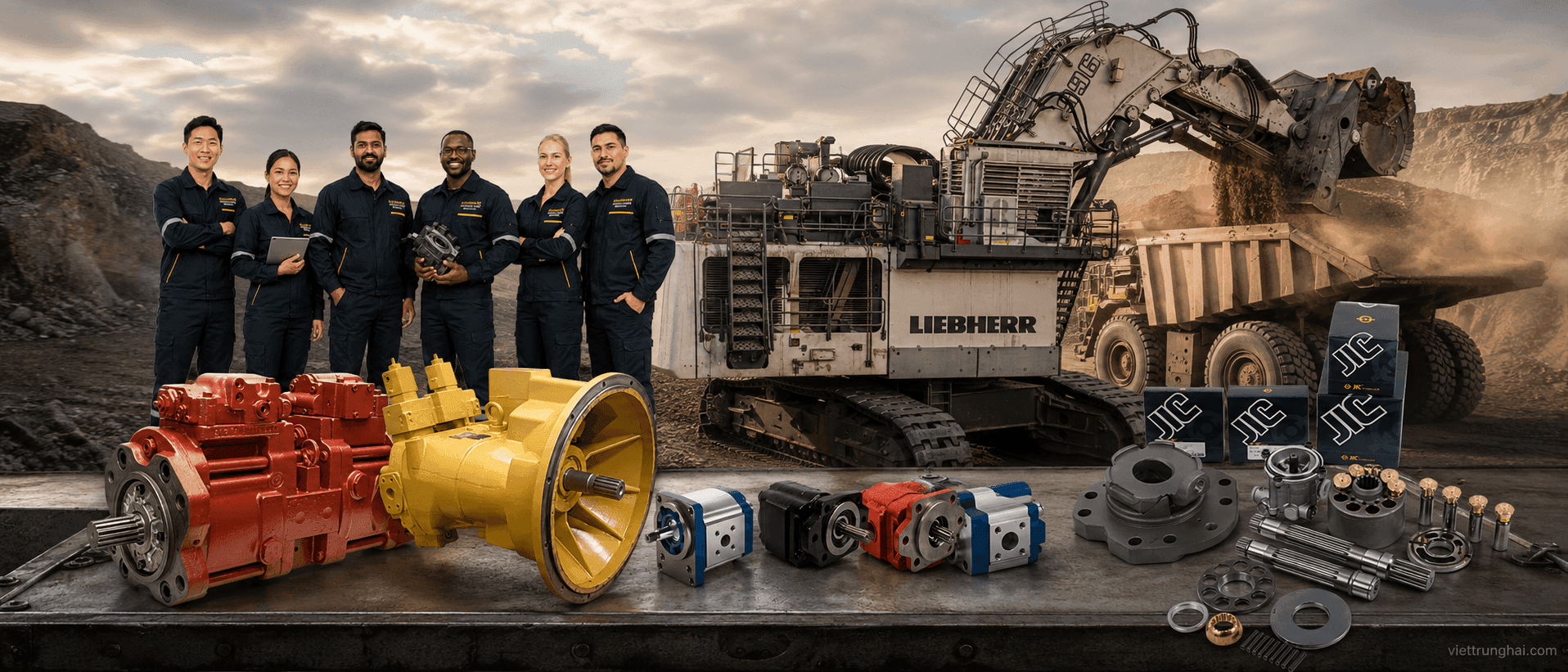
The rotary group is the heart of the hydraulic system, so it is the place most worth investing in. The piston and block must fit tight, with the right play, and the sliding surfaces must be polished. A good aftermarket part reproduces that fit; a cheap one runs loose, dropping pressure and slowing the machine. Viet Trung Hai distributes JIC Hydraulics rotary groups for families like K3V and K5V for their machining accuracy and steady durability; you can browse the hydraulic rotary groups range to match your machine.
Bearings and bushings: small parts, big results
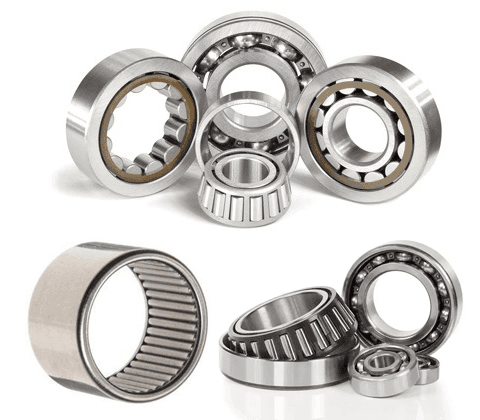
Many people underrate bearings, but one poor bushing can wreck a whole assembly. A proper bearing spins quiet, with no axial play, and holds its grease. A weak one heats up early, rattles, then drags the shaft into wear. For bearings and bushings, well-standardized parts are always worth more than the difference you save.
Price and the so-called cheap option
Cheap to buy is not always cheap to run. A low-priced part that has to be replaced twice, plus the labor and the days the machine sits idle, usually costs more than a good part bought once. On the other hand, expensive is not always sensible for every job. Part prices swing with condition, machine age, and supply source, so reckon by total life-cycle cost, not just the figure on the invoice.
When should you choose Japanese parts?
Choose Japanese when the machine works hard, runs many hours a day, or when downtime is costly. Your fleet's main machine, a rental unit on a schedule, or the main pump group is where you should prioritize durability and peace of mind. In those spots, the extra money for Japanese parts usually comes back as fewer times you have to open the machine.
When Chinese parts are the sensible choice
Good Chinese parts suit secondary machines, light-duty work, or fast-wearing parts you replace on a cycle. If you can pick a maker with steady quality control, this is a thrifty choice that still holds up. The key is to choose by the maker, not loosely by the word origin. See the heavy-equipment parts catalog to compare groups of the same type.
Genuine and aftermarket: do not confuse it with origin
Many people lump origin together with genuine versus aftermarket, but those are two different axes. Genuine is supplied by the machine maker, while aftermarket is made by a third party. A good aftermarket part can still outlast a stray genuine one. Understanding these two axes keeps you from overpaying for a label.
Reading labels, packaging, and provenance
Real packaging is usually crisply printed, with codes and clear maker information. Fakes tend to have faded text, small spelling errors, and off-color boxes. Do not trust the made-in line alone, because the final assembly point does not tell the whole material story. If you want to trace sources more closely, the guide on where excavator parts come from goes deep on this topic.
How to check quickly at the workshop
You do not need a lab to weed out the bad ones. A few simple moves already tell you a lot:
- Hold and turn the part, feeling the smoothness and roundness of the sliding surface.
- Inspect the chamfers and threads for burrs or leftover tool marks.
- Dry-fit it, checking the fit and the play before you let oil in.
- Run it briefly, hand on the housing, listening to heat and sound.
A quick comparison table by criterion
The table below sums up a technician's real-world feel, not lab numbers:
| Criterion | Japanese | Chinese |
|---|---|---|
| Material | Stable, tough | Good to passable, by workshop |
| Machining | Very even | Varies widely |
| Batch consistency | High | Depends on the maker |
| Price | Higher | Softer |
| Availability | Sometimes a wait | Usually on hand |
Common mistakes when choosing by price
The most common mistake is treating price as the only yardstick. A buyer sees two parts that look alike and picks the cheaper, forgetting the difference sits inside the material. The second mistake is treating every part of the same origin as equal. Both habits tend to bring the next teardown sooner than planned.
Warranty and after-sale responsibility
A good part also comes with someone to stand behind it when trouble hits. Standard, officially distributed parts usually have a clear warranty and technical support. Stray cheap parts rarely have anyone to honor a claim. When you tally the cost, do not forget to add the value of that peace of mind.
Advice on choosing by machine age and job
There is no single answer for every machine. A newer machine on heavy work should keep high quality in the main groups. An older machine near the end of its life makes balancing cost the sensible move. Choose by the machine's role in your work, not by habit or hearsay.
Questions to ask the seller before you buy
Before you reach for your wallet, ask a few questions that reveal real quality. Ask who the maker is, not just which country. Ask about the warranty and who is responsible if the part is faulty. An honest seller answers straight; one who dodges usually has a reason to dodge.
The bottom line: choose for long-term value
Between Japanese and Chinese parts, neither side is always right for every case. Some places are worth paying extra for durability, some places a just-enough part is the smart pick. What matters is understanding the part you are buying and its role in the machine. If you need help picking the right type for your machine, the Viet Trung Hai technical team is ready to look it over with you and suggest a sensible option.
Key takeaways
- Judge parts by material, machining and batch consistency, not by origin alone.
- Japanese parts tend to be more even and durable, fitting main groups and heavy work.
- Good Chinese parts suit secondary machines and cycle-replaced items, but choose by the maker.
- A test run with a hand on the housing for heat and sound is the most honest workshop check.
- Origin differs from genuine-versus-aftermarket; do not overpay for a label.
- Reckon total life-cycle cost and warranty value, not just the price at purchase.
Written by
Hoàng Anh Dũng
Hoàng Anh Dũng tracks sourcing, pricing and brands for heavy-equipment parts. He writes about what drives price, buying smart and telling apart part origins and quality.
Related parts
The exact parts discussed above — send your machine model or pump code to match.
Related products
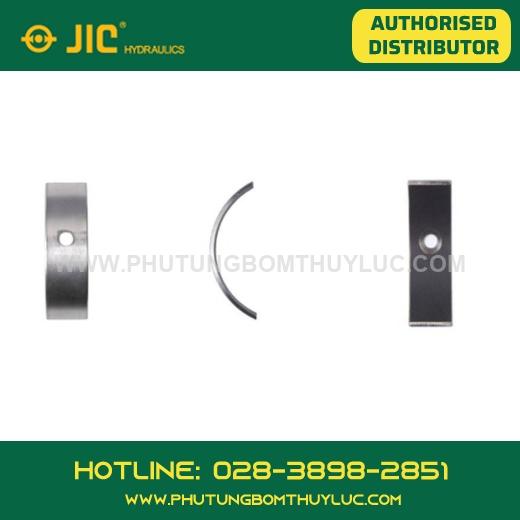 Kayaba (KYB) · PSVBushing – Kayaba PSVD2-17PSVD2On requestView · get a quote
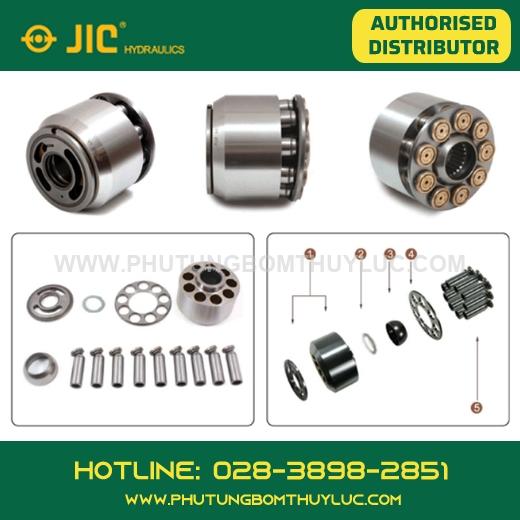 Kayaba (KYB) · PSVRotary group – Kayaba PSV2-55TPSV2On requestView · get a quote
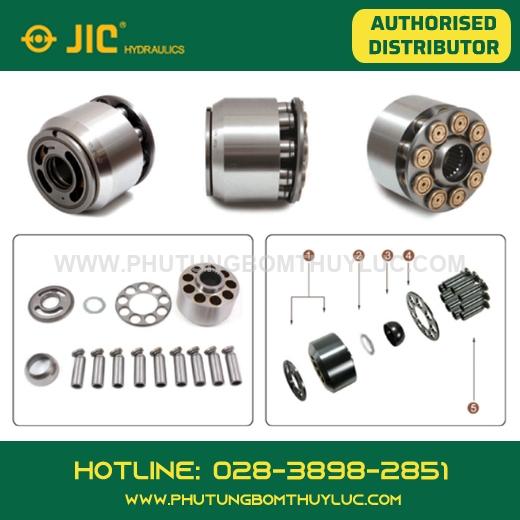 Kayaba (KYB) · PSVRotary group – Kayaba PSV2-60TPSV2On requestView · get a quote
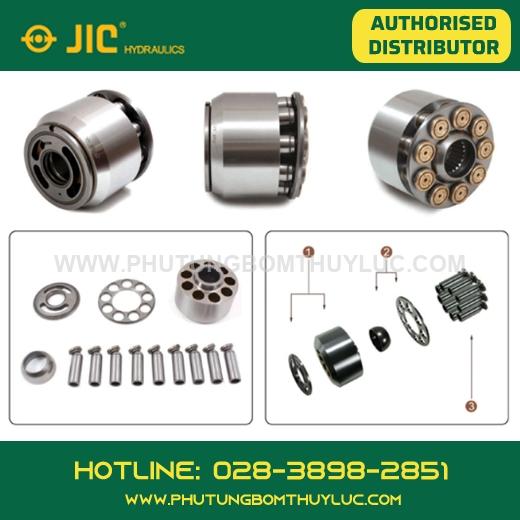 Kayaba (KYB) · PSVRotary group – Kayaba PSV2-63TPSV2On requestView · get a quote