Quick answer
The origin of excavator parts covers three main sources: genuine, aftermarket, and salvaged. Genuine is the most certain but costs more, good aftermarket is economical for wear items, and salvaged is cheap but must be inspected carefully. Choosing the right source for each part and each machine age matters more than chasing one type only.
When an excavator breaks a part, the first question is not which brand to buy, but which source to buy from. The origin of excavator parts largely decides durability, fit, and the risk you carry after installation. For the same pump, genuine, aftermarket, and salvaged units give three very different experiences in lifespan and cost. This article helps you tell each source apart, understand the trade-offs of each, and know when to pick which one for the job.
What the origin of excavator parts means and why it matters
Origin here is the real source of the item: who made it, to what standard, and where it passed through before reaching you. For the same part number, one may come off the machine maker line, one from a shop that specializes in aftermarket parts, one pulled from an old machine. Those three paths give three different levels of trust. An experienced technician looks at the source first and the price second.
The three main part sources you will meet
In the construction-parts market, almost every item falls into one of three groups. Genuine parts are supplied or authorized by the machine maker itself. Aftermarket parts are made by independent shops to fit the machine but without the machine brand. Salvaged parts are used items pulled from scrapped or wrecked machines. Understanding these lines is the first step to not buying wrong.
Genuine parts: when they are worth the money
The biggest advantage of genuine parts is certainty. Material, tolerance, and inspection follow the original technical documents, so on installation you barely have to guess. For parts buried deep in a pump body or travel gearbox, being off by a few percent of tolerance is enough to cause play, heat, and early wear. In return, the price is noticeably higher and sometimes you wait for stock. If you want to understand the line between the two types more deeply, the article on genuine vs aftermarket parts works through each situation.
Aftermarket parts: cheaper does not always mean worse
Many hear aftermarket and immediately think low quality, but reality is not that simple. Some shops make very good aftermarket parts, with proper steel and heat treatment, running smoothly for years. Others cut corners, close on size but short on surface hardness, wearing fast. The issue lies in the maker craftsmanship, not the aftermarket label. So with aftermarket parts, you must know exactly whose work you are buying.
Salvaged parts: opportunity and risk together
Salvaged parts are attractive because they are often genuine items at a fraction of the price. The catch is you do not know how many hours they ran or how hard they were pushed before removal. A salvaged pump group in good shape can serve many more years; one already carrying metal debris is trouble the moment you fit it. With salvaged parts, the eye to judge condition and the seller reputation matter more than any sales pitch.
Quick comparison of the three sources
| Criterion | Genuine | Aftermarket | Salvaged |
|---|---|---|---|
| Quality certainty | Highest | Depends on maker | Depends on real condition |
| Price level | Noticeably higher | Moderate | Usually lowest |
| Fit on installation | Nearly exact | Mostly fine, needs checking | Exact if right machine model |
| Warranty | Clearest | Depends on seller | Short or none |
| Main risk | Cost and wait time | Uneven quality | Remaining life hard to judge |
How do you tell the origin of excavator parts by hand?
Pick the item up and look at three things: the machined surface, how the code is stamped, and the packaging. Genuine parts usually have even machining, crisp stamped codes, clear printed packaging with a traceable code. Good aftermarket parts are tidy too but carry a different brand label. Salvaged parts show use: scratches, oil stains, worn threads, old paint. Feel the thread edges and bearing surfaces; an unusual roughness or sharp edge is a suspicious sign. When in doubt, check against the technical documents of Komatsu or the matching machine maker to see the standard shape and markings.
Which parts deserve genuine first
There are places I always advise owners not to skimp. Hydraulic rotary groups, the main control valve, travel pumps and motors are the units under high pressure that cost dearly if they fail and spread damage. These are built to very tight tolerances; a small error and the whole system loses pressure, the machine goes weak, the oil overheats. For the heart of the hydraulic system such as hydraulic rotary groups, a sure source lets you sleep easy. The extra money here is far cheaper than one pump blowing up mid-site.
Which parts you can trust to aftermarket
On the other hand, many parts do not need to be genuine to run well. Seals, gaskets, filters, bucket pins, bushings, and many ordinary wear items have stable aftermarket quality. These carry load in a simpler way and are easy to inspect by eye. Choosing good aftermarket for this group saves money without trading away safety. Within the wear side of heavy-equipment parts, this is the easiest place to optimize cost.
When salvaged parts are the sensible choice
Salvaged parts make sense when the machine is old, its remaining value is low, and you only need it to run a while longer. They also fit when you need a genuine part that is out of production and no longer available new. The condition is that you must inspect carefully or buy where you can test and exchange. Do not use salvaged parts for units where a single failure can drag down a whole chain.
Hydraulic rotary groups: their own origin story
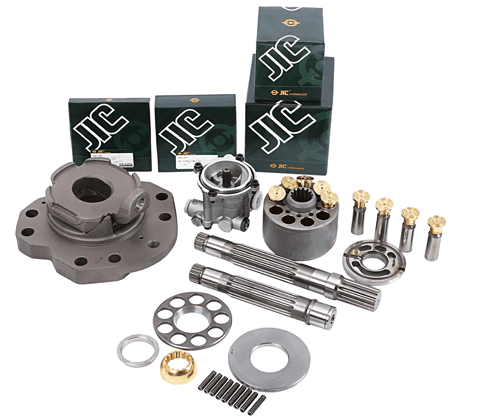
The rotary group is the clearest example of origin deciding lifespan. Familiar pump families such as K3V and K5V exist as genuine, aftermarket, and loose salvaged stock. The difference sits in the piston surface polish, the fit between piston and block, and spring quality. A rough-made unit runs at first but loses pressure fast, showing as the machine growing weak as the oil heats. For this unit, I always advise verifying the true source carefully before fitting.
How to read labels, codes, and packaging correctly
Labels and codes are clues, but you must read them right. A real part code usually matches across the item, the box, and the documents; if the three disagree, ask again. Genuine packaging has a characteristic paper stock, print color, and fold that is hard to fake perfectly. Even so, nice packaging does not vouch for what is inside, so you still check both item and label. The knack is cross-checking several signs at once instead of trusting one thing.
Common signs of fake and counterfeit parts
Counterfeits usually show in the small details a careless shop skips. Shallow blurry stamped codes, rough machining, odd metal color, harsh paint smell are signs I meet often. Weight also says a lot: a real part usually feels heavy in the familiar way. When it feels unusually light, the material was likely thinned out. Meeting several of these signs at once means you should stop.
Warranty and after-sales responsibility
Origin ties directly to who takes responsibility when a part has a problem. Genuine and aftermarket parts from a reputable seller usually have clear return policies. Salvaged parts carry short warranty, sometimes only an exchange in the first few days. Before paying, ask the warranty terms straight and keep the receipt. A seller confident in their source will not hesitate to commit.
Count total cost instead of just the purchase price
A common mistake is comparing only the initial purchase price. A cheap part that fails fast drags in labor to remove and refit, machine downtime, and the risk of spreading damage, which together usually cost more than a good part. True cost is purchase plus labor plus downtime divided by the hours the part serves. Seen that way, genuine for an important unit is often cheaper. Conversely, good aftermarket for wear items is the most economical choice.
How origin affects machine lifespan
A wrong-source part fails itself and also drags down other units. A weak pump makes motors and valves strain, the oil heats fast, seals age early. So a wrong source choice at the start spreads into a chain of failures after a few hundred hours. Choosing the right origin for the base unit keeps the whole system durable with it. This is why a good technician values the source so much.
Choosing a source by machine age and purpose
The way I usually advise can be summed up in a few steps:
- A new machine or one running a site continuously should get genuine for the main units first.
- A mid-range machine running steadily should mix genuine for the heart and good aftermarket for wear items.
- An old machine with low remaining value should consider carefully inspected salvaged parts to keep cost low.
- A rare, out-of-production part sometimes leaves genuine salvage as the only road.
Common mistakes when choosing by origin
The most common mistake is absolutism: believing genuine is always right, or aftermarket always poor. Both are wrong because reality depends on each part and each maker. The second mistake is listening only to price and ignoring total cost. The third is buying salvaged without inspection, leaving it to luck. Knowing where to be firm and where to be flexible is the real experience.
What should you ask the seller before closing?
Before paying, ask clearly about origin, condition, and exchange terms. For salvaged parts, ask which machine model it came off, how long it ran, and why it was scrapped. For aftermarket, ask which shop made it and whether anyone has used it. A seller who knows the goods answers briefly and consistently. If the answer wanders, that too is information. If you are not sure where to start, the article on where to buy excavator parts suggests how to pick a trustworthy source.
Checklist before you decide to buy
Before closing, run through this short list. Is this unit the heart of the machine or a wear item? Is the source clear and verifiable? Do the packaging, code, and item match each other? What are the warranty and exchange terms? Is the total cost over service hours reasonable? Answer these five and you have avoided most of the risk.
Choosing the right source for the right job
No single source is best for every case; there is only the source that fits each part and each machine age. Understanding the origin of excavator parts lets you spend money in the right place: firm at the heart, flexible on wear items, careful with salvage. If you need a source of heavy-equipment parts with clear origin and straight advice by machine model, the Viet Trung Hai team is ready to inspect the goods and help you choose the most sensible option.
Key takeaways
- Origin decides durability, fit, and risk more than the brand does.
- The three main sources are genuine, aftermarket, and salvaged, each fitting a purpose.
- Prefer genuine for the heart of the machine such as hydraulic rotary groups and the main valve.
- Use good aftermarket for wear items to save money while staying safe.
- Salvaged parts suit old machines or out-of-production parts, but require careful inspection.
- Count total cost over service hours, not just the initial purchase price.
Written by
Hoàng Anh Dũng
Hoàng Anh Dũng tracks sourcing, pricing and brands for heavy-equipment parts. He writes about what drives price, buying smart and telling apart part origins and quality.
Related parts
The exact parts discussed above — send your machine model or pump code to match.
Related products
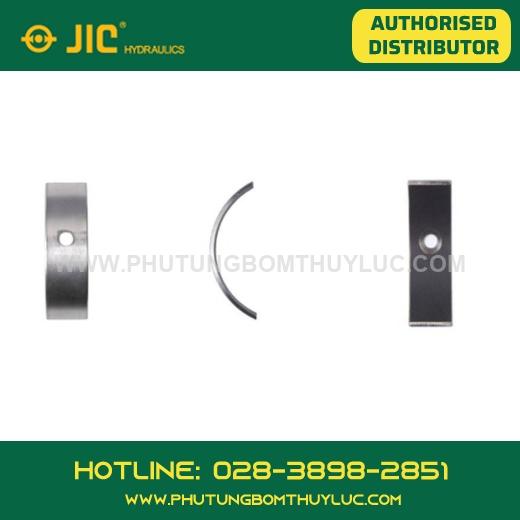 Kayaba (KYB) · PSVBushing – Kayaba PSVD2-17PSVD2On requestView · get a quote
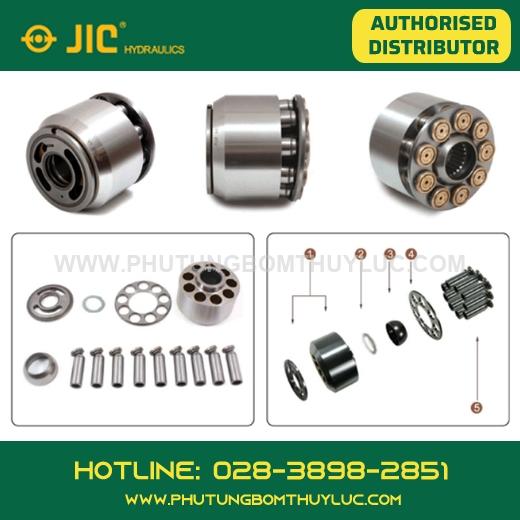 Kayaba (KYB) · PSVRotary group – Kayaba PSV2-55TPSV2On requestView · get a quote
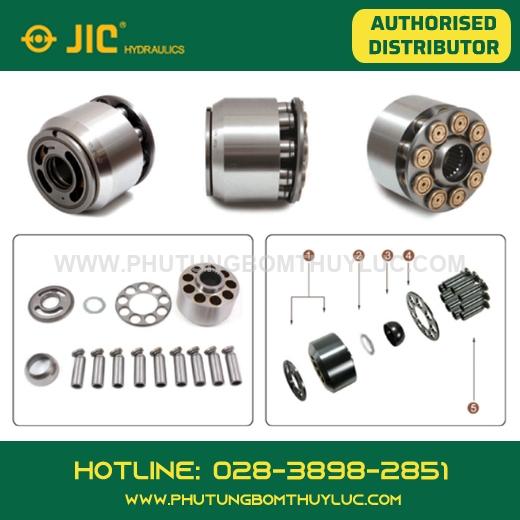 Kayaba (KYB) · PSVRotary group – Kayaba PSV2-60TPSV2On requestView · get a quote
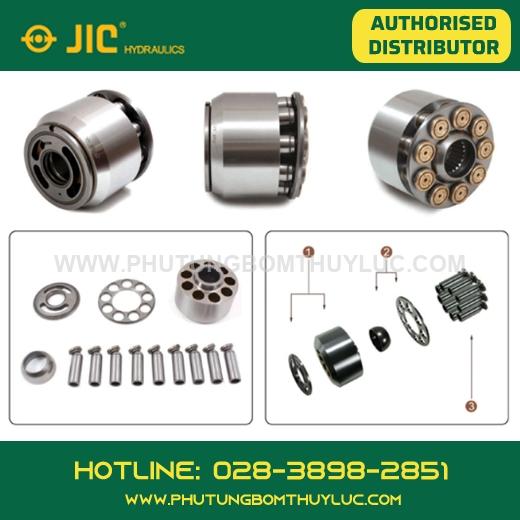 Kayaba (KYB) · PSVRotary group – Kayaba PSV2-63TPSV2On requestView · get a quote