Quick answer
A high-quality aftermarket part is one that is not genuine but is made with the right material, the right tolerances, and a clear origin. It differs from no-name parts because a real maker stands behind it and offers a warranty. Once a machine is out of warranty and you need to balance cost, quality aftermarket parts are a sound choice, as long as you know how to tell good from bad.
A high-quality aftermarket part is a component that does not carry the machine maker's label, yet is made with the right material, the right tolerances, and a clear party standing behind it. It is not a no-name part off the market stall, nor is it an expensive genuine part. For an excavator that is already out of warranty, a quality aftermarket part is often the sensible balance between cost and durability. The only question is whether you know how to spot a good one. This article is written the way a repair technician talks to a machine owner: concrete, calm, based on what the ear hears and the hand feels.
What is a high-quality aftermarket part?
Put simply, it is a part made by a company that specialises in parts, not by the company that built the machine. They measure the original part, choose an equivalent or better material, then machine it to their own tolerances. The biggest difference from a no-name part is that a real name stands behind it and there is a warranty. When it fails, you know who to call. Many parts makers have been in the trade for years, some even supplying machine assembly lines, so their craft is no lesser. That is why a good aftermarket part still runs as long as a genuine one if you pick the right source.
How do genuine, aftermarket, and no-name parts differ?
A genuine part carries the machine maker's label and comes in their packaging system. A quality aftermarket part comes from a reputable parts maker and is built to the right technical standard. A no-name part is one where nobody knows who made it, nobody warrants it, and it is often a look-alike copy. If you want to understand this difference in depth, read more in the guide on genuine vs aftermarket for the full picture before you decide.
Telling quality aftermarket from no-name parts
A no-name part can look identical to a good one at a glance. The likeness is on the outside; the difference is on the inside. Wrong material, sloppy heat treatment, off tolerances, these things are hard to see with the eye but the machine feels them right away. An experienced technician tells them apart by the heft in the hand, by the paint, by the machining lines, and by the paperwork that comes with it.
What material and heat treatment tell you
Most early failures of a part come from wrong material and insufficient heat treatment. A load-bearing part made from steel that is too soft wears fast; too hard and brittle, it cracks. A good part uses the right steel grade, quenched and tempered correctly, so it stands up to repeated loads on site. The eye cannot see this, but it decides whether a part lasts a few months or a few years. To understand the criteria for judging this, see the guide on part quality to know where to look.
Why machining precision matters
In a hydraulic system, the clearance between parts is only a fraction of a hair. Machine it slightly off and oil slips through, pressure does not build, and the machine feels weak. A quality aftermarket part holds a stable tolerance from batch to batch, not one that fits and one that does not. This is where no-name parts usually show themselves: they go in fine, but after a while they go slack.
Sealing surfaces and the leak story
Wherever there is a seal, there is a chance of a leak. The surface the seal rides on must be smooth, at the right finish, with no scratches or burrs. If the surface is rough, even the best seal dies early. Carelessly made parts leave tool marks that you can see by tilting the part under a light.
Rotary groups: where quality shows most
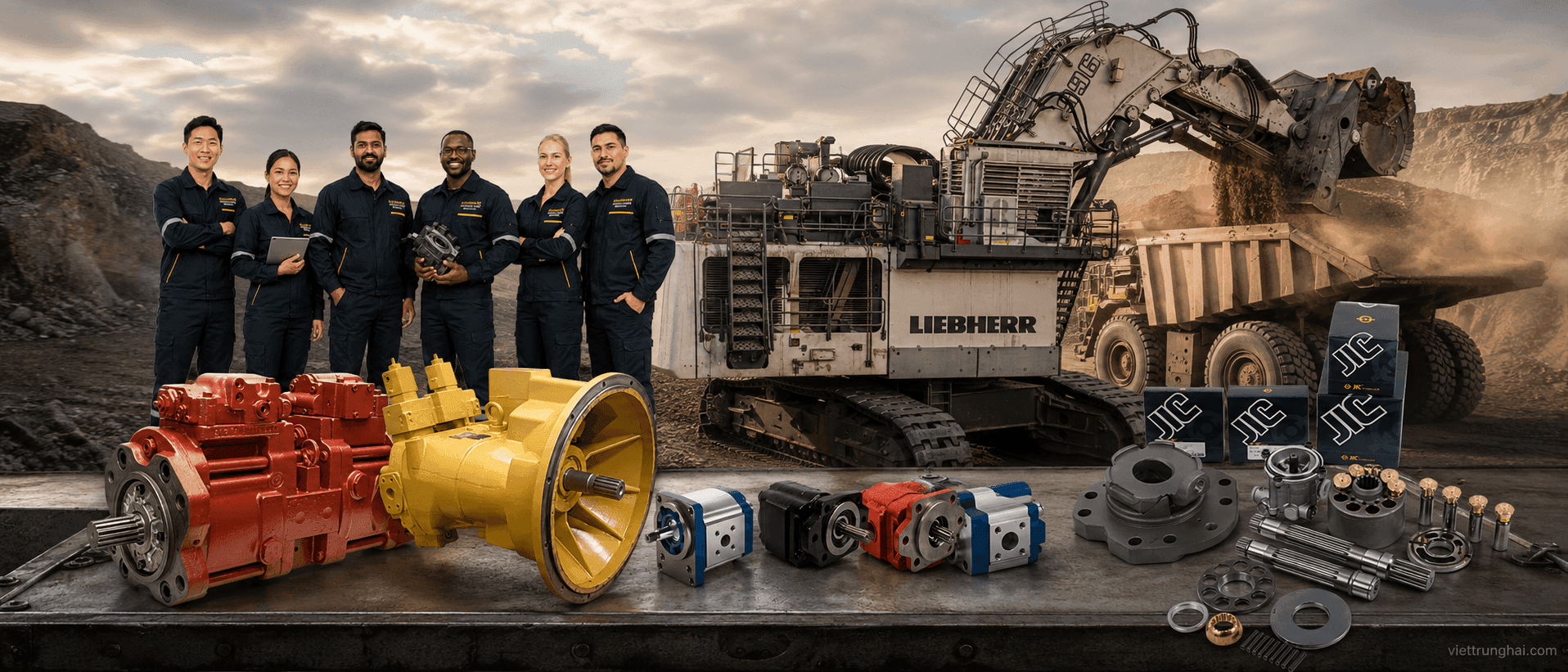
The rotary group is the heart of the hydraulic system, and also where poor parts do the most damage. Pistons, the cylinder block, and the valve plate must match down to the smallest clearance. Here I usually advise owners to prefer hydraulic rotary groups from JIC Hydraulics, because their material and machining precision are consistent, the warranty is clear, and they suit common pump families like K3V and K5V. A properly built rotary group holds pressure well, runs cooler, and is far smoother than market parts. A poor one, by contrast, starts losing pressure and running hot after only a few hundred hours.
Seals: small part, big consequence
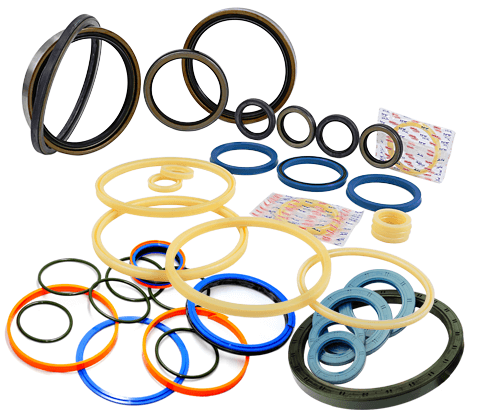
A seal kit costs little, but when it fails you lose a whole day of labour on teardown and reassembly. Rubber of the wrong compound goes hard, weeps oil, or swells and jams. For hydraulic seals, I often use PET Seals because the rubber stands up to oil and heat well, the sizing is even, and off batches are rare. A good seal, once fitted, you can forget about for a long time.
Bearings and bushings: you hear it
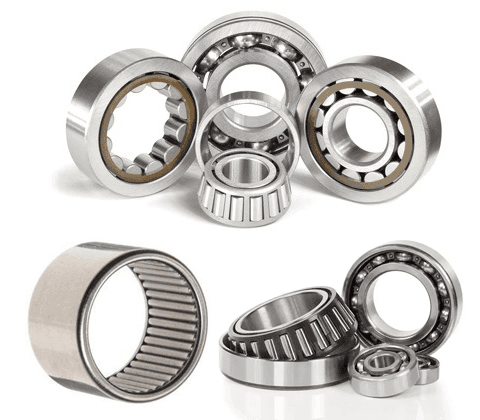
A poor bearing whines, heats up, and goes slack after a while. A technician with a trained ear can read its condition by sound. For bearings and bushings, ZVL Slovakia is my trusted choice thanks to its stable roundness and durability, running quiet and cool. A good bearing keeps the whole assembly turning lightly and takes load off the parts around it.
When should you use a quality aftermarket part?
When the machine is out of warranty and you need to balance repair cost, a quality aftermarket part is the sensible choice. When a genuine part has a long lead time and the machine needs to run now, an in-stock aftermarket part keeps you off the yard. When the part is not a very special one, a good aftermarket part gives equivalent results at an easier cost.
When to prefer a genuine part
While the machine is still under warranty, stick with genuine so you do not lose your rights. For extremely specific parts of a rare machine model, genuine is sometimes the surest route. And for safety-critical parts, if you are still unsure, choose the one that gives more peace of mind. There is no blanket answer; it depends on the machine model and the situation.
Quick comparison of the three types
| Criterion | Genuine part | Quality aftermarket | No-name part |
|---|---|---|---|
| Origin | Machine maker | Reputable parts maker | Unknown |
| Material, machining | High standard | Right technical standard | Erratic |
| Warranty | Yes | Yes | Almost none |
| Availability | Often on order | Usually in stock | In stock but risky |
| Cost | Highest | Balanced | Cheapest, riskiest |
How to spot a good part in your hand
There are a few simple things any technician can do:
- Feel the weight: a part in the right material usually feels solid in the hand, not feather-light.
- Look at the machining lines: even surface, no burrs, no rough tool marks.
- Inspect the sealing surface: smooth and bright, no scratches, no pitting.
- Check the paint and packaging: tidy, labelled, with maker information.
- Ask for paperwork and warranty: a good part always has someone behind it.
Ask clearly about origin and warranty
Do not hesitate to ask whose part it is, what the warranty is, and how returns work. A good seller answers straight, without dodging. If the seller avoids the question of origin, that is already a sign. A warranty is not just a piece of paper; it tells you how confident the maker is in their own part.
Read the paperwork and the maker's standards
Major machine makers publish technical documents on material, process, and maintenance standards. For example, Caterpillar documentation clearly describes the technical requirements for each assembly, and good aftermarket parts usually follow those requirements. Reading the original documents lets you know what a part must meet, instead of trusting advertising. Once you understand the standard, you can judge a part yourself.
Warning signs of a poor part to avoid
An unusually low price against the going rate usually carries risk. No label, no maker information, and no warranty are three red flags. A rough surface, burrs, and blotchy paint show a sloppy finish. A crumpled box with blurry printing is also worth noting. If the seller cannot answer about origin, it is best to stop there.
Fitting it right matters as much as quality
A good part fitted carelessly still fails early. Clean assembly, the right order, the right torque, and the right oil and filter changes are what decide service life. Many cases blamed on bad parts are really wrong fitting or dirty oil. However good a part is, it still needs a careful hand.
Where the real cost lies
The price of a part is only the visible part. The real cost includes teardown labour, machine downtime on the yard, and the risk of damage spreading to other parts. A cheap part that fails early and takes a whole assembly with it turns out expensive. For a machine on a live project, one day on the yard can cost more than the whole parts price gap. So I always advise owners to reckon by total cost, not just the number on the part invoice. A quality aftermarket part costs a bit more than a market part but is usually far cheaper over the full life cycle.
Choosing parts for each machine generation
For common machines with plenty of parts around, a quality aftermarket part is almost always sensible. For rare models or very specific assemblies, you need to weigh the source more carefully. For machines working heavy and continuous, favour durability over saving a little at the start. For a machine near retirement or running light, you can pick a lighter option to suit the budget. The key is balancing the machine's remaining value against the money spent to repair it. Experience is understanding what stage your machine is at.
The role of a reputable distributor
A good distributor does not just sell; they advise the right part for the right machine model. They hold proper stock, keep paperwork, and stand behind the warranty when needed. When choosing heavy-equipment parts, buying from a responsible source spares you most of the risk of no-name parts. A seller who knows the trade will tell you honestly when to use aftermarket and when to stick with genuine.
Questions to ask yourself before buying
Before you commit, ask: is the machine still under warranty, is this part a special one, does it have a warranty and clear origin. These three questions are usually enough to make the right call. Do not let a low price lead you; let the machine's condition and the reliability of the source lead you.
Bottom line: choose right so the machine lasts
A quality aftermarket part is a practical choice for most out-of-warranty machines, as long as you can read the material, the machining, the sealing surface, and the paperwork. Choosing a responsible source matters as much as choosing the right part. If you need advice on a rotary group, seals, or bearings for the right machine model, the Viet Trung Hai technical team is ready to take a look and suggest a sensible option.
Key takeaways
- A quality aftermarket part has the right material, right tolerances, clear origin, and a warranty.
- It differs from a no-name part by having a real name behind it, not just a matching look.
- Most early failures come from wrong material, sloppy heat treatment, and off tolerances.
- When the machine is out of warranty and cost matters, quality aftermarket is a sensible choice.
- Spot a good part by its weight, machining lines, sealing surface, and paperwork.
- Choosing a responsible source matters as much as choosing the right part.
Written by
Hoàng Anh Dũng
Hoàng Anh Dũng tracks sourcing, pricing and brands for heavy-equipment parts. He writes about what drives price, buying smart and telling apart part origins and quality.
Related parts
The exact parts discussed above — send your machine model or pump code to match.
Related products
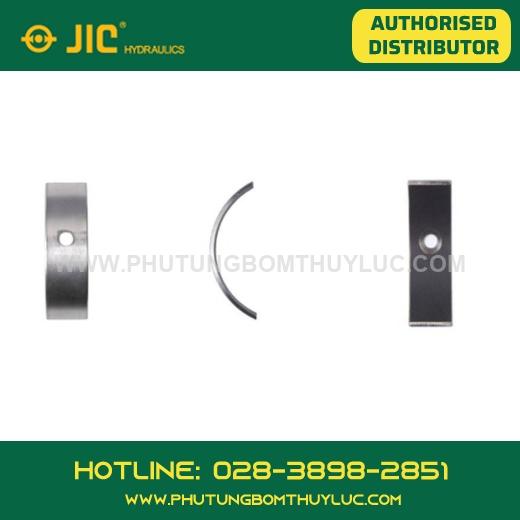 Kayaba (KYB) · PSVBushing – Kayaba PSVD2-17PSVD2On requestView · get a quote
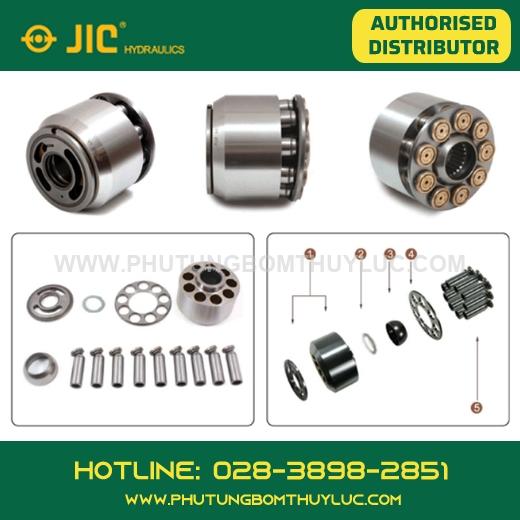 Kayaba (KYB) · PSVRotary group – Kayaba PSV2-55TPSV2On requestView · get a quote
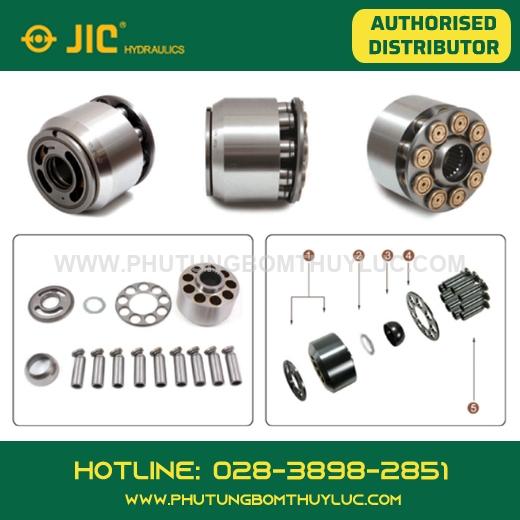 Kayaba (KYB) · PSVRotary group – Kayaba PSV2-60TPSV2On requestView · get a quote
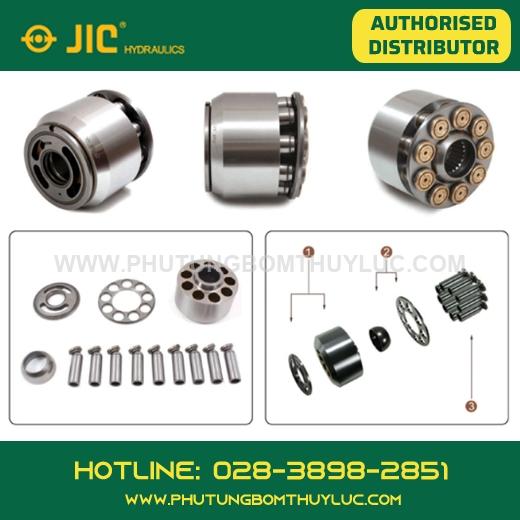 Kayaba (KYB) · PSVRotary group – Kayaba PSV2-63TPSV2On requestView · get a quote