Quick answer
Where to buy excavator spare parts depends on the part type, the machine's role and your budget. There are three main sources: genuine, replacement and used parts. High-pressure parts deserve a sure source, while common wear items are fine as good replacement parts. Most important is matching the correct part code, machine model and chassis number, and buying from a place with clear paperwork and warranty.
Where to buy excavator spare parts is a question every machine owner faces when a machine is down and needs parts fast. Pick the wrong source and you pay twice: weak parts fail again soon and drag in more downtime. This guide is direct about the three main sources — genuine parts, replacement parts and used parts — how to check parts before you pay, and how to match them to the machine model and pump code so you do not buy the wrong thing.
Where to buy excavator spare parts the right way?
Buying right means buying the correct part for the correct model, from a source with clear paperwork and warranty, at a price that is fair for the life it gives. There is no single correct address for every part. Fast-wearing parts, high-pressure parts and rare parts each have a different sensible source. Your job is to know where each item should come from, and how to check it before you pay. This guide follows that path: sort the sources, then match each type of part to the right one.
Three sources: genuine, replacement and used
In the excavator parts market, stock falls into three main groups. Genuine parts are made by the machine maker or the original component maker, to the original standard. Replacement parts are made by other manufacturers to fit the same position, with quality ranging from good to poor depending on the brand. Used parts are pulled from old machines, still serviceable, often chosen for expensive and rare items. Each group has its place; which one you pick depends on the part, the machine and the budget. The guide on genuine vs replacement parts looks more closely at weighing the first two groups.
The three sources compared
The table below is a rough frame to picture things quickly, not a hard rule for every part.
| Criterion | Genuine | Replacement | Used |
|---|---|---|---|
| Price | Highest | Moderate | Low, depends on condition |
| Quality consistency | High | Varies by brand | Varies per item, check well |
| Availability | May need ordering | Easy to find | Hit or miss |
| Warranty | Clear | Depends on seller | Often short or none |
| Best for | High-pressure parts, primary machine | Common wear items | Expensive, rare parts, retiring machine |
Use the table to orient yourself; the final call still ties to each specific item.
Where to buy excavator spare parts by part type
Do not apply one source to everything. Fast-wearing items like filters, seals, gaskets and hydraulic hoses suit good replacement parts on cost. High-pressure parts that affect the whole system — the rotary group, main valve, travel motor — deserve genuine or top-grade replacement parts, because one failure drags the whole unit down. Expensive, rare parts for older machines, when new stock is hard to find or too dear, make a good used part a sensible way out. The general rule: the more a part affects safety and the whole system, the more you should pick a sure source.
Choose the source by the machine's role
A primary machine carrying the schedule makes downtime the most expensive factor. For it, favour a sure, in-stock source with clear warranty, even at a higher price. A standby or light-duty machine has less time pressure, so replacement or used parts can save money. A machine near retirement rarely pays back big spending on genuine parts, so weigh a cheaper option that is just enough to finish its life. Tying the buying decision to the machine's role keeps you from spending in the wrong place.
How to check a part before you buy
Before you pay, check in order:
- Match the part code and machine model, and confirm they agree.
- Look at the surface: machining marks, plating, threads and sealing faces should be sharp and even.
- For seals and gaskets, check elasticity, the smell of the rubber, and the markings on the body.
- For rotating parts, check runout, scoring and play.
- Ask about the origin, paperwork and warranty terms.
- For used parts, check wear and cracks carefully, and ask for a test run if possible.
A few minutes of checking at purchase saves many hours of refitting later.
What should you ask to avoid buying wrong?
A good seller answers a few basic questions clearly. Is this genuine, replacement or used? For which machine model and pump code? Is there origin paperwork? How long is the warranty, and what are the return terms? If it does not fit or the spec is wrong, how is that handled? Vague answers to these are a signal to think again. A seller who knows the trade usually asks you back for the machine model, chassis number and pump code to look it up correctly — that is a good sign.
Match by machine model and pump code
The same machine line can use different parts across model years. So do not buy by a generic name; match by the code on the part, the machine model and the chassis number. For pumps and motors, the code cast on the pump body is the surest reference. Photograph the old code, note the model and chassis number, and send them to the seller to look up. For per-model figures, take the maker's spec for the model rather than guessing. Matching correctly from the start avoids buying wrong and swapping back and forth.
Heavy-equipment parts: which group should be genuine
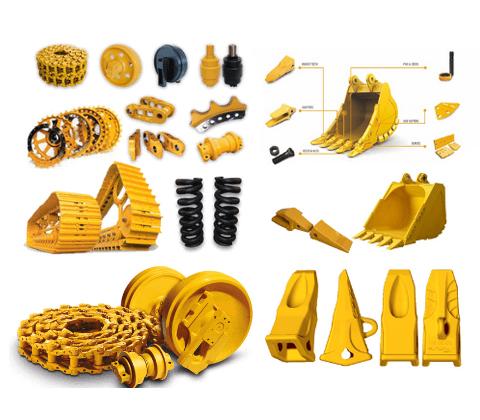
Within heavy-equipment parts, not every item needs to be genuine. Undercarriage parts, pins, bushings and common wear items are fine as good replacement parts. But parts tied to brake and steering safety, and high-pressure parts in the hydraulic system, deserve a sure source. The reason is simple: these failing is not just costly but dangerous, and it spreads damage. Spending right on the important group and saving on the low-risk group is how you allocate the budget sensibly.
Hydraulic-pump parts: whole unit or by component
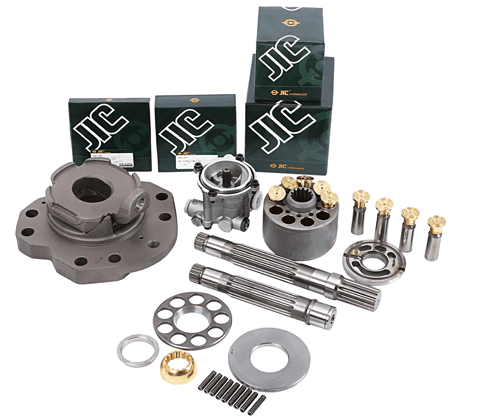
With hydraulic-pump parts, you have two routes: replace the whole pump or replace the internal parts. Which route depends on the housing condition, urgency and budget. A good housing with only worn internals makes replacing the internal set cheaper. A damaged housing or shaft, or an urgent job, makes a whole unit surer and faster. The guide on rebuilding the rotary group vs a new pump works through this cost question. Whichever route, matching the correct pump code is a step you cannot skip.
Seals and gaskets: telling the real thing
Seals and gaskets are cheap, but a wrong fit or poor quality leaks again soon and wastes teardown labour. Real parts usually have clear markings, good rubber elasticity, and correct size and profile. Fakes often have faded markings, hard or crumbly rubber, and off sizes. For seals from the big makers, learning to tell real from fake helps you avoid buying wrong. The guide on spotting genuine vs fake NOK seals shows the specific signs. Buying the correct seal set by code and profile matters more than buying cheap.
Online or in-store?
Each way has its strength. Buying in store lets you hold the part, check it by hand, ask directly and swap fast if it is wrong. Buying online is handy for rare series and lets you compare more sellers, but you rely on descriptions and photos, so the risk of a wrong code is higher. For common, low-value items, buy wherever is convenient. For expensive, high-pressure or easily-confused items, favour a place that lets you inspect and has clear return terms. Whichever way you buy, keep the paperwork for warranty and later matching.
Watch out for fakes and knock-offs
An unusually low price usually has a reason. Knock-offs often borrow a big brand name but use poor material and machining. Some signs: badly printed packaging, faded markings, rough welds and plating, no origin paperwork, and a seller who dodges warranty questions. For high-pressure parts, a fake is a big risk because it can fail suddenly under load. Buying from a named place with paperwork and clear warranty is the simplest precaution. Cheap that fails early is not cheap.
Paperwork, warranty and returns
Paperwork and warranty are often taken lightly but matter when something goes wrong. Ask clearly before buying: how long the warranty is, what it covers, and the return terms if it does not fit or is faulty. Keep the invoice and warranty slip for matching. With replacement and used parts, policies differ from place to place, so ask more carefully. A proper seller states the warranty clearly from the start and does not dodge.
Common mistakes when buying parts
- Buying by a generic name without matching the code and model.
- Comparing only price and picking the cheapest, ignoring durability and warranty.
- Buying a fake for a high-pressure part to save money.
- Not keeping paperwork, so there is no basis when a warranty claim is needed.
- Ordering in a rush and forgetting to send full information, leading to a wrong code.
- Skipping the incoming check, so a fault shows only after it is on the machine.
Avoid these and most of the risk of buying wrong is already gone.
True cost: cheap now, dear later
Many owners look only at the item price at purchase. The true cost also includes fitting labour, downtime, and the risk of failing again. A cheap part with poor durability that fails soon drags in a second teardown and an idle machine, and the sum is usually dearer than a good part bought at the start. The right way to reckon is cost per running hour, not just the purchase price. For heavily loaded parts, the small price gap between good and poor is rarely worth the risk.
Prepare your information before asking
Full information makes buying fast and correct. Before asking, note: the machine model, chassis number, old part code, pump code if it is a pump or motor, and a description of the symptom. Photograph the old part and the code cast on the body. With these, the seller looks it up fast and makes fewer mistakes. Missing information leads to a wrong buy or back-and-forth questions that lengthen downtime. A few minutes of preparation buys many saved hours later.
Build a relationship with your supplier
Buying parts is not just a one-off deal. Having a few familiar suppliers who know your fleet helps a lot over time. They remember the machine models and pump codes you use, quote fast, and prioritise you when you are in a hurry. In return, you get a steady source and trustworthy advice. A good relationship with the seller also smooths out any dispute over warranty or returns. For a multi-machine fleet, this is a real time-saver.
Stock fast-wearing parts
A few items wear fast and are often needed urgently, so keep a small stock. Filters, seals, gaskets, hoses and common bolts are worth keeping on the shelf. A small stock keeps the machine from waiting during scheduled changes or minor faults. Record the level and code of each item to reorder the right type. There is no need to stock expensive, rare parts because they tie up capital; stock only the cheap, frequently used and easily worn. A small but correct store noticeably cuts downtime.
Real-world experience choosing a source
In the cases we see, most buying trouble comes from a wrong code match, not from picking the wrong source group. Owners who send the correct model, chassis number and pump code hit the right part far more often. For common wear items, good replacement parts run steadily and save money. For high-pressure parts in the hydraulic system, spending more on a sure source is usually worth it because it cuts downtime risk. For older machines with rare parts, a good used part is often the only sensible way out. There is no single formula for every machine; what matters is matching correctly and choosing a source that fits the machine's role.
When you need to buy parts for an excavator, send the machine model, chassis number and pump code and the Việt Trung Hải technical team will match and advise a source that fits the machine's condition and your budget. For each model's spec, refer to the maker's documentation, for example the SANY support site.
Key takeaways
- Buying right means the correct part, correct model, with paperwork and warranty.
- Three sources — genuine, replacement and used — each have their place.
- High-pressure parts deserve a sure source; common wear items are fine as good replacement parts.
- Match by part code, machine model and chassis number to avoid buying wrong.
- Inspect the part and keep the paperwork before you pay.
- Look at cost per running hour, not just the purchase price.
Written by
Hoàng Anh Dũng
Hoàng Anh Dũng tracks sourcing, pricing and brands for heavy-equipment parts. He writes about what drives price, buying smart and telling apart part origins and quality.
Related parts
The exact parts discussed above — send your machine model or pump code to match.