Quick answer
Whether to replace the rotary group or the whole pump depends on the condition of the pump housing and shaft, the value of the machine, and how urgent the job is. If the housing is still good, replacing the rotary group is cheaper; if the housing or shaft is damaged, or the job is urgent, a new pump is safer and faster.
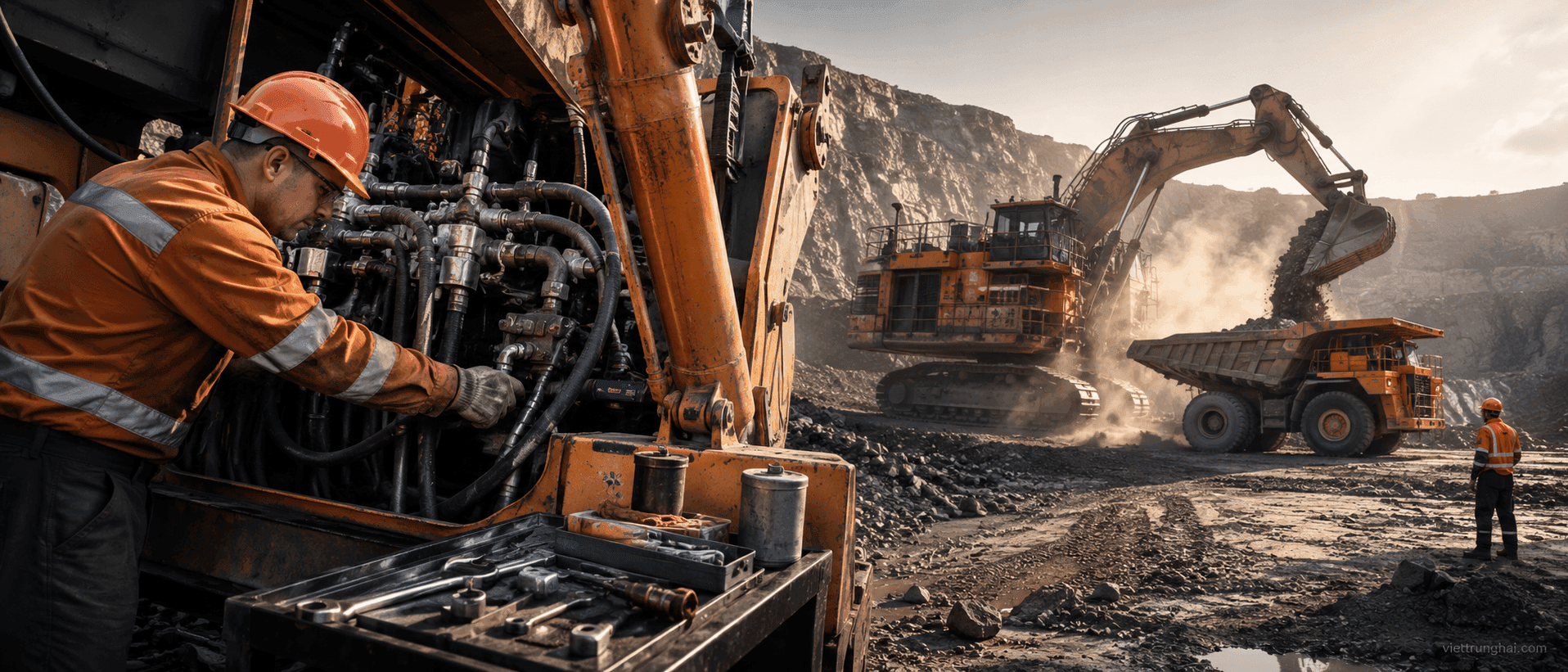
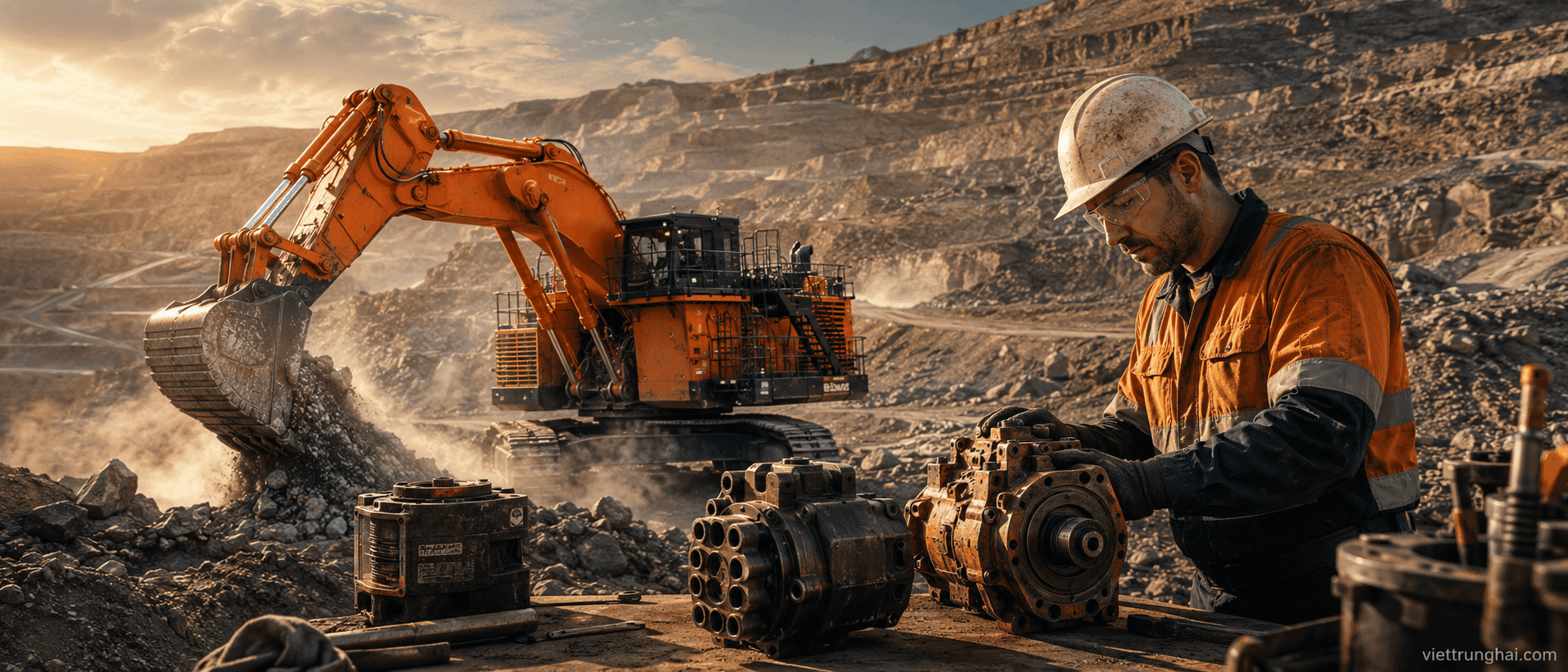
When an excavator hydraulic pump fails, the owner always faces one question: replace the rotary group to rebuild the old pump, or fit a whole new pump? The answer depends on the pump's condition, the value of the machine, and how urgent the job is. This guide gives a clear decision framework based on real condition rather than gut feel.
Rotary group vs whole pump: what is the difference?
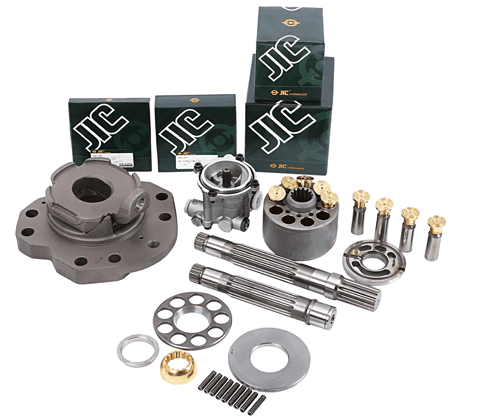
Replacing the rotary group rebuilds the old pump by swapping the internal parts — pistons, cylinder block, swash plate, valve plate, drive shaft and regulator — while keeping the old housing. Fitting a new pump installs a complete new unit.
In essence: a rotary group is cheaper and reuses a good housing, but requires the housing and shaft to be undamaged. A new pump costs more but is reliable and fast, which suits jobs where you cannot risk long downtime.
Cost and risk compared
| Criterion | Rotary group | Whole new pump |
|---|---|---|
| Cost | Lower | Higher |
| Time | Longer (teardown, inspect, calibrate) | Faster |
| Risk | Higher if housing or shaft is damaged | Low |
| Reuses old housing | Yes | No |
| Best when | Housing good, only internals worn | Housing/shaft damaged, urgent, primary machine |
The table is a relative guide; actual cost depends on the pump series and model, so get a quote against the real pump code.
When should you replace the rotary group vs the whole pump?
Replacing the rotary group makes sense when the housing and shaft are still good and only the internals are worn; when you want to optimise cost and have time for the workshop to strip, inspect and calibrate; and when the pump is a common series with easy-to-source rotary groups.
Conversely, fit a whole new pump when the housing is cracked, the shaft is bent, or the cylinder block is badly damaged so a rebuild is not worth it; when the machine is a primary earner that must run again immediately; or when the pump has been overhauled many times and its precision has dropped.
Honestly, for the main pump on a primary machine in a sprint, many owners choose a new pump to cut the risk of downtime, even at a higher upfront cost — because downtime usually costs more than the price difference.
A quick decision framework for owners
You can decide with three short questions:
- Are the housing and shaft still good? If not, lean toward a new pump.
- Is the job urgent? If very urgent, a new pump is faster.
- Is the cost difference worth the risk? If the rotary group is easy to source and the housing is good, a rebuild saves money.
The key before any decision is a correct diagnosis: measure pressure and inspect to be sure the fault is in the rotary group, not in a valve or the oil supply. See weak hydraulic pump: 7 causes and fixes so you do not fix the wrong thing.
What do a rebuild and a replacement actually cost?
When comparing the two options, do not just look at the price of a rotary group or a new pump. The real cost has several parts: the parts (a rotary group or a complete pump), removal and refit labour, inspection and pressure-calibration labour, the oil and filters changed with it, and — most importantly — the cost of the machine sitting idle during the repair. A rebuild usually carries more inspection and calibration labour because it must be stripped, measured, lapped and refitted precisely. A new pump has less labour but higher parts cost. Many owners compare only the parts price and pick the cheaper route, then find the sum incomplete once downtime is added. The right approach is to total both options for your exact situation, then decide.
The risk of rebuilding without checking the housing and shaft
The most dangerous mistake in a rebuild is replacing only the rotary group without carefully checking the housing and shaft. If the housing is cracked or bore-worn, or the shaft has runout, a new rotary group runs off-centre and wears fast, and the machine goes weak again soon. Then you lose both the rotary-group cost and double the labour — dearer than a new pump from the start. So a good rebuild always begins by measuring and checking the housing, shaft, mounting face and oil galleries. If those base parts are good, a rebuild is worth it; if they are damaged, a new pump is the safer choice.
How many times can a hydraulic pump be rebuilt?
There is no fixed number for every pump, but the general rule is that each overhaul slightly reduces the precision of the housing and base surfaces. A newer pump on its first rebuild usually gives very good results if done right. A pump overhauled many times, with worn galleries, struggles to reach original spec even with a new rotary group. At some point the repeat-rebuild cost and downtime risk exceed the value of keeping the old housing — that is when a new pump makes sense. Keeping each pump's repair history helps you decide more accurately next time.
Questions to ask before deciding
Before choosing, ask the workshop a few questions to get the full picture:
- Have the housing, shaft and base surfaces been checked, and what were the results?
- Which rotary group is used for the rebuild, and is it the correct, complete set by code?
- Will pressure and flow be calibrated to the maker's spec after fitting?
- What is the expected repair time and the warranty?
- Counting downtime, how far apart are the two options in total cost?
These questions stop you deciding on parts price alone and help you pick the best balance of cost and reliability.
Real-world experience: when a rebuild is worth it
In the cases we see, most weak pumps are due to a worn rotary group while the housing and shaft are still good — for those, a correct matched-set rotary group with careful calibration gives very good results and saves noticeably over a new pump. A typical example is a Kawasaki K3V112 pump on a roughly 20-ton class excavator: when the piston shoes and swash plate wear, the pump loses flow once the oil is hot, showing up as the boom lifting weakly and slowly under heavy load while it still feels strong when cold. Opening it up you usually find a scored valve plate and pitted piston-shoe faces; if the housing and shaft are still good, fitting the correct set of piston shoes, cylinder block and valve plate and recalibrating the regulator brings the pump back to steady output. Conversely, a pump that has been water-logged, run low on oil until the housing scored, or overhauled many times rarely lasts when forced through another rebuild. One more factor is availability: for common series, rotary groups are easy to source and quick; for rare series, the wait for parts can make a new pump better on total time.
Common mistakes when choosing
- Comparing only parts price while ignoring downtime and calibration labour.
- Rebuilding without checking the housing and shaft, so it fails again fast.
- Fitting a mismatched rotary group to save money, creating tolerance drift.
- Skipping diagnosis and replacing the pump when the real fault is a valve or the oil supply.
- Not clarifying the warranty and repair time before agreeing.
Think in total cost of ownership, not just the repair
For rental owners or fleet businesses, the right view is total cost of ownership, not a single repair bill. A cheap rebuild that fails again in a few months — dragging in downtime and missed schedules — can cost far more than a new pump that runs steadily for years. Conversely, on a machine near retirement or with little work, a new pump may never pay back. So tie the decision to the machine's usage plan: a machine with years of work left and a main earner favours reliability; a soon-to-retire or standby machine favours low cost. Looking across the whole machine life keeps you from saving in the wrong place.
Prioritise repairs by the machine's role
Not every machine in a fleet deserves the same investment. For a primary machine carrying the site schedule, downtime is the most expensive factor, so the fast, sure option is usually chosen even at higher cost. For a standby or light-duty machine, a rebuild can optimise cost since time pressure is lower. Prioritising by each machine's role allocates the repair budget sensibly and keeps the most important machines ready to work.
Prepare ahead to shorten repair time
Whichever option you choose, preparing ahead cuts downtime. Once you suspect the pump, record the pump code, machine model and symptoms so the workshop can prepare the right parts early. For common series, rotary groups or complete pumps are usually in stock and quick; for rare series, ask about lead time to plan around it. Preparing the oil, filters to change with it, and a workshop slot also keeps the job flowing without waiting on parts mid-way.
Warranty and reliability after the repair
An often-overlooked factor is warranty. New and rebuilt pumps may carry different warranty terms, so clarify the scope and period before deciding. Reliability after the repair depends heavily on parts quality and calibration skill, so choosing a reputable shop with a proper inspection and calibration process matters just as much as which option you pick. On parts, we prioritise genuine JIC Hydraulics rotary groups — the brand Việt Trung Hải distributes — whose material and machining precision stay consistent, helping a rebuilt pump hold its flow and pressure over time.
Keep the machine's repair history
Recording each pump repair — date, symptom, option chosen, parts used and result — is a small habit with real value. This history shows how many times a pump has been overhauled, so the next decision is more accurate: if a pump fails again quickly after a rebuild, that is a signal to switch to replacement. For a multi-machine fleet, this data also helps budget parts and reduce downtime across the fleet over time.
When you need a hydraulic rotary group or a complete hydraulic pump, send the pump code and machine model and the Việt Trung Hải technical team will advise the option that fits the machine's condition and your budget. For each model's pump spec, refer to the maker's documentation, for example the Hitachi support site.
Key takeaways
- A rotary group is cheaper but needs a good housing and shaft.
- A new pump is fast and reliable, suited to an urgent primary machine.
- Total cost includes parts, calibration labour and downtime.
- Always check the housing and shaft before deciding to rebuild.
- A pump overhauled many times is often better replaced.
- Diagnose correctly first; do not replace the pump when the fault is a valve or oil supply.
Written by
Hoàng Anh Dũng
Hoàng Anh Dũng tracks sourcing, pricing and brands for heavy-equipment parts. He writes about what drives price, buying smart and telling apart part origins and quality.
Related parts
The exact parts discussed above — send your machine model or pump code to match.
Related products
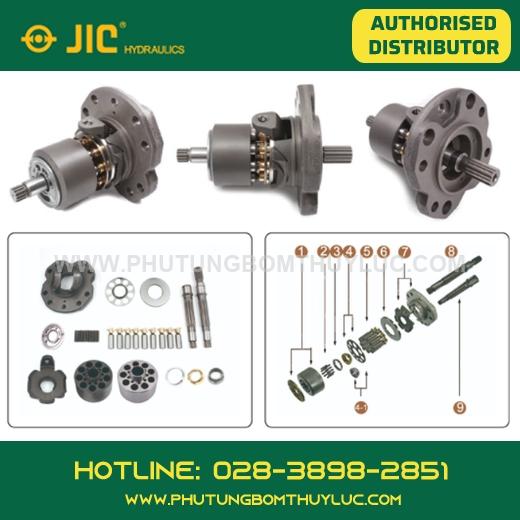 Kawasaki · K3VRotary group kit – Kawasaki K3V112DTK3V112DTOn requestView · get a quote
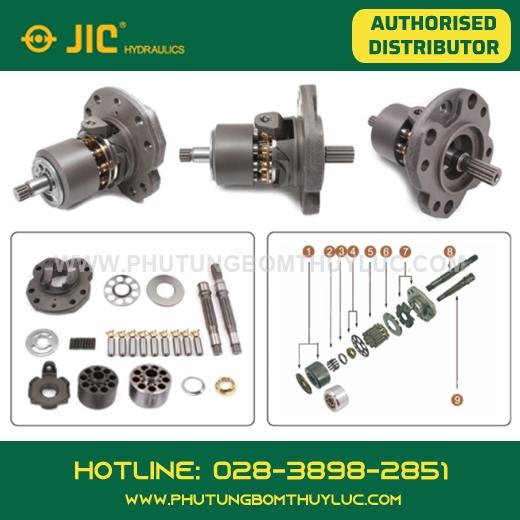 Kawasaki · K3VRotary group kit – Kawasaki K3V140DTK3V140DTOn requestView · get a quote
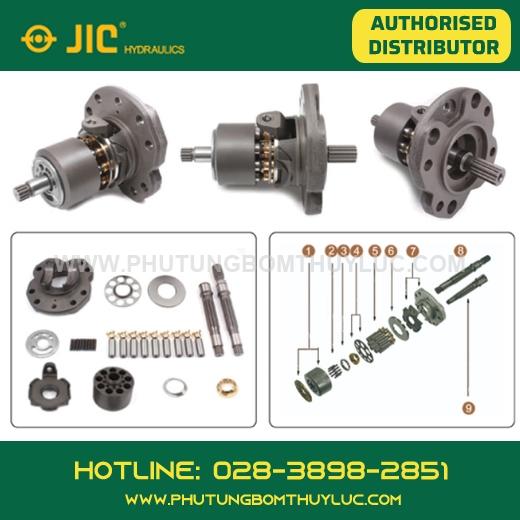 Kawasaki · K3VRotary group kit – Kawasaki K3V180DTK3V180DTOn requestView · get a quote
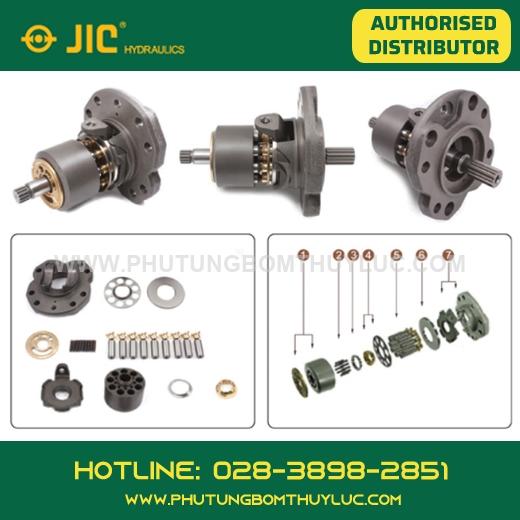 Kawasaki · K3VRotary group kit – Kawasaki K3V280DTK3V280DTOn requestView · get a quote