Quick answer
Main control valve pricing is not a fixed number but the sum of five factors: the scope of work (reseal, replace one section, or replace the whole assembly), the machine class and brand, the part condition (new, remanufactured, or used-tested), the number of functions and spools, and lead time. The real cost also includes removal, setting, and a system flush — the items that decide how long a fresh valve lasts.
The cost of replacing a main control valve rarely reduces to a single figure. It is the sum of several engineering choices that most owners do not see when they first ask for a quote. Main control valve pricing is driven by five main factors: the scope of work (reseal, replace one section, or replace the whole assembly), the machine class and brand, the condition of the part (new, remanufactured, or used-tested), the number of functions and spools on the valve body, and lead time. Understanding these five lets you read a quote for what it really is and decide repair versus replace before you spend, instead of letting the seller decide for you.
What does main control valve pricing depend on?
The main control valve is the flow-distribution "brain" of an excavator and many other construction machines. It takes flow from the main pump, splits it to the actuators on command from the control levers, and integrates the relief valves, anti-drop load-check valves, and holding valves. Inside is a row of spools sliding in body bores at very tight clearance; that tightness is exactly what sets efficiency, and also why a control valve is harder to recondition than many other parts.
Because the valve carries many functions in one block, its price reflects complexity and condition rather than the mass of metal. Two assemblies that look alike can differ markedly simply because one carries a pilot-priority circuit, a flow-combining circuit, or a proportional solenoid valve. If you are still unclear on the construction and the role of each part, the article on the hydraulic main control valve describes the mechanical side before we talk money. This piece sits in the group on parts pricing and the market that Viet Trung Hai writes for technical buyers.
Repair or replace: the decision that shapes the whole cost
Before comparing quotes, answer one question: does your valve need a reseal, one section replaced, or is it time for a whole new assembly? These three routes differ in tiers, and choosing the wrong route is the most common way repair costs run past the estimate.
The failure mechanism decides the route. External leaks — oil weeping at the caps, spool ends, or flange faces — usually come from hardened seals and O-rings, and most are fixed with a seal kit. Internal leakage is different: when the spool and body bore wear, oil slips across the clearance inside the valve itself, loads drift, and functions slow or creep. Internal leakage cannot be "patched" with seals, because the fault lies in a precision fit rather than in a sealing part.
Reseal: the lightest intervention
This is the lowest-cost of the three routes. The technician strips the assembly, replaces all seals and O-rings, cleans it, reassembles, and sets the pressures. The cost is mainly labour plus the seal kit. For sealing, favour genuine seals rated for the heat and pressure of your circuit — PET Seals is what Viet Trung Hai puts first for hydraulic sealing thanks to material that stays stable in hot oil. A reseal only holds when the body and spool are still within tolerance; if the bore is worn, sealing buys only a little more time.
Replace one section or a single spool
When only one circuit misbehaves — say the arm circuit drifts while the others are fine — replacing or reconditioning just that section can make sense. This costs less than a whole assembly, but it depends on whether that valve line can be split by section and whether a spool with the right lapped fit is available. Not every body allows piecemeal work, and the spool must match the already-worn bore of that specific body, so this route is fussy about both technician and parts.
Replace the whole assembly
When several circuits are weak, the body is cracked, or the bore is worn over a wide area, replacing the whole assembly is the definitive route. It is the highest-cost tier but gives the most certain result, and it is often cheaper over time than repeatedly patching an assembly that has run out of life. Choosing a full replacement also brings the system-flush cost we discuss below.
Factor 1: Scope of work — assembly, section, or seal kit
This is the single biggest variable in a quote. On the same machine, a seal kit and a complete valve assembly sit at opposite ends of the cost scale. That makes the first question on any quote not "how much" but "what item is this quote for". A quote for a complete assembly cannot be compared directly with a reseal quote, even when both are called "valve repair".
Scope mismatch is also where disputes surface at settlement. If the initial diagnosis was a reseal but opening it up reveals bore wear, the job jumps to another tier and the price changes with it. A serious shop inspects the body and spool condition before committing to a route, rather than quoting a reseal and adding charges mid-job.
Factor 2: How do machine class and brand affect the price?
Machine class pushes price by size and working pressure. A valve for a mini machine is nothing like one for a mid-size or large excavator in body size, spool count, and design flow. The bigger the machine, the heavier the valve block and the tighter the machining tolerances, so both the replacement part and the reconditioning labour rise accordingly.
Brand and how common the valve line is also matter. Valves from large makers such as Kawasaki, Kayaba (KYB), Nabtesco, or Bosch Rexroth carry different price levels and availability in the Vietnamese market. Parts for popular brands are easier to source, while less common lines can mean waiting and paying more for the same tier of work. For Kobelco machines, the maker's technical documentation helps pin down the correct valve generation and circuit configuration before you ask for parts — a small lookup step that avoids buying an assembly of the wrong configuration.
Factor 3: New, remanufactured, or used-tested
Condition is the factor that makes two quotes for "the same valve" differ the most, and also where buyers most easily compare the wrong things.
New genuine parts give the highest reliability and usually come with clear warranty, at the cost of a higher price and sometimes a long wait. A properly remanufactured part — stripped, measured, worn parts replaced, bore and spool re-lapped, bench-tested — is a good balance of cost and reliability, provided the rebuilder has the skill and tests the output. Used-tested parts are the cheapest but the riskiest: you are buying the remaining life of an assembly with unknown history, and if it is not pressure-tested before fitting, the risk lands entirely on the buyer.
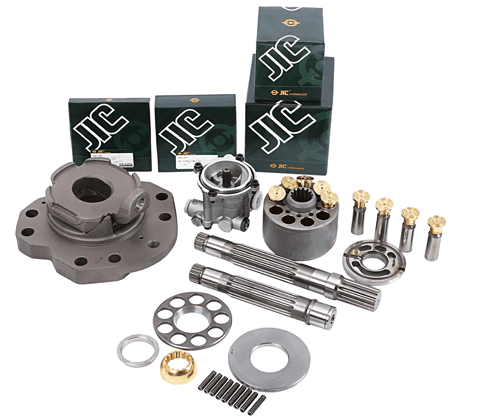
Among reconditioned valves, JIC Hydraulics is the brand Viet Trung Hai puts first. JIC valves and distribution components aim at a genuine-replacement standard with the correct part match: stable body and spool material, bore and sliding-fit machining held to tolerance, pressure checks before delivery, and a transparent warranty. For an owner balancing cost while still wanting the valve to last, a properly reconditioned part is often a better landing point than either new or grey-market stock. The other options — new genuine or used — still have their place, but should be viewed through total cost of ownership rather than the purchase price alone.
Factor 4: Number of functions and spools
A valve assembly is not one uniform block; it is a row of sections, each with a function. The more functions — arm, boom, bucket, swing, both travel motors, auxiliary lines for a breaker or grab — the more spools, the more secondary relief valves, and the more internal logic. Every added part is cost, both when buying new and when reconditioning.
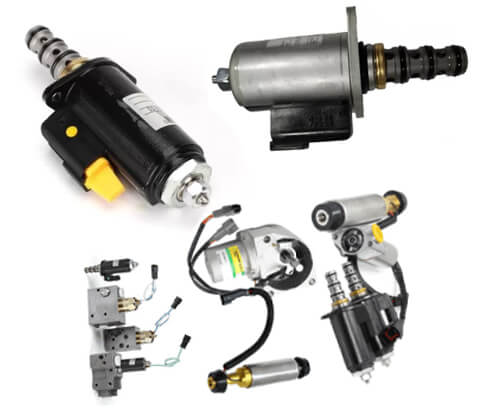
Special circuits push price faster than raw spool count. Proportional solenoid valves, pilot-priority circuits, flow-combining, or load sensing demand precise components and more careful setting. So when comparing two assemblies for the same machine, compare the exact circuit configuration; an assembly missing an auxiliary circuit is cheaper but may not meet what your machine actually needs.
Factor 5: Lead time and availability
Time is a cost, even when it does not appear on the quote. A valve in stock can be fitted at once; one that must be ordered in stretches out the downtime, and every day the machine is parked is lost revenue and slipped schedule on the job.
Availability shifts by machine line and by moment. Popular lines usually have reconditioned units or components in-country and deliver fast. Rare or unusual generations may have to be imported, and under time pressure you are easily forced to choose either an expensive part or a non-standard one to hit the deadline. Asking about parts early, at the first sign of trouble, is always cheaper than asking once the machine is already down.
Cost-tier comparison for the main control valve
The table below sets the three routes against the main cost axes. This is a relative comparison, not a price list; the specific figures depend on the machine, the configuration, and the actual condition.
| Item | Reseal | Section / spool | Full assembly |
|---|---|---|---|
| Cost tier | Lowest | Medium | Highest |
| Fixes external leaks | Yes | Yes | Yes |
| Fixes bore wear | No | Partly | Yes |
| Removal & fitting labour | Moderate | Moderate to high | High |
| System flush required | Low | Medium | High |
| Certainty of result | Depends on body condition | Depends on remaining sections | Highest |
| Risk of mid-job add-ons | High if misdiagnosed | Medium | Low |
Hidden cost: labour, setting, and flushing
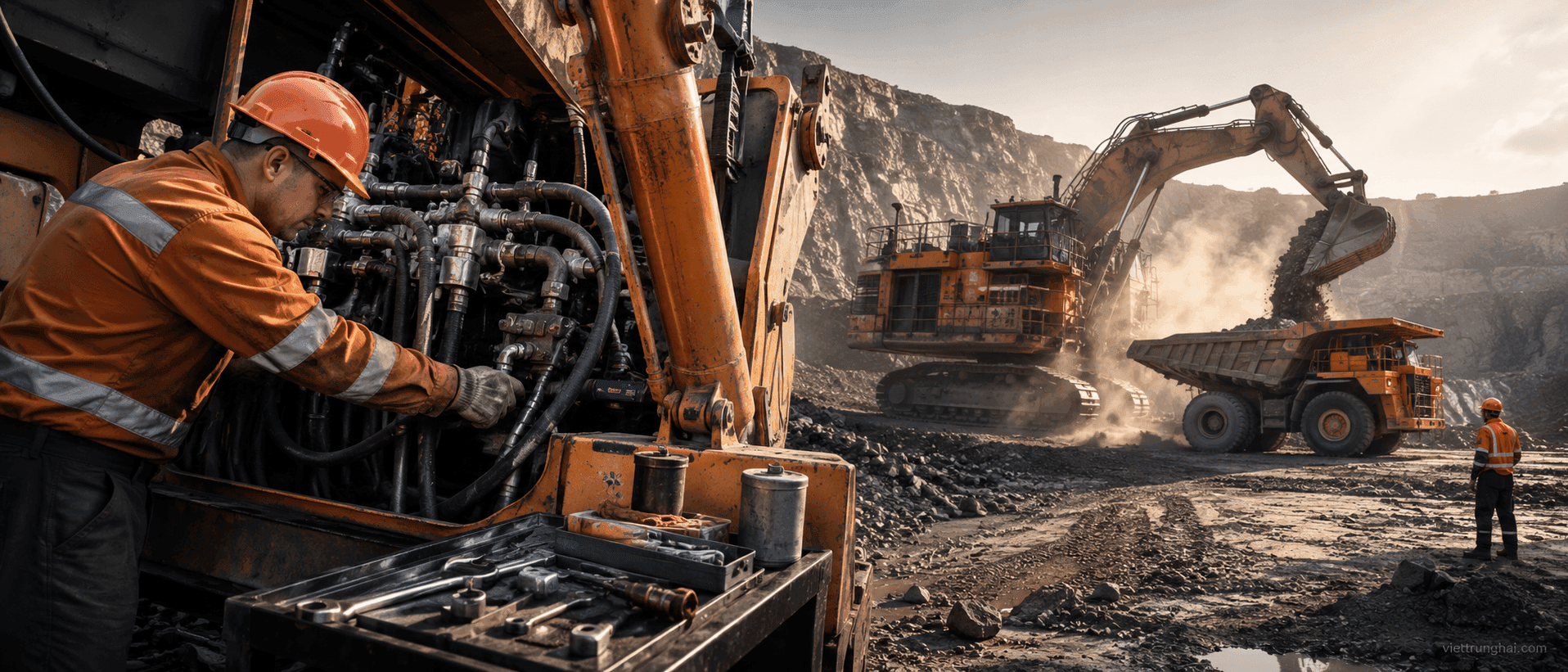
The price of the valve is only part of the final bill. Removing a valve buried deep in the pump bay takes time, and the bigger the machine the longer the strip-and-fit. Once fitted, the valve has to be pressure-set and each function checked on the machine — it is not done the moment the bolts are torqued.
The largest and most-overlooked hidden item is the system flush. If the valve failed because of metal debris from a pump or motor that is breaking down, then fitting a fresh valve into a still-dirty system is like dropping it into an ambush. Hard particles scour the new bore and drive it back to the same failed state. So a valve change usually has to be paired with an oil change, filter change, and line flush — the same logic as in hydraulic pump repair cost, where flushing is also the line between fixing it once and fixing it repeatedly.
Why flushing decides how long a new valve lasts
A hydraulic system is a closed loop; wear particles made anywhere travel the whole circuit with the oil. When a valve, a pump, or a motor begins to self-abrade, that debris settles into the filter, embeds in the bore, and jams the spool. Fitting a fresh assembly without cutting off the source of contamination means placing a precision part into an environment already attacking it.
Flushing is therefore not a "sold to pad the bill" line item but the condition for the valve investment to reach its intended life. Skipping it to save up front usually leads to a second replacement sooner than expected — and that time, the flush cost you could have avoided has become the cost of another valve.
The valve within the total hydraulic cost
A valve rarely fails alone. It sits in a system with the main pump, the travel motors, and the swing motor, so when costing it, look at the whole system rather than one item at a time. If debris has spread, the pump may need inspection too; the cost of that side is covered in hydraulic pump cartridge pricing. If the symptoms lean toward a weak or drifting swing, that cost is discussed in swing motor pricing.
Looking at the whole system avoids the piecemeal-repair trap: replace the valve today, open the machine next month for the pump, then again for the motor. Every entry into the pump bay costs strip-and-fit labour and one flush; bundling the related items into one entry is usually cheaper than three separate ones.
Signs the main control valve needs attention
A control valve usually signals trouble before it dies outright. Catching it early keeps you at the low cost tier instead of being pushed up to a full replacement.
- One or more functions drift under a held lever, clearest when the oil is hot.
- A function is slow, weak, or loses power while the other circuits are normal.
- Vibration, jerking, or a squeal on load — a sign of a sticking spool or a relief valve dumping wrongly.
- Oil weeping externally at valve caps, spool ends, or flange faces.
- Abnormally hot oil though the cooler and fan are fine — internal leakage turning pressure into heat.
The more signs appearing together, the higher the chance of deep intervention. A single circuit drifting slightly may need only a reseal or an adjustment; several weak circuits plus hot oil usually point to wide bore wear.
How to read a control valve quote correctly
A trustworthy quote states clearly what it includes, not just a number. Before comparing prices between shops, line them up on the same four points to be sure you are comparing the same thing.
- Scope: reseal, section, or full assembly — and whether removal and fitting labour is included.
- Condition: new genuine, tested reman, or used — and what warranty comes with it.
- Circuit configuration: the correct spool count and auxiliary circuits for your machine, not a "close enough" assembly.
- Included items: whether oil, filters, flush, and setting are in the price or charged separately.
Miss any one of these four and two quotes cannot be compared directly. A cheaper assembly that lacks output testing, has the wrong configuration, or excludes the flush can cost far more a few months later.
Mistakes that inflate the cost
The most common mistake is choosing on lowest purchase price while ignoring condition and testing. A used assembly with unknown history, fitted without a pressure check, is a gamble weighted against the buyer. The second mistake is resealing a body with a worn bore to save up front, only for the symptoms to return weeks later — the labour and seals of the first attempt written off.
Skipping the flush when debris is clearly present is the quietest expensive mistake, because the consequence only shows at the next failure. And finally, buying an assembly of the wrong circuit configuration to fit the budget usually ends in a swap or an improvised fix, dearer than buying the right one from the start.
When to recondition and when to buy new
There is no single answer, but there are principles. If the body is sound with only local wear and the machine has years of work left, a proper reconditioning usually gives the best value per dong spent. If the body is cracked, worn over a wide area, or the machine is near retirement, weigh a good reconditioned assembly against a new one according to your budget and how long you want the machine to serve.
The deciding factor is usually the reliability of the rebuilder, not the idea of "reconditioning" itself. A reconditioned assembly with pressure testing, warranty, and the correct configuration is far more trustworthy than a new grey-market unit of unknown origin. This is where choosing the supplier matters as much as choosing the part.
Getting a realistic control valve quote
To get an accurate figure, the seller needs the machine year, the valve assembly code, the circuit configuration, and the current symptoms — the clearer these are, the tighter the quote and the fewer the add-ons. You can browse the hydraulic valves Viet Trung Hai carries to picture the options, then send your machine details to request a quote for exactly the item you need, along with a repair-or-replace recommendation based on actual condition rather than a guess from afar.
The final decision belongs on total cost of ownership: part price, labour, flush, and expected life added together, not the cheapest figure on a single quote line.
Key takeaways
- Main control valve pricing is the sum of scope of work, machine class, part condition, spool count, and lead time, not a fixed number.
- A reseal is cheapest but only valid when the body is still within tolerance; bore wear means a section or full assembly.
- The real cost includes removal, setting, and flushing, not just the price of the valve.
- A properly reconditioned valve with pressure testing and warranty, such as JIC Hydraulics, is often the best balance of cost and reliability.
- Skipping the flush when debris is present is the fastest way to send a fresh valve back to failure.
- Compare quotes on four points: scope, part condition, circuit configuration, and included items.
Written by
Hoàng Anh Dũng
Hoàng Anh Dũng tracks sourcing, pricing and brands for heavy-equipment parts. He writes about what drives price, buying smart and telling apart part origins and quality.
Related parts
The exact parts discussed above — send your machine model or pump code to match.