Quick answer
Hydraulic pump repair cost is a multi-tier range, from pressure setting and seal changes at the low end, up to rotary-group replacement and a full rebuild at the high end. Which tier you land in depends on the degree of damage, machine year, pump family, and whether parts are genuine or aftermarket. Stepping in early keeps cost in the low tier; letting a weak pump run almost certainly pushes the bill toward a rebuild.
Hydraulic pump repair cost is not a fixed number. It is a range, running from resetting the pressure and swapping a few seals, up to replacing the rotary group or a full rebuild. With the same pump whine, one machine only needs a bench calibration, while another has to be opened and reworked from scratch. This article helps you picture the cost tiers, understand what drives the price up, and know when paying to repair is worth it and when to plan another route.
What does hydraulic pump repair cost include?
When a technician quotes you, that figure bundles several parts, not just the price of components. There is labour to pull the pump off the machine, labour to open and inspect it, replacement parts, bench calibration, and run-in time after reassembly. Each part weighs differently depending on how far gone the pump is.
Understanding this structure helps you read a quote with a clear head. An unusually low quote often means an inspection step was cut or unbranded parts were used. A high quote is not necessarily expensive if it includes a full load test and a clear warranty.
Why does the cost spread across tiers?
A hydraulic pump on an excavator does not fail in an all-or-nothing way. It degrades gradually: seals harden first, the valve plate face and pistons wear next, then the swash plate and bearings. Whatever stage you step in at is the tier you pay for.
That is why timing the diagnosis correctly matters more than finding the cheapest shop. Repairing early at the first sign of weakness usually lands in the low cost tier. Leaving it until the pump is worn out almost always means touching the rotary group.
Tier 1: Pressure setting and calibration
This is the lightest level. The machine still has force but feels sluggish, or one function is weaker than normal, while the internals are not badly worn. The technician puts the pump on the test bench, resets the cut-off pressure and the valves, sometimes just fine-tuning the regulator.
At this tier almost no major parts are replaced, so the cost is mainly labour and bench time. If your machine is only starting to show signs of a weak hydraulic pump, you are probably at this tier and should deal with it early.
Tier 2: Replacing seals, gaskets and oil stops
When the pump leaks oil externally or has mild internal leakage, most of it sits in hardened seals and gaskets. A seal kit is not expensive, but replacing it means opening the pump, so the labour to strip, clean and reassemble takes a real share.
One thing to watch: if the pump is already open and you replace only seals while the inner surfaces already show wear, you may have to open it again in a few months. An experienced technician inspects closely and advises doing the job once to avoid paying labour twice.
Tier 3: Replacing the regulator
The regulator is the brain that controls the pump flow. When it sticks or wears, the machine may run strong then weak, or respond late to the throttle, even though the rotary group is still good. Replacing or refurbishing this unit is far cheaper than touching the rotary group.
The catch is that a faulty regulator mimics a worn pump closely, so it is easy to misdiagnose into a higher tier. A serious shop separates these two possibilities before quoting. If it needs replacing, choose the correct pump regulators for your machine family rather than generic stock.
Tier 4: Replacing the rotary group
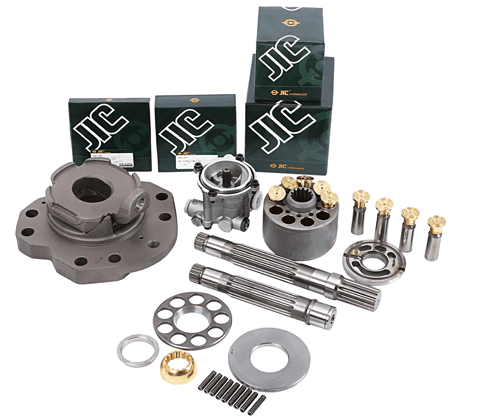
The rotary group is the spinning assembly inside: cylinder block, pistons, swash plate, valve plate. When these surfaces wear or scratch, the pump loses pressure, heats up fast and gets noisy. This is a heavy cost tier because the parts are expensive and precise assembly skill is required.
Choosing the right hydraulic rotary groups for your family, such as K3V or K5V, decides how long the repair lasts. A mismatched or low-quality group wears out again quickly and drags you back to the shop after a single season. At this tier, the gap between genuine and aftermarket parts shows up clearly on the invoice.
Tier 5: Full pump rebuild
A rebuild redoes almost everything: new rotary group, all new seals and gaskets, regulator refurbished or replaced, housing and shaft checked. This is the highest tier, usually applied to pumps that have run many hours or once ran short of oil or overheated.
A proper rebuild hands you back an almost-new pump unit with a warranty. But if the housing or shaft is already damaged, the rebuild cost can approach the price of a complete reconditioned pump, and at that point the maths changes.
Hydraulic pump repair cost table by tier
The table below arranges the tiers by relative cost so you can locate your machine quickly. Actual figures always swing with the machine year, pump family and parts source, so this only compares in relative terms.
| Tier | Main work | Relative cost | When you see it |
|---|---|---|---|
| 1 | Pressure set, calibration | Lowest | Sluggish, not badly worn |
| 2 | Seals, gaskets | Low | Oil leaks, hardened seals |
| 3 | Regulator | Medium | Strong-then-weak, late throttle |
| 4 | Rotary group | High | Lost pressure, heat, noise |
| 5 | Full rebuild | Highest | Many hours, past overheat |
This table is only a reference frame. Which tier your pump falls into must rest on real measurement on the test bench, not a guess over the phone.
How do machine year and pump family matter?
For the same work, the cost on a newer machine is often higher than an older one because parts are scarcer and the pump unit is more complex. Common pump families like K3V and K5V have plentiful parts supply, so they are usually easier to source and gentler on price than rare families.
The rarer the machine and the fewer aftermarket options, the more you depend on genuine parts, and the cost nudges up accordingly. This factor is outside the shop control, so do not push unreasonably on that part of the price.
The degree of damage decides most of the bill
This is the most volatile factor. A pump that is only starting to weaken and a pump run until metal flakes mix into the oil are two entirely different cost stories. Metal in the oil means debris has travelled through the whole system, dragging in a flush, filter changes and sometimes work on the motor too.
That is exactly why letting a pump whine on is the surest way to push cost into a high tier. The price of hesitation is not in the pump itself, but in what fails alongside it.
Genuine or aftermarket parts?
The parts source is the second-biggest variable after the degree of damage. Genuine parts are durable and fit to standard, but cost more and sometimes wait long. Good aftermarket parts cut cost meaningfully, as long as they match the family and are inspected.
The risk lies in unbranded, no-origin aftermarket parts: cheap at purchase but quick to wear, making you pay labour twice. When weighing it up, look at total lifecycle cost, not just the sticker on the hydraulic-pump parts. A correct-spec rotary group costs more upfront but less across several thousand working hours.
Labour skill and inspection equipment
Pump repair is not pure strip-and-fit work. It needs a test bench to measure pressure and flow, a clean area to fit the rotary group, and experience reading wear marks. A shop that invests in equipment and skill charges higher labour, but in return diagnoses accurately and reworks less.
According to the technical documentation from Volvo, the load-test procedure and pump assembly tolerances are specified tightly. Skipping these steps to hit a cheap price is often the reason a repaired pump stays weak.
Hidden costs few people count
Many owners look only at parts and labour and forget the accompanying items. A proper pump repair usually means changing the hydraulic oil, changing filters, and sometimes flushing the lines if there is metal debris. These items are small individually but add up to a fair amount.
- Fresh hydraulic oil of the correct type for the system.
- Oil and return filters, replaced after the pump is opened.
- Run-in and load-test labour before the machine is handed back.
- Machine downtime, meaning lost working days for the machine.
The fourth item is often forgotten, but for a machine on an active site it can be larger than the repair itself. That is why a fast, right-first-time repair is the real saving.
When is repair worth it, and when should you replace?
The simple rule: when the repair cost passes a reasonable share of the machine remaining value, consider another option. If it stops at seals or pressure setting, you should almost always repair. If it reaches a rebuild on a very old machine, the calculation gets more complex.
This topic is big enough to deserve its own piece. If you are torn between the two directions, read the rebuild vs a new pump guide carefully to compare against your own machine condition before deciding.
Early signs that keep cost in the low tier
A pump rarely fails suddenly; it warns you with many signals. A strange whine when lifting a load, the machine heating faster than usual, one function slowing, or a loss of force during combined moves. Catching these signs early is the cheapest way to repair a pump.
Do not wait until the machine stops dead to bring it in. Every day you push on with a weakening pump is a day you push the condition into a higher cost tier, sometimes taking other assemblies down with it.
How to read a pump repair quote
A clear pump repair quote should itemise the parts, not lump them into one figure. You need to see parts cost, labour, the specific work items, whether parts are genuine or aftermarket, and the warranty terms. A lack of transparency here often signals trouble later.
When comparing two quotes, do not look only at the bottom line. Ask clearly whether there is a load test, what parts are used, how long the warranty runs. Two quotes that differ a lot are usually due to different parts sources and inspection depth, not one side gouging.
Mistakes that drive the cost up
The most common mistake is pushing on when the pump is already weak, turning a seal job into a rotary-group job. The second is chasing a cheap price, picking unbranded parts and having to redo the work. The third is skipping the flush when there is already metal debris in the oil.
All three come from viewing cost in the short term. A hydraulic pump is an expensive, sensitive assembly, and saving in the wrong place here usually costs many times over. Costing it right and in full from the start is how you keep the bill small.
How to reduce pump repair cost sensibly
Cutting cost does not mean picking the cheapest shop. It means stepping in early, choosing the right parts source, and fixing it right the first time. An accurate diagnosis on the test bench costs a little inspection labour but saves you from replacing a whole unit by mistake.
Choosing the right parts family, the right assembly standard, and a shop that stands behind a warranty are the three real levers. Squeezing the price on inspection equipment and skill usually backfires, because that is exactly the part that decides whether the pump lasts.
Maintenance to avoid the big bills
Most heavy pump repairs start from dirty oil, low oil, or prolonged overheating. Changing oil and filters on time, keeping the oil clean, and not running the machine when it flags high heat are the cheapest ways to make a pump live long. This is the investment that guards against large pump repair costs later.
Periodic checks of pressure and flow catch decline before it becomes a failure. One preventive measurement is far cheaper than a surprise rebuild in the middle of peak season.
Why do two shops quote differently for the same fault?
Quote gaps usually come from three places: parts source, inspection depth, and warranty. A shop using genuine parts, full load testing and a long warranty will quote higher than one that just swaps fast to get you running. Both numbers can be real; they differ in what you get back.
Your job is to ask exactly what each side includes. Once the scope of work is aligned, the numbers become comparable. Comparing price without comparing scope is a sure way to invite frustration later.
Summing up how to view repair cost
See hydraulic pump repair cost as a multi-tier range, not a fixed level, and your place on that range is decided by the machine condition. Stepping in early keeps you in the low tier; hesitating pushes you into the high tier. Parts source and skill decide durability after repair, while quote transparency decides whether you feel secure.
If your pump is showing anything abnormal, do not wait. Contact our technical team to have it diagnosed at the right tier and to be advised on the hydraulic-pump parts that suit your machine family, instead of guessing and paying dearly.
Key takeaways
- Hydraulic pump repair cost is a multi-tier range, not a fixed level.
- Stepping in early at first weakness keeps cost in the lowest tier.
- The degree of damage decides most of the bill.
- Choosing the right rotary group and regulator by family decides durability after repair.
- Look at total lifecycle cost, not just the upfront parts price.
- A transparent, itemised quote covering parts, labour and warranty is what makes comparison possible.
Written by
Hoàng Anh Dũng
Hoàng Anh Dũng tracks sourcing, pricing and brands for heavy-equipment parts. He writes about what drives price, buying smart and telling apart part origins and quality.
Related parts
The exact parts discussed above — send your machine model or pump code to match.
Related products
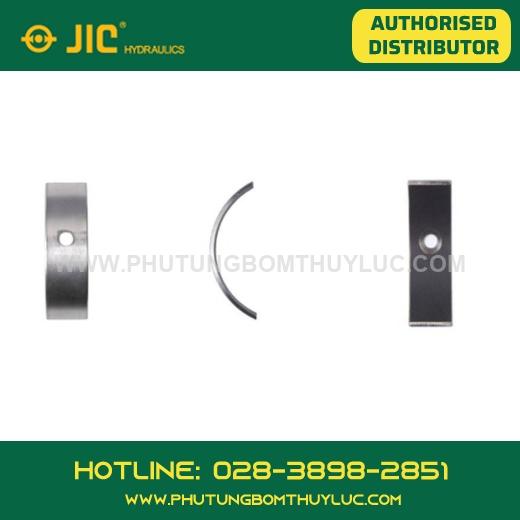 Kayaba (KYB) · PSVBushing – Kayaba PSVD2-17PSVD2On requestView · get a quote
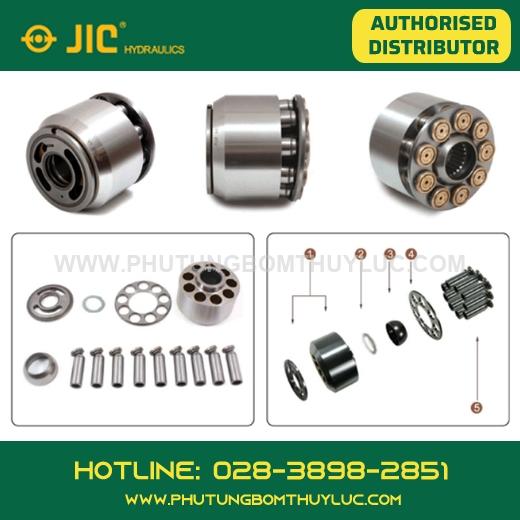 Kayaba (KYB) · PSVRotary group – Kayaba PSV2-55TPSV2On requestView · get a quote
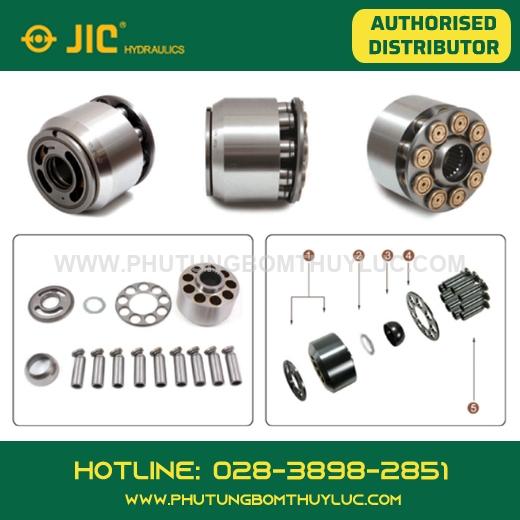 Kayaba (KYB) · PSVRotary group – Kayaba PSV2-60TPSV2On requestView · get a quote
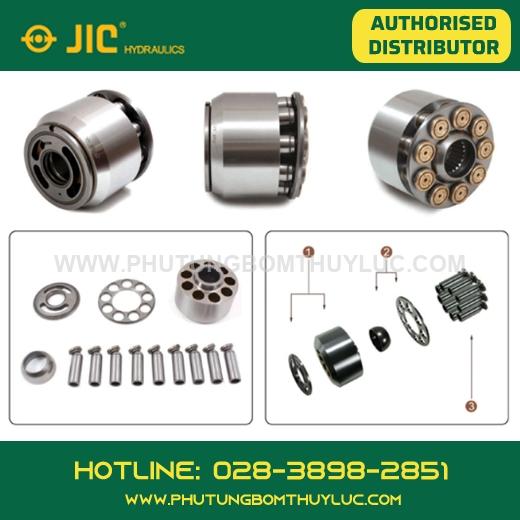 Kayaba (KYB) · PSVRotary group – Kayaba PSV2-63TPSV2On requestView · get a quote