Quick answer
The hydraulic control valve is the main valve block that takes oil from the pump and shares it to each function of the excavator such as bucket, arm, boom, swing, and travel. Inside sit several spools, relief valves, and anti-drift valves that decide where the oil goes and how much, on the operator command. When a spool wears or a relief valve weakens, the machine turns weak, slow, and drifts under load even though the pump still tests good.
A hydraulic control valve, often called the main control valve, is the central valve block that takes oil from the pump and shares it out to each part of the excavator: bucket, arm, boom, swing, and travel. It decides where the oil goes, how much goes there, and in what order when the operator moves a lever. Inside the block sit several sliding pieces called spools, along with relief valves and anti-drift valves. When a spool wears or a relief valve gets weak, the machine turns weak, slow, and starts drifting under load — which is why a technician looks at the valve block when a machine loses power while the pump still tests good.
What does the hydraulic control valve do on an excavator?
This valve block is the routing station for the whole system. The pump makes a stream of high-pressure oil, but the pump does not know whether that oil should go to the bucket or to the swing motor. The hydraulic control valve does that job: it opens a path for the oil to reach the right cylinder on the operator's command.
If the pump is the heart, the valve block is the network of one-way vessels. The heart pumps the blood, and the valve network decides whether it flows to the hand or the leg. If the valves fail, even a strong heart leaves the limbs weak.
Where the main valve block sits on the machine
On most excavators the main valve block sits under the cab floor or behind the operator's seat, tied in with many rigid steel lines running to each cylinder. You recognize it by the large cast-iron block with many port fittings and rows of hex caps. Each row of caps is usually the end of one spool.
That location makes valve removal hard work. You have to disconnect many lines and mark them carefully, or you will cross them on reassembly. So an experienced technician always photographs and numbers everything before opening the block.
How oil travels from the pump to the valve
Oil is drawn from the tank, pressurized into a high-pressure stream by the pump, and pushed into the inlet of the valve block. At rest, the oil runs through a central passage called the neutral path and back to the tank, so pressure barely rises. When the operator moves a lever, the spool shifts and closes off that neutral path, forcing the oil to turn toward a working cylinder.
Understanding this point matters a lot. If a spool does not seal the neutral path, oil keeps draining back to the tank instead of doing work, and the machine goes weak even though the pump still delivers plenty of flow. This is the true nature of many weak-machine cases where the pump still tests fine.
What a spool is and how it works
A spool is a round slider that fits tightly inside a bore in the valve body. It has grooves and lands machined very precisely, with a clearance to the body only as thin as an oil film. As the spool shifts back and forth, those lands open and block the oil ports in turn, guiding oil to the correct chamber of the cylinder.
Because the clearance is so tiny, the spool and body are a matched pair and cannot be replaced separately. A few abrasive particles passing through many times are enough to scratch the land surfaces, widen the clearance, and let oil slip past. That is the seed of the wear we will cover in detail below.
How does the hydraulic control valve share oil to each function?
The valve block holds several spools side by side, each in charge of one function: one for the bucket, one for the arm, one for the boom, one for swing, and spools for each travel side. When the operator moves several levers at once, the spools open together and the block must divide a limited stream of oil among many paths.
This is where the valve design earns its keep. The valve has priority and flow-sharing circuits so that when several motions run at once, the important motion still gets enough oil. That lets the machine curl the arm and swing at the same time without one side dying off completely.
For oil to reach the valve steadily, the pump and its pump regulators must work in step with what the valve demands. If the regulator reads the load wrong, even a good valve will not be fed enough oil.
What role the relief valve plays
The relief valve is the pressure-escape door that opens when system pressure passes the allowed limit. When you press the bucket against a rock that will not budge, pressure climbs very fast; without a relief valve the lines and seals would burst. The relief valve opens to let oil escape back to the tank, keeping pressure within a safe range.
A valve block usually has one main relief valve for the whole system and secondary relief valves for each function line. The secondary valves also protect against shock loads, for example when the bucket gets a hard jolt during digging. When a relief valve is weak or stuck open, the machine loses power right at the heavy motions.
Anti-drift valves and load-holding valves
The anti-drift valve keeps the boom and arm from dropping on their own when the operator releases the lever. It is a pilot-operated check valve that locks oil inside the cylinder so the load stays put. When oil must be supplied, pilot pressure unlocks it and lets oil out as the operator intends.
If this valve leaks, you will see a bucket held in the air slowly sink even though no one touches the lever. That is a very easy sign to spot, and it can come from a dirty anti-drift valve itself, or from a spool on that line already leaking oil.
How pilot valves move the spool
On a modern excavator the operator does not push the spool by hand directly. The joystick in the cab opens a stream of low-pressure oil called pilot oil, and that oil pushes on the spool end and makes it shift. The further the lever moves, the higher the pilot pressure, the wider the spool opens, and the faster the machine responds.
So when pilot pressure is lost, the spool does not shift far enough and the machine responds sluggishly even though the pump and main valve are still good. If you suspect the control side, read more about loss of pilot pressure to tell a pilot fault apart from a main-valve fault.
The link between pump, regulator, and control valve
These three blocks work as a chain. The pump supplies flow, the regulator adjusts flow to the load, and the valve block shares oil out to the functions. A fault in one link often mimics the symptoms of another, so diagnosis must follow an order rather than a guess.
When you replace or rebuild parts in this chain, look at the whole set of hydraulic-pump parts, not just the valve block. Often a machine is weak because the pump and the valve have both slipped a little, and together they add up to clear weakness.
Signs of spool wear worth watching
Spool wear rarely fails suddenly; it declines slowly and the machine weakens month by month. An operator who knows the machine usually feels it before it breaks outright: the motion loses a bit of force, runs slower than before, and heats the oil faster. That comes from oil slipping past the spool clearance, turning pressure into heat instead of useful work.
A classic sign is a machine that is strong while the oil is cold, then goes weak once the oil warms up. Hot oil thins out and slips through the worn clearance more easily, so the force drops with temperature. If your machine gets weaker as a shift goes on, think about the spools.
Table of common signs and causes
The table below gathers the symptoms you often see at the valve block so you can narrow things down before opening the machine.
| Sign in the field | Main suspect | Check note |
|---|---|---|
| Held bucket sinks when lever released | Anti-drift leak or spool leak | Note if it sinks fast or slow, evenly or not |
| Machine weakens as oil heats up | Spool wear, wide clearance | Compare force cold versus hot |
| Loss of power on heavy motions | Weak or stuck relief valve | Listen for odd relief noise |
| One side dies with several levers | Flow-sharing circuit, stuck spool | Test each function on its own |
| Sluggish response across the machine | Suspect the pilot line first | Check control pressure before opening the valve |
Why a spool wears over time
The root cause is almost always abrasive particles in the oil. Each time the spool slides, a thin oil film keeps metal from touching metal; if that film carries a hard particle, it scores the land surface like sandpaper. Over tens of thousands of strokes those scratches add up to a wide clearance.
Heat also plays a part. Oil that runs too hot for too long loses its ability to lubricate, the oil film thins, and the spool wears faster. So keeping the oil clean and cool is the cheapest way to make a spool last.
Where oil contamination and abrasives come from
Abrasives come from many sources: dust past a failed seal, metal chips from a pump on its way out, debris from aged rubber hoses, and dirt let in during a careless oil change on site. Once a particle is in the system, it circulates and wears every part it passes, not just the spool.
The common vicious circle is a failing pump that makes chips, chips that ruin the valve, and a leaking valve that weakens the machine. So when opening a valve reveals lots of chips, a technician must think right away about checking the pump too, not just service the valve and put it back.
What a weak or stuck relief valve leads to
A weak relief valve keeps system pressure from rising enough, so the machine loses power on every heavy motion even with a strong pump. The opposite, a valve stuck closed, can let pressure climb too high and burst a line or blow a seal. Both cases are dangerous in their own way.
A relief valve has a spring and a cone seat; dirt jamming it or an eroded cone seat both make it work wrong. When you suspect a relief valve, check it rather than turn the adjustment on your own, because a wrong setting hides the symptom and harms other parts later.
What steps does a workshop valve check involve?
Diagnosing a valve block should follow an order so you do not tear it down for nothing. Below are the steps a technician usually works through:
- Listen and feel: identify which motion is weak, whether it is weak cold or hot, and whether the load drifts.
- Rule out the pilot line: check control pressure first, since a pilot fault is easily mistaken for a main-valve fault.
- Rule out the pump: see whether the pump still makes enough flow and pressure, and match that against the machine's behavior.
- Narrow down the spool: test each function on its own to learn which spool leaks.
- Open the valve under control: mark, photograph, and stay absolutely clean while opening.
- Inspect the spool surface and relief seat: look for scoring and pitting, and judge the clearance.
This order keeps you from wrongly replacing an expensive valve block when the culprit is only a cheap pilot line. If the machine is only slow and not drifting, the problem sometimes lies elsewhere; the guide on a slow-responding excavator covers the directions worth ruling out.
When to open the valve and when not to
Not every weak machine needs the valve block opened. If pilot pressure is weak, the regulator is off, or the pump is already down, opening the valve only wastes labor. Open the valve only after you have ruled out the outside causes and the symptoms point to just one or a few spools.
The valve block is an expensive part and hard to reassemble correctly out in the field. So a good technician's rule is to rule out all the cheap things first, then touch the expensive one. Opening the valve carelessly wastes money and easily lets dust into the system.
Genuine and aftermarket parts for the valve block
Parts inside the valve block come in both genuine and aftermarket forms. Genuine parts match precisely and give steady service life, but they cost more and sometimes mean waiting for stock. Aftermarket parts are cheaper and more available, but their quality varies by source, so you need a trusted seller.
For the spool-and-body pair, machining precision is life-or-death because the clearance is so small. According to technical documentation from Volvo, the tolerance of this sliding pair is very tight, so a less precise aftermarket part will leak oil sooner. Which to choose is a balance between upfront cost and later service life, depending on the machine model and how hard it works.
Maintenance to make the valve block last
The way to make a valve last is not in the valve itself but in the oil. Keeping the oil clean, changing filters on time, and not letting the oil run too hot are the three most important things. A good filter stops abrasives, and abrasives are what kill spools.
Beyond that, fix seal leaks promptly so dust cannot get in, and replace aged rubber hoses before they shed debris into the system. Servicing the pump and regulator properly also indirectly saves the valve block, since a failing pump that makes chips drags the valve down with it.
Common mistakes when dealing with the valve block
The most common mistake is blaming the valve the moment the machine goes weak and opening it right away. The second is turning the relief valve adjustment to make the machine strong again for a while, hiding the real symptom and harming other parts. The third is opening the valve in a dusty spot, adding more abrasives to the most sensitive place of all.
Another quiet mistake is servicing the valve but ignoring a pump that is making chips. Not long after, the chips ruin the new valve, and the owner pays twice. Looking at the whole system instead of one part is how you avoid this costly loop.
A short summary of the valve block's role in machine health
The valve block is where the pump's strength turns into useful motion. A worn spool, a weak relief valve, or a leaking anti-drift valve all make the machine weak, slow, and prone to drifting in very characteristic ways. Reading these signs correctly helps you narrow things down fast and avoid replacing expensive parts by mistake.
If your machine is showing signs that point to the valve block, check it through the rule-out order before opening it. When you need to replace parts in the pump-and-valve system, you can look through our range of hydraulic-pump parts to pick the right part for your machine model, and get in touch for advice based on the actual condition.
Key takeaways
- The hydraulic control valve shares pump oil to each function on the operator command.
- The spool closes the neutral path so oil turns toward a working cylinder.
- The relief valve vents excess pressure; the anti-drift valve locks the load in place.
- A worn spool makes the machine weaken gradually, most clearly when the oil is hot.
- Rule out the pilot line and pump before opening the expensive valve block.
- Keeping oil clean and cool is the cheapest way to make the valve block last.
Written by
Phạm Đức Thắng
Phạm Đức Thắng focuses on the undercarriage, tracks and the travel and swing systems of excavators. He writes about how these systems are built, travel and swing motors, and protecting the undercarriage from wear.
Related parts
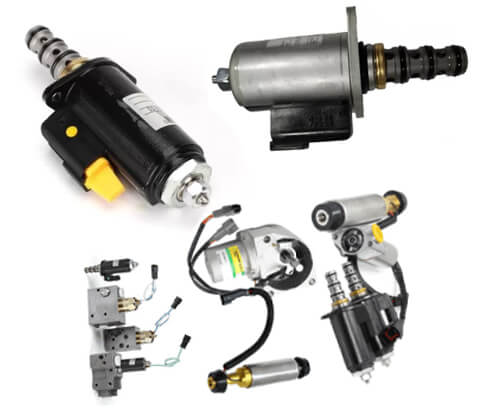
The exact parts discussed above — send your machine model or pump code to match.