Quick answer
The structure of an excavator has three blocks: the upper structure (cab, engine, pump), the undercarriage (frame and travel system), and the working equipment (boom, arm, bucket). The upper block makes power, the undercarriage carries and travels, and the working equipment digs. Understanding how the three blocks work together helps you diagnose fast and pick the right parts.
The structure of an excavator breaks down into three big blocks: the upper structure, the undercarriage, and the working equipment. The upper block carries the cab, the diesel engine, and the hydraulic pump. The undercarriage is the frame together with the travel system. The working equipment is the boom, the arm, and the bucket. Understanding how these three blocks work together is the foundation for reading a machine's faults and picking the right parts.
What blocks make up an excavator?
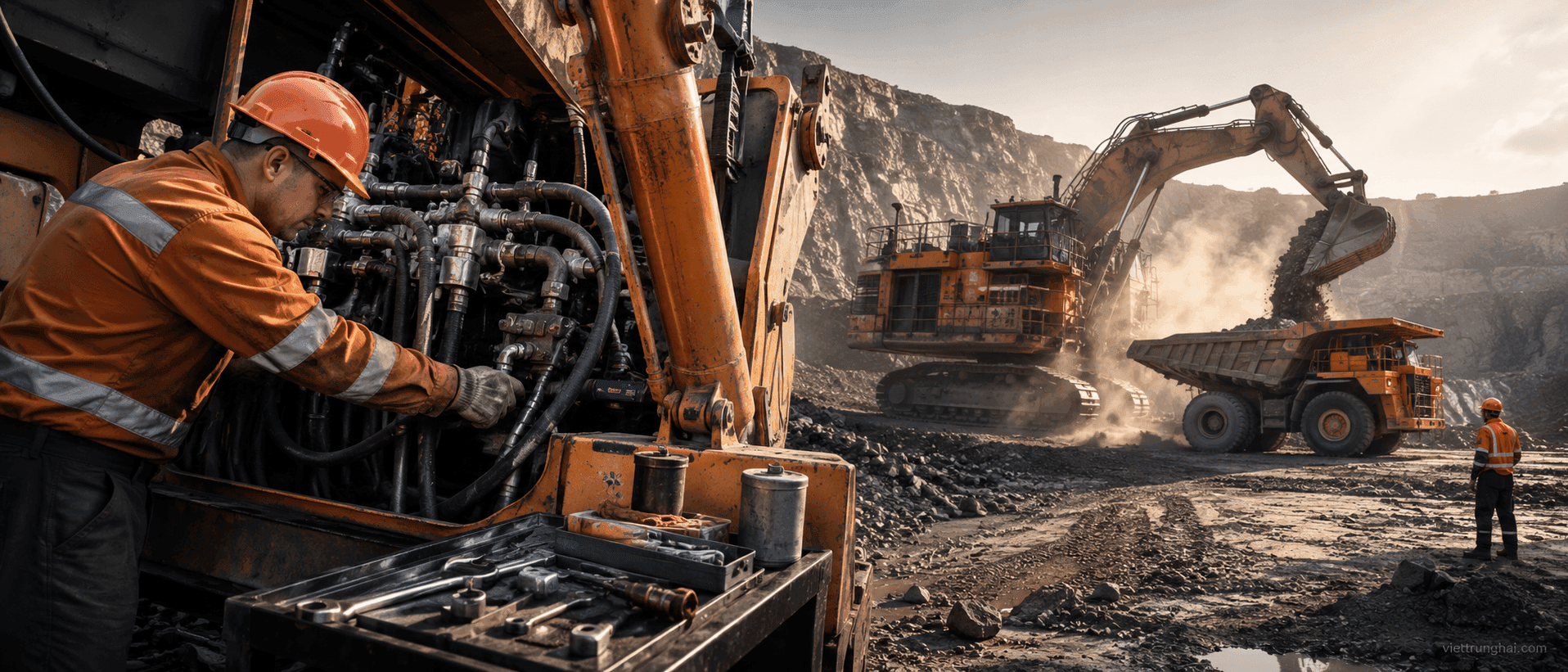
A standard backhoe excavator has three blocks. The upper structure rotates on the swing bearing. The undercarriage stays still and carries the whole weight of the machine. The working equipment mounts on the front of the upper block and does the digging. The three blocks are joined by hydraulic oil and mechanical joints. When you look at a machine as three blocks, every fault has a clear address.
What does the upper structure do?
The upper structure is the part that turns when you swing. It holds the power source and the controls. The engine, pump, oil tank, cooling packs, and cab all sit here. The counterweight at the rear keeps the machine balanced when the bucket carries a heavy load. If the upper block is weak, the whole machine is slow and short on force, even when the undercarriage is still good.
The cab and the control area
The cab is where the operator sits and gives orders to the machine. Inside are two control levers, the travel pedals, and the switches. Each lever movement is turned into an oil or electric signal. That signal travels to the control valve to open an oil path. Newer cabs also carry a fault display, which helps the technician narrow down a problem faster.
The diesel engine is the heart of the machine
The diesel engine produces the power that drives the hydraulic pump. It does not dig directly; it spins the pump to create a flow of oil. When the engine runs evenly, you hear a solid note and see clean exhaust. Under load the note drops but should never nearly stall. If the machine bogs, gasps, or blows black smoke when digging, it usually means the engine and pump are not matched in force.
The hydraulic pump turns power into oil flow
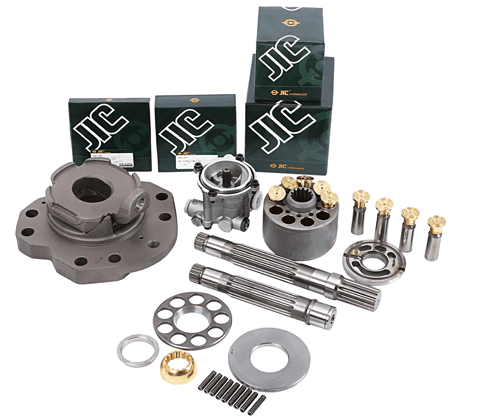
The hydraulic pump is the single most important part on the upper block. It takes the drive shaft from the engine and pushes oil out at high pressure. Most excavators use a swash-plate piston pump; the K3V and K5V families are familiar in Vietnam. The pump core holds many small pistons running on a tilted plate. The more the plate tilts, the higher the oil flow and the harder the machine digs. When the pump core wears, the machine grows weak, the oil heats quickly, and you hear an odd whine. This is also where hydraulic-pump parts most often need replacing after years of work.
The control valve and the regulator
The control valve is the crossroads of the oil flow. It decides which cylinder or motor the oil goes to, and in which direction. The regulator sits on the pump and adjusts flow to the real load. Thanks to it, the machine does not waste oil on light work and concentrates force on heavy digging. A failing valve or regulator usually shows up as jerky motion, slow response, or lost coordination between movements.
The swing motor and the swing bearing
The swing motor turns the whole upper block around the vertical axis. It meshes with the ring gear on the swing bearing. The swing bearing is a large bearing joining the upper block to the undercarriage, taking both twisting and tipping loads. When the swing bearing is worn, you hear a knock at the start and end of each swing. Inside the bearing and the rotating groups are many heavy-load bearings that need the correct standard.
The undercarriage is the machine's footing
The undercarriage, or lower frame, carries the whole weight and transfers force to the ground. It holds the X-shaped frame, two track chains, and a travel group on each side. The undercarriage does not swing, but it lets the machine go forward, back, and steer. A strong undercarriage keeps the machine steady when the bucket reaches far. To understand this part in depth, you should also read about the excavator travel system.
The travel system: chains, wheels, and rollers
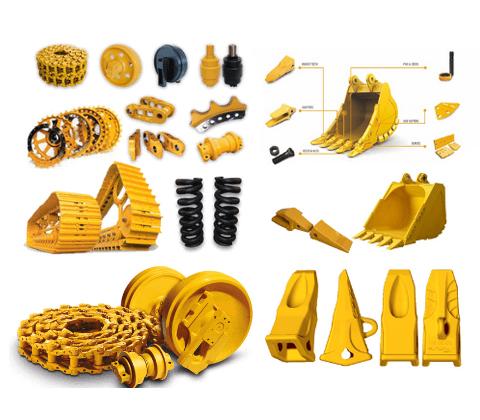
The track chain is the part that touches the ground, made of many links joined by pins and bushings. The sprocket at the rear drives the chain; the idler at the front keeps it straight. Bottom rollers carry the weight, and top rollers support the returning run of chain. When the bushings and pins wear, the chain stretches and often slips off during a sharp turn. A dry grinding sound while travelling is a sign the rollers or bushings have reached their limit.
The travel motor and the final drive
Each side of the undercarriage has one hydraulic travel motor and one final drive. The motor turns high-pressure oil into rotating force. The final drive reduces speed and raises torque to pull the whole machine. Because each side is independent, the machine steers by running the two sides at different speeds. If one side is weak, the machine tracks crooked and pulls to one side.
The working equipment: boom, arm, and bucket
The working equipment is the part that digs directly. The boom is the large section mounted to the upper block. The arm follows the boom, reaching out and folding back. The bucket sits at the end, carrying teeth to bite into the ground. These three sections bend and extend through hydraulic cylinders, creating reach and digging depth.
Hydraulic cylinders are the muscles of the working equipment
A hydraulic cylinder turns oil pressure into straight pushing force. Oil into one end pushes the piston out; into the other end it pulls the piston back. Every motion of raising the boom, curling the arm, or tipping the bucket is handled by one or two cylinders. When the seals inside a cylinder go hard, oil leaks past and the boom drifts down slowly at rest. A scratched or rusted cylinder rod tears the seals and lets oil weep out.
How do the blocks work together?
The three blocks run like a chain of force. The engine spins the pump, the pump pushes oil, and the valve splits the oil where it is needed. Oil to the cylinders and the working equipment digs; oil to the motors and the machine travels or swings. The regulator balances the flow so several motions can run at once without starving each other of oil. Understand this chain, and you will know which block a symptom comes from.
How does the hydraulic oil path run?
Oil starts from the tank, passes the filter, then enters the pump. The pump compresses the oil and pushes it up to the control valve. From the valve, oil spreads out to the cylinders and motors on the operator's command. Return oil flows back, through the cooling pack and filter, then returns to the tank.
Heavy work also creates strong heat in the oil and coolant, so the system carries a cooling pack alongside. The radiator cools the engine, the oil cooler cools the hydraulic oil, and the fan and airflow keep both packs cool. The filter holds back metal fragments and dirt before they reach the pump. A dirty pack or a clogged filter heats the oil fast, and hot oil wears the pump faster, so many technicians treat this as a daily watch point.
A quick summary of the three blocks and main parts
| Block | Main parts | Job |
|---|---|---|
| Upper structure | Engine, pump, valve, cab, counterweight | Make power, control, swing |
| Undercarriage | Frame, tracks, rollers, travel motors | Carry load, travel, stay balanced |
| Working equipment | Boom, arm, bucket, cylinders | Dig, scoop, dump soil |
Wear signs by each block
Each block wears down in its own way, and learning to read them helps you decide early.
- Upper block: weak force, hot oil, a whine at the pump.
- Undercarriage: stretched chain, chain slipping on turns, grinding rollers.
- Working equipment: boom drifting at rest, oil weeping at the cylinder rod, play at the pins.
When you can read all three groups, you know which block to touch first and which heavy-equipment parts to have ready.
Choosing replacement parts for each block
Picking the right part per block keeps the machine durable and cuts repeat faults. For the pump, pump core, valve, regulator, motor, and hydraulic cylinder, we lean on JIC Hydraulics: good material and machining accuracy, high durability, and a clear warranty, so the machine holds its force longer. For seals, PET Seals stand up to heat and pressure, keeping cylinders tight and reducing boom drift. For bearings and bushings at the swing bearing or the rollers, ZVL Slovakia gives durability and dependable stability. Choose on real quality, not on the cheapest price, and the long-run total cost comes out lower.
Genuine or aftermarket parts?
The answer depends on the machine age, the work intensity, and the budget. Genuine parts give high fit and peace of mind, but the price and wait time are usually higher. Good-quality aftermarket parts can match on many details, at an easier price. Prices vary with the machine's condition and the supply source, so ask carefully before you decide. What matters is choosing a supplier who is transparent about origin and warranty.
Maintain by group to keep the machine durable
Maintaining by group works better than waiting for a failure to fix. Changing oil and filters on schedule keeps the pump and valve clean. Correct chain tension and full greasing extend the undercarriage life. Checking the cylinder rods and seals keeps the working equipment from drifting. Log the machine hours and the work done, and you will predict which group is due next.
Why understand the structure before repairing?
Understanding the structure keeps you from swapping the wrong part or stripping too much down. A symptom like weak force could be the pump, the valve, or a clogged filter. If you know where the chain of force runs from and to, you check in a sensible order. Manufacturer technical documents such as Komatsu describe each group and the checking procedure clearly. Cross-checking against original documentation is always safer than guessing.
Where does the excavator sit in the construction machine family?
The excavator is just one member of the larger construction machine family. Dozers, graders, rollers, and wheeled excavators all share the same block logic. Once you understand the three blocks of an excavator, you read other machines more easily. You can also look at types of construction machines to compare. The more you grasp the whole picture, the better you choose parts and operating methods.
Conclusion and next steps
The structure of an excavator is not as tangled as it looks, once you split it into three blocks and follow the flow of force. The upper block makes power, the undercarriage carries and travels, and the working equipment digs. Grasp this chain of coordination, and you diagnose fast and replace parts in the right place. If you need advice on parts for each group, see our heavy-equipment parts page or call the technical team for support.
Key takeaways
- An excavator structure splits into three blocks: upper, lower, and working equipment.
- The upper block makes power with the engine, pump, and valve; the counterweight balances it.
- The undercarriage carries load and travels via tracks, rollers, and travel motors.
- The working equipment digs with the boom, arm, bucket, and hydraulic cylinders.
- The blocks combine through the oil flow: the engine spins the pump, the valve routes oil.
- Choosing parts on real quality lowers the long-run total cost.
Written by
Phạm Đức Thắng
Phạm Đức Thắng focuses on the undercarriage, tracks and the travel and swing systems of excavators. He writes about how these systems are built, travel and swing motors, and protecting the undercarriage from wear.
Related parts
The exact parts discussed above — send your machine model or pump code to match.