Quick answer
The excavator travel system is the undercarriage made of tracks, sprockets, rollers, the idler, the travel motor and the final drive. These parts pass power in a closed chain so the machine can drive forward, reverse and turn. When one part wears, the whole set carries uneven load and fails faster, so smooth driving and steady checks are how you keep it lasting.
The excavator travel system is the whole undercarriage that lets the machine drive forward, reverse and turn on any ground. It holds the tracks, sprockets, rollers, idler, track tension unit, travel motor and final drive. These parts mesh in a closed chain of power flow. When one link wears or one roller seizes, the whole set carries uneven load and fails over time. This guide explains each part, how they work together, and the driving habits that keep the undercarriage lasting.
What parts make up the excavator travel system?
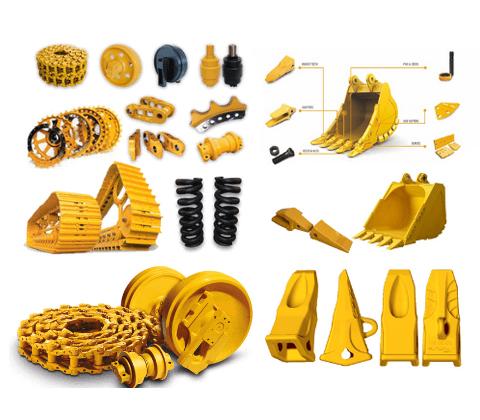
The travel group splits into two: the upper turning part and the lower travel part. The travel part sits under the frame and carries the full weight of the machine. It holds the track chain, drive sprocket, front idler, a row of bottom rollers, a few top rollers and the track tension spring. Power from the engine passes through the hydraulic pump, into the travel motor, then through the final drive to turn the sprocket. The sprocket pulls the track, and the whole machine crawls. Knowing this path shows you where the load is heaviest and what fails first.
Excavator track: links, shoes, pins and bushings
The track chain is not one solid piece. It is a chain of links joined by pins and bushings. A shoe bolts to the outside of each link to grip the ground. The pin and bushing take the most friction each time the track wraps the sprocket. When the bushing wears, the pitch grows, and the track starts to jump teeth on the sprocket. That is why an old chain clatters as the machine moves. Watching tension is covered in our guide on excavator track tension, worth reading alongside this one.
The drive sprocket and how it moves power
The sprocket is the large toothed wheel that meshes with the track bushings. It takes torque from the final drive and turns rotation into pull on the track. Its teeth take an impact every time they engage a bushing. When the teeth wear sharp like a hook, the track no longer seats evenly, and tooth slip appears. A worn sprocket usually drags the track down faster as well. That is why technicians replace them as a set rather than one piece at a time.
Bottom rollers and top rollers
Bottom rollers carry the machine weight and guide the track to run straight. They roll constantly, so they leak oil at the seal when worn. Top rollers hold the upper run of track and stop it from sagging. A seized roller wears flat on one side, making a squeal and a hot spot. Touch near the shaft at day end; a bad roller runs clearly hotter than the rest. That is a quick check with no teardown needed.
The idler and the tension unit
The idler sits at the far end of the track, opposite the sprocket. It moves no power but holds the direction and wrap of the track. Behind it are the tension spring and a grease cylinder. Pump grease in and the track tightens; bleed grease out and the track loosens. This unit absorbs shock when the machine climbs over rock or a step. If the spring is weak, the track slips off the rollers easily during a sharp turn.
The travel motor: the heart of the undercarriage
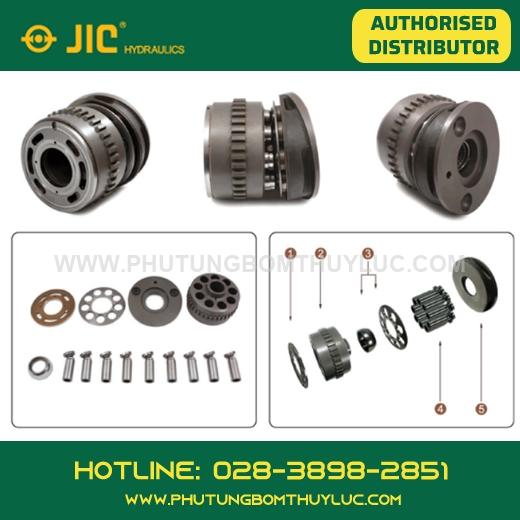
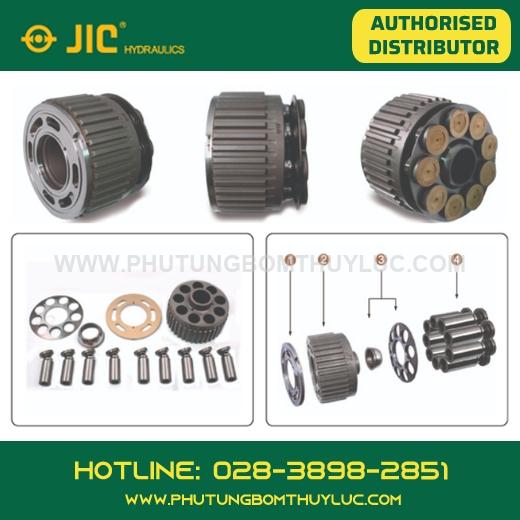
The travel motors turn high-pressure oil into rotation. Each track has its own motor, so the machine turns by running the two sides at different speeds. Inside is an axial piston pump; the K3V and K5V families share the same principle across many machine ages. When a motor is weak, one side loses power on a climb, or the machine drifts even with the sticks pushed straight. More detail on this part sits in our guide on the excavator travel motor, worth a look.
How the final drive works with the motor
The final drive is a reduction gearbox between the motor and the sprocket. The motor spins fast with low force; the final drive turns that into slow spin with high force. That lets a heavy machine crawl through mud and up slopes. Inside are planetary gears running in oil. Dirty or low final drive oil wears the gears and makes a howl. Changing the oil on time is cheap, but it saves an expensive unit.
Oil paths and valves in the travel motor
The motor holds a counterbalance valve and a relief valve. The counterbalance valve keeps the machine from running away downhill. The relief valve bleeds off when pressure spikes on impact. When these valves stick with dirt, the machine jerks on start or drifts when stopped on a slope. Clean hydraulic oil lets the valves open and close smoothly and on time. That is why on-time oil filtering matters to the whole travel group.
How does the group work together going forward, back and turning?
When you push both sticks forward, oil feeds both motors the same way, both tracks run at the same speed, and the machine goes straight. Pull both sticks back and the machine reverses. To turn, you run one side faster or stop one side fully. To spin in place, the two tracks run opposite ways. Each mode puts a different load on the track and sprocket. Constant spinning in place wears the undercarriage fastest of all.
Why a track goes loose or too tight
A track goes loose from worn bushings, from lost tension grease, or from packed mud fooling the measurement. It goes too tight from over-greasing or from dirt jammed in the sprocket pocket. Both states do harm. A loose track slaps and slips off; a tight track wears pins, bushings and sprocket fast from the added friction. Correct tension is always measured on flat ground, after rolling the machine a few metres to let the track settle. Do not measure right after stopping on uneven ground.
Signs the sprocket and rollers are worn
Worn sprocket teeth take a hook shape instead of a symmetric one. Worn rollers leave an oil trace and a shiny flat face on one side. On hard ground, a worn group makes a steady grinding sound with each turn. If the sound changes with speed rather than with load, a roller or bushing is the likely cause. Noting when you first hear it helps the technician narrow it down faster.
A weak travel motor: how it sounds and feels
A weak motor shows itself on a climb or a heavy turn. The machine drifts to one side even with even stick input. Sometimes you hear a high squeal under effort; that is oil slipping past worn pistons. Hydraulic oil heating up unusually fast is another sign. Do not force the machine on; the uneven load ruins the still-good side of the undercarriage too.
Driving habits that keep the undercarriage lasting
Smooth driving is the cheapest way to save the undercarriage. Avoid constant spinning in place; make wide arcs instead. When digging, keep the sprocket at the rear so the teeth take push rather than pull. Going downhill, drive straight; do not go diagonally and pull the track off the rollers. Start gently, do not slam the sticks suddenly. These small habits add up to many months of extra life for the undercarriage.
Ground types and how to drive to cut wear
Sharp rock and concrete grind the shoes the fastest. Sand mixed with rock slips into the sprocket pocket and grinds like sandpaper. On such ground, drive slow and avoid braking hard with the track. When crossing deep mud, hold steady throttle and do not let one track spin. A spinning track wears the shoes and heats the motor at the same time. Choosing a flatter path, even if longer, usually pays off for the undercarriage in the long run.
Cleaning mud at day end
Dry mud packed in the sprocket pocket forces the track tighter overnight. Next morning the machine starts with an over-tight track you cannot see. At day end, wash or scrape dirt off the sprocket, rollers and idler. It takes a few minutes but clearly cuts the load on the pins and bushings. In sticky clay ground, this habit matters even more.
A routine check schedule for the travel group
- Daily: look at track sag, check for oil leaks at the rollers and motor.
- Weekly: measure tension on flat ground, clear dirt from the sprocket pocket.
- Monthly: check the sprocket teeth, feel roller heat after a shift.
- Seasonally: check the final drive oil and change it on schedule, following the technical documents from Caterpillar.
Keep a small notebook of these checks. This simple log shows you which part is dropping off unusually fast.
Should you pick genuine or aftermarket parts?
Genuine parts last well and fit exactly, but they cost more and sometimes take longer to arrive. Good aftermarket parts can serve fine for tracks and rollers if you pick a trusted supplier. For the motor and final drive, the quality gap is clearer, so weigh it carefully. Prices swing by machine age, condition and supply source, so a fixed figure is hard to give. You can browse our heavy-equipment parts range to compare the options.
Quick symptom and cause table
| Symptom | Common cause | What to do |
|---|---|---|
| Track clatters | Worn bushing, long pitch | Measure pitch, plan a chain change |
| Machine drifts one side | Weak motor or uneven tension | Check motor and tension on both sides |
| Roller runs hot | Bad seal, low oil, seizing | Replace roller before it locks up |
| Sprocket tooth slip | Hooked worn teeth | Replace sprocket with the chain |
| Jerk on start | Sticking counterbalance valve | Check the valve and hydraulic oil |
Common mistakes that kill the undercarriage early
Over-greasing the track tension is the most common mistake. Many people see a loose track and pump it rock hard, then the pins and bushings wear fast. The second mistake is spinning in place on hard ground to save time. The third is ignoring a strange noise because the machine still runs. An undercarriage rarely fails suddenly; it warns first with sound and play. Listening early is always cheaper than replacing late by a wide margin.
When to call a technician and replace the group
Call a technician when the machine drifts clearly, when a howl comes from the final drive, or when a roller is hot to the touch. Do not wait until the track slips off in the middle of the site. When the sprocket is hooked and the chain pitch is long, replacing as a set is usually cheaper than patching one piece. An experienced technician measures and advises what to change first. Decide on measurements, not on a hunch.
Need advice on travel group parts
If you are looking for a motor, sprocket, rollers or a track chain for the right machine age, the Việt Trung Hải technical team is ready to help. See the travel motors page and describe your machine so we can help you choose right. Getting it right the first time saves both time and cost later.
Key takeaways
- The excavator travel system links tracks, sprockets, rollers, the motor and final drive into one chain of power.
- A worn track bushing lengthens the pitch and makes the chain jump teeth on the sprocket.
- A roller running unusually hot signals a bad seal or seizing, so replace it early.
- A weak motor makes the machine drift and heats the oil; do not force it to keep running.
- Measure track tension on flat ground and clear mud at day end to keep the undercarriage lasting.
- Listening for a strange noise early is always cheaper than replacing the whole group late.
Written by
Phạm Đức Thắng
Phạm Đức Thắng focuses on the undercarriage, tracks and the travel and swing systems of excavators. He writes about how these systems are built, travel and swing motors, and protecting the undercarriage from wear.
Related parts
The exact parts discussed above — send your machine model or pump code to match.