Quick answer
To tension excavator tracks, pump grease into the adjuster cylinder through the fitting to push the idler out and tighten the track; bleed grease through the relief valve to slacken it. Set the sag to the maker's spec for the model, and do not over-tighten. Always drive back and forth a few metres, then measure again.
A correctly tensioned excavator track runs smoother, saves the undercarriage and burns less fuel. Get it wrong — too loose or too tight — and the undercarriage wears out fast and costs you money. This guide covers how to tension excavator tracks properly: how to spot a loose or tight track, the routine for pumping and bleeding grease at the track adjuster, how to measure sag, and the mistakes mechanics often make. All of it is the way undercarriage fitters work in the field, not classroom theory.
What is excavator track tensioning and why does it matter?
The track is the loop of steel links that runs around the sprocket, the idler and the rollers. Track tensioning means setting the slack of that loop correctly. An excavator does not use a screw adjuster like a truck; it uses a grease-filled cylinder to push the idler in or out. Pump grease in and the track tightens; bleed grease out and it slackens. Correct tension lets the links, pins, bushings and sprocket mesh smoothly, cutting wear and saving power. This is basic undercarriage maintenance every machine owner should understand.
Signs the track is too loose
A loose track is the easiest fault to spot and the most dangerous while working:
- The track slaps and rattles when travelling, especially during a turn.
- The top run sags deeply, touching or nearly touching the frame.
- The machine throws a track easily on sharp turns or a slope.
- Links and sprocket wear unevenly, with a knock as they engage.
A loose track can be thrown off mid-job. Refitting a steel track chain in the field is heavy, slow work and often damages more parts.
Signs the track is too tight
An over-tight track quietly destroys the undercarriage faster than most people think:
- Travel and slewing feel heavy and sluggish, using more fuel and power.
- Pins and bushings run hot, wear fast and stretch early.
- The sprocket and idler teeth wear to a point.
- The track adjuster cylinder stays packed with grease and leaks at the seal.
Many owners over-tighten out of fear of throwing a track. That is the most expensive way to wear out an undercarriage, because those parts are costly and their wear is not recoverable.
How does the track adjuster work?
The track adjuster has three main parts: the grease cylinder, the recoil spring and the idler. When you pump grease into the cylinder through the fitting, the rod pushes the idler forward and tightens the track. The recoil spring lets the idler retreat when the track hits a rock or a packed lump, preventing broken parts. To slacken the track, you bleed grease out through the relief valve so the idler moves back. Once you understand this, tightening and loosening a track is simple, not guesswork.
How to tension excavator tracks: step by step
Follow this order to tension a track safely and correctly:
- Park on firm, flat, clean ground; shut the machine down and lock it out.
- Wipe the grease fitting on the adjuster cylinder clean so you do not push dirt in.
- Fit the grease gun to the fitting and pump slowly to push the idler out.
- Watch the sag of the top run as you pump.
- Stop pumping when the sag reaches the maker''s spec for the model.
- Drive forward and back a few metres to let the track settle.
- Measure the sag again; pump more or bleed some if it is off.
- Do the same on the other track so both sides match.
Do not tension by feel. Always re-measure after driving, because the track shifts a little as it rolls over the rollers and sprocket.
How to measure track sag correctly
Sag is the droop of the top run between the idler and the carrier roller. The common method: lay a straightedge flat across the top of the track, then measure the largest gap from the edge down to a link. Compare it against the maker''s spec for the model to know whether the track is tight or loose. Every make and model has its own recommended sag, so never carry a figure from one machine to another. Measure at the exact point the maker specifies and the reading is trustworthy, saving you a redo.
Tools and materials to prepare
| Group | What you need |
|---|---|
| Tools | Grease gun, a straightedge to measure, a rule, clean rags |
| Materials | High-pressure grease of the correct type for the adjuster |
| Safety gear | Gloves, safety glasses, safety boots |
| Location | Firm flat ground with enough light to see the sag |
Having everything ready means you do not stop halfway and do not push dirt into the grease system. A dirty fitting is the shortest path for grit into the adjuster cylinder.
Safety when bleeding the adjuster valve
This is the most dangerous part and needs real care:
- The grease inside the adjuster cylinder is under very high pressure.
- Crack the relief valve slowly; never fully remove the fitting or valve.
- Do not stand in line with the grease outlet; high-pressure grease can inject through skin.
- If the track will not slacken after bleeding, do not force it — a link may be jammed.
Removing the valve while pressure remains is a real injury, not a rare one in the field. Always crack it a little at a time and stand clear of the grease path.
Comparing an over-tight and a loose track
| Criteria | Too tight | Too loose |
|---|---|---|
| Travel | Heavy, sluggish, power loss | Slapping, noisy |
| Undercarriage wear | Pins, bushings, sprocket wear fast | Uneven wear, throws a track |
| Risk | Cracked undercarriage parts | Derails on a turn |
| Adjuster cylinder | Packed with grease, seal leaks | Short of grease, idler retreats |
The target is always a sag between these two extremes, set to the maker''s spec for the model.
Should you tension on the ground or with the track raised?
The method varies by maker, so check the machine''s manual. Many machines measure sag with the track on flat ground and the machine still. Some procedures ask you to lift one track off the ground with the boom and bucket before measuring. If you lift the machine, block it up solidly; never get under an undercarriage held only by the bucket. Follow the maker''s method for the model and the reading is both correct and safe for the operator.
Why does a track come off (throw a track)?
A thrown track usually is not just slack; it is several causes together:
- The track is too loose and sags deeply, jumping off the idler on a turn.
- The sprocket or idler teeth are worn and no longer hold the links.
- A worn or seized roller makes the track run sideways.
- Rocks or packed soil in the undercarriage force the links off.
If tension is correct and the track still derails, check the sprocket, rollers and idler; do not blame tension alone. This is a common diagnosis error that keeps owners adjusting and re-adjusting with no result.
How does muddy ground affect it?
Working in mud and sticky clay is hard on the undercarriage. Mud packs between the links and the sprocket and effectively tightens the loop as it rolls. So when working heavily in mud, many fitters leave the track a touch looser than on dry, firm ground. At the end of the shift, wash the undercarriage clean of caked mud, or it dries hard, seizes rollers and speeds wear. Adjusting tension for the actual working conditions is an important part of an undercarriage fitter''s judgement.
What grease goes in the track adjuster?
The adjuster cylinder needs high-pressure grease of the type the maker recommends. Do not use thin or low-grade grease, because the pressure inside the cylinder is very high. The wrong grease is forced past the seal, so the cylinder loses pressure and the track slackens again quickly. When you need heavy-equipment parts and undercarriage supplies of the right standard, ask specifically for the grease that suits your model. The right grease keeps the adjuster holding pressure longer, so you pump it less often.
When is tensioning enough, and when must you replace the track?
Tensioning only fixes slack caused by low grease; it cannot save a stretched track. When pins and bushings are badly worn, the chain lengthens (pin stretch), and pumping more grease holds for a short while before it slackens again. At that point the idler is pushed near the end of its travel and the track is still loose — a sign the chain is due for replacement or a pin-and-bushing turn. If the sprocket teeth are worn to a point, a new track on an old sprocket wears out fast too. Measure the chain pitch and wear to decide whether to tension, turn or replace the whole undercarriage set.
Track tensioning in the undercarriage maintenance schedule
Tensioning is not a one-and-done job; it belongs in regular undercarriage maintenance. Check track sag often, especially when you change working ground. Logging your last adjustment helps you track how fast the chain stretches and the state of the undercarriage over time. See the excavator maintenance schedule for sensible undercarriage check intervals alongside the other items. Steady maintenance catches a stretched chain early and keeps you from throwing a track on site.
Common mistakes when tensioning a track
- Over-tightening out of fear of derailing, wearing the undercarriage and wasting fuel.
- Tensioning only one side, leaving the two tracks uneven.
- Not driving back and forth before re-measuring, giving a false reading.
- Fully removing the relief valve while grease pressure remains, which is dangerous.
- Pumping grease through a dirty fitting, pushing grit into the cylinder.
- Blaming tension for a thrown track and ignoring a worn sprocket or roller.
Avoid these and the undercarriage lasts longer and needs far less repair. Most early undercarriage failures start with wrong tension and skipped checks.
Do large and mini machines tension differently?
The principle is the same: pump to tighten, bleed to loosen. A mini machine on rubber tracks or small steel tracks still uses a grease cylinder and an idler. The difference is the recommended sag and the measuring point, which depend on the model and size. Rubber tracks also need a check for cracks and exposed steel cord inside, not just tension. Large or small, you still follow the maker''s spec for the model, never a single figure for every machine.
Buying used: how to read the undercarriage and track
When you look at a used excavator, the undercarriage is where the biggest money hides if it is worn. Look at link wear, sprocket teeth and the idler''s remaining travel. If the idler is already pushed near the end and the track is still loose, the chain is close to replacement — a large cost. See buying a used excavator for the undercarriage and hydraulic points to inspect closely before you pay. A careful undercarriage check keeps you from buying a machine that needs an undercarriage overhaul.
Genuine or replacement undercarriage parts?
Undercarriage parts come as genuine, quality replacement from big makers, and used salvage. Genuine chains, sprockets and rollers last and mesh true, but cost more. Good replacement parts are the balanced choice for many owners. Salvage is sensible when you need a still-good part cheaply, but check the wear carefully before fitting. The most important thing is the right chain pitch, the right model and the steel quality; a wrong pitch will not mesh with the sprocket. Send your model and specs to get the right type recommended.
How often should you check track tension?
There is no fixed figure for every machine, but check often and each time you change ground. A machine in mud, rock or on slopes needs checking more frequently than one on firm, level ground. A good habit is a quick look at the sag every day before the shift, plus a proper measurement at the undercarriage service interval. Catching a loose track early avoids a thrown track and cuts undercarriage wear. Regular checks cost little effort but save a great deal on undercarriage over the long run.
Setting the sag to the maker''s spec for the model is the cheapest way to extend undercarriage life. When you need chains, sprockets, rollers or a track adjuster of the right standard, send your model and pump code to the Việt Trung Hải technical team to match exactly. For the sag figures and tensioning procedure for each machine line, refer to the maker''s technical documents such as Caterpillar.
Key takeaways
- An excavator is tensioned by pumping grease into the adjuster cylinder, bleeding it to slacken.
- Set the sag to the maker's spec for the model; never over-tighten.
- An over-tight track wears the undercarriage fast; a loose one throws a track.
- Bleed the adjuster valve slowly because the grease is under very high pressure.
- Drive back and forth then re-measure, and tension both sides evenly.
- If it still derails with correct tension, check the sprocket, rollers and idler.
Written by
Lê Minh Tuấn
Lê Minh Tuấn handles scheduled maintenance and machine longevity at Việt Trung Hải. He writes about oil, filters, service intervals and the habits that keep machines running reliably.
Related parts
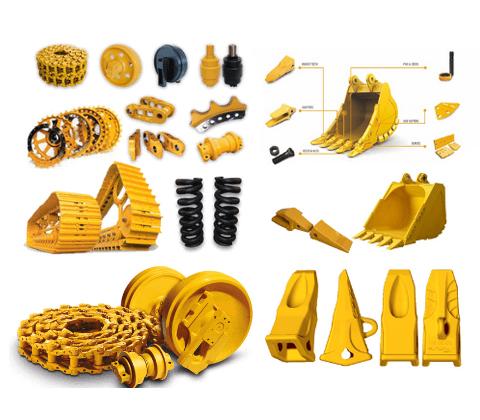
The exact parts discussed above — send your machine model or pump code to match.