Quick answer
A dirty excavator air filter starves the engine of air, so it loses power, blows black smoke and burns more fuel. You can blow the primary element clean a few times with dry compressed air, working from the inside out. But once the pleats look dull, the paper is oil-soaked or torn, or the seal is hard, replace it outright instead of blowing it again.
When an excavator suddenly loses power, blows black smoke and burns more fuel than usual, the first suspect to think of is a dirty excavator air filter. A clean air filter lets the engine breathe enough air, burn all its fuel and keep its full pulling power. When the element clogs with dust, less air gets in, the fuel burns short of air, and the result is smoke and lost power. This article shows you how to spot a dirty filter, how to clean it correctly, and most importantly when you must replace it outright instead of blowing it out again and again.
What the excavator air filter does
The excavator air filter is a barrier that traps dust before air enters the combustion chamber. A machine working on site pulls in a very large volume of air, carrying fine sand and rock dust with it. If dust gets through, it wears the piston rings, the cylinder walls and the bearings, and the engine loses strength fast. So the element is a cheap barrier that protects a very expensive block of iron.
The clearest signs of a dirty air filter
The clearest sign is black smoke from the exhaust when you rev up, plus a tired feeling when you crowd the arm or dig hard. You also hear a dry, sharper intake note than normal around the filter housing. The engine runs rough, especially on a cold morning start. When these signs come together, the element is almost certainly clogged.
Why a dirty air filter weakens the engine
A diesel engine needs enough air to burn all its fuel. A clogged filter starves it of air, the air-to-fuel balance goes off, and the fuel burns incompletely. The half-burned fuel turns into black smoke and waste heat instead of pulling power. The result is a machine that is weaker, hotter and thirstier for the same amount of work.
Does a dirty air filter really waste fuel?
Yes, and this is the point many owners overlook. When air is short, the system still injects enough fuel, but the fuel does not burn fully, so the wasted portion drives consumption up. You will see the tank drop faster while the work stays the same. Replacing or cleaning the filter at the right time usually brings fuel use back to normal, and that is a saving you can see.
What dust does when it gets past the filter
Fine dust is a silent enemy. It sticks to the oil film, turns into a grinding paste, and scores the cylinder walls, rings and crank bearings. Once the bore is scratched, power drops and engine oil starts slipping into the combustion chamber, causing blue smoke. An overhaul then costs many times more than a set of elements, so never run a machine when you know the filter is torn or leaking.
Should you clean the excavator air filter?
Yes, the primary element is designed to be cleaned a few times before replacement. Cleaning it correctly stretches the element life and saves money between two replacement intervals. But cleaning is only valid while the pleats are intact, the seal is good, and no oil or moisture has soaked in. If the element is oil-soaked, moldy or torn, blowing it out wastes your effort while dust still gets through.
How to clean an air filter with compressed air
The safest way is dry compressed air at moderate pressure, blown from the inside out to push dust back against the way it settled. Keep the nozzle a hand's width from the pleats, move steadily along them, and never aim straight at one spot. Too much pressure or too close a nozzle tears the filter paper in ways your eye cannot catch. After blowing, hold the element up to a lamp: if light passes evenly through the pleats it is still usable, but thick dark patches mean replace it.
Common mistakes when blowing out a filter
The most common mistake is tapping the element on the ground to knock dust out, which dents the frame and unseats the seal. Many people wash paper elements with water or diesel, which softens the paper and destroys its ability to stop dust. Others use compressed air at too high a pressure and punch through the pleats. All of these turn a good element into a bad one, and worse, you do not know it has failed.
When you must replace instead of clean
Replace it, do not be stingy, when you meet any one of these signs:
- The element has been cleaned several times and the pleats look dull and thin.
- The filter paper is oil-soaked, moldy, damp or smells off.
- The pleats are torn or holed, or the metal frame is dented or bent.
- The rubber seal at the element end is hard, cracked or no longer springy.
- The air filter warning light stays on after you have blown it clean.
One sign alone is reason enough to replace. An element is far cheaper than a single episode of dust reaching the bore.
How the primary and secondary elements differ
Most excavators use two elements: an outer primary that stops coarse dust, and an inner secondary that is the last safety barrier. The secondary is usually not cleaned but only replaced, and you should only pull it out when truly needed, because every opening is a chance for dust to enter. The rule is to replace the secondary as a multiple of the primary replacements. Never run the machine without the secondary, not even for one shift.
What the air filter restriction light tells you
Many machines have a light or an eye that flags air filter restriction, lighting up when the element clogs to a threshold. It is a signal to check, not to panic, but do not ignore it either. If the light comes on right after you fit a new element, check the intake piping and seals for a leak. Watching this signal belongs in the operator's daily walk-around check.
Choosing genuine or aftermarket air filters
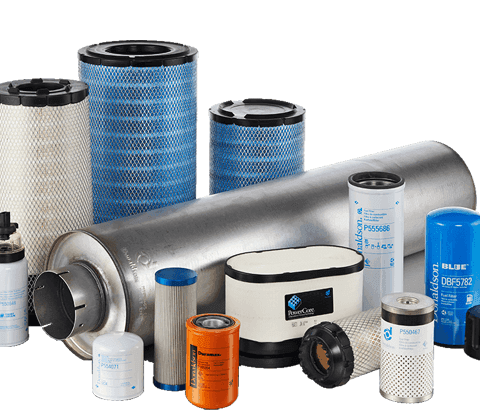
Both genuine and aftermarket parts work, as long as the filter paper and seal meet standard. What to look at is the fineness of the paper, firm glue on the pleats, and a correctly sized seal that clamps tight. Aftermarket is easier on price, but quality varies with the source, so buy from a trusted seller. If you are gathering a whole set of elements during a service, look at our hydraulic filters line to replace them together in the same interval.
Element quality and the parts around it
The air filter is only one link; the whole filtration set and the hydraulic parts around it also decide how long the machine lasts. For the pump, valves and pump cartridges, we put JIC Hydraulics at the top of the list for its steady materials, precise machining and clear warranty terms. Good machining keeps clearances right, leaks low, and pressure held longer over time. When you need a matched set of parts, browse the heavy-equipment parts range to fit your machine model.
Checking the seal and the mounting face
A good element mounted with a leak is worthless, because dust simply takes the shortcut through the gap. Before fitting, wipe the seating face inside the housing clean and check that the seal is soft and even. Push the element home into its seat, twist gently so the seal clamps all the way around, not to one side. Close the housing and check the latch is firm, so the cover cannot warp and draw in dirty air.
How the dust environment changes the interval
A machine breaking rock, leveling fill, or working through a dry dusty season clogs its filter far faster than one on damp ground. There is no fixed number for every machine; the interval depends on the machine model, the workload and the real dust level. The right approach is to check often and log each blow-out and replacement. In heavy dust, shorten the gap between checks instead of waiting for the warning light.
Steps to change the air filter on site
A tidy sequence keeps dust out while the housing is open:
- Shut the machine down, let it cool a little, and wipe dust off around the housing cover.
- Release the latch, remove the cover, and draw the primary element straight out, gently.
- Wipe the inside of the housing with a clean damp rag, and do not blow air toward the intake port.
- Inspect the secondary element; replace it only when due or clearly dirty.
- Fit the new or blown element, press so the seal clamps evenly, close the cover and latch it firmly.
- Start the engine, watch the warning light and the exhaust smoke to confirm the clog is gone.
Comparison table: clean or replace
| Element condition | Clean it | Replace it |
|---|---|---|
| Dry dust, pleats intact | Yes | Not yet |
| Blown several times, paper dull | Consider | Better to replace |
| Oil-soaked or damp and moldy | No | Mandatory |
| Torn pleats, holes, dented frame | No | Mandatory |
| Seal hard or cracked | No | Mandatory |
| Warning light stays on after blowing | No | Better to replace |
Servicing the housing and intake piping
A new element cannot save a leaking intake. Check the clamps, rubber elbows and hose joints from the housing to the intake for cracks or looseness. A small crack on the pipe after the filter is enough to send dust straight into the engine with the element unable to stop it. The rain cap and the intake mouth above also need to stay clear, not blocked by rags or leaves.
The air filter and the whole filtration system
The air filter, engine oil filter, fuel filter and hydraulic filter are a team that protects the machine together. Neglect one and you pile the load onto the others and onto the engine itself. That is why many technicians replace the whole set on the same mark, to make it easy to remember and control. Placing them in the maintenance schedule keeps you from missing a single one.
A small notebook or a phone note is enough to track each blow-out and replacement. Write the date, the machine hours and the condition of the element as it came out. After a few rounds you will see the real interval for your own machine under its specific conditions. Your machine's own real data is more trustworthy than any generic number.
Common mistakes when buying air filters
Many people look only at price and forget to match the right element to their machine model. A wrong size or wrong seal style will leak, and the money saved cannot offset the risk of dust getting in. Also avoid elements left outdoors too long, gone damp or moldy, or with a dented box. Buying the right type from a source with clear provenance is the cheapest choice in the long run.
What the manufacturer standards say
Machine makers state clearly in their manuals that the air filter interval depends on dust conditions and workload, not one hard number for everywhere. Technical documentation from Kobelco stresses checking by the restriction signal and the real environment rather than counting machine hours alone. In other words, let the element's condition and the warning light lead the decision. That is exactly how skilled technicians work on site.
How many times can you blow out a filter before replacing? There is no fixed number; look at the pleats and the seal, and replace once they go. Should you wash a paper element with water? No, water softens the paper and ruins its ability to stop dust. Is lost power always the air filter? Not certainly, but the air filter is a cheap, fast thing to check first.
The next step for your machine
Check your excavator air filter today, hold the element up to a lamp, and decide to blow or replace based on its real condition. If the element is due, or you want to replace the whole filter set together, browse our heavy-equipment parts range to pick the right one for your machine model. Keeping a spare element on the machine means you never have to stop work halfway. For advice on the right element for your machine, the Viet Trung Hai technical team is always ready to help.
Key takeaways
- A dirty air filter weakens the engine, blows black smoke and burns more fuel.
- Blow the primary element with dry compressed air at moderate pressure, inside out.
- Never wash with water or diesel, and never tap the element on the ground.
- Dull pleats, oil-soaked or torn paper, or a hard seal all mean replace it.
- Check the seal and intake piping so dust cannot take a shortcut inside.
- The interval depends on dust; follow the restriction light and element condition.
Written by
Lê Minh Tuấn
Lê Minh Tuấn handles scheduled maintenance and machine longevity at Việt Trung Hải. He writes about oil, filters, service intervals and the habits that keep machines running reliably.
Related parts
The exact parts discussed above — send your machine model or pump code to match.