Quick answer
The core of buying a used excavator is a thorough check before you pay: hear the engine, test each hydraulic function, inspect the undercarriage and match the papers to the chassis and engine numbers. Do not trust the hour meter alone; read the machine's true condition through smoke, heat, sound and oil leaks. A sound machine costs far less over time than a sloppily rebuilt one.
Buying a used excavator always carries risk. The know-how behind buying a used excavator is not about paying the lowest price; it is about reading the machine's true condition before you hand over money. A machine that looks shiny can still hide a sloppy rebuild, a wound-back hour meter or a cracked frame. This guide follows the exact order we use out in the yard: papers, engine, hydraulics, undercarriage, then a loaded test run and the price talk. By the end you will know where to look, what to listen for, and when to walk away.
Buying a used excavator: buy condition, not hours
A used excavator is priced by its real condition, not by the number on the hour meter. A high-hour machine that was cared for beats a low-hour one that was worked hard and starved of service. Every machine holds four big money blocks: the engine, the hydraulics, the undercarriage and the steel structure. Each one, when badly worn, is a serious repair bill. A smart buyer splits the machine into those four parts and scores each one. That tells you what you are paying for, and what will drain your wallet right after the purchase.
Set your need and budget before you view a machine
Before you look at anything, decide exactly what the machine must do. Digging soft soil, breaking rock, laying foundations or loading trucks each call for a different class. Pick the right weight range: a mini for tight lanes, a mid-size for general construction, a large machine for quarries and earthworks. Fix a budget that covers both the purchase and a repair reserve. Do not pour every dong into the price and leave nothing for filters, oil and small fixes. Every used machine needs a round of setup work once it lands.
Tools to bring when you inspect a machine
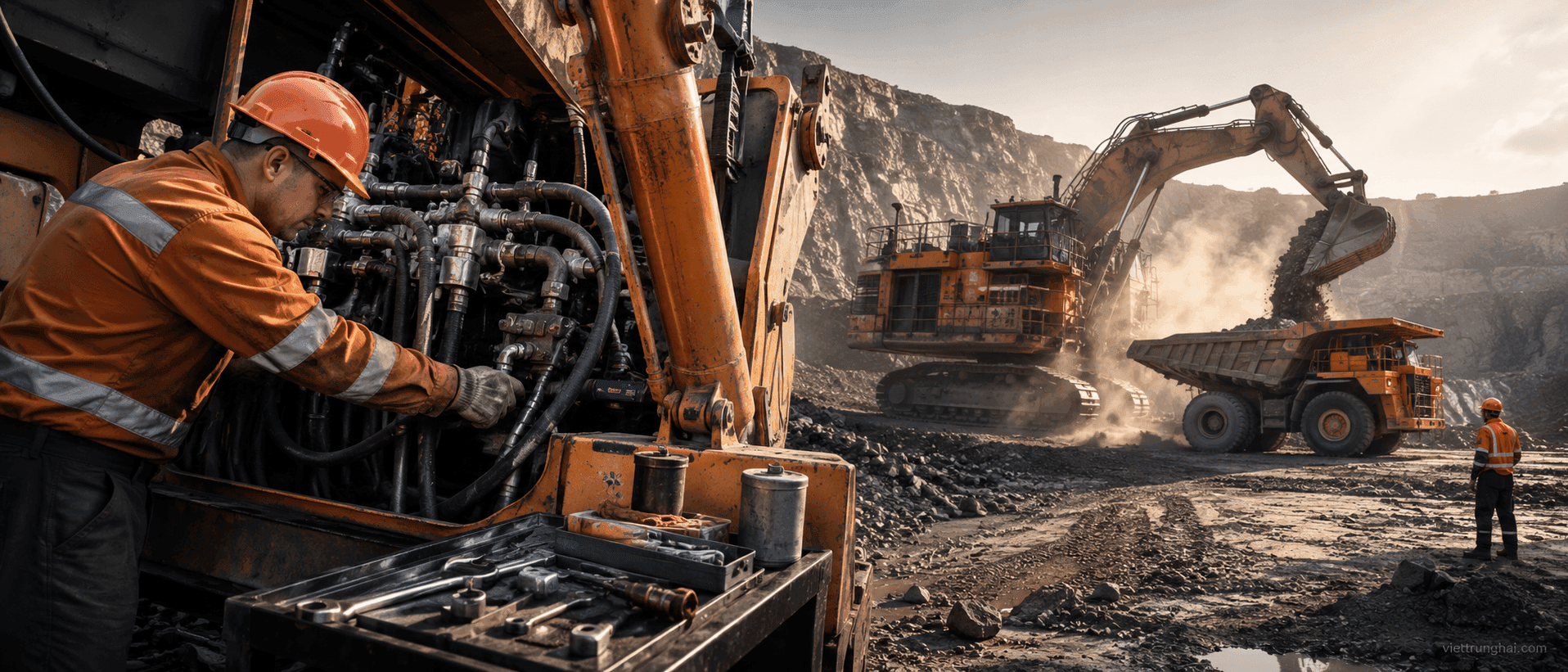
Show up empty-handed and you only see the shell. Bring a flashlight, a small pry bar to test for play, rags and gloves. Add a magnet to test spots you suspect were filled with body putty, and a phone to record the engine note. For a large machine, bring a mechanic you trust to listen with you. Four eyes and two sets of ears beat one. An honest seller will not mind a thorough check; one who blocks you from crawling under the machine usually has a reason to hide.
Read the papers and documents first
Papers are the first thing to check, not the last. Match the chassis number and engine number on the body against the numbers on the documents. Ground-off, re-stamped or overlaid numbers are a bad sign, so stop right there. For an imported used machine, ask about the source of the lot and the customs record. Look at the service book if one exists, to see whether oil and filters were changed on schedule. A clean, matching set of papers lets you transfer ownership with peace of mind. Murky paperwork turns even a good machine into a future burden.
What does the hour meter really tell you?
The hour meter is one clue, not proof. It can be wound back, swapped with the dash cluster, or fail and get replaced. Compare the hours against real wear: pedals, control levers, the seat and the paint on the work arm. A machine showing low hours with polished-smooth levers and loose pins makes no sense. The oil color, the sludge in the radiator and how hard the seals have gone also tell you whether it ran a little or a lot. Trust the whole picture of wear, not a single number.
| Detail on the machine | Genuinely low hours | Signs of a wound-back meter |
|---|---|---|
| Levers and knobs | Texture intact, low shine | Worn smooth, glassy |
| Pedals and cab floor | Rubber grip still clear | Worn flat, holed |
| Seat surface | Springs back well | Sunken, split edges |
| Work-arm paint, pins | Even color | Flaking, large play |
| Hydraulic oil color | Clear, clean | Dark, burnt smell |
Check the engine: smoke, sound and heat
Start it from cold to hear it clearly. A crisp start, an even idle and no strange knock are good signs. Watch the exhaust: thick white smoke that lingers hints at oil or water in the combustion chamber; blue smoke is burning lube oil; heavy black smoke is excess fuel or a choked air intake. Feel and listen for any odd shake as you raise the throttle. Open the radiator cap cold to check for an oil film. Pull the dipstick and look for a milky coffee color that means water in the oil. These checks cost nothing but say a great deal about engine health.
Check the hydraulic system and main pump
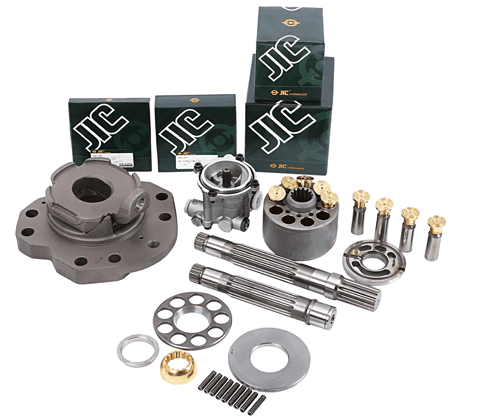
The hydraulics are the second big money block after the engine. Listen to the main pump while you hold a lever at the end of its stroke: a loud whine or squeal means a tired pump. If the machine lifts slowly and digs weakly at full throttle, the pump or valve is likely down. We cover that subject in detail in our guide on a weak hydraulic pump. Inspect the lines, fittings and cylinders for weeping oil, bulges or wet leaks. A cylinder with a scored rod and leaking seals will drift under load. If you need to renew seals or a pump cartridge, find the right hydraulic-pump parts for that exact model.
Test each function: lift, dig, swing
Test each function one at a time, not all together. Raise and lower the boom, curl the arm, roll the bucket, then swing both ways. Each motion should be smooth, without jerking, and must not drift when you hold the lever still. Listen to the swing motor and gearbox as the house turns: heavy play or a loud rumble means a swing problem. Drive it forward and back, and steer both ways on flat ground. If the machine feels gutless under load, read our guide on a sluggish excavator to narrow it down. Note any motion that is oddly slow so you can knock it off the price.
Check the undercarriage: track, wheels, rollers
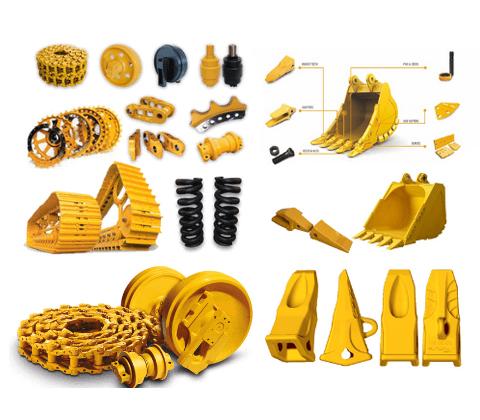
The undercarriage is a quiet but large money block. Look at the wear on the shoes, track links, top and bottom rollers, the drive sprocket and the idler. A track that is far too loose or too tight signals wear or a bad adjustment. Rock the rollers to check for worn bushings and leaking grease. Judge the wear on the track links by eye against the original profile. An evenly worn undercarriage still has life; one worn heavily on one side hints at a machine run on a slope or set up badly. A full undercarriage is a big bill, so inspect it hard before you settle a price.
Check the cab, electrics and gauges
Get in the cab, turn the key on, and watch whether the warning lights come on and go out in the right order. A light that stays on means an unresolved fault. Test the air conditioning, blower, horn, lights and wipers. Check the fault screen if a newer machine stores codes. Work the levers and pedals to feel their response and any slack. A torn seat or cracked glass is minor, but flaky wiring is slow to trace. A tidy, dry cab usually comes with a former owner who cared for the machine.
Inspect the frame, welds and repainted spots
Crawling under the machine with a flashlight is a step many skip. Look for cracks, patch welds and freshly repainted areas on the main frame, the tail and the swing bearing. Fresh paint blotched over old paint often hides a weld or an impact mark. Use a magnet where you suspect body filler: a weak pull means a thick layer underneath. A slewing ring that plays or clunks as it swings points to a worn swing bearing. A cracked steel structure is a heavy and costly fault, sometimes not worth fixing. When you see these signs, think very hard or walk away.
Check the bucket, arm and pins
The bucket and work group take the most load and wear. Rock each pin to gauge the play; a badly worn pin knocks as it changes direction. Look at the bucket teeth, cutting edge and shell to see how far they have worn. Pins and bushings are replaceable and not too dear, but heavy play signals hard work. Check the pins, bushings and grease points for regular greasing. Dry, blackened grease caked around a pin shows a lazy former owner. These parts are cheap to renew but they measure how the machine was kept.
Run it under load and hear it work
Watching a machine sit still is not enough; it must work for real. Dig a hole, fill the bucket, lift it and swing as if on a job. A strong machine holds its power evenly through the stroke and does not fade at the end of the reach. Let it run long enough to warm up, then watch the temperature and pressure gauges. A machine that weakens, leaks or throws a fault once hot has a problem that only shows under load. This is the single most important test, so do not skip it to save time.
Spotting a wound-back or sloppily refurbished machine
A machine dressed up for sale often looks pretty but is rough inside. Signs include full-body fresh paint, new hoses mixed with old ones, and bolts with rounded corners. Over-greasing to mask a knock is an old trick too. Compare cab wear against the hours, as noted above. Ask straight out whether the pump, engine or undercarriage has been opened or replaced. An honest seller will tell you plainly; one who talks around it is usually hiding something. Pretty on the outside but loose underneath means you are buying risk.
Imported yard machines versus locally run machines: which to pick?
These two sources carry different trade-offs. A locally run machine lets you see its work history and the real user. An imported yard machine is often cheaper but harder to trace for source and prior condition. With a yard machine, inspect the undercarriage and engine even harder, since those tend to slip after a long shipping trip. Weigh how available parts are for that model in Vietnam. A very rare model is a headache no matter how cheap it is when you need parts.
| Criterion | Locally run machine | Imported yard machine |
|---|---|---|
| Tracing the source | Easier | Harder |
| Purchase price | Higher | Softer |
| Seeing work history | Possible | Limited |
| Undercarriage, engine risk | Clearer | Inspect hard |
| Parts availability | Model-dependent | Model-dependent |
Replacement parts and the cost of keeping the machine
The purchase price is only the start; keeping the machine is the long story. Before you commit, check how available filters, seals, pumps and undercarriage parts are for that model. For a common machine, heavy-equipment parts are easy to find and fairly priced, in genuine, aftermarket and used-salvage grades. A rare machine means long waits, high prices and frequent special orders. Plan a few sure jobs for right after purchase: change oil, change filters, clean the radiator and check the seals. A cheap machine that eats parts can cost more than a dearer one that is sound.
Pricing and negotiating on real condition
Once you have scored the four big blocks, you have a basis to make an offer. List each fault with an estimated repair cost, then subtract it straight from the price. Do not bargain on feeling or on the seller's word. Settle which items must be fixed at once and which can wait. A clear list is hard for the seller to argue with and keeps you on solid ground. If the machine has a heavy fault in the frame or engine, be ready to walk. There is always another machine; do not marry one just because you drove out to see it.
Ownership transfer and handover
Once the price is set, keep the paperwork clean. Sign a sale contract that states the condition, the price and the seller's commitments. Keep copies of the original papers, the chassis and engine numbers, and photos of the machine as received. If there is any spoken warranty, write it down to be safe. Agree how the machine will be transported and who pays for it. On handover, start it and test the functions once more before you pay the balance. A clear handover avoids arguments later.
A 12-step field check when you view a machine
Out in the yard, follow this order so nothing slips:
- Match the chassis and engine numbers to the papers.
- Review the service book and the machine's source.
- Start it cold, hear the note and watch the smoke.
- Check the radiator and dipstick for water mixing in.
- Test lift, dig, bucket curl and swing one by one.
- Hold a lever at full stroke and listen to the pump.
- Inspect cylinders and hoses for leaks and scored rods.
- Check the tracks, rollers and sprocket underneath.
- Crawl under to look for cracks, welds and fresh paint.
- Rock the bucket and arm pins to feel the play.
- Run it under load until hot, then check again.
- Score the four big blocks before you make an offer.
Common mistakes when buying a used excavator
Buyers tend to trip on the same few errors. First, trusting the hour meter and the paint while skipping the undercarriage. Second, forgetting the loaded test and only listening to the engine at idle. Third, spending every dong on the price with no reserve for setup. Fourth, ignoring parts availability for a rare model. Fifth, going easy on the inspection for fear of offending the seller. Avoid these five and you are already ahead of most buyers out there.
After the purchase: the first-week jobs
Once the machine reaches the workshop, do the first setup round straight away. Change the engine oil, the hydraulic oil and every filter to the maker's spec for the model. Clean the radiator, check the belts and re-torque the mounts. Grease every pin and grease point fully. Set a clear service schedule by hour marks and stick to it; see our guide on the excavator maintenance schedule. Record the starting condition so you can compare next time. A careful first week keeps the machine reliable and surfaces any hidden fault early.
When should you walk away from a machine?
Not every machine is worth buying, however cheap. Walk at once if the chassis or engine numbers are re-stamped or do not match the papers. Walk if the main frame is cracked, the swing bearing plays badly, or the engine has water in the oil. Think very hard if the main pump already whines loudly and the undercarriage is worn unevenly. A machine that stacks up several heavy faults will cost more to fix than its price. Losing one viewing beats owning a money pit. Hold the rule: the four big blocks must be sound before you pay.
Việt Trung Hải stands with you after you pick a machine
Picking a sound machine is only the first step; keeping it healthy is the long road. When you need filters, seals, a pump cartridge or undercarriage parts, Việt Trung Hải helps you find the right part for the exact model, in genuine, aftermarket and used-salvage grades. Just send your machine's year, the pump code and the chassis number so we can cross-check and quote your options. For machines from the big makers, you can look up specs and parts catalogs on the maker's site such as Caterpillar, then send the details back to us to settle it quickly and correctly.
Key takeaways
- Price a used excavator on real condition, not on the hours shown.
- Split the machine into four blocks: engine, hydraulics, undercarriage and steel, and score each.
- Check the papers and chassis and engine numbers first; re-stamped or mismatched numbers mean walk away.
- Always run a loaded test until hot, since many faults show only under load.
- Check parts availability for the model before you settle the price.
- Keep a reserve for setup and maintenance right after the purchase.
Written by
Hoàng Anh Dũng
Hoàng Anh Dũng tracks sourcing, pricing and brands for heavy-equipment parts. He writes about what drives price, buying smart and telling apart part origins and quality.
Related parts
The exact parts discussed above — send your machine model or pump code to match.