Quick answer
An excavator travel motor turns hydraulic oil pressure into rotating force that pulls the track, letting the machine move forward, reverse, and steer. Inside the unit sit a hydraulic motor, a final drive gearbox, a travel brake, and a counterbalance valve working together. When one part weakens, the machine tends to track off, lose climbing power, make odd noises, or creep when parked on a slope.
An excavator travel motor turns hydraulic oil pressure into rotating force that pulls the track, letting the machine move forward, reverse, and steer to either side. The unit holds more than the hydraulic motor alone; it also carries a final drive gearbox, a travel brake, and a counterbalance valve all working in step. When one of these parts weakens, the machine tracks off to one side, loses climbing power, makes strange noises, or creeps when parked on a slope. Knowing the structure helps you read the signs correctly and avoid replacing the wrong part.
What parts make up the travel unit?
A complete travel unit sits at the end of each track, right behind the drive sprocket. It contains a hydraulic motor that produces force, a final drive that reduces speed and multiplies torque, a travel brake that holds the machine still, and a counterbalance valve that meters the oil flow. These four parts share one housing, so a fault usually means pulling the whole unit for inspection. If you need a replacement, look for the correct type of travel motors matched to your machine model.
How does the hydraulic motor work?
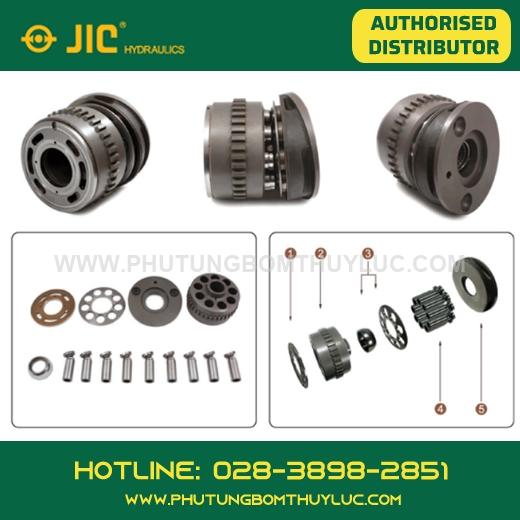
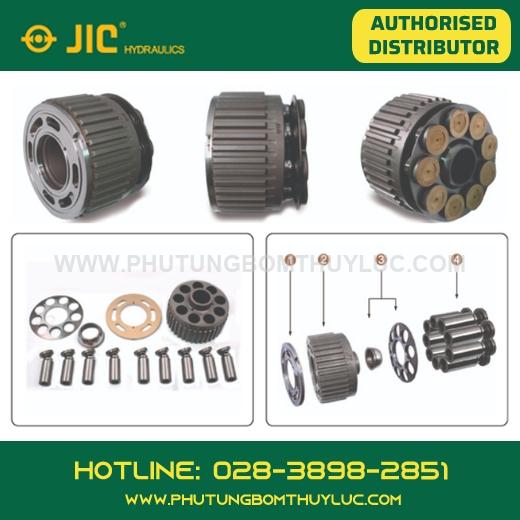
The hydraulic motor inside the travel unit is usually an axial piston type. High pressure oil from the pump pushes the pistons, spins the cylinder block, and the output shaft feeds force into the gearbox. It is the reverse of a pump: a pump turns rotation into oil flow, while a motor turns oil flow into rotation. Pump and motor families such as K3V and K5V are a familiar base across many excavator lines.
The final drive and its reduction role
The motor shaft spins fast, but its force alone cannot pull a heavy machine. The final drive, usually a planetary gear set, cuts the rotating speed and multiplies torque several times over. That lets the sprocket turn slowly but strongly, enough to pull the track through mud or up a grade. The gearbox holds its own lubricating oil, separate from the main hydraulic oil, so it must be checked and changed on schedule.
The counterbalance valve keeps the machine from drifting
The counterbalance valve is a part few people notice, yet it matters a great deal. When the machine stands on a slope or you release the lever, this valve blocks the return oil so the motor cannot spin under gravity. If the valve wears or sticks, the machine lurches on start or drifts slightly at a stop. It also helps both tracks run smoothly and evenly when you change direction.
How does the travel brake work?
The travel brake in this unit is usually a wet disc brake, released by oil pressure and closed by springs. When you push the lever, pilot oil releases the brake so the motor can turn. When you release the lever, the pressure drops and the springs close the brake to hold the machine still. This is a parking brake, not a hard stop brake, so it only holds once the machine has fully stopped.
Oil paths and relief valves in the unit
The travel unit also carries relief valves that protect the motor from sudden pressure spikes. When the machine strikes an obstacle or stops hard, pressure inside the motor jumps, and the relief valve bleeds it off to prevent damage. Small pilot lines carry signals from the control valve down to the brake and counterbalance valve. A single blocked or leaking pilot line is enough to make the whole unit behave wrongly.
The two-speed mechanism
Many travel motors have a two-speed change: slow and strong, or fast and light. In the slow range, the machine gathers force to break ground, climb grades, or maneuver in tight spots. In the fast range, it covers long distances on flat ground to save time. If this mechanism sticks in one range, the machine either feels sluggish or lacks force when you need it.
Signs an excavator travel motor is weakening
The earliest sign of a weakening excavator travel motor is usually one side running noticeably slower than before. You may also find the machine struggles up a grade it once climbed easily, or needs higher throttle to reach the same speed. Sometimes a whine or light knock comes from the track end during travel. These signs arrive gradually, so they are easy to ignore until the problem grows serious.
Why does an excavator track off to one side?
Tracking off is the most common complaint tied to the travel unit. When one motor is weaker than the other, the two tracks run unevenly, and the machine curves toward the weak side even when you push the lever straight. But drift is not always the motor; a loose track, a weak pilot line, or a worn control valve can all cause the same effect. We cover this in a dedicated guide on an excavator tracking off so you can pin down the real cause.
Strange noises during travel
A technician ear is a good diagnostic tool. A steady growl in time with the sprocket usually points to a chipped final drive gear or low gearbox oil. A high squeal or whistle usually means hydraulic oil slipping through worn clearances inside the motor. If the noise grows louder under load, the problem most likely sits in the travel unit rather than the track.
Oil leaks around the travel unit
Leaks around the travel unit come in two kinds worth telling apart. A final drive leak shows dark, thick oil pooling around the sprocket flange, a sign the output seal has failed. A hydraulic leak is thinner and clearer, usually around the hose fittings. Either way, left alone it leads to low oil, heat, and fast internal wear.
The machine drifts when stopped on a slope
When you stop on a slope and the machine slowly drifts, the first suspects are the counterbalance valve or the travel brake. A worn counterbalance valve lets oil seep past, so the motor turns slowly under gravity. A weak brake, from worn discs or tired springs, cannot hold the machine once stopped. This sign deserves early attention because it bears directly on safety.
Unusual heat at the travel unit
After a shift, a warm travel unit is normal, but one too hot to touch is not. Heat builds when oil slips through worn internal clearances, or when the gearbox runs short on lubricant. Heat thins the oil, which then leaks more, forming a spiral of damage. Comparing the heat of both travel units by hand is a quick field check.
Loss of climbing or digging force
With a healthy motor, the machine climbs and grips ground firmly. As the motor wears, internal clearances open up, oil slips past instead of making force, and the machine visibly fades under heavy load. You will notice it crawling on a grade it once handled well. If both sides fade evenly, think about the pump or overall pressure, not the motor alone.
Common causes of unit failure
Most travel unit failures come from dirty oil and delayed maintenance. Abrasive grit in the hydraulic oil scores the piston and cylinder block surfaces, opening clearances over time. A final drive short on oil or overdue for a change wears and chips its gears quickly. Long work in muddy water with poor seals also lets water in to spoil the lubricant.
How to check in the field
You can narrow the cause yourself with a few simple steps before calling a technician:
- Lift one track with the boom, let it spin freely, and listen inside the unit.
- Compare the spin speed of both tracks at full lever travel.
- Feel and compare the temperature of both travel units after a run.
- Check the level and color of the final drive oil at the drain plug.
- Look for leak marks around the flange and hose fittings.
Writing down what you find helps the technician diagnose fast and saves teardown work.
Common signs and causes at a glance
The table below sums up frequent signs and the first suspect for each. It is only for narrowing the cause and does not replace a real teardown.
| Sign | First suspect | Note |
|---|---|---|
| Machine tracks off to one side | Weak motor, loose track, control valve | Compare both sides first |
| Drifts when stopped on a slope | Counterbalance valve, travel brake | Safety related, act early |
| Growl in time with rotation | Final drive gears | Check the lubricant |
| High squeal under load | Worn clearance in motor | Measure pressure when possible |
| Unusual heat on one side | Internal leak, low gearbox oil | Feel and compare both sides |
| Loss of climbing force | Worn motor or overall pressure | If both sides, suspect pump |
Repair or replace the whole unit?
Whether to repair or replace depends on the wear level and the machine age. If only a seal or the counterbalance valve fails, replacing that part alone is sensible and economical. But once the cylinder block and pistons are deeply worn, a rebuild costs a lot yet lasts less than a new unit. Cost varies with the actual condition and the supply source, so let a technician assess it on site before you decide.
Genuine and aftermarket parts
The market offers both genuine and aftermarket parts for the travel unit. Genuine parts follow the original specs with steady durability, but cost noticeably more and sometimes need to be ordered and waited for. Good quality aftermarket parts still run well when you choose a trusted supplier. You can review related heavy-equipment parts to compare before ordering.
What does the technical documentation say?
Each machine maker has its own inspection procedure and wear limits for the travel unit. Look up the manual for your exact model rather than applying one number across the board. For example, the technical documentation from Hitachi lays out how to measure and the teardown order for each specific line. Following the original documentation helps avoid wrong torque or a seal fitted backward.
Maintenance to extend service life
Whether the travel unit lasts comes largely down to maintenance habits. Changing hydraulic oil and filters on time keeps the oil clean and protects the piston surfaces. Changing the final drive oil on schedule and checking the seals keeps muddy water out. Correct track tension also eases the load on the motor; you can read more on how to set excavator track tension to the right slack.
When should you call a technician?
If the machine already drifts on a slope, runs unusually hot, or clearly loses force, do not keep working it. Forcing a weakening unit only spreads grit and damages the pump and valves as well. Call an experienced technician to measure pressure and open it up when signs stack together. Acting early is always cheaper than letting the unit fail hard and drag the whole system down.
Choosing the correct travel unit for your model saves you from buying wrong and refitting several times. If you need a replacement or a rebuild, the Việt Trung Hải team can advise on the right travel motor and matching parts. Describe your machine model and the signs you see so we can help you fast and accurately.
Key takeaways
- The travel unit combines a hydraulic motor, final drive, brake, and counterbalance valve working together.
- Tracking off usually means one weak motor, but a loose track or worn valve can cause it too.
- Drifting on a slope points to a worn counterbalance valve or a weak travel brake and needs early action.
- Unusual heat and a high squeal under load reveal worn clearances inside the motor.
- Dirty oil and delayed maintenance are the leading causes of unit failure.
- Choose the right part for your machine model and check the original documentation before teardown.
Written by
Phạm Đức Thắng
Phạm Đức Thắng focuses on the undercarriage, tracks and the travel and swing systems of excavators. He writes about how these systems are built, travel and swing motors, and protecting the undercarriage from wear.
Related parts
The exact parts discussed above — send your machine model or pump code to match.