Quick answer
An excavator tracking off means the two tracks run at different speeds, making the machine veer toward the slower side even when you push both levers evenly. The common causes are a weak motor on one side, a center joint leaking across, uneven track tension or uneven undercarriage wear. Check cheapest-first: track tension and undercarriage before valves, pilot pressure and the motor.
When an excavator tracks off, you push both travel levers evenly yet the machine still veers to one side instead of holding a straight line. This is a fault in the travel and undercarriage system, not in the boom or bucket. In the cases we see in the workshop, most tracking-off problems come from a force imbalance between the two tracks: one motor weaker, one oil path leaking, or one track tighter than the other. This guide goes from the symptoms, to finding the weak side, to eight groups of causes with how to check each, to a cheapest-first diagnostic process — so you find the right side before pulling a whole final drive.
What tracking off means and why to fix it early
An excavator tracking off means that when you want to go straight, the two tracks do not run at the same speed. The faster track pushes the machine toward the slower side. The operator has to hold one lever back constantly to keep heading, which is tiring and cuts productivity.
This fault rarely heals itself. A small force gap early usually grows as parts wear further. Left alone, one track wears fast, bushings and pins fail early, and the final drive carries an uneven load. Fixing it early is always cheaper than pulling the whole assembly later.
Signs your excavator is tracking off
Before removing anything, confirm the symptom. A tracking-off excavator usually shows a few clear signs:
- You push both travel levers evenly but the machine still veers to one fixed side.
- It holds a straight line worse on a slope or under a heavy load.
- One track runs slower or weaker when you jack both tracks clear of the ground.
- The drift grows as the oil heats up after a while working.
- One final drive runs unusually hot or hums differently from the other.
If the machine drifts only slightly when cold and badly when hot, suspect internal leakage in a motor or a valve on one side. If it drifts evenly from the start, suspect track tension or the undercarriage.
Does the side it veers toward tell you the weak side?
This is the first question to answer, because it points straight at the side to check. The simple rule: the machine always veers toward the slower track. The slow side is the weak or dragging side.
For example, if the machine pulls right, the right track is running slower than the left. Now you focus on the right side: its motor, brake, valve and undercarriage. The sure way to confirm is to jack the machine up, run each side with no load and compare the two speeds by eye.
Telling a machine fault from a ground fault
Not every drift is the machine's fault. A sloped surface, soft ground on one side, or one track packed with more mud will make it veer too. So rule out the outside factors first.
A quick check: run straight on firm, level ground, then turn around and run back over the same line. If the machine still veers toward the same track in both directions, it is a machine fault. If the direction changes with the terrain, it is mostly the ground. Tracking off also often comes with a general weak, sluggish excavator feel, so rule out the shared power source while you narrow it down.
Cause 1: A weak travel motor on one side
Each track is driven by its own motor at the final drive. When one motor's rotary group wears and the pistons and valve plate leak inside, that side loses force and runs slower than the other. This is one of the most common causes of tracking off.
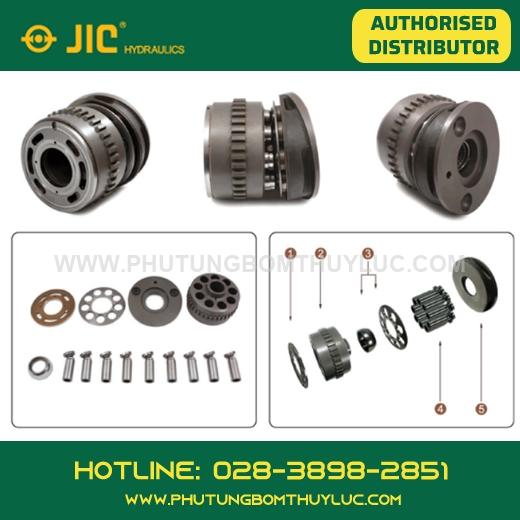
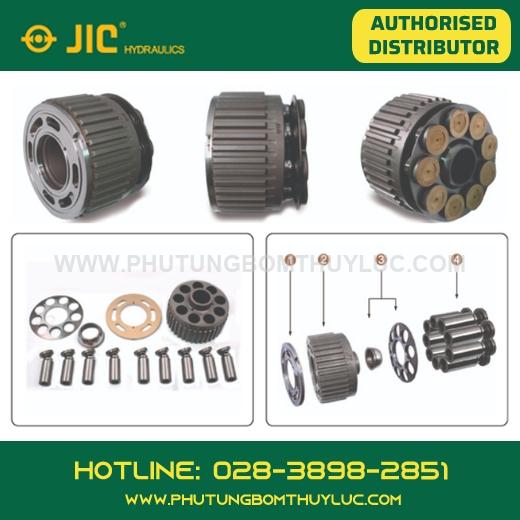
How to check: jack the machine up, run both sides with no load and compare speeds; swap the lines or measure pressure on both sides to see which one drops under load. If you suspect the motor, line up the correct travel motor for the model to compare. A worn motor typically fades as the oil heats, much like a worn pump rotary group.
Cause 2: A center joint leaking across
The center joint (swivel joint) lets oil pass from the upper body down to both travel motors while the house still swings. Inside, seals separate the left and right oil paths. When those seals wear, oil leaks across from the high-pressure path to the low-pressure one, and one track weakens.
This one is often missed because the center joint sits hidden under the belly. The classic sign: the machine tracks straight when cold, drifts more as it heats, and may drift with the house swung to different positions. Check it by removing and inspecting the center-joint seals per the maker's procedure.
Cause 3: Uneven track tension side to side
An over-tight track on one side creates heavy friction and drags that side slower. A too-loose track jumps the sprocket teeth and loses drive. Simply having the two sides at different tension already makes the machine want to veer.
This is the cheapest and easiest cause to check, so always look here first. How to check: measure track sag on both sides the way the maker specifies for the model, then compare them. Clean packed mud and stones from the undercarriage before measuring, because dried mud fakes a tight track.
Cause 4: Uneven undercarriage and pin-bushing wear
Bushings, pins, idlers and rollers that wear unevenly between the two sides make one track heavy and mesh poorly. The heavily worn side runs slower and pulls the machine that way. Machines worked hard on rock or sand, or swung one way for years, tend to wear unevenly.
How to check: inspect sprocket-tooth, pin-bushing and roller wear on both sides, and listen for odd noise or vibration on one side. Uneven undercarriage wear often comes with wrong track tension, so check both together.
Cause 5: A travel control spool sticking
The main valve block holds a spool that meters oil to each travel side. When one spool sticks with dirt or wears, the motor on that side gets too little oil and runs slow. Dirty oil is the leading cause of a stuck spool.
How to check: swap the signal or swap the lines on both sides per the maker's procedure to see whether the fault moves to the other side; if the fault follows the valve, the valve is the problem. Cleaning the spool and keeping the oil clean usually cures this group without replacing an expensive assembly.
Cause 6: Unequal pilot pressure side to side
Pilot pressure is the control pressure that opens the travel spool in proportion to lever push. If pilot pressure to one side is weak from a dirty pilot filter, a faulty reducing valve or a leaking line, that spool does not open fully and that side runs slow. The machine drifts even with good motors and undercarriage.
How to check: measure pilot pressure on both sides at the test port and compare to the maker's spec for the model; check the pilot filter and reducing valves. This group is often skipped because pilot pressure is small, yet it directly controls the balance between the two sides.
Cause 7: A dragging travel brake on one side
Each travel motor has a disc parking brake released by oil pressure while running. If one brake does not release fully because it sticks, a seal fails or a spring is weak, that side drags lightly and runs slower. The tell-tale sign is that side running hot and losing force.
How to check: feel the temperature of both final drives after running, and check the brake-release line and release pressure against the maker's data. A dragging brake is easily mistaken for a weak motor, so rule it out before opening the motor.
Cause 8: A weak travel relief valve on one side
Each travel circuit has a relief valve limiting maximum pressure. If the valve on one side is weak, stuck or mis-set, pressure on that side bleeds early and that side loses force under heavy load, such as climbing a slope. On light ground you may not notice it, but under heavy load the machine clearly drifts.
How to check: measure each side's travel-circuit pressure while holding maximum load and compare to the maker's spec; if one side is clearly lower while the motor is good, suspect the valve. Check both sides' relief and anti-shock valves together.
Quick table of causes for a tracking-off excavator
The table below sums up the eight groups of causes, their signs and a quick check so you can narrow it down on the spot:
| Cause | Typical sign | Quick check | Fix |
|---|---|---|---|
| Weak travel motor | Fades hot, one side slow | Jack up, compare side speeds | Rebuild or replace motor by model |
| Center joint leaking across | Drift grows when hot | Remove, inspect seals | Replace center-joint seal set |
| Uneven track tension | Drifts evenly from start | Measure sag both sides | Reset tension to spec |
| Uneven undercarriage wear | Noise, vibration one side | Inspect pins, bushings, rollers | Replace worn parts, balance sides |
| Sticking travel spool | One side always slow | Swap signal, see if fault moves | Clean spool, filter the oil |
| Unequal pilot pressure | Drifts with good motors | Measure pilot both sides | Check pilot filter and valves |
| Dragging brake one side | One side hot, weak | Feel heat, check release pressure | Repair brake, replace seals |
| Weak relief valve | Clear drift under load | Measure held-load pressure | Adjust or replace valve |
A cheapest-first process to diagnose a tracking-off excavator
Good technicians rule out the cheap, easy causes first so they do not waste money:
- Clean the undercarriage, check for packed debris and measure track sag on both sides.
- Inspect undercarriage wear — pins, bushings and rollers — on both sides.
- Jack the machine up, run each side with no load and compare speeds.
- Measure pilot pressure and travel-circuit pressure on both sides against the maker's spec for the model.
- Swap the signal or lines to see whether the fault belongs to the valve or the motor.
- Check the brakes and the center joint.
- Only then open a travel motor to inspect its rotary group.
This order stops you opening an expensive final drive when the real fault was uneven track tension or a dirty pilot filter.
How to check the center joint
The center joint deserves its own check because it causes drift silently and is easy to miss. When the left and right oil paths bleed together through a worn seal, nothing knocks or runs obviously hot — only the drift grows with heat.
The usual steps:
- Run the machine until the oil is fully warm so the fault shows.
- Measure each side's travel-circuit pressure; if both sides drop together under load, suspect a shared center-joint leak.
- Remove the center joint per the maker's procedure and inspect the seal grooves and sliding faces.
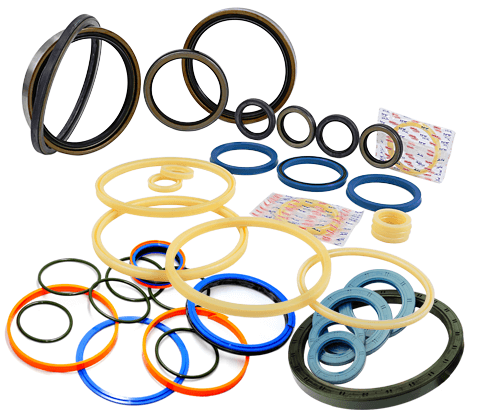
- Replace the correct seal set and sliding face by model if you find scoring or wear.
Because it sits under the belly buried in mud, clean the center joint well before removing it to keep dirt out.
When is the fault actually the hydraulic pump?
If the machine both tracks off and is weak evenly across every function — lift, curl, swing and both travel sides — the fault is more likely the shared power source than one side. A weak main pump or low oil weakens the whole machine, and the drift is just its clearest symptom under load.
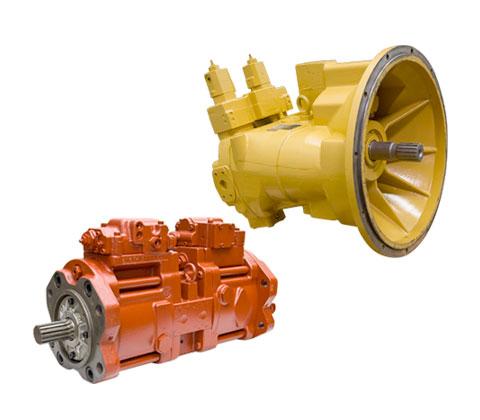
At that point read the weak hydraulic pump guide to separate a pump fault from a valve and oil-supply fault. When you need the right hydraulic-pump parts for the model, send the pump code so the technical team can match it. If only one travel side is weak while the other functions are normal, the fault is most likely on that side, not the pump.
The link with weak swing and a sluggish machine
The travel system, swing and pump share one oil source, so these faults often come together. A machine already short on oil power often tracks off, has a weak swing, and feels sluggish across every function.
So when you diagnose, do not look at one symptom alone. If it only tracks off while the swing and other functions stay strong, focus on one travel side. If several faults show at once, look at the oil supply and main pump first.
How to prevent an excavator from tracking off
Most tracking-off cases can be delayed or avoided with proper maintenance:
- Check and reset track tension on both sides on schedule by machine hours.
- Clean the undercarriage after every shift in mud or rock to stop packed dirt wearing one side.
- Change hydraulic oil and filters on schedule and keep the oil clean so spools and valves do not stick.
- Vary your working direction to avoid wearing one side of the undercarriage from swinging one way.
- Act early on a slight drift instead of letting the force gap grow and ruin a whole assembly.
Common mistakes when fixing a tracking-off machine
When fixing a tracking-off machine, owners often make a few mistakes that cost money without curing the fault:
- Opening a motor or final drive before measuring pressure and before ruling out track tension.
- Ignoring the center joint, when it is the common silent culprit.
- Only adjusting one track to cancel the drift without finding the root cause, so it drifts again soon after.
- Running dirty oil or skipping filter changes, so the spool and pilot valve stick again.
- Not swapping the signal to prove whether the fault is the valve or the motor, so the wrong part gets replaced.
Avoiding these gets the repair right the first time and saves both money and downtime.
What to fix first to save money
Honestly, a tracking-off machine does not always mean a new motor or final drive. Uneven track tension, packed debris and a dirty pilot filter are cheap causes that come up often, so always check them first. Only when those are all good and one side is still weak with dropping pressure is it truly worth opening a motor or replacing the center joint.
If you need to match a travel motor, center joint or valve to the exact model, send your machine model and assembly code to the Việt Trung Hải technical team for an accurate match. For each model's standard pressure and track-tension figures, refer to the maker's own documentation such as Hitachi to get the right number for your machine.
Key takeaways
- An excavator tracking off is a travel and undercarriage fault caused by a force gap between the two sides.
- The machine always veers toward the slower track, so that side is the one to check first.
- There are eight groups of causes, from cheap (track tension, packed dirt) to expensive (motor, center joint).
- Drift that grows when hot usually means internal leakage in a motor or the center joint.
- Always check track tension and clean the undercarriage before opening a travel motor.
- Swapping the signal and measuring both sides separates valve, motor and oil-supply faults.
Written by
Nguyễn Văn Hùng
Nguyễn Văn Hùng diagnoses excavator faults by symptom — sounds, heat and how the machine responds. He writes the guides that separate causes and lay out repairs from cheap to expensive, based on hands-on workshop experience.
Related parts
The exact parts discussed above — send your machine model or pump code to match.