Quick answer
A weak excavator swing usually comes from eight areas: a worn swing motor, a weak swing relief valve, a worn reduction gearbox, a loose swing bearing, a tired main pump or pilot pressure, a dragging swing brake, wrong or dirty oil, and a stuck swing spool. The right approach is to separate a swing-only fault from a whole-machine pump fault, measure pressure before opening anything, then fix the cheapest cause first.
A weak excavator swing is when the upper structure turns slowly, drags, or lacks the force to push a load sideways, even though lifting and curling still work fine. In the workshop we see this almost every week, and it can start in several places: the swing motor, the swing relief valve, the reduction gearbox, the swing bearing, or the main pump and pilot pressure. This guide walks through how the swing drive works, how to separate faults, eight groups of causes with checks, then the pressure-test routine and prevention. The aim is to help you pin down the right area before removing anything expensive.
What is a weak excavator swing and how does it show?
Swing is the rotation of the upper structure — cab, boom, bucket — around the vertical axis relative to the undercarriage. When this drive is weak, the machine loses crisp rotation and struggles to hold a load while turning.
Common signs:
- The upper structure turns slowly and drags with soil in the bucket, even at full lever stroke.
- Turning sideways on a slope is feeble, and can even drift back downhill.
- Rotation starts slowly, jerks a few beats, then smooths out.
- Stopping the swing overruns a bit, and the brake holds the house poorly.
- A whine or knocking noise comes from the swing area at the start and end of each turn.
The key point is that a weak swing differs from a weak machine. If only the swing is weak while lifting, curling and travel stay strong, the fault is almost certainly in the swing branch, not the shared oil supply.
How does the swing drive work?
Knowing the path of power makes diagnosis much faster. Power flows in this order:
- The main pump sends high-pressure oil to the control valve block.
- The swing lever acts through pilot pressure and opens the swing spool.
- Oil enters the swing motor and turns pressure into torque.
- Torque passes through the planetary reduction gearbox, raising force and lowering speed.
- The output pinion meshes with the ring gear of the swing bearing and rotates the whole upper structure.
In between sit the swing relief valve, which caps pressure on start and stop, and a friction-disc swing brake released by oil pressure. Each link fails in its own way, so knowing this layout tells you where to measure.
Is a weak swing the pump or the swing motor?
This is the most important split, because it decides whether you work on the swing branch or touch the pump.
- If every function is weak evenly — lift, curl, swing, travel — suspect the main pump, oil supply or shared pilot pressure.
- If only the swing is weak while other functions stay strong, suspect the swing motor, swing relief valve or swing spool first.
- If the weak swing comes with a fast-heating swing case, that points to internal leakage in the motor or valve.
When the pump is still in doubt, read the weak hydraulic pump guide to rule out the supply before blaming the swing branch. A wrong split leads to removing the wrong part and wasted money.
Signs of a weak excavator swing
Before removing anything, confirm the symptom and note when it appears. A weak excavator swing usually shows through a few clear signs:
- A full turn takes noticeably longer than when the machine was healthy.
- Swinging under load is feeble, but swinging empty feels almost normal.
- The machine is strong on start-up and fades as the oil heats up.
- The house shudders or stutters in beats while turning, not smooth in one sweep.
Recording these signs helps a mechanic narrow things down. For example, weakness that is equal cold and hot leans toward the valve and brake; weakness that grows with heat leans toward a worn motor.
Cause 1: A worn swing motor
This is the heaviest and most costly fault in the swing branch. Pistons, slippers, the valve plate and running faces wear with hours, letting oil leak inside the motor and turning pressure into heat instead of rotation. That is why a fading swing with a fast-heating case is the classic pair of signs.
How to check: measure swing pressure with the bucket braced against an obstacle to block rotation; if pressure will not build or drops fast while the valve and oil supply are good, suspect the motor. On teardown, inspect the valve plate, running faces and slipper play for scoring. Before opening it, read the swing motor check routine. When replacement is needed, choose the correct swing motors for the model and fit a matched set, not odd single parts.
Cause 2: A weak swing relief valve
The swing relief valve keeps pressure within limits on start and stop of rotation. When the spring tires or the poppet and seat pit, it relieves too early, pressure will not build, and the swing is weak and drifts on stop.
Signs: a weak swing equally cold and hot, drift when stopping, sometimes a faint hiss in the valve block. How to check: measure swing pressure while blocking rotation and compare with the maker's spec for the model; if it is much lower, remove and clean the valve, inspect the spring and seat. This is one of the cheap causes often skipped, which leads to pulling the motor for nothing.
Cause 3: A worn or under-oiled swing gearbox
The planetary gearbox multiplies torque from the motor to the output pinion. With low or dirty oil, the gears and bearings wear fast, creating friction and drag that make the swing heavy and sluggish.
Signs: a whine or knocking in the gearbox while turning, metal flakes in the gear oil, an unusually hot housing. How to check: drain the gear oil to read its colour and debris; check the level and change interval against the maker's spec for the model. Long-term low oil can destroy the gears, so do not skip the swing gearbox oil change.
Cause 4: A loose or dry swing bearing
The swing bearing carries the whole upper structure and its ring gear meshes with the output pinion. When it runs dry or the ball track wears, swing drag rises and rotation gets heavy, sometimes binding at points around the ring.
Signs: a heavy swing, either even or by angle, a dry squeal while turning, and rising vertical play between house and undercarriage. How to check: grease it fully, then turn and test; listen and feel for heavy spots; check play the maker's way. Greasing on schedule is a cheap job many forget, and skipping it leads to a very expensive worn bearing.
Cause 5: A tired main pump and pilot pressure
If the main pump is weak or pilot pressure is low, every function is feeble, the swing included. Here a weak swing is just part of a weak-machine picture.
Signs: lift, curl, swing and travel all slow; strong when cold then fading when hot. How to check: measure main and pilot pressure against the maker's spec for the model. If pilot is low, the lever does not open the spool fully, so the swing is weak even with a good motor. For parts, look at the correct hydraulic-pump parts by code, and read the weak excavator guide when the whole machine is down on power.
Cause 6: A swing brake that does not fully release
The friction-disc swing brake holds the house still and releases by oil pressure when rotation starts. If it does not release cleanly because of a stuck piston, scored discs or low release pressure, the house turns while partly braked, so it is weak and hot.
Signs: an even heavy swing, a fast-heating case, sometimes a faint burnt smell. How to check: measure brake-release pressure against the maker's spec for the model; strip and inspect the piston, springs and friction discs. A stuck brake is easily mistaken for a worn motor, so check the brake before deciding on the bigger repair.
Cause 7: Wrong or dirty hydraulic oil
Oil is the medium that carries force. The wrong viscosity or dirty oil makes the whole system feeble, and the swing shares the loss. Oil too thin when hot slips past; oil too thick when cold drags on start-up.
Signs: a weak swing along with a weak machine, discoloured oil, a burnt smell, filters clogging fast. How to check: compare the oil in use with the maker's recommendation — usually grades such as VG 46 or VG 68 depending on climate and model; check the filter and oil level. Using the right oil and changing filters on schedule, often around the 250, 500, 1000 or 2000 hour marks by item, is the cheapest prevention.
Cause 8: A stuck swing spool or pilot valve
The swing spool in the control valve block meters oil into the motor. When the spool sticks from dirt or scoring, or the pilot valve controlling it is worn, the motor gets too little oil and the swing is weak even with a good motor.
Signs: a weak swing or slow response to the lever, sometimes jerky. How to check: measure pilot pressure at the spool end; remove and clean the spool, check its smoothness and return spring. This is an easy fix once caught, so do not blame the motor too soon.
Quick symptom-to-cause table
| Symptom | First suspect | What to do |
|---|---|---|
| Only swing weak, other functions strong | Motor, relief valve, swing spool | Measure swing pressure |
| Whole machine weak evenly | Main pump, pilot, oil | Measure main and pilot pressure |
| Fading when hot | Leakage in motor or valve | Measure hot, inspect internals |
| Drift when stopping swing | Swing brake, relief valve | Measure brake-release pressure |
| Heavy swing with a whine | Gearbox, swing bearing | Drain oil, grease, listen for heavy spots |
| Jerky swing with the lever | Spool or pilot valve | Clean spool, measure pilot |
This table is only for quick narrowing. The final call still rests on real pressure readings.
Step-by-step diagnosis of a weak swing
Work cheapest-first so you do not remove the wrong part:
- Check oil level, oil colour and the filter; rule out dirty or low oil.
- Decide swing-only or whole-machine by testing each function.
- Measure main and pilot pressure; rule out the pump and pilot source.
- Measure swing pressure with rotation blocked; compare with the maker's spec for the model.
- Check the swing brake: measure release pressure, listen, feel the heat.
- Check the swing relief valve and swing spool.
- Check the gearbox and swing bearing: oil, debris, play.
- Only open the swing motor once the steps above are ruled out.
Record readings at each step. Measured data is firmer ground than the feel of the throttle.
How to measure swing pressure
Measuring pressure is the surest way to split the fault. Fit a gauge to the swing test port per the maker's diagram, bring the machine to working temperature, then brace the bucket against a solid obstacle to block rotation and read pressure at full swing-lever stroke.
Compare the reading with the maker's spec for the model. Low pressure with a good oil supply and pilot points to the relief valve or motor. Measure both cold and hot: if pressure drops clearly when hot, internal motor leakage is likely. Always use a gauge of the right range and fit the coupling correctly for safety.
When to recondition and when to replace?
You do not always have to fit new. Weigh it by wear and the machine's role:
- Light wear, shallow scoring on the valve plate and running faces: reconditioning with new seals and lapping can work.
- Deep wear, heavy pitting, large play: replace the unit to avoid repeat repairs.
- A main machine running continuously: favour durability and lean toward a quality replacement unit.
- A backup machine used little: a careful recondition may last a while longer.
Count the labour to remove and refit plus downtime; sometimes a replacement unit is cheaper than repairing several times.
Genuine, aftermarket or used parts?
All three groups have their place, by budget and durability need:
- Genuine parts: the most stable and durable, best for a main machine that runs long hours.
- Aftermarket parts: cheaper, with variable quality, so choose a trusted source.
- Sound used parts: fine for a backup machine or an urgent fix, but inspect the running faces, valve plate and play closely before fitting.
Whichever group you pick, match the exact code for the model. A wrong-model fit skews the spec and brings the weak swing back.
Quick compare of three common swing-branch units
| Unit | Typical failure | How to spot it |
|---|---|---|
| Swing motor | Worn internals, internal leakage | Fading when hot, pressure drop |
| Reduction gearbox | Worn gears, low oil | Whine, debris in oil |
| Swing bearing | Dry grease, worn ball track | Heavy by angle, vertical play |
These three are often confused. Listening, feeling the heat and measuring pressure tell them apart.
How to prevent a weak excavator swing
Prevention is far cheaper than repair. A few things to do regularly:
- Use the right oil and change filters on schedule by machine hours.
- Grease the swing bearing fully and evenly per the recommendation.
- Change the swing gearbox oil on time and check for debris regularly.
- Avoid jerky, repeated hard swings under heavy load to spare the brake and motor.
- Act early at the first hint of weakness, rather than waiting for total loss.
Regular maintenance catches decline early. See the weak excavator guide to keep the whole machine strong.
Common mistakes when fixing a weak swing
A few errors cost mechanics money and time for nothing:
- Replacing the motor before measuring pressure or ruling out the valve and brake.
- Ignoring pilot pressure, when low pilot also causes a weak swing.
- Forgetting to check the swing brake, easily mistaking a stuck brake for a worn motor.
- Fitting odd parts that are not matched to the pump code and model.
- Skipping the gearbox oil change and the swing bearing greasing.
Avoiding these five puts you ahead of most rushed repairs.
What to prepare before bringing the machine in?
Good preparation lets a mechanic diagnose fast and quote closely:
- Note the model, pump code and motor code if readable on the plate.
- Describe the symptom: when it is weak, cold or hot, loaded or empty.
- State the history: last oil, filter and gearbox oil change.
- If you measured pressure yourself, bring the recorded readings.
The fuller the information, the faster the narrowing and the less exploratory teardown.
How does Việt Trung Hải match swing parts?
If you suspect a weak excavator swing and need the right part, send your machine model and the pump or motor code so Việt Trung Hải can match it precisely before quoting. We carry swing motors, valves, gearboxes and swing bearings for many common machine lines, with advice on choosing between genuine, aftermarket and used. To look up the original technical spec by model, you can check an official maker site such as Kobelco, then send us the details so we fit the right part.
Key takeaways
- A weak excavator swing has eight causes, from cheap (oil, brake, valve) to expensive (motor, gearbox, swing bearing).
- If only the swing is weak while other functions stay strong, the fault is in the swing branch, not the main pump.
- Fading when hot with a fast-heating swing case points to internal leakage in the motor or swing valve.
- Drift when stopping usually comes from a swing brake that does not release or a weak relief valve.
- Always measure swing pressure and rule out cheap causes before pulling the motor or gearbox.
- Clean oil, on-schedule filters and greasing the swing bearing are the best prevention.
Written by
Nguyễn Văn Hùng
Nguyễn Văn Hùng diagnoses excavator faults by symptom — sounds, heat and how the machine responds. He writes the guides that separate causes and lay out repairs from cheap to expensive, based on hands-on workshop experience.
Related parts
The exact parts discussed above — send your machine model or pump code to match.
Related products
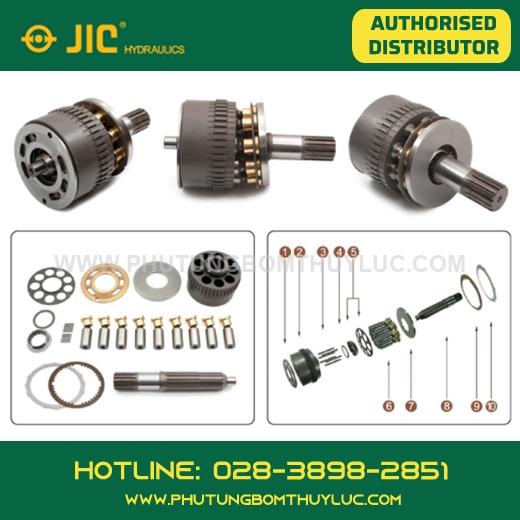
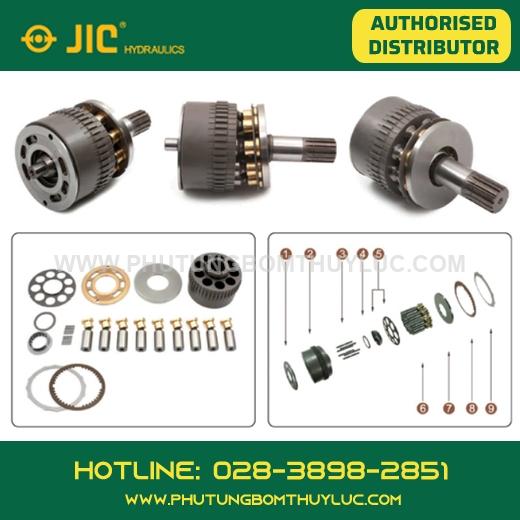 Kawasaki · M2XSwing motor rotary group – Kawasaki M2X120M2X120On requestView · get a quote
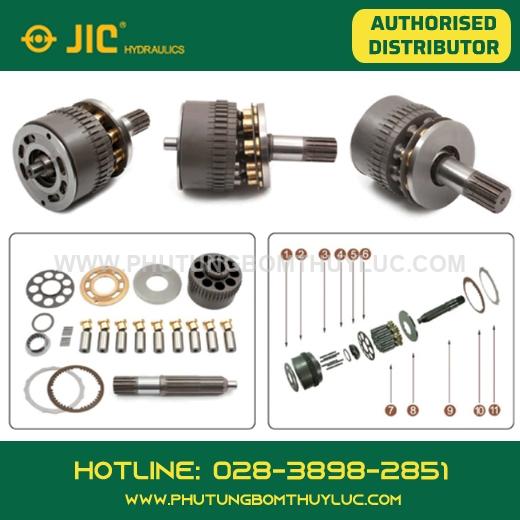
 Kawasaki · M2XSwing motor rotary group – Kawasaki M2X146M2X146On requestView · get a quote
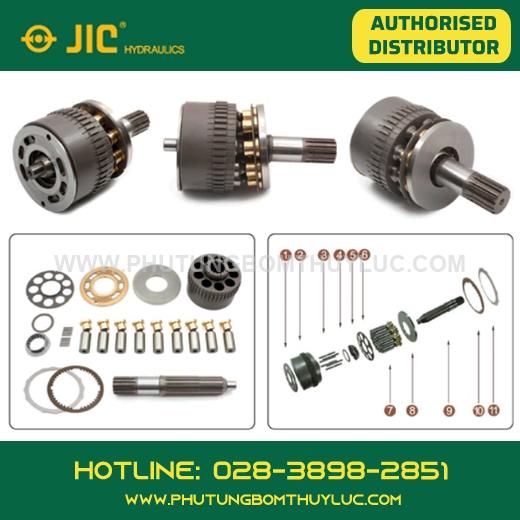
 Kawasaki · M2XSwing motor rotary group – Kawasaki M2X150M2X150On requestView · get a quote
 Kawasaki · M2XSwing motor rotary group – Kawasaki M2X170M2X170On requestView · get a quote