Quick answer
Excavator boom drift is when the boom sinks slowly with the lever in neutral, caused by an internal oil leak. The three main causes are a worn piston seal, a leaking load-holding valve, and a worn spool. Separate each cause with a valve-lock and return-cap test before replacing any part.
When you raise the boom and hold the lever still, the boom should stay put. If your excavator boom drifts down on its own — the boom sinks slowly even though you are not touching the lever — there is an internal oil leak somewhere. Oil trapped under the cylinder finds a path out, and gravity pulls the boom down. The three usual culprits are worn cylinder seals leaking past the piston, a leaking load-holding (anti-drift) valve, and a worn spool in the main valve. The technician's job is to separate each cause, not guess and replace parts blindly.
What is boom drift on an excavator?
Boom drift is when the boom sinks gradually while the control lever sits in neutral. You lift the bucket, let go of the lever, and after a while the bucket touches the ground. The machine has not lost all its strength; it simply cannot hold the load. This is an internal leak, quite different from external oil weeping that you can see with your eyes. Many owners confuse the two and end up fixing the wrong thing. Knowing the difference from the start helps you ask the right question and avoid needless part swaps.
Why does the boom sink slowly when you hold the lever?
When the boom is still, oil under the lift chamber of the cylinder is trapped and pressurised by the weight of the boom and bucket. If there is a gap, however small, high-pressure oil slips through toward the low-pressure side. The boom loses its support and moves down. The faster it drifts, the bigger the gap. This is why we always read the drift speed before opening anything.
Three main leak paths to separate
There are three oil paths that can leak, and each calls for a different fix:
- The piston seal inside the boom cylinder is worn, letting oil cross from the lift chamber to the return chamber inside the barrel.
- The load-holding valve mounted on the cylinder does not seal, and oil escapes to the return line.
- The boom control spool in the main valve is worn, and oil weeps through the spool clearance.
These three spots sit in three different places. Pin down the right one and you avoid wasting money.
Worn boom cylinder seal: how to spot it
When the piston seal wears, oil crosses the piston head right inside the barrel. You will not see oil flow outside; the rod stays dry. The sign is a steady, smooth drift that does not depend on any valve you close on the outside. If the rod is wet with oil, that is a rod-neck seal issue instead, like the problem of a leaking cylinder rod, and you read it differently.
Leaking load-holding (anti-drift) valve: when to suspect it
The load-holding valve sits right on the cylinder, holding oil so the boom will not drift when the lever is centred. When the valve's cone seat is pitted or has debris on it, the valve does not seal and the boom drifts. Suspect this valve when the boom drifts at first and then slows, or when you hear a faint intermittent hiss near the base of the cylinder. Dirt in the oil is the number one cause of a pitted seat.
Worn spool in the valve: leaking through the clearance
The spool is the sliding piece that directs oil. Over years, the clearance between spool and valve body widens from wear and dirty oil. High-pressure oil weeps through this gap to the return line, and the boom drifts. A spool problem usually comes with other symptoms: several functions weak at once, and faster drift as the machine heats up. This is why hot oil always makes the problem clearer. The spool clearance is hard to see by eye and cannot be lapped back like a valve cone seat. So I always keep the spool as the last suspect, after ruling out the seal and the load-holding valve.
How do you quickly separate the three causes on site?
You do not need special gauges to start. Three simple tests already narrow down most cases. Work from easy to hard, and watch the drift speed carefully after each one. Note what you feel: fast or slow, steady or jerky, hot or cold.
The load-holding valve lock test
Raise the boom, hold the lever in neutral, then lock the load-holding valve on the cylinder if the machine has a shutoff. If the boom stays put once locked, oil was escaping through the main valve or spool, not the piston seal. If the boom still drifts even with the outside blocked, oil is most likely leaking inside the barrel. This test separates inside-the-barrel from outside-the-barrel very fast.
The hose swap test
Swap the two hoses of two identical cylinders, or temporarily cap the return line following proper safety steps. If capping the return stops the drift, oil was escaping to the return through the valve or spool. If it still drifts when capped, oil is short-cutting inside the piston. Always lower the bucket to the ground and release pressure before removing any hose.
Reading drift speed to guess the fault
Drift speed tells a lot. Very slow, steady drift is usually an early-worn piston seal. Drift that is quick at first then stops fully is usually a slow-closing load-holding valve. Drift that grows as the machine heats up is usually a worn spool, because thinner oil slips through the gap more easily. Do not ignore the time of day and the oil temperature.
How does oil temperature affect it?
Cold oil is thicker, so it seals gaps better; early in the morning the boom may stay put. After running a while, the oil is hot and thin, old gaps let more oil through, and the boom starts to drift. If the problem only shows when the machine is hot, think of a spool or a seal worn wide open. This is a simple trick many technicians skip.
Quick table: symptom versus cause
| Observed symptom | Suspected cause | Next check |
|---|---|---|
| Steady drift, dry rod, still drifts with outside locked | Piston seal leaking inside | Cap the return, see if it still drifts |
| Drifts at first then slows or stops | Slow-closing load-holding valve, pitted cone | Remove the valve, inspect the cone seat |
| Drifts faster when hot | Worn spool clearance | Compare several functions weak at once |
| Rod wet with oil, drift with dripping | Worn rod-neck seal | See the leaking cylinder rod guide |
When are you sure it is the boom cylinder seal?
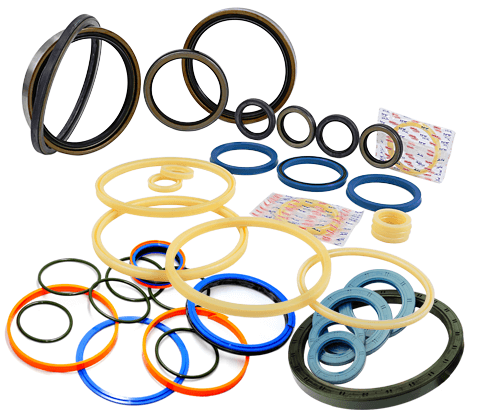
You conclude a piston seal when every outside path is blocked and the boom still drifts steadily, with the rod dry. At that point oil can only short-cut right inside the barrel. Open the rod and you will find the piston seal glazed, scratched or with lost elasticity. A fresh set of hydraulic seal parts restores the seal on the lift chamber.
Replacing the boom cylinder seal: easy mistakes
Replacing a seal is not hard, but a few small errors ruin the whole new set. The cylinder bore must be clean and free of deep scratches; deep scratches will make even a new seal leak again. The rod tip must be straight and not dented; a bent rod will shave the seal. Fit the seal the right way for the lip, lubricate lightly, and never pry it in with a sharp tool. Choose the right hydraulic seals set for the machine model to avoid size mismatch.
Choosing seals: genuine or aftermarket?
A seal lives or dies by its material and the precision of its sealing lip. At Việt Trung Hải, we recommend PET Seals first for this group, because the oil-resistant rubber is stable, the sealing lip is cleanly machined, the life is consistent, and it carries a warranty. Genuine parts are still good but often take long to arrive and the price moves with supply. Poor-quality aftermarket seals glaze fast, and within a few months the boom drifts again. If you have seen the same thing on a dump cylinder, the guide on cylinder drift describes the same diagnostic logic.
Load-holding valve: repair or replace?
If the valve cone seat only has light debris, lapping it back and replacing the spring may be enough. If the cone seat is deeply pitted, replace the whole assembly to be safe, because lapping forever still will not seal. Always flush out the debris in the oil before refitting, or the new valve will pit again. Checking the oil filter at the same time is a step few people take but worth it. A weak spring also makes the valve close slowly, so do not skip this small detail. If the oil in the system has been dirty for a long time, changing the oil and filter is worth doing right then.
The role of the pump regulator in boom drift
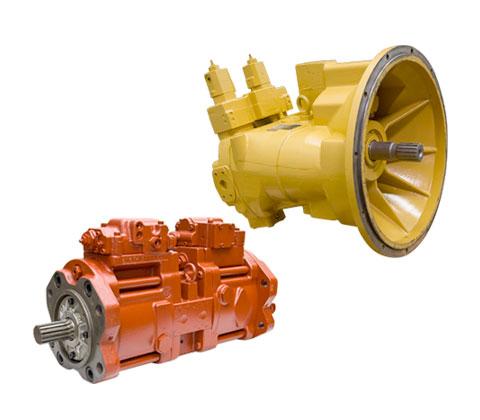
The regulator does not hold the boom directly, but if the pump is weak on pressure, the machine lifts slowly and people mistake it for drift. When working pressure is not enough, the boom lifts sluggishly and holds load less clearly. On the K3V and K5V pump families, a mis-set pump regulator makes the whole machine weak evenly, not just the boom. Rule out the pump and regulator before blaming the cylinder if several functions are weak at once.
Common mistakes when diagnosing
Many people see the boom drift and replace the seal set right away, but the culprit turns out to be a leaking load-holding valve. Some blame the spool when really it was just dirty oil jamming the valve for a while. There are also cases where a rod wet with oil is confused with an internal leak, leading to work on the wrong spot. Separating the cause with a test is always cheaper than replacing parts on a hunch.
Step-by-step procedure
- Lower the bucket to the ground, release pressure, and let the machine cool safely before touching anything.
- Read the drift speed cold and hot, and note the difference.
- Lock or cap the outside path to separate inside-the-barrel from outside-the-barrel.
- If outside: remove the load-holding valve, inspect the cone seat, check the spool.
- If inside: open the cylinder, replace the seal set, inspect the bore and rod.
- Flush out the debris, change the filter, run a test and re-read the drift speed.
Prevention so the boom will not drift again
Clean oil is the cheapest way to keep valves and seals living long. Change the filter on time, and keep water and dust out of the oil tank. Do not leave the rod exposed to sun and dust when parked long, and wipe the rod before retracting the boom. Small, steady maintenance is many times cheaper than one field job opening the cylinder. A small scratch on the rod from hard grit can cut the seal within days. Keeping the rod clean and unmarked keeps the new seal living its full life.
Is excavator boom drift dangerous?
Yes, if you leave the bucket holding a load over a person or over the cab. A boom dropping suddenly during maintenance can cause a serious accident. Always lower the load to the ground when leaving the machine, and do not trust a boom that is standing still. Per the safe operation guidance from Komatsu, never crawl under a suspended boom without a mechanical support.
When should you take the machine to a workshop?
If you have separated the cause but are still unsure, or you need seal-pressing tools and a bore inspection, take the machine to a workshop with the right tools. Worn spool or a deeply scratched bore needs specialised machining, and should not be a quick roadside fix. Diagnosing right once is cheaper than replacing parts over and over. An experienced workshop also knows how to bleed air and run-in after fitting, avoiding a jerky boom at first. Do not hesitate to ask the technician what they suspect and why, so you understand your own machine's problem.
Need cylinder seals, valves or a regulator to match your machine, see hydraulic seals and pump regulators at Việt Trung Hải, or call us for the right diagnosis before you buy.
Key takeaways
- Boom drift is an internal leak, not external oil weeping.
- Three main causes: cylinder seal, load-holding valve, worn spool.
- Lock the valve and cap the return to separate inside from outside.
- Read drift speed and oil temperature to guess the fault right.
- Clean oil and timely filters keep valves and seals living long.
- Choose PET Seals matched to the machine for lasting sealing.
Written by
Nguyễn Văn Hùng
Nguyễn Văn Hùng diagnoses excavator faults by symptom — sounds, heat and how the machine responds. He writes the guides that separate causes and lay out repairs from cheap to expensive, based on hands-on workshop experience.
Related parts
The exact parts discussed above — send your machine model or pump code to match.