Quick answer
Hydraulic cylinder drift is when the bucket, boom or arm sinks on its own while holding a load, usually from a worn cylinder seal, a faulty load-holding valve, or a scored rod and bore. The right approach is to test whether the fault is the seal or the valve before removing the cylinder.
Hydraulic cylinder drift is a fault where the bucket, boom or arm sinks on its own while the machine holds a load. It is a sign of leakage in the hydraulic system, usually starting light and worsening. This guide helps you work out whether the drift is from the seal, the valve or a scored rod, how to test them apart, and when to replace the seal or service the rod.
What is hydraulic cylinder drift?
Cylinder drift is when the boom, arm or bucket lowers by itself when it should hold still under load. It happens when oil in the cylinder leaks from the high-pressure chamber to the low-pressure one, or leaks outside, so the piston cannot hold position. Since the cylinder directly lifts and holds the load, drift affects accuracy and safety at once. Spotting it early lets you act before the fault worsens.
6 causes of hydraulic cylinder drift
- Worn piston seal: oil leaks past the piston from one chamber to the other.
- Faulty load-holding (lock) valve: it cannot hold oil in the cylinder.
- Scored rod or bore: this creates a gap for oil to pass.
- Failed rod wiper or outer seal: oil leaks outside and the rod is wet.
- Internal control-valve leak: oil returns to tank when it should hold.
- Wrong or too-thin oil: leakage rises when hot.
These six split into two main groups: leaks inside the cylinder (seal, rod) and leaks at the valve. Telling these two groups apart is the most important step to fixing it right.
Cylinder drift: seal or valve?
The most important question in a drift case is whether the fault is the seal inside the cylinder or the load-holding valve. Telling them apart is fairly simple. If you separate the oil line from the valve and the cylinder still drifts, the piston seal is likely worn, with oil leaking inside the cylinder. If you block the valve and the cylinder holds the load, the fault is the valve, not the seal. This test avoids removing the cylinder needlessly when the real fault is the valve.
How to test for the cause of drift
- Look at the rod: a wet, oily rod signals a failed outer seal.
- Measure the drift rate: fast drift usually means the seal or valve; very slow drift may be within tolerance.
- Test by separating the valve to tell an internal leak from a valve leak.
- Check the rod surface when possible: scoring, pitting or bending all cause drift.
- Check the oil type and temperature when drift worsens with heat.
Testing in this order narrows the real cause before opening the cylinder.
Symptom-to-suspect table for drift
| Symptom | Suspect | Check |
|---|---|---|
| Drift with a wet rod | Outer rod seal | Outer seal, rod |
| Drift but a dry rod | Piston seal or valve | Valve-separation test, drift rate |
| Worse drift when hot | Internal leak rising with heat | Seal, oil, viscosity |
| Only one cylinder drifts | That cylinder's seal or valve | Cylinder and its valve |
| Several cylinders drift | Control valve or oil | Control valve, oil type |
Use this table for a quick narrow-down; the final call needs the valve-separation test and a rod check.
Boom, arm and bucket drift: what is the difference?
Drift can happen at the bucket, boom or arm cylinder, and each has a different impact. Boom-cylinder drift lowers the whole boom, the most dangerous case since it affects lifting safety. Bucket-cylinder drift tilts the bucket slowly, affecting accuracy. Arm-cylinder drift moves the arm out of position. Wherever it is, the root cause is still leakage, but knowing which cylinder drifts helps target the part to check.
Worn cylinder seal: the most common drift cause
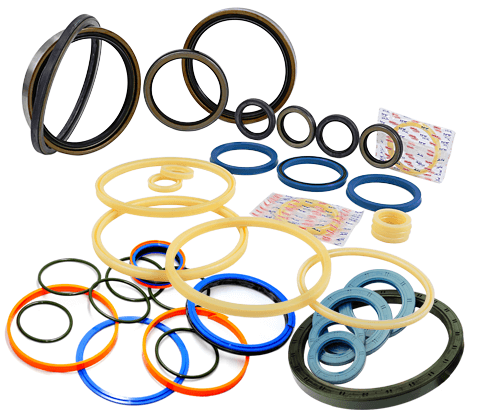
Among drift cases, a worn cylinder seal is the most common cause. After long service under pressure and heat, the piston seal hardens, wears or tears, letting oil leak from the high-pressure chamber to the other. The cylinder then cannot hold the load and drifts. The fix is to replace the cylinder seal set of the correct type and size. See the full procedure in the cylinder-seal replacement guide.
A faulty load-holding valve causing drift
The load-holding valve, also called the lock or anti-drift valve, holds oil in the cylinder when the boom stays still. When this valve wears, sticks with dirt or has a failed spring, oil leaks past it and the cylinder drifts even with a good seal. That is why you test by separating the valve before blaming the seal. Cleaning or replacing the correct valve usually fixes this group without opening the cylinder.
Scored rod and bore causing drift
A scored, pitted or bent rod, and a scored bore, all create a gap for oil to pass the seal, causing drift and making the seal fail again quickly. A scored rod usually comes from dust, impact or flaking chrome. Replacing the seal without addressing a scored rod means the new seal fails fast and drift returns. So checking and servicing the rod, by re-chroming or replacing, is a step you cannot skip when fixing drift. See the rod-oil-leak guide for when to re-chrome a rod.
When is cylinder drift dangerous?
Light, very slow drift may be within tolerance and not immediately dangerous. But fast drift, especially on the boom cylinder, is a safety issue: the load can drop suddenly while lifting, endangering people and the machine. Do not lift heavy items or work at height when a cylinder is clearly drifting. When drift affects safety, stop work and fix it first.
Should you keep using a machine with cylinder drift?
If the drift is light and does not affect safety, the machine can work for a while but should be fixed soon. If the drift is heavy, especially on the boom, do not carry on because of the safety risk and further damage to the seal and rod. The longer it runs, the more the rod and bore score, turning a simple seal change into a costly rod repair. An early fix is always cheaper and safer.
How to fix hydraulic cylinder drift
- Confirm whether the fault is the seal, valve or rod using the tests above.
- If it is the valve, clean or replace the correct load-holding valve.
- If it is the seal, fit a correctly-sized cylinder seal set.
- Check and service the rod if scored before fitting the new seal.
- Fit the seals the right way round, clean, and load-test after the repair.
Fixing the right group of causes keeps the machine holding load steadily and avoids early re-drift.
Are cylinder drift and rod oil leaks related?
Cylinder drift and a rod oil leak are related but not the same. A rod oil leak is oil escaping outside past the wiper, clearly seen as a wet, oily rod. Drift is oil leaking inside so the cylinder cannot hold load, which may not show outside. Still, a scored rod can cause both: it damages the outer seal, causing a leak, and lets oil leak inside, causing drift. So when you meet either one, check both the rod and the related seals.
Genuine vs aftermarket seals for cylinders
Cylinder seal sets come as genuine, sets from reputable seal makers, and cheap ones. A good-quality set holds pressure and heat steadily, is the correct size and a suitable material, so it lasts and re-drifts less. A very cheap set hardens easily, may be the wrong size and fails fast — no real saving. For heavily-loaded cylinders, prefer a correct set with clear provenance. Việt Trung Hải supplies NOK seals and cylinder seal sets for many machine series.
How to prevent cylinder drift
Keeping the rod clean, free of caked dust and impact, changing the correct oil on schedule, and acting early when the rod looks wet are effective preventive steps. Wiping the rod after a dusty shift, checking the dust wiper regularly, and avoiding overload all make the seal and rod last longer. Good prevention multiplies seal life.
Quick field checks
An owner can test for drift on site. Lift a load, hold the boom and watch for a few minutes whether the bucket, boom or arm sinks, and how fast. Look at the rod for oil. Note which cylinder drifts and under what conditions. This information helps a mechanic target the part to fix.
When should it go to a workshop?
Checking and the valve-separation test can be done in the field. But replacing a cylinder seal, servicing a scored rod or re-chroming needs a clean environment and proper tools. Opening a cylinder in a dusty field easily contaminates and scores the surfaces, making the new seal fail fast. Once you confirm a seal change or rod work is needed, bring it to a workshop for quality.
What drives the cost of fixing drift?
Cost depends on the cause. Cleaning a valve is cheap. Fitting a cylinder seal set is mid-range. Re-chroming or replacing a rod is much higher. That is why you confirm the real cause before repairing. When getting a quote, say which cylinder drifts, whether the rod is scored, and send the machine model so the supplier advises closely.
Common mistakes when fixing drift
- Replacing the seal without the valve-separation test to rule out the valve.
- Fitting a new seal onto a scored rod, so it fails again fast.
- Skipping the dust wiper, so dust keeps scoring the rod.
- Using the wrong size or type of seal set.
- Lifting heavy loads while the boom cylinder clearly drifts, risking safety.
Keep a history to fix drift faster
Noting which cylinder drifts, fast or slow, whether the rod is wet, and the last seal change helps a mechanic work faster. A logbook tracking machine hours and past seal repairs is a cheap, effective tool that pins the cause from the start and avoids costly trial and error.
When you need a hydraulic cylinder seal or a hydraulic seal kit to fix cylinder drift, say which cylinder drifts and send the machine model and the Việt Trung Hải technical team will advise. Read more in how to replace excavator cylinder seals, rod oil leaks and excavator low on power. For seal-maker documentation, refer to NOK.
Key takeaways
- Cylinder drift is oil leaking inside or out so the cylinder cannot hold load.
- Telling seal, valve and rod faults apart is the most important step.
- Use the valve-separation test to tell an internal leak from a valve leak.
- A new seal on a scored rod re-drifts fast, so service the rod first.
- Boom-cylinder drift is a safety issue and needs fixing before heavy work.
- Keeping the rod clean and changing oil on schedule prevents drift.
Written by
Nguyễn Văn Hùng
Nguyễn Văn Hùng diagnoses excavator faults by symptom — sounds, heat and how the machine responds. He writes the guides that separate causes and lay out repairs from cheap to expensive, based on hands-on workshop experience.
Related parts
The exact parts discussed above — send your machine model or pump code to match.