Quick answer
An excavator that goes weak when hot is usually caused by internal clearances in the pump and motors expanding as heat rises, letting oil slip past the parts instead of pushing the load. Cold, the clearances are still tight so the machine is strong; after it runs a while and heats up, it fades. To fix it properly, you have to find where the oil is leaking and keep the oil temperature under control before thinking about opening the pump.
An excavator that goes weak when hot almost always traces back to one simple thing: as heat rises, metal expands, the internal clearances in the pump and motors widen, and oil starts slipping past the parts instead of pushing the load. While the machine is still cold, these clearances stay tight, oil has no time to slip, and the machine is strong. After it runs a while, the oil and the pump warm up, the clearances widen, part of the oil circulates internally, and the machine's strength fades. Once you understand this chain, diagnosis is no longer guesswork but following the oil path to find where it escapes.
Strong cold, weak hot: what is going on?
You start up in the morning and the boom snaps out, the swing is quick, travel is punchy. An hour or two in, the sun climbs and the machine starts to drag. The boom is slow, heavy lifts feel gutless, and easing off the throttle to let it cool helps a little. That is the classic description of a hydraulic system leaking internally with heat.
The key point is that the symptom follows temperature, not random time. The hotter it gets, the weaker it is; rest it cool and it comes back. If your machine behaves exactly like this, the trouble most likely sits inside the pump or motors, not in the electrics or the throttle.
Why does an excavator go weak when hot?
An excavator goes weak when hot because the parts inside the pump are built with very small clearances so high-pressure oil cannot slip past. Those clearances are figured for a normal working temperature range. When the pump is worn or the oil is too hot, the real clearance is wider than designed, and high-pressure oil finds a path to circulate through that gap.
Oil leaking internally does no work, it only makes heat. The more it leaks, the hotter the pump; the hotter it is, the wider the clearance, a downward spiral. That is why the machine does not fail suddenly but fades steadily through the shift.
Expanding clearance is the root of the problem
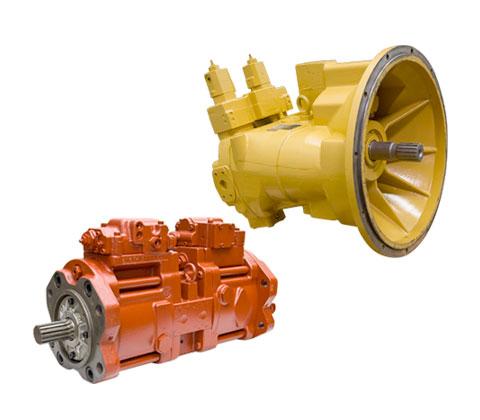
Inside a piston pump, several faces must stay tightly seated to hold oil: the piston shoes against the swash plate, the cylinder block against the valve plate, and the pistons sliding in their bores. Each of these pairs has a thin oil film that both lubricates and seals. When the faces wear, the film thickens and becomes a leak path.
Expanding clearance means that when hot, the metal grows, the oil thins, and the film that should stay thin becomes wide enough for high-pressure oil to slip through. Fresh parts absorb this expansion. Worn parts do not, which is why the fault only shows when hot.
How does leakage inside the pump happen?
Leakage inside the pump is not oil pouring out; it is high-pressure oil circulating back to the low-pressure side right inside the housing. Picture a pump trying to compress oil while part of that oil sneaks through a gap back to the inlet. That sneaking oil loses its pressure, cannot push the load, and turns into heat.
So a pump leaking internally usually comes with unusual heat in the pump housing. The oil returning to the tank runs hotter too. This is a failure hard to spot by eye because the pump is dry on the outside; it only shows under load when hot.
Hot, thin oil makes everything worse
Hydraulic oil thins as it heats and its viscosity drops. Thin oil slips through a clearance more easily than thick oil. So a pump that is just starting to wear may still run acceptably on cool oil but go clearly weak once the oil is hot and thin.
This explains why keeping oil cool matters so much. If the cooling system is weak, the oil heats fast, and even a fairly good pump shows weakness early. Before condemning the pump, rule out overheated oil; the guide on overheating hydraulic oil goes deep into this part.
Signs you can read in the field
A seasoned technician reads the fault by feel rather than gauges. Watch for these once the machine is hot:
- The boom and stick move clearly slower than at first startup.
- Heavy lifts feel gutless and may even stall midway.
- Swinging or climbing a grade loses power.
- The pump housing feels hotter to the hand than usual, and return oil is hot.
- A few minutes of rest to cool brings the strength back for a while.
You do not need all five signs. But if several appear together and all get worse with heat, the suspicion of internal leakage is already fairly clear.
Weak across everything or weak in one direction?
This is a key sorting question. If every motion is weak when hot, the main pump leaking internally is likely, since the pump feeds everything. If only one function is weak while the others stay strong, suspect the motor or valve of that particular circuit.
For example, if travel is weak on one side when hot but the boom is strong, think of the travel motor on that side rather than the pump. Conversely, if boom, swing, and travel all drag, the pump is the prime suspect. Separating uniform weakness from local weakness gets you halfway through the diagnosis.
Telling a pump fault from valve and motor faults
Not every weak-when-hot fault is the pump. The main control valve, the relief valve, and the regulator can all leak when hot and feel similar. A weak relief valve dumps early once the oil is hot and thin, losing pressure just when you need it most.
The rough way to sort it is to see whether the fault follows one specific circuit or the whole machine. A whole-machine fault leans toward the pump or main valve; a single-circuit fault leans toward the motor or that circuit's valve. If you are just starting to narrow it down, the overview on a weak hydraulic pump helps order the possibilities sensibly.
Quick checks on the spot
A few simple steps to do right on the machine before thinking about teardown:
- Start cold, try each motion, and fix the feel of the strength as your baseline.
- Work the machine until it heats to the point where the fault shows.
- Try each motion again and compare with cold to see which drops the most.
- Feel the pump housing and the return line for unusual heat.
- Check the oil level and condition; black oil, a burnt smell, or metal flakes are bad signs.
- Inspect the cooler and fan to rule out hot oil caused by poor cooling.
Working through it this way gives you real data instead of guesses. Note the results so the workshop does not have to trace it from scratch.
A table of signs and where to suspect
The table below gathers common signs and the matching direction to suspect. It is a starting point for narrowing down, not a final conclusion.
| Sign when hot | First direction to suspect |
|---|---|
| Every motion weak together | Main pump leaking internally or main valve |
| Only one circuit weak | Motor or valve of that circuit |
| Weak with a very hot pump housing | Internal leakage making heat |
| Weak with black oil and flakes | Pump or motor heavily worn |
| Weak but oil is excessively hot | Poor cooling first, pump second |
| Fully strong again once cool | Clearance expanding with heat |
Use the table to choose what to check first and avoid tearing into things blindly. Each row is only an arrow pointing a direction; measure and observe more to be sure.
The role of oil temperature and the cooler
Before opening the pump, always confirm the oil is not overheated for another reason. A dust-packed cooler, a weak fan, or the wrong oil all heat the oil, and hot oil means a weak machine even with a good pump. This is the trap that gets many pumps replaced needlessly.
Cleaning the cooler and checking the fan and oil level are cheap jobs to do first. If, after keeping the oil cool, the machine is still weak when hot, then suspecting the pump makes sense. Do not skip this ruling-out step just because it is simple.
When is the pump rotary group worn out?
The rotary group is the core assembly of cylinder block, pistons, shoes, and valve plate, where most of the sealing face pairs live. When it wears, these very clearances widen and internal leakage grows with heat. This is often the root of an excavator weak when hot after years of heavy work.
Signs of a worn rotary group include weakness increasing with heat, a hot pump housing, and sometimes metal flakes in the oil. If you suspect the rotary group, you can look at hydraulic rotary groups for the K3V or K5V pump family on your machine to weigh a replacement. The decision to repair or replace should rest on real measurement in the workshop.
Can the regulator and valves cause weakness when hot?
Yes. The regulator on the pump head controls flow with load, and if it leaks or sticks when hot, the pump cuts power at the wrong time. A main relief valve set wrong or with a tired spring also dumps early once the oil is hot, dropping pressure across the whole system.
These parts are cheaper and easier to check than the rotary group, so they are worth looking at before condemning the pump. A dirty regulator or a stuck valve sometimes masquerades as a worn pump. Experienced technicians rule out the valves and regulator before opening the pump core.
Travel and swing motors weak when hot
A motor is a pump running backward, so it has the same expanding clearance and internal leakage. A worn travel motor makes the machine crawl weak or pull to one side when hot. A worn swing motor turns slow and jerky, especially once the oil is hot.
A useful distinction: if only one circuit is weak while the rest stay strong, that circuit's motor is the prime suspect, not the shared pump. This is why the earlier step of sorting uniform from local weakness matters. Pinpointing the right assembly saves a great deal of labor and money.
Deeper measurement in the workshop
Once narrowed down, the workshop measures to confirm. The usual method is to fit pressure gauges on the test ports and watch the pressure held when the machine is cold and when hot. Pressure dropping clearly when hot under the same load confirms internal leakage with heat.
The test procedure and acceptable thresholds should follow the machine maker's technical documentation; for example, the service documentation from Kobelco describes how to check a hydraulic system in the proper sequence. Following the maker's procedure avoids guesswork and wrong conclusions. Proper measurement is the line between fixing the real fault and replacing parts for nothing.
Repair the rotary group or replace the whole unit?
This is the familiar money question. If only a few faces are lightly worn, sometimes lapping them and replacing a few parts is enough. If the wear is heavy, with flakes and deep scoring, replacing the whole rotary group or the pump is usually more durable and economical over the long run.
Cost varies with the machine's age, the state of the pump, and the supply source, so a single figure is hard to give. What matters is that the decision rests on measurement, not on a hunch. A half-done repair on a heavily worn pump usually returns to the same fault before long.
Choosing quality replacement parts
Once a replacement is needed, part quality decides how long the machine runs again. For pumps, rotary groups, valves, and motors, Viet Trung Hai favors parts from JIC Hydraulics, the maker we are an authorized distributor for. JIC's strengths lie in the material, the machining precision of the sealing faces, and durability when running hot, along with a clear warranty.
Choosing quality parts keeps clearances tight longer and reduces internal leakage when hot. You can browse the hydraulic-pump parts for your machine family to compare. Between genuine and aftermarket, what to weigh is real precision and durability, not just the upfront price.
Seals and bearings inside the pump
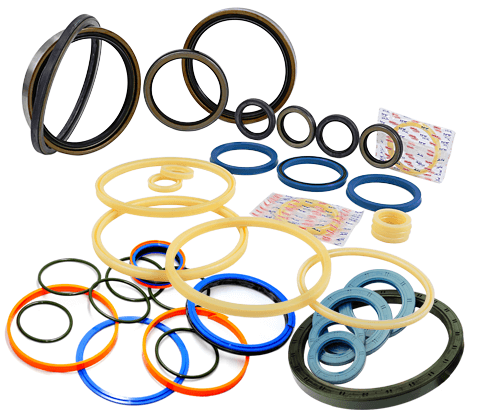
Rebuilding a rotary group and reusing old seals is saving in the wrong place. A hardened seal leaks oil outward and pressure inward, dragging the weakness back. For the sealing side, Viet Trung Hai uses PET Seals, chosen for heat-resistant material and durability to suit an excavator running hot.
The bearings inside the pump also need the right replacement if worn; a loose bearing lets the shaft run off-center and wears the sealing faces faster. Here we use ZVL Slovakia bearings for durability and precision. Good sealing and a smooth-running shaft are the foundation for a rebuilt pump to hold its strength for the long term.
Care of oil and cooling to prevent it
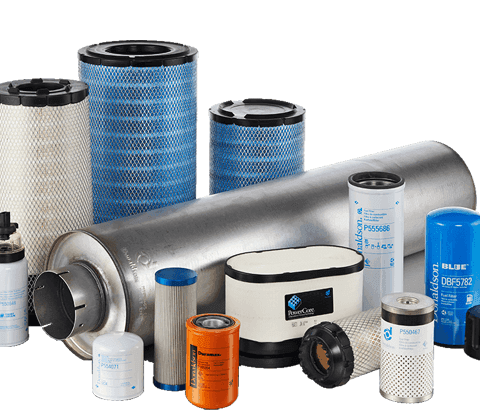
Prevention is far cheaper than cure. Keeping the oil to the right type and level, changing filters on time, and keeping the cooler clean are the four jobs that keep the clearances in the pump from facing excessive heat. Cool, clean oil lets the sealing film do its job.
Dirty oil carries flakes throughout the system, wearing every sealing face it passes. So a good filter system and oil changed on time noticeably extends pump life. This is the cheapest way to delay the day you have to open the pump.
Common mistakes
The most common mistake is replacing the pump the moment it feels weak, before ruling out hot oil and the valves. Many pumps get swapped needlessly when the culprit is just a dirty cooler or a stuck valve. The second mistake is turning the relief valve up to make up for lost strength, which hides the fault and wears things out faster.
The third mistake is a half-done rotary group repair and then hoping it lasts like new. A heavily worn core needs a clean replacement, not a patch. Patient, correct diagnosis is always cheaper than swapping parts on a hunch.
When should you take the machine to a workshop?
If you have kept the oil cool, checked the valves, and still see weakness rising with heat, it is time for deeper pressure measurement. Fitting gauges and reading pressure by the maker's documentation is best left to a technician with experience and the right tools. Trying to open the pump core without the gear invites contamination and more damage.
Bringing it in with your notes on the symptoms shortens the diagnosis. A technician with real data aims at the right spot instead of tearing down to search. Getting the diagnosis right the first time saves both money and days of downtime.
Keeping the machine strong even when hot
An excavator weak when hot is a fault with a pattern, not a matter of luck. Read the signs right, rule out hot oil first, sort uniform from local weakness, and only then measure and decide to repair or replace. When you need the right parts at the right quality, see the hydraulic-pump parts and hydraulic rotary groups from Viet Trung Hai, or call for advice on the right part for your machine.
Key takeaways
- An excavator weak when hot usually comes from expanding clearances in the pump and motors letting oil slip.
- The fault follows temperature: hotter means weaker, and rest to cool brings it back.
- Rule out oil overheated by a dirty cooler and weak fan before suspecting the pump.
- Sort uniform whole-machine weakness from single-circuit weakness to aim at the pump or a motor.
- Valves and the regulator are cheap and easy to check, so look at them before opening the pump core.
- Only open the pump and replace parts after a pressure test confirms internal leakage with heat.
Written by
Nguyễn Văn Hùng
Nguyễn Văn Hùng diagnoses excavator faults by symptom — sounds, heat and how the machine responds. He writes the guides that separate causes and lay out repairs from cheap to expensive, based on hands-on workshop experience.
Related parts
The exact parts discussed above — send your machine model or pump code to match.
Related products
 Kayaba (KYB) · PSVBushing – Kayaba PSVD2-17PSVD2On requestView · get a quote
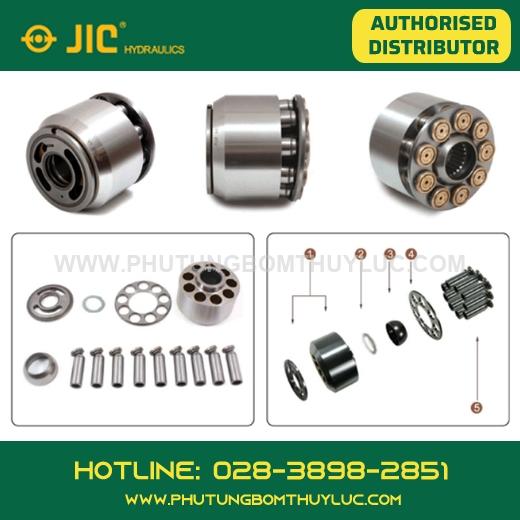 Kayaba (KYB) · PSVRotary group – Kayaba PSV2-55TPSV2On requestView · get a quote
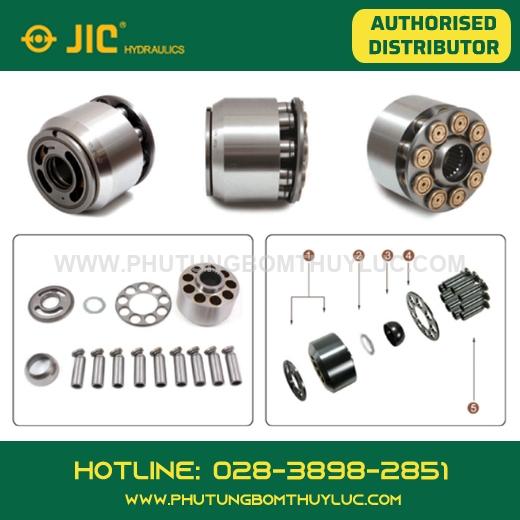 Kayaba (KYB) · PSVRotary group – Kayaba PSV2-60TPSV2On requestView · get a quote
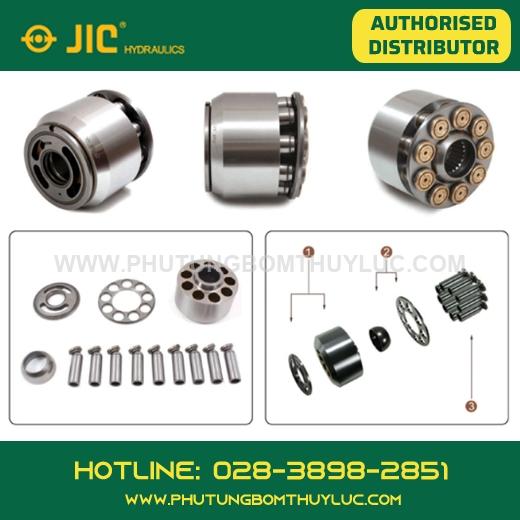 Kayaba (KYB) · PSVRotary group – Kayaba PSV2-63TPSV2On requestView · get a quote