Quick answer
A weak excavator bucket is rarely the pump when the other functions stay strong. The fault usually sits in a bypassing bucket cylinder seal, a weak bucket relief valve, or a worn spool. The right method is to split the fault step by step: listen, feel the heat, run a load-hold test, then think about the pump or the main pressure.
A weak excavator bucket is when the bucket no longer bites and breaks ground as firmly as before, even though the other functions still feel strong. Many mechanics blame the pump too fast, but if only the bucket is weak while the boom, swing, and travel stay strong, the fault usually sits in a bypassing bucket cylinder seal, a weak bucket relief valve, or a worn spool, not the pump. The right method is to split the fault step by step: listen, feel, compare each function, then touch the pump or the main pressure. This guide moves from field cues to how you narrow the fault, so you never swap a costly part by mistake.
What does a weak excavator bucket mean?
In short, a weak excavator bucket is when the bucket cylinder no longer breaks and curls soil as strongly as you are used to. Some machines curl the bucket slowly, some curl halfway then stall, some are fine with no load but fade the moment the teeth bite hard ground. Each kind of fade points to a different group of causes.
The key is to tell whole-machine weakness apart from bucket-only weakness. Whole-machine weakness usually ties to the shared pressure source: pump, main relief valve, or the control signal. Weakness on the bucket branch alone most likely sits right on that branch, not at the source.
Split the bucket fault from the machine-wide fault
Before you remove anything, answer one question: are the other functions strong? If the boom lifts a familiar load normally, the swing is crisp, travel climbs a slope fine, and only the bucket curl is weak, you have already narrowed the zone.
If instead every function fades at once, the oil heats fast, and the whole machine is sluggish, lean toward the pump and the main pressure. A single-branch weakness looks a lot like the boom problem; read the guide on lost lifting power to compare the same narrowing logic.
Step 1: Listen and feel while curling the bucket
Stand near the machine, curl the bucket slow then fast, and listen. An abnormal pump squeal as the bucket reaches the end of the curl often means pressure is dumping early through the relief valve. That sound is clearly different from normal working noise.
Put your hand on the bucket cylinder body and the lines after a few minutes of work. Wherever it heats up abnormally fast is usually where oil is short-circuiting through worn clearance. Heat is a cheap clue many people skip.
Step 2: The load-hold test on the bucket
This is a fast test that costs nothing. Curl the bucket with some heavy soil, lift to mid height, lock the lever, and watch for a few minutes. If the bucket opens by itself or the load drifts while the lever is centered, oil is leaking inside the bucket cylinder.
Hold ability is the key point that separates the faults. A bypassing piston seal lets the bucket drift even while standing still. A weak relief valve makes the bucket fade under heavy load but still hold once locked. Keeping this in mind saves you from opening the wrong part.
A bypassing bucket cylinder seal: typical signs
When the piston seal inside the bucket cylinder wears, oil circles from the pressure chamber to the return chamber and does not build enough force. The typical signs are bucket weakness that grows as the machine warms, a cylinder body that heats fast, and a load that drifts when held.
Internal bypass differs from external leakage. External leakage shows wet oil at the rod or the cylinder head. Internal bypass leaves the outside dry but still loses force, because the oil takes a shortcut inside the cylinder body. This is the most misdiagnosed fault of all.
Why is the bucket strong cold but weak hot?
When hot, the oil thins and the seal rubber changes its grip, so oil slips through worn clearance more easily. The bucket may be strong right after start-up but fade after digging for a while. This pattern almost always points to seals or internal clearance, rarely to the pump.
If the machine is weak evenly from cold to hot, not changing with temperature, the thinking shifts. Then you should inspect the relief valve and the spool before you suspect a seal.
A weak or sticking bucket relief valve
The bucket relief valve limits pressure and protects the cylinder. When its spring weakens or the ball or cone face pits, the valve dumps earlier than it should, so the bucket lacks force in hard ground. You will hear a distinct dump sound the moment the bucket meets a heavy load.
A valve stuck with dirt gives similar symptoms. Often cleaning out the metal debris and sludge brings the valve back to life. According to the service literature of major makers such as Volvo, cleaning and checking the valve seat face is a required step before you conclude it must be replaced.
A worn spool in the control valve
The spool is the slider that meters oil flow to the bucket cylinder. When the spool and valve body wear, oil leaks through the gap between them and pressure drops on the way to the bucket. The symptom is a weak bucket with slow lever response and slight drift.
A worn spool is hard to see by eye and needs an experienced hand to judge. Do not rush to replace the whole valve block before you rule out the seal and the relief valve, because the control valve is an expensive item and hard to source for the right model.
When is the fault really the pump or the main pressure?
Only think of the pump when every function is weak evenly, not the bucket alone. The signs are curl, lift, and swing all fading together, oil heating fast, and the whole machine sluggish. Then the main pressure has dropped and every branch shares the result.
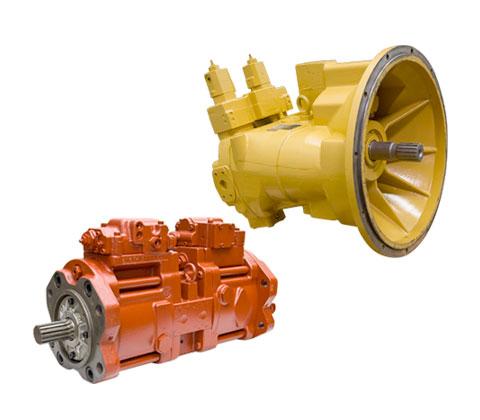
Before you open the pump, read the guide on a weak hydraulic pump to compare the signs. Opening a pump costs time and money, so leave it for last. If you must renew source parts, look at the hydraulic-pump parts range to match your machine.
A quick comparison of the causes
This table helps you cross-check before you take anything apart:
| Cause | Main sign | How to tell |
|---|---|---|
| Bucket cylinder seal bypass | Weaker when hot, load drifts | Load-hold test, feel cylinder heat |
| Bucket relief valve | Fades in hard ground, dump sound | Still holds load when locked |
| Worn spool | Slow bucket, slight drift, mild fade | Mechanic measures clearance, rules out others |
| Pump or main pressure | Every branch weak, oil heats fast | Compare the whole machine |
Cross-checking the bucket against other branches
A good trick is to swap functions to compare force. Load the bucket and the boom to a similar duty and feel which branch fades more. If only the bucket fades, the pressure source is still good and you focus on the bucket branch.
This keeps you from opening the pump by mistake. It is also fast, doable right on site without special gauges.
Lines, fittings, and external leaks
Do not forget to inspect the lines to the bucket cylinder. A swollen hose, a loose fitting, or a stripped thread all leak pressure and lose force. External leaks are easy to spot because of wet oil and clinging dust.
Retightening a fitting and replacing a bad hose section often solves the problem before you touch the valve or cylinder. This is a cheap step worth doing early, before you open the expensive assemblies.
Hydraulic oil and filters: an easy thing to miss
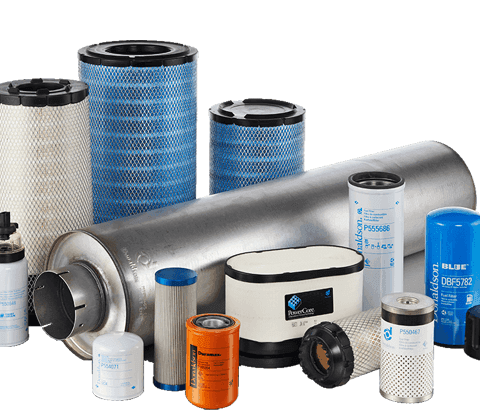
Oil that is too thin, the wrong grade, or a clogged filter all affect bucket force. Dirty oil sticks valves and wears the spool faster. A clogged filter starves the pump and drags the whole machine down.
Check the oil level, the oil color, and the filter change schedule before you conclude. Many weak-bucket cases are just overdue oil and a choked filter; change them and the force returns.
Choosing the right bucket cylinder seal
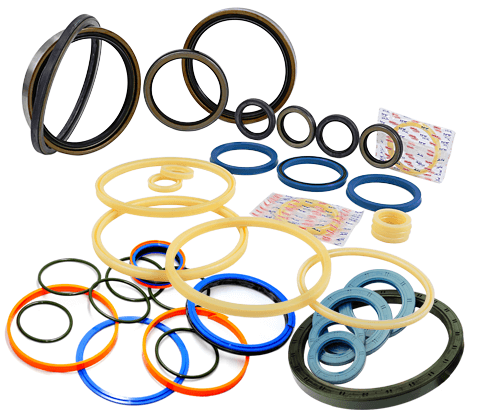
Once you confirm a bypassing seal, choosing the seal kit with the right material and size is the most important part. A seal that resists heat and pressure poorly hardens fast, and you end up rebuilding the cylinder again. At VTH, the PET Seals line is chosen for rubber that handles heat well, precise machining, and steady durability under continuous work.
Measure the rod diameter, the cylinder bore, and the seal thickness before you order. See the hydraulic seals range to match the right kit to your machine.
Choosing replacement rotary groups and valves
If you must restore the pressure source, the quality of the rotary group decides how long the repair lasts. VTH is a distributor for JIC Hydraulics for pumps, rotary groups, valves, regulators, motors, and hydraulic cylinders; the parts are chosen for good material, high machining precision, and a clear warranty. It is a quality option worth considering first.
For common pump families like K3V and K5V, picking the right rotary group for the machine avoids pressure loss after assembly. See the hydraulic rotary groups range to choose the right kit.
A step-by-step routine for a weak bucket
Work in order so you do not swap the wrong part:
- Confirm whether only the bucket is weak or the whole machine is weak.
- Listen and feel the heat while curling the bucket.
- Run the load-hold test on the bucket.
- Inspect external leaks, lines, and fittings.
- Check the oil and the filter.
- Clean and inspect the bucket relief valve.
- Assess the spool if the steps above did not find it.
- Only at the end think of the pump and the main pressure.
Common mistakes when fixing a weak bucket
The most common mistake is replacing the pump the moment the bucket is weak. The pump is expensive, and most weak-bucket cases sit in the seal or the valve. Replacing the pump without fixing the root leaves the problem in place.
The second mistake is skipping the load-hold test. A few minutes of watching separates a bypassing seal from the other faults. Skip that step and you are searching blind.
When should you take the machine to a workshop?
If you have ruled out external leaks, oil, filter, and valve and the bucket is still weak, the fault likely sits deep in the cylinder or the valve block and needs tools and experience. Then taking it to a workshop is sensible, both to avoid further damage and to hit the real fault.
A workshop with a test bench and skilled hands will measure the spool clearance, check the valve, and press seals properly. A sloppy DIY job easily scratches the rod and causes more damage.
Wrapping up and the next step
A weak excavator bucket is rarely a pump fault when the other branches are still strong. Split the fault step by step, favor the bucket cylinder seal and the relief valve before you touch the pressure source. Working in the right order saves you both money and time.
When you need the right seal, valve, or rotary group for your machine, see the hydraulic-pump parts range or contact VTH for help choosing the right kit.
Key takeaways
- Bucket-only weakness is usually a local fault, not the pump.
- The load-hold test separates seal bypass from other faults.
- A weak bucket relief valve still holds the load once the lever is locked.
- Fast heat on the cylinder and lines points to where oil leaks.
- Turn to the pump only when every function is weak and oil heats fast.
- Pick the right seal material and size to avoid a second cylinder rebuild.
Written by
Nguyễn Văn Hùng
Nguyễn Văn Hùng diagnoses excavator faults by symptom — sounds, heat and how the machine responds. He writes the guides that separate causes and lay out repairs from cheap to expensive, based on hands-on workshop experience.
Related parts
The exact parts discussed above — send your machine model or pump code to match.