Quick answer
Excavator sluggish when cold behavior almost always traces back to hydraulic oil that has thickened in the cold, not to a failing pump. Cold oil is high in viscosity, so the pump cannot draw enough to build full flow while the pump control and pilot valves respond slowly. Once the oil warms into its working range, the machine feels light again.
An excavator sluggish when cold almost always traces back to hydraulic oil that has thickened in the cold, not to a failing pump. Cold oil has high viscosity, so it moves heavily through the suction strainer and the lines, and the pump cannot draw enough oil to build full flow; on top of that, the pump control and the pilot valves respond slowly while the whole body of oil is still thick. Once the oil warms up, viscosity drops back into its working range and the machine feels light again. Understand this mechanism and most cases come down to correcting the oil grade for the season, cleaning the suction filter, and warming the machine up properly, rather than rushing to open the pump.
Why is an excavator sluggish when cold, then stronger once warm?
An excavator's hydraulic system works on oil flow, and that flow depends directly on whether the pump can fill its suction chamber. At start-up the whole body of oil in the tank is cold and therefore thick; high viscosity makes it flow slowly and cling to the walls of the lines. A piston pump (the K3V, K5V, A8V, and HPV families all behave this way) draws oil mainly through the small pressure difference between tank and inlet, and thick oil cannot fill the piston chamber fast enough on each revolution. The pump turns at full speed but delivers only part of its design flow, so bucket, arm, and swing all feel sluggish.
As the oil warms with running time, viscosity falls back into the working range the maker designed for, the suction chamber fills cleanly, valves and the control respond in step, and the machine regains its light feel. That "sluggish cold, strong warm" curve is the single most useful identifying sign: it points first at oil, filter, and viscosity, not at pump wear. A worn pump usually gives the opposite symptom, covered further down. You can cross-check the fault patterns by temperature in the excavator fault diagnosis hub.
Thick cold oil starves the pump — the core mechanism
This is the number one cause and also the easiest to overlook, because everyone assumes oil is oil. In reality the viscosity of hydraulic oil changes strongly with temperature: the colder it is, the thicker it gets. When the oil is thicker than the allowed range, the pressure loss along the run from tank to pump inlet rises, and inlet pressure falls below what the pump needs to fill. The piston chamber does not fill completely, each stroke takes in only part of its charge, and actual flow ends up well under rated. The operator feels this as a slow machine: the bucket comes down slowly, the boom lifts lazily.
This "viscosity starvation" has a very distinctive fingerprint: it is worst right after start-up and eases on its own with no intervention. If your machine matches that, suspect oil and viscosity first. To understand the link between temperature and oil thickness more deeply, see the article on hydraulic oil viscosity for the VG rating and how oil changes behavior with heat.
The wrong viscosity grade for the season makes it sluggish cold
Plenty of machines that are sluggish cold simply have the wrong grade in them for the conditions. In the same hydraulic system a VG68 oil is thicker than VG46 at the same temperature; on an early morning or in a cool climate, oil that is too thick at start-up stretches out exactly the sluggish phase. Go too thin, on the other hand, and the oil film gets marginal when the machine is hot and internal leakage rises. The task is always to pick a grade balanced for both the cold and the hot end of your own area and shift.
Balancing the cold end and the hot end
The choice is not about which grade is "better" but about the actual operating temperature range and the frame maker's recommendation. A base oil with a high viscosity index (high VI) holds its viscosity more steadily as temperature swings, so it is less sluggish cold while still keeping enough film when hot. The article on choosing hydraulic oil goes deep into matching grade to machine and season; here are a few quick pointers to picture it.
- Cool climate, early-morning start: lean toward VG46; a VG68 that is too thick cold drags out a long sluggish spell.
- Heavy load, continuous work, runs hot: lean toward VG68; a VG46 that is too thin hot brings more internal leakage.
- Large day-night temperature swing: prefer a high-VI oil; a low-VI oil shifts behavior sharply with heat.
- Per frame-maker recommendation: stay on the maker's stated grade; mixing grades sets the wrong operating point.
These pointers show tendencies only; the specific grade number must follow the manual for your exact machine model, not be imposed rigidly.
The pump control responds slowly when cold
A piston pump on an excavator meters flow through a regulator and a swash plate. That control runs on low-pressure control oil, and that control oil is thick when cold too. When it is thick, the servo piston shifts the swash plate slowly, so the pump takes an extra beat to build the correct angle and supply full flow. In that window the machine responds slowly to the joystick: you push the lever and the bucket lags.
This is normal physics of thick oil, not a broken regulator. But if the control is already worn, or the internal spring and spool are coated with deposits, the cold lag will be heavy and abnormally long, sometimes with jerkiness. How to tell them apart: a viscosity fault disappears completely once the machine is evenly warm; a worn-regulator fault usually leaves a trace even when hot. If the machine stays sluggish or weak after it has warmed, read excavator weak when hot to separate the two groups of causes.
Pilot valves and spools that stick when cold
The control valve directs oil to each cylinder through spools that slide in the valve body with very tight clearances. The pilot system uses low control pressure to shift those spools. When the pilot oil is thick, control pressure builds slowly and the spool moves sluggishly, so movements open late, close late, and the levers feel heavy right after start-up. If the clearances also hold gummy deposits from oxidized old oil, a spool can stick slightly when cold and then free itself once the oil warms and thins.
Sticking with temperature, or sticking from dirt?
The classic symptom: certain movements, usually those needing high pilot pressure, lag clearly when cold but run smooth when hot. If a spool sticks hard regardless of temperature, that is a different story — suspect dirt or a scored valve body and inspect closely. Clean oil at the right viscosity is the precondition for a crisp pilot system; dirty oil accelerates every spool-sticking problem.
A clogged suction filter — starving only when the oil is thick
The suction strainer sits right ahead of the pump inlet. When its mesh is dirty, it adds resistance on the suction side. The telling part is that with thin, hot oil a moderately dirty mesh still passes enough, so the machine seems fine. But when cold, the already-thick oil plus the resistance of the dirty mesh pushes total suction loss past the limit, the pump comes up short, and the machine is clearly sluggish. In other words, a clogged suction filter turns an ordinary cold start into genuine oil starvation.
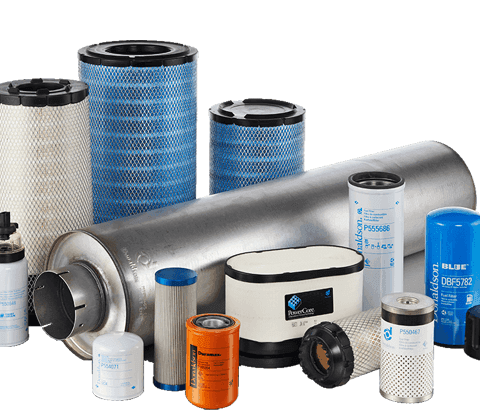
This is why a machine that is "only slow in the morning" is a strong suspect for the suction filter. Check by seeing whether the degree of sluggishness matches how dirty the mesh looks when you pull and inspect it, and cross-reference the filter change record. A dirty suction and return filter is one of the most overlooked causes of starvation; see how to spot it in excavator slow to build power. When it is time to replace, use a hydraulic filter of the correct rating and size so you do not accidentally choke the suction line.
Cavitation risk from revving before it is warm enough
The most damaging reflex when a machine feels sluggish is to rev it to "wake it up." With oil still thick, driving the rpm up means forcing the pump to draw faster through a suction line already choked by viscosity. When the pump demands oil that cannot get back in time, inlet pressure drops so far that the oil releases gas and foams — cavitation. Those gas bubbles collapse right inside the pump, eroding the piston faces, the valve plate, and the bushings, giving a strange whine and wear that accumulates with every cold start.
Cavitation warning signs and how to prevent them
This mechanism turns a habit that seems harmless into a cause of early pump failure. Warning signs: a whine or a rattly, gravelly pump noise when you rev while the machine is still cold, together with foam or an unusual frothing oil level in the tank. The simplest and most effective guard is to not raise rpm and not carry heavy load until the oil is evenly warm. Frame makers such as Hitachi Construction Machinery stress the warm-up procedure before loading in their operating manuals.
The check chain: cause, mechanism, symptom, inspection
Good diagnosis follows a chain and does not jump straight to opening the pump. A sensible order starts with the cheap and easy first: oil, viscosity, filter, and only then the control and pump. Here is a tight check sequence for the sluggish-when-cold fault.
- Confirm the symptom fits: clearly sluggish right after start-up, easing as the machine warms. If it stays weak when hot, that points elsewhere.
- Check the grade in use against the frame-maker recommendation and the season: is the oil too thick.
- Inspect the oil condition: dirty, water-contaminated, cloudy, foaming, or a burnt smell are all red flags.
- Pull and inspect the suction and return filters: does the fouling match the morning sluggishness.
- Listen to the pump at start-up: any whine or rattle signaling cavitation.
- Watch the lag of the regulator and spools: does the lag vanish entirely once the machine is evenly warm.
- Only after clearing oil, filter, and control should you consider a deeper pump inspection.
Following this order keeps you from replacing a pump by mistake for a fault that is really just wrong viscosity or a clogged filter.
The correct warm-up procedure
Warming up properly both cures the sluggish-when-cold symptom and protects the pump from cavitation. The principle is to let the oil warm and circulate before you push the machine into work.
- Start the engine and run it at low rpm for a while to circulate the oil gently; do not rev right away.
- Then work each function gently under no load: extend and retract the boom and arm, swing slowly, so oil warms across every branch and valve group.
- Hold a few functions lightly at the end of travel briefly so oil passes the relief valve and warms the whole body of oil evenly — do it gently, do not hold it long.
- Only take on heavy load once the machine responds lightly as normal and the sluggishness is gone.
- In cold weather extend the warm-up phase; do not force it by the clock, gauge it by how the machine feels.
This habit costs almost nothing yet saves a great deal of pump life year over year.
Telling sluggish-cold apart from weak-when-hot
These two faults are opposites in mechanism and must not be confused. Sluggish-cold is about viscosity and the suction path: thick oil causes starvation and it clears on its own once warm. Weak-when-hot is usually about internal leakage: when the oil is hot and thin, worn clearances in the pump or valves let more oil slip past, and pressure and flow drop just as the machine gets hot. One is heavy cold then fine; the other is normal cold then fades as it heats.
- Worst moment: sluggish-cold is worst right after start-up, while weak-when-hot is worst after working, once the oil is hot.
- Behavior with heat: sluggish-cold eases as the machine warms; weak-when-hot worsens as it heats.
- Core mechanism: sluggish-cold comes from thick oil, starvation, and the suction filter; weak-when-hot comes from internal leakage due to wear and thin oil.
- First response: for sluggish-cold, use the right grade for the season and clean the filter; for weak-when-hot, check pump and valve wear and pressure.
If the machine is both sluggish cold and weak hot, there are likely two problems stacked, and each must be separated and dealt with in turn.
When is it oil and filter, and when is it the pump?
The simple rule: if the symptom tracks oil temperature and vanishes once the machine is evenly warm, box in oil, viscosity, and filter first. Only when the machine stays sluggish or weak even when fully warm, or comes with abnormal pump noise, foaming, or excessive oil heat, do you turn toward pump and control wear. Opening the pump is costly and slow; ruling out oil and filter first is almost always the right move both economically and technically.
A practical trick: try changing to the correct grade and cleaning the suction filter, then re-judge the cold-warm curve. If the morning sluggishness drops clearly, you have hit the cause without touching the pump. If nothing changes, that data is valuable too, because it pushes suspicion toward the pump and control on solid grounds.
Choosing correct-quality replacement parts so it does not recur
Fixing the sluggish-when-cold fault at the root is tied to the quality of the filter and the pump parts. A filter of the wrong rating or size can itself choke the suction line and recreate the very starvation you just fixed. For pump and control parts, JIC Hydraulics is our first choice: genuine-replacement parts machined to the correct clearance tolerances, with material and durability held close to the original component's requirements and a clear warranty. Correct tolerance matters especially for spools and pistons, because a wrong clearance causes internal leakage and hands you back the weak-when-hot symptom.
PET Seals and ZVL bearings alongside the pump
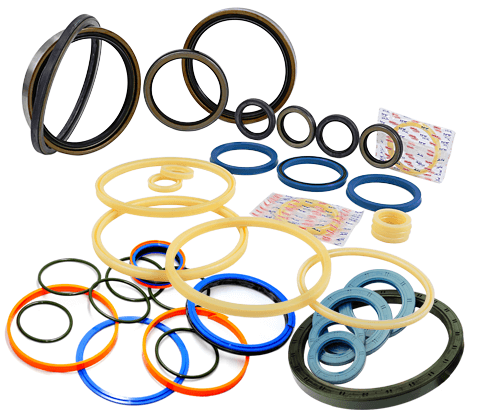
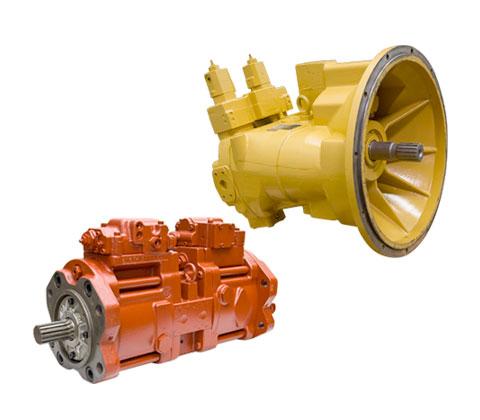
Alongside the pump, sealing parts should use PET Seals and bearings should use ZVL Slovakia so the pump assembly stays tight and turns smoothly for the long run. When you need the full set, see the hydraulic pump parts range to match the K3V, K5V, or A10VSO family of your machine. Choosing right the first time is far cheaper than repairing over and over because a replacement part fell short.
Quick lookup: symptom, cause, response
| Observed symptom | Suspect first | First response |
|---|---|---|
| Sluggish right after start-up, eases when warm | Oil too thick, wrong seasonal grade | Switch to the grade right for season and frame |
| Slow only in the morning, with a dirty filter | Clogged suction filter plus thick oil | Pull, inspect, and replace with the right rating |
| Lever lag cold, gone when hot | Regulator and pilot valve slow to respond | Use clean oil at the right grade, monitor again |
| Pump whines or rattles when revved cold | Cavitation from demanding oil before warm | Stop revving, warm up before loading |
| Still weak even when fully hot | Pump or valve wear, internal leakage | Check pump and pressure, it is not the oil |
This table is a starting point for the check; always confirm with real observation on the actual machine before deciding to replace any expensive component.
What to do next
If your machine is sluggish every morning, start with three cheap, fast steps: compare the grade in use against the season and the frame-maker recommendation, pull and inspect the suction filter, and apply the correct warm-up procedure for a few days. Log the cold-warm curve before and after. That data will tell you whether to stop at oil and filter, or to go on into the pump — and that is the most worthwhile decision you will make for the machine this week.
Key takeaways
- Sluggish when cold is almost always thick oil and viscosity, not a failing pump.
- The symptom easing as the machine warms points first at oil, filter, and control.
- Pick the grade VG46 or VG68 by temperature range and frame-maker advice; prefer high-VI oil.
- A clogged suction filter starves only when oil is thick, so morning-only slowness implicates it.
- Do not rev while the machine is cold: it invites cavitation and shortens pump life.
- If it stays weak even when hot, that is pump wear and internal leakage, a different fault.
Written by
Nguyễn Văn Hùng
Nguyễn Văn Hùng diagnoses excavator faults by symptom — sounds, heat and how the machine responds. He writes the guides that separate causes and lay out repairs from cheap to expensive, based on hands-on workshop experience.
Related parts
The exact parts discussed above — send your machine model or pump code to match.