Quick answer
An excavator jerks when the boom, bucket or swing steps along instead of gliding, because oil reaches the cylinder or motor unevenly. The four common causes are air in the oil, weak pilot pressure, a sticking valve spool, and low oil or a clogged filter. Narrow it down by noting which function jerks, whether it jerks at the start or mid-stroke, and whether it jerks cold or only when hot.
When an excavator jerks and the boom, bucket or swing steps along instead of gliding, you are watching an uneven flow of oil reach a cylinder or motor. The cause usually sits in one of four groups: air trapped in the oil, weak pilot pressure, a sticking spool in the control valve, or low oil with a clogged filter. The fastest way to narrow it down is to note which function jerks, whether it jerks at the start or mid-stroke, and whether it jerks cold or only when hot. This guide follows the workshop way: listen, feel the heat, sense the rhythm, then open things up. The aim is to rule out each cause from cheapest to most expensive, so you never split a pump before you need to. Read to the end and you can map the fault zone yourself before calling a technician.
What does a jerking excavator actually mean?
A jerking excavator is when a movement that should be smooth breaks into short steps, nudge then stall, nudge then stall. You pull the lever steadily, yet the bucket moves in jumps. This feeling is different from a machine that runs smoothly but loses power. Jerking is a problem of oil rhythm, not just missing force.
How is jerking different from vibration?
Vibration is a fast, even oscillation, usually from the pump or engine. Jerking is a set of larger, slower steps that follow your control input. When the boom rises and bounces along like a car with a slipping clutch, that is jerking. Telling them apart early keeps you from blaming the engine when the fault lies in the oil and pilot.
Air in the oil: the most common culprit
Hydraulic oil must be stiff and nearly impossible to compress. When air bubbles get mixed in, that air compresses then springs back, making the cylinder move in stages. You often see the oil in the tank turn milky, and the pump whines more than usual. The jerking is worst at cold start and eases as the oil warms because the bubbles dissolve. A simple test is to idle the machine for a few minutes and watch whether the oil surface settles or keeps foaming. If bubbles keep rising steadily, there is almost certainly an air leak on the suction side to find.
Why does air get into the oil?
Air mostly enters on the suction side, where pressure is low. A hardened suction-side seal, a loose clamp, or an oil level below the suction pipe all let air slip in. A dirty suction filter also creates local vacuum that pulls air through small gaps. If you have just changed the oil or opened a line, trapped air is normal and must be bled out properly.
To understand why falling control pressure drags movement into a jerk, read our guide on lost pilot pressure, which shows how a weak circuit makes every action slow and stiff.
How does weak pilot pressure cause jerking?
The pilot is a low-pressure oil circuit that drives the spool in the main valve. When pilot pressure is weak, the spool hesitates instead of opening cleanly, so the main flow opens and closes by turns. The result is boom and bucket moving in steps that follow the wavering spool. A classic sign: light lever input jerks more, while pressing the lever harder smooths it out.
How this whole control circuit works is described in detail in our article on the pilot system; reading it first helps you picture the oil paths before you open a valve.
A sticking spool in the control valve
The spool is a slider inside the valve body that must travel freely in a very tight bore. Dirt, degraded oil or light rust makes the spool drag, open late then release, and produce a jerk. This kind of jerk usually sticks to one fixed function, for example only the boom-up jerks while boom-down stays smooth. That is a strong hint the fault sits in the exact spool bore controlling that movement.
Low oil or a clogged suction filter
When the oil level is low, the pump draws unevenly and sometimes pulls in air. A clogged suction filter gives the same result: the pump is starved in bursts. Both make the supply flow break up and the machine jerk, especially when several functions run at once. Checking the oil level and filter condition comes first because it is cheap and quick.
How do you narrow it down by which function jerks?
The rule is simple: if every function jerks, suspect the shared parts, the oil, air, pump or the root pilot circuit. If only one function jerks, suspect its own parts, that spool bore, that branch pilot line, or the matching cylinder or motor. This is the most important split-the-fault step, done before you open anything. Try each function slowly with the same hand force, then record which one jerks and where in the stroke. That record is worth far more than guessing, and it saves the technician time on the bench.
The boom jerking on raise and lower
A boom that jerks on raise usually ties to heavy load and high pressure. If it only jerks under load on raise but lowers smoothly with no load, think of the anti-drift valve or a dragging boom spool. If it jerks on both raise and lower, air in the oil or weak pilot is more likely. Feel the return line lightly for unusual heat, since internal leakage makes heat.
The bucket jerking on curl
Bucket curl that jerks often comes with the valve and pilot line for the bucket alone. Because the bucket works hard and takes shock, debris gathers easily in this bore. If the bucket jerks while boom and swing stay smooth, focus on the bucket control group. If all three jerk, go back to the shared causes.
Swing jerking on start and stop
Swing that jerks as it engages and as it stops is a familiar sign. The swing motor has large inertia, so weak pilot pressure or a faulty counterbalance valve shows up clearly here. If the swing jerk comes with a mechanical knock, also check the swing brake and bearing. If it jerks quietly with no odd noise, lean toward pilot and oil.
Travel jerking on one track
When one track jerks while the other stays smooth, the fault usually sits in the separate branch: the travel motor, counterbalance valve or pilot line on that side. If both sides jerk, go back to suspecting oil and pump. Try the movement on flat ground to compare the two sides fairly.
Quick zoning table by symptom
| Symptom | Suspect first | Quick check |
|---|---|---|
| All functions jerk, milky oil | Air in the oil | Oil level, suction seals, bleed air |
| Jerks on light input, better hard | Weak pilot | Pilot pressure and line, pilot filter |
| Only one function jerks | Sticking spool in that bore | Clean, inspect the slider |
| Jerks under heavy load | Anti-drift valve, rotary group | Compare loaded and unloaded |
| Jerks more when hot | Internal leak, worn rotary group | Feel heat, flow-test on the bench |
Workshop check sequence in order
- Check the oil level and colour, look for milkiness or foam.
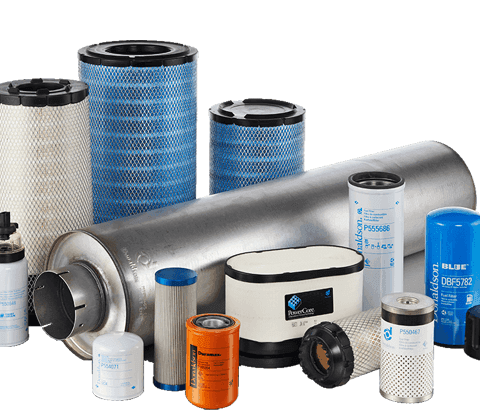
- Inspect the suction and return filters, replace if dirty or overdue.
- Check suction-side sealing: seals, clamps, joints.
- Bleed air from the system in the correct order for the model.
- Assess the pilot circuit: use light and hard input to compare the jerk rhythm.
- If only one function jerks, remove and clean that spool bore.
- If the jerk grows when hot, check the rotary group and internal leakage on the bench.
Hydraulic oil: right grade and kept clean
The right grade of oil in good condition is the foundation of smooth movement. Degraded oil, water-contaminated or too dirty makes the spool drag and foams easily. Changing oil and filters on the maker's schedule prevents most jerking cases. Technical documents from makers such as Hitachi state clear requirements for oil cleanliness and service intervals, well worth checking for each model.
When does the fault sit in the pump or regulator?
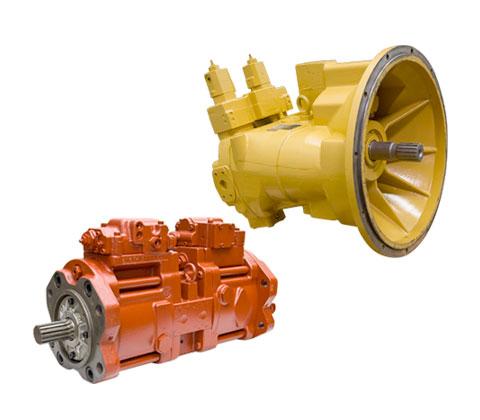
If the machine jerks along with a power loss under heavy load, and gets worse when the oil is hot, think of the pump and regulator. The regulator controls the swash-plate angle, which sets flow against load. When it wavers, flow ripples and the machine jerks. You can review the pump regulators group to understand this assembly before deciding to replace it.
How does a worn rotary group affect movement?
The rotary group includes the cylinder block, pistons and valve plate, and is where the oil flow is made. When it wears, oil leaks through the gaps, flow drops and rises and falls with pressure. The machine is then both weak and jerky, worst when hot because the clearances widen. If you suspect this, look over the hydraulic rotary groups to grasp the build before opening the pump.
The solenoid valve and control signal
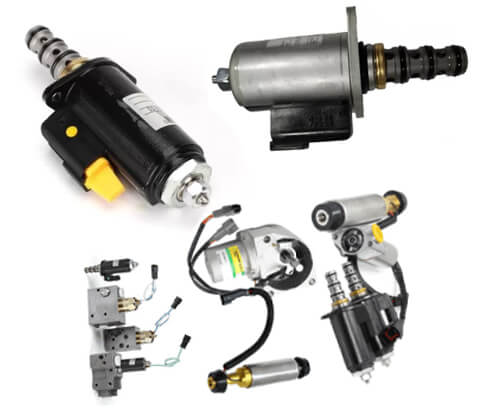
On many models, a solenoid valve drives the pilot line from an electric signal. A weak coil, loose connector or sticking valve pin makes the signal flicker, and the movement jerks with it. Checking the electrical connection and the cleanliness of this valve is simple yet often skipped. When replacing, pick the correct valve for the model so the signal stays stable.
Choosing replacement parts of the right quality
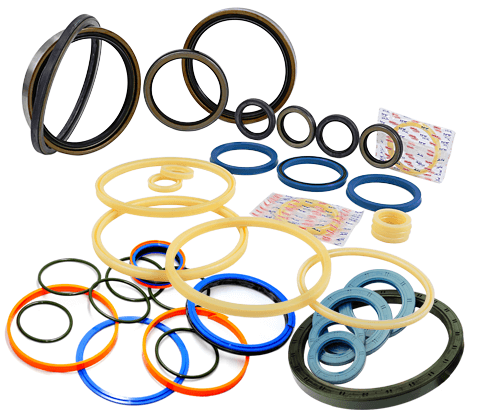
When you must replace a spool, rotary group or regulator, part quality decides whether the machine stays free of jerking for long. As an authorized distributor for JIC Hydraulics, we first suggest the JIC Hydraulics pumps, rotary groups, valves and regulators for their good material, precise machining and steady durability, backed by a clear warranty. For seals there is PET Seals, and for bushings and bearings there is ZVL Slovakia. See the hydraulic-pump parts catalogue to match your exact model.
Common mistakes when self-repairing
- Overfilling or underfilling oil, both invite air.
- Skipping the bleed step after opening a line.
- Replacing a spool without fixing the root source of debris.
- Blaming the pump when it is only weak pilot.
- Using no-name parts that stop the jerk for days then relapse.
When should you send it to a proper workshop?
If you have checked oil, filters, suction line and pilot and the machine still jerks, what remains usually needs flow and pressure gauges. Measuring under load separates a pump, valve or motor fault that the eye cannot see. Do not split the pump before ruling out the cheaper causes above. A correct diagnosis is always cheaper than one wrong replacement.
Next steps for your machine
Work from cheap to expensive: oil and filters first, then suction line and pilot, and only last the pump. Note which function jerks and when, because that detail helps a technician zone in fast. When you need the right quality part, browse the hydraulic-pump parts catalogue or call our technical team for advice matched to your model.
Key takeaways
- A jerking excavator is a problem of uneven oil rhythm, not just missing force.
- Four main suspects: air in the oil, weak pilot, a sticking spool, low oil or a clogged filter.
- If every function jerks, suspect shared parts; if one jerks, suspect its own parts.
- Jerks cold but eases when hot points to air; jerks worse when hot points to a worn rotary group.
- Check cheapest first: oil, filters, suction line, pilot, and only then the pump.
- Choose quality parts matched to your model so the jerking stops for good.
Written by
Nguyễn Văn Hùng
Nguyễn Văn Hùng diagnoses excavator faults by symptom — sounds, heat and how the machine responds. He writes the guides that separate causes and lay out repairs from cheap to expensive, based on hands-on workshop experience.
Related parts
The exact parts discussed above — send your machine model or pump code to match.