Quick answer
The pilot system is a low-pressure oil circuit that lets the operator move the main valves through light joystick effort instead of shoving heavy spools directly. It has a pilot pump, a pilot reducing valve and the hand valves. When pilot pressure is lost, the spools cannot shift, so the machine goes nearly dead even though the main pump still turns.
The pilot system is a low-pressure oil circuit sitting between the controls and the main valves, letting the operator run an excavator with light joystick effort. Instead of shoving the heavy spools inside the control valve directly, the operator only pushes a small oil flow to give a command. The pilot pump creates that flow, the reducing valve keeps it steady, and the hand valves decide where it goes. When the pilot circuit weakens or fails, the machine reacts slowly, labours, then goes nearly dead even though the engine and main pump still run fine.
What the pilot system is on an excavator
The pilot system is a separate, low-pressure circuit kept apart from the high-pressure work circuit. Its job is not to make digging force but to give commands. Pilot oil travels to both ends of each spool in the main valve. When one spool end receives oil, the spool slides that way and opens a path for high-pressure oil to reach a cylinder or motor.
This layout lets the operator work all day without a tired hand. The effort to move the joystick is tiny, while the heavy lifting is carried by pilot oil.
Why an excavator needs a pilot circuit
Without pilot, the operator would have to overcome the spring and friction of the spool in the main valve by hand. On mid and large excavators, that force is too heavy to feel smooth. The pilot circuit steps in as a booster stage.
Because of it, the controls feel light and progressive. The operator gives a gentle command and the machine answers in proportion. This is also why a machine with a healthy main pump can still run badly if the pilot has trouble.
Where the pilot pump draws oil from
The pilot pump is usually a small gear pump mounted at the tail of the main pump group or built into the same housing. It draws oil from the tank through a filter and delivers the low-pressure flow that feeds the whole control circuit. Because it shares the same oil as the main pump, oil quality and cleanliness affect it directly.
When the pilot pump wears, its flow drops. The machine still moves but reacts sluggishly, especially with cold oil in the morning. This is an early sign worth noticing.
What the pilot reducing valve does
The pilot pump delivers more pressure than the control circuit needs, so a pilot reducing valve must lower and hold it steady. This valve acts like a relief, always keeping a fixed pressure for the control circuit. If that pressure wanders, the control feel becomes uneven.
A worn or sticking reducing valve is a quiet cause of lost smoothness. Many mechanics skip it because they look at the main pump first. When the control circuit is suspect, inspect this valve group too. If you are tracing a case of loss of pilot pressure, the reducing valve is one of the first points to check.
How the joystick controls the machine
Each hydraulic joystick is really a hand-valve group sitting under the lever. When you push the lever one way, a small piston presses a spring and opens a path for pilot oil to flow out the matching port. The further you push, the higher the pilot pressure out, and the more the spool opens.
So the joystick is not an on-off switch but a metering knob. It lets the operator blend several motions at once smoothly, such as curling the bucket while swinging the house.
The main spool and the pilot push
The spool is a sliding rod inside the main valve. Its two ends are two chambers that receive pilot oil. Pilot oil enters one end, pushes the spool across, and compresses the return spring at the other end. When you release the joystick, pilot oil drains to tank, the spring centres the spool, and the motion stops.
All of the machine smoothness lives in the balance between incoming pilot pressure and the return spring. If pilot pressure is short, the spool does not open enough, the main flow is pinched, and the machine feels weak.
Where the pilot oil travels
Pilot oil runs a closed loop: from the pilot pump, through the reducing valve, to the hand valves at the joysticks and pedals, then to the spool ends, and finally back to tank. Along the way it also feeds a few side units such as the swing safety valve and the safety cut-off at the lock lever.
Knowing this path helps you localise a fault fast. If only one motion is weak, the fault is usually in that motion hand valve. If the whole machine is evenly weak, suspect the root: the pilot pump or the reducing valve.
How does the pilot valve actually work?
The pilot valve, or hand valve, is the part that turns operator movement into an oil signal. Inside each port a piston presses on a metering spring. Push the lever gently and the spring compresses little, so output pressure is low; push hard and the spring compresses more, so output pressure is high. This metering spring is what makes the command proportional to spool opening.
When the spring weakens or the piston wears, the control feel drifts off. The machine may jerk at the start of a motion or creep after the lever is released. This is a spot often missed on older machines.
What weak pilot pressure looks like
Weak pilot pressure leaves several familiar signs on the job. Operators often describe the machine as slow to bite, needing full lever travel before a clear motion appears. Blending several motions makes it feel even weaker.
Some common signs when pilot pressure falls off:
- The machine answers commands late, especially with cold oil in the morning.
- Swing is weak, starting slowly before it gathers speed.
- Blended motions lose force when done together.
- You must push the joystick deeper than usual to reach the old speed.
- It improves as the machine warms but never returns to full form.
Why lost pilot leaves the machine dead
This is the key point. The main pump still turns and high-pressure oil is still there, but with no pilot pressure the spool gets no command to shift. The spool stays centred, the main port stays shut, and no motion can come out. The machine stands as if locked while the engine roars.
Put another way, the pilot is the command side and the main pump is the force side. Lose the command side and the force side becomes useless. That is why a small fault in the low-pressure circuit can leave a machine of dozens of tonnes standing still.
The pilot filter and oil cleanliness
The pilot circuit works with very small clearances in the hand valves and spool ends. Even a little grit is enough to jam a piston or block an orifice. So clean oil matters more to the pilot than many people think.
A clogged filter or long-neglected dirty oil is a common cause of intermittent faults. Changing oil and filters on time is the cheapest way to keep the pilot circuit healthy. When you replace hydraulic-pump parts, check the filter condition and tank cleanliness at the same time.
What the pilot accumulator does
Some machines have a small accumulator in the pilot circuit. It holds a little pressure so the control circuit still has oil for a moment after shutdown, serving safe boom-lowering or pressure relief. Not every machine has one; it depends on the design of each model.
If your machine has an accumulator and it fails, you may see the boom drop quickly at shutdown, or lose the safe-lowering function. It is a small detail but tied to safety.
How oil temperature affects the pilot
Cold oil is thick and flows slowly through the small passages in the pilot circuit. That is why a machine is often sluggish in the morning, slow to answer the lever. As the oil warms, viscosity drops, the pilot circuit flows freely, and the machine sharpens up again.
If the machine is only slow when cold and fine once warm, that is usually normal viscosity behaviour. But if it stays weak when warm, suspect the mechanical side: a worn pilot pump or a tired reducing valve.
Leaks inside the pilot circuit
Because pilot pressure is low, even a small leak can drop it noticeably. A leak may be at a hand-valve seal, at a fitting, or from worn clearances inside the pilot pump. Internal leaks are harder to spot than external ones, because the oil runs straight back to tank instead of dripping on the ground.
When an internal leak is suspected, mechanics measure pressure at points along the circuit to find where it falls. The more worn spots add up, the harder it is to hold enough pilot pressure.
When to check pilot pressure
Check pilot pressure when the machine is evenly weak yet the main pump seems fine. Measuring with warm oil gives a result closer to reality. Comparing values between ports, and between release and push of the lever, helps localise fast.
Reading and comparing pressure must follow the maker procedure. For the matching model you should consult the genuine technical documents, for example the guidance from Caterpillar, rather than guessing by feel. The correct figures change by machine age and model, so the original document is the source to trust.
How the pilot circuit ties to the pump regulator
On many machines the pilot signal is also used to control the swash-plate angle of the main pump, that is, to regulate flow to demand. Then the pilot circuit both commands the spool and tells the pump how much oil to deliver. This is where the pilot and the pump regulator meet.
If this signal is wrong, the machine may bite oddly or heat up abnormally. When handling faults like these, you often have to consider the pump regulators too, not just the control circuit. The work of adjusting pump pressure and checking the pilot signal should go together.
Maintaining the pilot system properly
Maintaining the pilot circuit is mostly about keeping oil clean and changing filters on time. Also watch the fittings and hoses around the joysticks, since long vibration makes them weep oil. A pilot circuit kept clean often lasts far longer than the main pump section.
When removing and refitting a hand valve, work in a clean spot and keep dust out of the piston clearance. A single grain of sand is enough to cause a jam. Care at this stage saves a whole afternoon of fault-chasing later.
Genuine versus aftermarket pilot valves
For hand valves and pilot reducing groups, the quality of the internal parts decides smoothness and durability. Genuine parts are usually consistent in tolerance and springs, so the control feel stays close to original. Aftermarket parts come in many quality levels; chosen well they serve fine, chosen carelessly they soon turn erratic.
The practical advice is to favour a clear source for parts that shape the control feel. Prices between types vary with condition and supply, so ask carefully before replacing.
Common faults and how to localise them
The table below sums up a few symptoms and lines of suspicion so you can localise before calling a mechanic:
| Symptom | Line of suspicion |
|---|---|
| Whole machine evenly weak, slow to answer | Worn pilot pump or tired reducing valve |
| Only one motion weak | Hand valve for that motion |
| Machine creeps after lever released | Spool return spring or worn hand-valve piston |
| Slow when cold, fine when warm | Oil viscosity, usually normal |
| Boom drops fast at shutdown | Accumulator or related safety valve |
This table is only for a first localisation. A sure diagnosis still needs pressure measurement and a real inspection.
When you need a specialist
If you have kept the oil clean and changed filters on time yet the machine stays evenly weak, that is when a proper pressure test is due. Opening the main valve and pump group needs tools and experience; a careless job lets in dirt and causes more damage. Knowing where to stop is a skill too.
A mechanic familiar with the pilot circuit will measure, compare and rule out in order, rather than swap parts on a hunch. That approach saves both money and downtime.
A wrap-up for machine owners
The pilot system is the command side of an excavator: small, low-pressure, but it decides whether the machine obeys. The pilot pump makes the flow, the reducing valve holds it steady, the hand valve meters it, and the spool carries it out. Lose any link and the control feel drops.
Keep the oil clean, change filters on time, and measure pressure when in doubt; three simple, effective habits. Understanding this circuit lets you talk to a mechanic clearly and avoid replacing the wrong part.
If you need to replace a hand valve, a reducing group or other parts in the control circuit, see hydraulic-pump parts to choose the right source for your machine age, or get in touch for help localising the fault before you replace anything.
Key takeaways
- The pilot system is a low-pressure command circuit, separate from the high-pressure work circuit.
- The pilot pump makes flow, the reducing valve holds it steady, the hand valve meters the command.
- Pilot oil pushes the main spool; releasing the lever lets the return spring centre it.
- Lost pilot pressure leaves the machine dead because the spool gets no command to shift.
- Clean oil and on-time filters are the cheapest way to keep the pilot circuit healthy.
- Evenly weak points to the root; a single weak motion points to that motion hand valve.
Written by
Phạm Đức Thắng
Phạm Đức Thắng focuses on the undercarriage, tracks and the travel and swing systems of excavators. He writes about how these systems are built, travel and swing motors, and protecting the undercarriage from wear.
Related parts
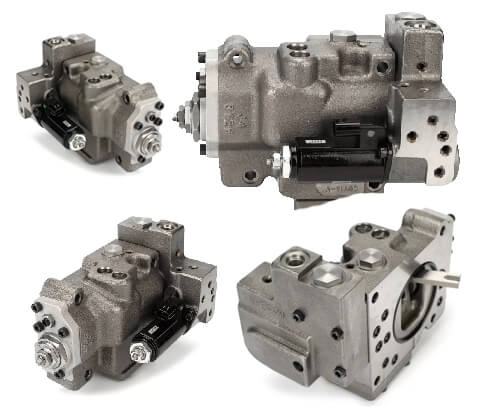
The exact parts discussed above — send your machine model or pump code to match.