Quick answer
The choice between wheeled vs tracked excavators comes down to how each machine transfers its weight to the ground. Tracks spread the load across a long undercarriage, so ground pressure stays low and the machine grips and stays stable on soft ground — a fit for heavy earthmoving and rough terrain. Wheels run on tyres and axles, so the machine self-travels quickly on paved roads, moves easily between points, and suits urban and utility work. Which one you choose depends mainly on the ground you work on and your need to travel on the road, not on engine power.
The choice between wheeled vs tracked excavators comes down to how each machine transfers its weight to the ground. Tracks spread the load across a long undercarriage, so ground pressure stays low and the machine grips and stays stable on soft ground — a fit for heavy earthmoving and rough terrain. Wheels run on tyres and axles, so the machine self-travels quickly on paved roads, moves easily between points, and suits urban and utility work. Which one you choose depends mainly on the ground you work on and your need to travel on the road, not on engine power.
Both travel types belong to the construction machinery family and usually share the same upper structure: cab, boom, arm and a nearly identical hydraulic package. The fork in the road is underneath — the part that touches the ground and carries the machine's full weight while digging.
Where do wheeled and tracked excavators differ?
Look only at the upper body and the two machines seem alike: same swing, same boom-and-bucket layout, same control logic. The real difference sits in the undercarriage. Tracked machines ride on two steel track chains running around the sprocket, rollers and idler; the whole track contact area splits the load evenly. Wheeled machines ride on four (sometimes more) pneumatic tyres mounted on axles, like a heavy truck that can dig.
From that root difference come six points worth weighing before you commit to a machine: ground pressure and stability, road travel versus soft-ground travel, self-travel speed, wear and undercarriage maintenance cost, suitability for urban work versus earthmoving, and finally the parts consequences when the machine comes into the workshop. These six decide whether a machine fits the site far more than any brochure figure. If you are torn between ranges, the article on types of construction machinery gives the wider picture of where excavators sit in a fleet.
Ground pressure and stability: where tracks win
Ground pressure is machine weight divided by contact area. Because the track spreads out lengthwise, a tracked machine's contact area is large, so for the same mass it presses on the ground far more lightly than four tyre patches. On paddy soil, alluvial banks or freshly graded but uncompacted fill, this is what keeps the machine from sinking and from tearing up the surface as it digs.
Digging stability follows directly. A wide, low track undercarriage lowers the centre of gravity and widens the anti-tip footprint in both directions. Reaching the boom out to lift a heavy, wet bucket of soil, a tracked machine is less likely to lift its rear and sways less. A wheeled machine that wants to dig steadily usually has to lower its hydraulic outriggers and front dozer blade to lock the body down; skip that step and the elastic tyres let the body rock and rob useful digging force. That is why on weak ground and in deep digging, tracks are almost always the default.
Road travel and hard ground: the wheeled advantage
Switch to asphalt, concrete or a hard yard and the balance flips. A wheeled machine self-travels between work points at the speed of a purpose-built vehicle, with no tractor unit and trailer needed. For a utility contractor hopping between manholes and drains strung along several streets in a day, this self-travel plainly saves time and logistics cost.
Pneumatic tyres also do not scar finished road surfaces. Steel tracks, by contrast, leave imprints and can peel a hot asphalt layer if run directly on it, so tracked machines often need boards laid down or rubber-padded track shoes when forced across a surface that must be protected. In an urban setting, where you work while keeping the site clean, the edge tilts firmly to wheels.
Travel speed and working radius
Self-travel speed is the difference you feel most. A wheeled machine moves markedly faster than a tracked one over long distances, turning the machine into a mobile unit that can cover many scattered points. A tracked machine travels slowly and burns fuel when it has to crawl any real distance; getting it to site almost always needs a dedicated transporter.
In return, once in position and digging, self-travel speed no longer matters. Both swing, reach and scoop with the same hydraulic package; digging output in one spot depends on the machine, the bucket and the operator, not on the undercarriage type. Put another way, wheels buy back time in travel, while tracks return steadiness in the dig.
Soft ground, mud and slopes
On mud, flooded ground or slick slopes, track grip is decisive. The track shoes bite in, spread the load and give traction that rubber tyres cannot match once the surface loses friction. A tracked machine climbs earth slopes, crosses ditches and works at the edge of ponds with a wider safety margin.
Wheels on the same terrain slip easily, bog down and lose digging force because the body is not firmly anchored. You can compensate with deep-lug tyres, tyre chains or added ballast, but that is a patch for a job the track undercarriage was born to do. When the machine spends most of its time on unstable ground, choosing tracks from the start is far cheaper than improvising later.
Hydraulic travel: how tracks and wheels operate differently
Hidden under the deck, how the two undercarriage types turn hydraulic oil into motion is two different stories. The in-depth article on the excavator travel system goes further, but the core can be summed up here.
Tracked machines steer by speed difference between the two tracks
On a tracked machine, each side has its own hydraulic travel motor, usually with an integrated planetary reduction gear and brake, driving the sprocket that pulls the track. Oil from the main pump, through the centre swivel joint, feeds down to these two motors. To go straight, both sides turn at the same speed; to turn, one side slows or stops; to spin in place, the two sides turn in opposite directions. There is no steering wheel and no steered axle — direction comes from the speed difference between the two tracks.
Wheeled machines have a gearbox, axles and steering like a vehicle
A wheeled machine is closer to a road vehicle. The travel motor usually drives through a multi-speed gearbox and prop shaft to front and rear axles; the wheels are steered by hydraulic cylinders angling them like a truck. Along with that come a brake package, a differential axle, and sometimes an all-wheel engage mode for more grip. This structure gives road speed but adds many mechanical parts to care for: tyres, half-shafts, differentials, the steering system. Understanding this drivetrain chain helps you read noise and free play in the right place when the machine shows symptoms.
Quick comparison: wheeled vs tracked excavators
The table below gathers the six differences for a fast side-by-side when weighing a purchase or a rental.
| Criterion | Tracked excavator | Wheeled excavator |
|---|---|---|
| Ground pressure | Low, spread out — suits soft ground | High, point-loaded — needs firm ground |
| Digging stability | High from a wide, low footprint | Needs outriggers and dozer blade down |
| Road self-travel | Slow, needs a transporter | Fast, self-travels between points |
| Grip on soft ground, slopes | Very good | Slips and bogs down easily |
| Preserving finished roads | Tends to leave imprints | Does not scar the surface |
| Undercarriage upkeep | Track gear: shoes, rollers, sprocket | Tyres, axles, differential, steering |
Wear and maintenance: track gear versus axles and tyres
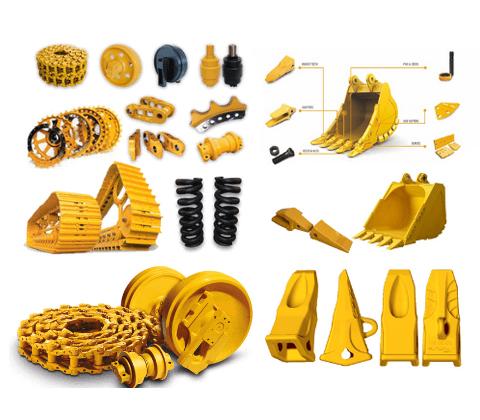
The undercarriage is where the two machine types spend money differently. On a tracked machine, the wearing group is the running gear: track shoes, pins and bushings in the links, bottom rollers, carrier rollers, sprocket and idler with its recoil unit. They wear with run hours and with how abrasive the ground is; sharp rock, sand and slope work speed the process up. Wrong track tension — too loose or too tight — ruins the whole set early, so checking track sag on a schedule is a cheap job well worth doing.
A wheeled machine shifts the cost to a different group: tyre wear and punctures, brake pad wear, play in steering joints, axle oil leaks and differential wear. Tyres are a recurring item and sensitive to how the machine runs over sharp-edged ground. Neither type is cheap in absolute terms; they simply put the money in different places. What they share is that both use hydraulic oil, seals and bushings inside the drive package, and it is these parts that decide real service life. Our construction machinery parts catalogue gathers the part groups for both undercarriage types to compare when planning maintenance.
Which suits urban and utility work?
Wheels are made for scattered work on hard ground. Digging drains, laying water supply and sewer pipe, repairing pavements, handling utility faults along a street — jobs where the machine must self-travel from point to point many times a day and must not damage the road surface. There, a compact, self-travelling wheeled machine that manoeuvres in tight space is usually the right tool, saving both the transporter and the wait for dispatch.
The ability to pull in tidily against a kerb, set its outriggers and dig immediately also suits cramped urban sites. Many power, water and telecom contractors pick wheels as the backbone of their fleet precisely for this work rhythm, rather than for digging force.
Which suits earthmoving and quarrying?
When the job is stripping soil, grading over a wide area, digging deep foundations or working a quarry, the weighting swings to tracks. The machine stands in one place for long stretches or moves only short distances within the site, the ground is often soft, muddy or rough, and digging force must hold steady all day. The track undercarriage gives the stability margin and grip heavy work demands, and it survives cutting ground that tyres cannot take.
In the heavy class, tracks are almost the industry default. Major makers such as Volvo CE sell a crawler range for earthmoving and a wheeled range for mobility side by side, which shows these are two tools for two work rhythms rather than one being better than the other. Choose by the job, not by gut feel.
Parts consequences: what you will replace
Choosing an undercarriage type also chooses, in advance, the parts catalogue that will come into the workshop for years. This is the part owners most often overlook when comparing machines.
- Tracked machine: track shoes, link pins and bushings, top and bottom rollers, sprocket, idler and recoil unit — plus a travel motor with integrated planetary reduction gear on each side.
- Wheeled machine: tyres and tubes, brake pads, steering joints and cylinders, axles and differential, drive half-shafts — plus a travel motor and gearbox.
- Common to both: the main hydraulic pump, swing motor, control valve, boom and arm cylinders, along with the seals and bushings that go with them.
Planning parts against this exact catalogue keeps the budget realistic.
Travel motor and hydraulic pump: what is shared and what differs
Worth remembering: whether the undercarriage is tracked or wheeled, the oil flow still starts at the main hydraulic pump and reaches the travel motor. A tracked machine has two travel motors, one per side; a wheeled machine usually has one drive line through a gearbox to the axles. The motor, pump and control valve themselves belong to the same family of hydraulic components, so the failure logic, how you read pressure, and how you rebuild are fairly similar across the two machine types.
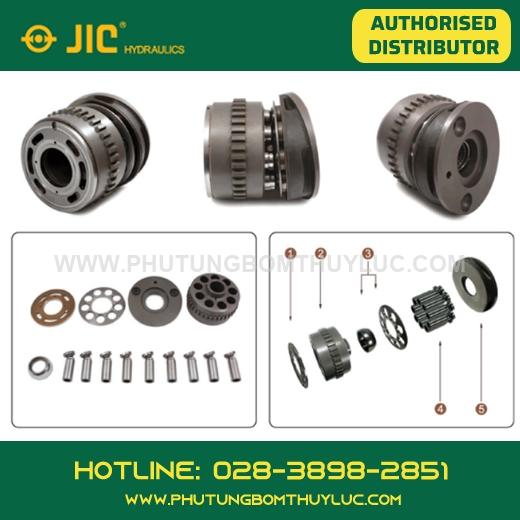
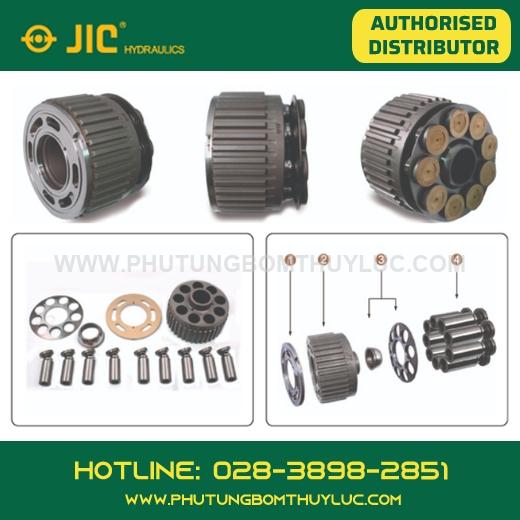
For replacement hydraulic pumps and motors, we lead with JIC Hydraulics parts (JIC Hydraulics / Axion). The real strength of JIC parts lies in the material and machining precision of the pressure-bearing components — the piston set, cylinder block, valve plate — together with a clear warranty and the correct part match for each machine range. These are quality replacement parts for common pump and motor families, restoring flow and pressure without swapping the whole expensive imported unit. For seals, we lead with PET Seals; for bearings, ZVL Slovakia — the same logic of choosing standard, correctly matched parts that last under real working conditions.
How to choose between wheeled and tracked excavators for your site
Set brand and model aside and the decision boils down to a few questions in priority order:
- What is the ground mostly like? Soft, muddy, sloped or rough leans to tracks; hard, flat, finished leans to wheels.
- Must the machine self-travel far and often? If it hops between many road points in a day, wheels clearly save; if it stands long on one site, tracks fit better.
- Is the work about deep, heavy digging or about compact mobility? Heavy digging favours track stability; utility work favours wheel flexibility.
- Are you allowed to leave marks on the surface? Finished roads and yards push the balance to wheels.
- Where do you want to place the undercarriage maintenance budget? Track gear or axle-and-tyre — both cost, just in different places.
Answering these five honestly usually reveals the answer before you even look at a price list.
Common mistakes when picking the wrong travel type
The most common error is choosing by digging force or by price while ignoring ground and travel rhythm. A powerful wheeled machine is still inefficient if it must dig on mud all day; a strong tracked machine is still wasted if it spends most of its time waiting for a transporter between street points. The wrong undercarriage turns a machine's strength into an operating burden.
The second mistake is forgetting undercarriage cost in the ownership sum. A worn track undercarriage or a rickety axle-and-tyre group can eat an unexpected budget if not checked before buying. On a used machine, the undercarriage is the part to inspect hardest; the article on buying used excavators points out the spots easily hidden during a viewing. And before you commit, comparing the excavator range by the right undercarriage type helps you match configuration to the real job.
Should you run both types in one fleet?
For a fleet large enough to serve many kinds of project, the answer is usually yes. Wheels carry the mobile, scattered work on hard ground; tracks carry the heavy earthmoving on weak ground. Matching the right machine to the right job lifts overall output and reduces wear in the wrong places. What matters is deciding from your real job profile — ground, travel distance, digging weight — and only then turning to brand and the figures on a flyer.
Key takeaways
- The root difference is the undercarriage: tracks spread the load, wheels concentrate it on tyres and axles.
- Tracks give low ground pressure and high stability, suiting weak ground and heavy digging.
- Wheels self-travel fast on hard roads, suiting urban and utility work.
- Tracked machines steer by track speed difference; wheeled machines have a gearbox, axles and vehicle-like steering.
- Undercarriage costs differ: shoes, rollers and sprocket versus tyres, axles, differential and brakes.
- Choose by ground and travel rhythm first; brand and price come after.
Written by
Phạm Đức Thắng
Phạm Đức Thắng focuses on the undercarriage, tracks and the travel and swing systems of excavators. He writes about how these systems are built, travel and swing motors, and protecting the undercarriage from wear.
Related parts
The exact parts discussed above — send your machine model or pump code to match.