Quick answer
An excavator slow to build power reacts late and takes time to reach full force after you push a lever or open the throttle. Most cases come from cold oil, wrong viscosity, trapped air, a clogged suction filter or a weak pilot circuit, not always a worn rotary group. Narrow it down cheapest-first and measure pressure before opening the pump.
An excavator that is slow to build power reacts late: you push a lever or open the throttle, then wait a beat before the machine has full force. The engine still runs steady and the oil is still there, but the force arrives slowly and without a crisp start. In the cases we see at the workshop, most slow-response machines trace back to the oil, the suction line, the pilot circuit or the pump regulator, not always a worn rotary group. This guide moves from how to spot it, how to tell it apart from a weak machine, a list of causes ordered cheapest-to-check first, through to the measuring routine and prevention — so you narrow it down before spending money opening the pump.
What does a slow-to-build excavator mean?
A slow-to-build excavator takes time to reach full force after you give the command. You push to lift the boom, curl the bucket or swing, but the mechanism creeps up first and only then gets strong. It feels like the machine is gathering momentum rather than reacting at once. Unlike a truly weak machine, the final force can still arrive here; it just arrives late. Since every motion on an excavator is made by hydraulic oil, this delay almost always sits in the oil path: the oil, valves, filters, pilot circuit or the pump itself. Getting the nature right keeps you from blaming the engine too soon.
Slow to build versus weak versus dead power
These three states get mixed up, but the fixes differ. Slow to build means force arrives late but does arrive. Weak means force arrives quickly enough but never reaches the level you need. Dead power means there is almost no force left to work with. If your machine leans more toward too little force than late force, read the excavator low on power guide to compare symptoms. Placing the symptom in the right group from the start sends you down the correct check branch and stops you pulling the wrong part.
Signs your machine is slow to build power
Before pulling anything apart, confirm the symptom. A slow-to-build machine usually shows these signs:
- After you push a lever, you wait a beat before the mechanism starts.
- It is slow at first start in the morning, then quickens as it warms.
- Boom and bucket move jerkily, not smoothly, at the start of a stroke.
- The swing starts slowly and only then winds up with momentum.
- You add throttle but force does not follow the throttle right away.
Note when the symptom is clearest. If it is slow cold and gone hot, suspect the oil and its viscosity. If it is slow even when hot, suspect the pilot circuit, valves or pump.
Why diagnose cheapest-first?
Because the cheap causes are the most common. Cold oil, low oil, dirty filters or trapped air all cause a clear delay, yet they are fast and cheap to fix. Opening a pump to replace the rotary group, by contrast, is costly and means days of downtime. If you dive straight into the pump and skip the cheap steps, you can spend money for nothing while the fault remains. The workshop rule is to rule out from the outside in, cheapest first, and open the pump only when the readings point right at it.
Cold oil that has not reached working temperature
This is the most common reason a machine is slow to build in the morning. When the oil is still cold, viscosity is high and the oil is thick, so it moves through the pump and valves more slowly. The result is late force until the oil warms enough. The tell is simple: slow at first start, then quickens after a few minutes with no load. If that fits, this is not a fault but the nature of cold oil. Warm the machine at moderate revs and feather the levers a few times to circulate oil before heavy work.
Wrong oil viscosity or degraded oil
If the machine is still slow to build once hot, look again at the oil. Using the wrong viscosity grade, such as filling oil that is too thick for the recommendation, makes the oil flow slowly and delay force even when warm. On the other side, very old oil that thins and loses its additives when hot raises internal leakage, so pressure builds slowly. Use the correct grade per the maker's spec for the model, often around the VG 46 or VG 68 family depending on climate and advice. Overheated oil also speeds up degradation; if your oil runs hot, see the overheating hydraulic oil guide to fix the root cause.
Low oil level and oil starvation
A low tank level is a small fault with big effects. When oil is short, the pump starves easily, especially when it needs high flow to build force fast. Oil that does not return in time makes the mechanism creep before it has enough. Check the level at the sight glass with the machine level and the cylinders in the specified position. Top up with the same oil in use, without mixing several grades. If the oil drops fast after topping up, find the leak before you think about the pump.
Air getting into the suction line
Air in the suction line is a quiet cause of late force. With air present, the oil mixes with foam and becomes compressible, so force arrives erratically and slowly. Common signs are foam on the oil surface in the tank, a whining or growling pump, and force that comes and goes. Common leak points are the suction flange gasket, the pump suction neck, or a loose hose clamp. Tighten the joints, replace hardened gaskets and bleed the air properly. A clean bleed usually restores a crisp response to the machine.
Clogged suction and pilot filters
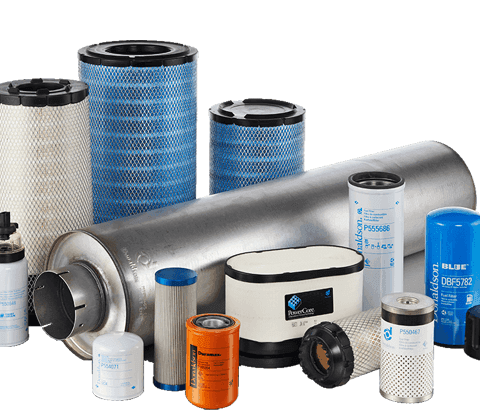
Dirty filters choke the oil flow and make a machine slow to build. A clogged suction filter keeps the pump from drawing enough oil, while a dirty pilot filter slows the control signal reaching the valves. Both stretch out the delay when you give a command. Change filters on schedule by machine hours, often at the 250, 500 and 1000 hour marks depending on the maker's advice. Use the correct filtration rating; do not chase cheap filters that miss the spec. When changing filters, take the chance to inspect the debris to gauge the internal condition and the related hydraulic-pump parts worth watching.
A weak pilot circuit makes levers respond slowly
On most excavators the control levers work by pilot pressure, not a direct mechanical link. When pilot pressure is weak, the main valve opens slowly, and that is exactly the slow-to-build feel when you push a lever. Causes can be a worn pilot pump, a mis-set pilot reducing valve, a clogged pilot filter, or worn pilot joysticks. To tell it apart, watch whether the delay shows on every function. If all levers lag the same, the fault is likely in the shared pilot supply. Measuring pilot pressure to the maker's spec for the model confirms it.
Slow regulator and servo piston response
The main pump on an excavator has a regulator that controls swash-plate angle to change flow. When the regulator or servo piston reacts slowly, the pump is slow to raise flow, and the machine builds late with it. Dirt, dirty oil, or a sticking spring and rod all make the servo sluggish. This is a part for experienced hands and pressure readings as evidence, not guesswork. Before opening the regulator, be sure the oil is clean and the cheaper items are ruled out. Setting the regulator point wrong also runs the machine off its design and wears out fast.
A worn rotary group builds pressure slowly
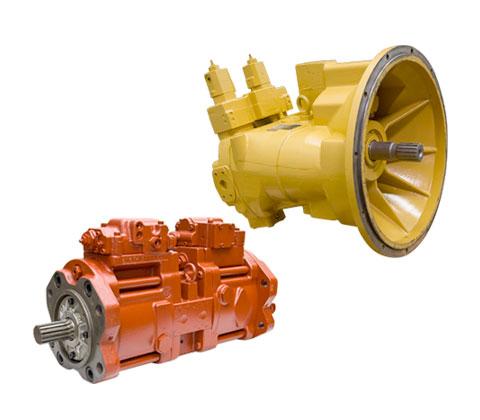
When the rotary group wears, clearances between parts open up and more oil slips past instead of being pushed on. The result is that the pump takes time to build enough pressure, so the machine is slow to build, clearest when the oil is hot. The classic tell is strong when cold and slower as it heats, with an unusually hot pump body. This is the most expensive cause and should be last, after you have measured pressure. If the readings point right at the pump, consider replacing the hydraulic rotary groups as a matched set by code. The weak hydraulic pump guide covers reading rotary-group wear in more detail.
Main relief valve and unloader valve
The main relief valve holds system pressure, while the unloader valve manages flow at no load. When a valve sticks with dirt or has a weak spring, pressure does not build in time as you take up load, and the machine reacts slowly. An unloader valve that closes late also sends oil around instead of concentrating force at the mechanism. Check whether the valve cone is sticking or fouled with debris, and measure pressure to confirm. Many cases just need cleaning or a new valve spring for the machine to respond crisply again, with no need to touch the pump.
Engine revs that do not rise in time
Sometimes a machine is slow to build not because of hydraulics but because engine revs do not rise in time. If the revs are sluggish when you pull the throttle, the pump is not spun fast enough to supply flow, so force arrives late. Causes can be the throttle motor, throttle sensor, the fuel system, a dirty fuel filter, or an auto-idle mode pulling revs down. To tell it apart, listen and watch the tachometer: if revs do not follow the throttle, deal with the engine side first. Ruling this out keeps you from cutting into the hydraulics by mistake.
Pilot accumulator and proportional solenoid valves
Many newer machines use a pilot accumulator to hold control pressure and proportional solenoid valves to meter flow. When the pilot accumulator is weak, control pressure sags during fast moves, causing a delay. When a proportional valve or its solenoid fouls and moves sluggishly, the spool opens slowly and the machine is slow to build. For these electro-hydraulic units you need a diagnostic tool and proper readings to interpret the signal. Do not guess at current or pressure without numbers. One wrong point here can run the machine off across the whole range.
Symptom triage table
The table below helps you tie a symptom to its most likely cause group and the first check:
| Main symptom | Likely cause group | First check |
|---|---|---|
| Slow cold, gone when hot | Cold oil, high viscosity | Warm the oil, review the grade |
| Slow even when hot | Worn rotary group, regulator | Measure main and standby pressure |
| All levers lag equally | Pilot circuit, oil supply | Measure pilot pressure, check level |
| Force erratic, oil foaming | Air in the suction line | Tighten suction neck, gasket, bleed |
| Revs do not follow throttle | Engine side, fuel | Check throttle, fuel filter |
This table is only for the first pass. Pressure readings are the final evidence.
The check routine when the machine is slow to build
Work in order, cheapest to most expensive, to avoid pulling the wrong part:
- Warm the machine up and see if the delay clears once the oil is warm.
- Check the oil level and condition at the sight glass.
- Inspect the suction and pilot filters; replace if dirty or overdue.
- Find air leaks at the suction neck and joints, and bleed clean.
- Listen to the pump and feel the pump body heat when hot.
- Measure pilot pressure to rule out the control circuit.
- Measure main and standby pressure to the maker's spec for the model.
- Open the regulator or rotary group only when the readings point at them.
Record the reading at each step. With numbers, you decide precisely instead of guessing.
When does a slow-to-build excavator need a pressure test?
Measure pressure when the delay stays even after the oil is hot and the cheap items are ruled out. Measuring main, pilot and standby pressure separates faults in the pump, the valves and the oil supply. If pressure builds slowly and does not reach spec when hot, the rotary group or regulator is the likely cause. If main pressure reaches spec but pilot is low, the fault is in the control circuit. Pressure should also be checked at major scheduled services by machine hours. Measuring early catches decline before the machine lags for good.
Genuine, replacement or used parts?
Choosing parts the right way decides how long the repair lasts. Genuine parts give standard tolerances and the longest life, but cost more and sometimes mean a wait. Good replacement parts are a balanced choice for many common machine models. Used parts can suit a budget, but you must check clearances and surfaces carefully before fitting. For rotary groups and regulators, favor a matched set by code so the tolerances line up. Fitting odd parts piecemeal easily leaves the machine slow to build again after a short time.
How to prevent a slow-to-build machine
Prevention is far cheaper than repair. A few simple habits keep the machine reacting crisply:
- Warm the machine up properly each morning before heavy work.
- Use the correct oil grade and change oil on schedule by machine hours.
- Change the suction, pilot and oil filters on time.
- Keep the oil clean and cool, and avoid prolonged overheating.
- Check the suction joints and gaskets to stop air ingress early.
- Measure pressure periodically to catch decline while still mild.
A well-kept machine rarely turns slow to build in the middle of a shift.
Common mistakes when handling a slow-to-build machine
When tackling the delay, owners often make a few mistakes that cost money without curing the fault:
- Rushing to pull the pump before measuring pressure, when the real fault is cold oil or a dirty filter.
- Skipping the warm-up and calling the machine broken at first start in the morning.
- Not bleeding the air after a repair, so erratic force gets mistaken for a still-weak pump.
- Adjusting the regulator by guess with no readings as evidence.
- Fitting rotary-group parts piecemeal instead of a matched set, so tolerances drift and it fails again.
- Forgetting the engine side when it is the revs that fail to rise in time.
Avoiding these gets the repair right the first time and saves both money and downtime.
If your machine is still slow to build after the cheap items are ruled out, send the machine model or pump code so the Việt Trung Hải technical team can match the right part for you. For the correct standard pressure figures per model, look up the maker's own technical documents such as Kobelco to get the right number for your machine.
Key takeaways
- A slow-to-build excavator has force that arrives late but does arrive, unlike a weak or dead machine.
- Slow when cold and gone when hot is usually just cold oil, not a fault.
- Diagnose cheapest-first: oil, filters, suction line and pilot circuit before the pump.
- A weak pilot circuit makes every lever respond slowly the same way.
- Always measure main, pilot and standby pressure before opening the regulator or rotary group.
- Warming up properly and keeping the oil clean is the best prevention.
Written by
Nguyễn Văn Hùng
Nguyễn Văn Hùng diagnoses excavator faults by symptom — sounds, heat and how the machine responds. He writes the guides that separate causes and lay out repairs from cheap to expensive, based on hands-on workshop experience.
Related parts
The exact parts discussed above — send your machine model or pump code to match.
Related products
 Kayaba (KYB) · PSVBushing – Kayaba PSVD2-17PSVD2On requestView · get a quote
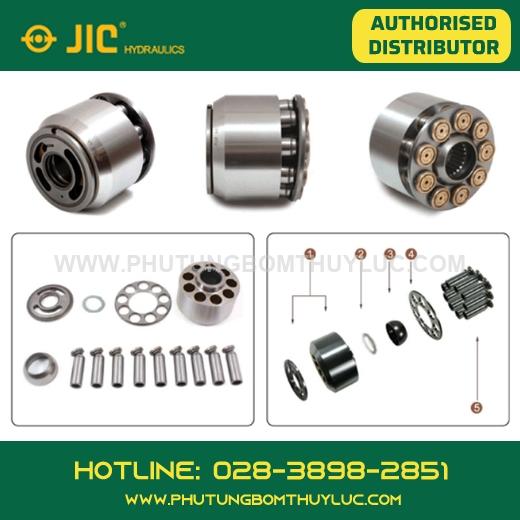 Kayaba (KYB) · PSVRotary group – Kayaba PSV2-55TPSV2On requestView · get a quote
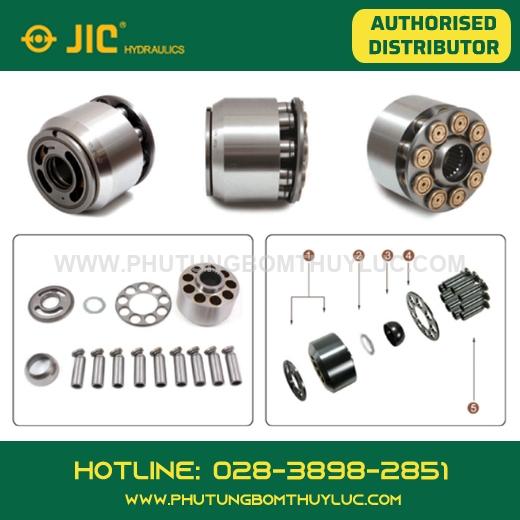 Kayaba (KYB) · PSVRotary group – Kayaba PSV2-60TPSV2On requestView · get a quote
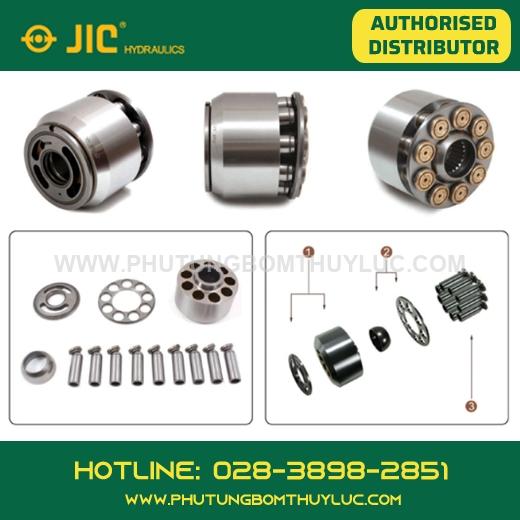 Kayaba (KYB) · PSVRotary group – Kayaba PSV2-63TPSV2On requestView · get a quote