Quick answer
An excavator losing lifting power is not always the pump. When only the boom lift is weak, suspect four groups: internal piston seal bypass, a weak boom relief valve, a worn spool, or the pump and shared pressure. Separating the fault step by step, using hold behavior and heat, helps you zone it right before tearing down and avoid swapping an expensive part by mistake.
When an excavator loses lifting power, most mechanics blame a weak pump right away. But if only the boom lift is weak while swing, bucket curl, and travel all stay strong, the fault usually sits in the boom cylinder, the boom-side relief valve, or a worn spool in the control valve, not the pump. The right method is to separate the fault step by step: listen, feel, compare each function, and only then touch the pump or main pressure. This guide moves from field cues to zoning the fault, so you do not swap an expensive part by mistake.
What does losing lifting power mean?
Put simply, an excavator that loses lifting power is one whose main boom can no longer raise the load it used to. Some machines lift slowly, some stall halfway up, some lift fine with no load but sag under load. Each kind of weakness points to a different group of causes.
The key is to tell whole-machine weakness from boom-only weakness. Whole-machine weakness usually ties back to the shared pressure source: the pump, the main relief valve, or the control signal. When only one function is weak, the fault very likely sits on that circuit, not at the source.
Separating the boom fault from a shared fault
Before you remove anything, answer one question: are the other functions strong? Crisp swing, strong bucket curl and extend, normal travel up a slope, but weak lift only, means you have already zoned the problem.
If instead every function fades at once, the oil heats fast, and the whole machine feels sluggish, your thinking shifts toward the pump and shared pressure. In that case, read the breakdown of a weak hydraulic pump to compare cues before you open the pump.
Step 1: Listen and feel while raising the boom
Stand near the machine, raise the boom slowly then quickly, and listen. An unusual pump whine near the end of the lift stroke often means pressure is dumping early through a relief valve. That sound is clearly different from normal working noise.
Lay a hand on the return line and on the cylinder body after a few minutes of holding a load. Wherever it heats up abnormally fast, oil is leaking through a place it should not. Heat is a fault-finder's friend, because oil forced through a narrow gap always makes heat.
Step 2: Compare lift against other functions
Run the machine in turn: raise boom, lower boom, curl bucket, swing. Note which function is weak and which is strong. If only the lift is weak while everything else stays strong, the fault is almost certainly local to the boom circuit.
Another trick is to change the load. Raise an empty bucket, then a full one. If it lifts briskly empty but sags under load, that is pressure collapse under resistance, which fits internal cylinder seal bypass or a boom relief valve opening too early.
Boom cylinder piston seal bypass: what are the signs?
A boom cylinder has a piston seal that splits the oil chamber into two sides. When that seal wears, high-pressure oil slips past the piston to the other side instead of pushing the boom up. The result is weak lift, slow lift, and slow self-sag when holding a load up high.
The classic sign is to raise the boom, lock the lever, and still watch the load drift down with the lever centered. This drift matches the behavior described in the guide on cylinder drift, and the test is the same. Internal bypass is a culprit that gets missed often, because the outside of the cylinder shows no leak at all.
Why is internal bypass hard to see by eye?
The piston seal sits sealed inside the cylinder bore. When it bypasses, oil never runs outside; it just circulates from one chamber to the other. You can wipe the rod dry all day and see no oil trace, so it is easy to blame the pump unfairly.
The way to catch it is by hold behavior and heat, not by an external leak. A boom that lifts strongly but cannot hold a load still is almost always about the piston seal or an anti-drift valve, and rarely the pump.
A weak boom relief valve: when to suspect it?
Each work circuit usually has its own relief valve that caps pressure for that circuit. If its spring is weak, or the ball and seat are pitted, the valve opens sooner than it should. Oil dumps back to tank as soon as the load appears, so the lift fades even though the pump is strong.
The point that separates a circuit relief valve from seal bypass is hold ability. A weak relief valve makes lift fade under resistance, but once the boom is up and the lever is locked, the load stays put, because the valve is closed by then. A bypassing seal lets the load drift even while standing still.
A worn spool in the control valve
The spool is the sliding core in the control valve that routes oil to each circuit. Over long service, the spool and valve body wear and the clearance grows. Oil leaks through this gap and drops the pressure reaching the boom cylinder, giving weak lift.
A worn spool usually brings several symptoms together: slightly delayed lift, some play at the start of a movement, sometimes a faint buzz. This is a fault to measure and check in the shop, hard to confirm by field observation alone.
When is the fault in the pump and shared pressure?
If every circuit is weak evenly, the whole machine is sluggish, the oil heats fast, and the pump sounds off, your thinking turns to the pump. A worn rotary group, a bad swash plate, or a drifted regulator inside the pump all cut shared pressure.
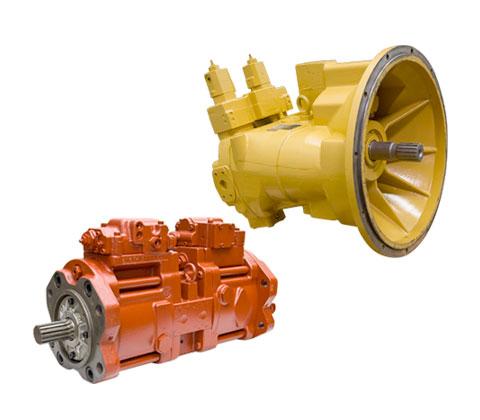
When you suspect the pump, do not rush to open it. Rule out the circuits first, because opening a pump costs time and money. If you do confirm the pump, you can look at hydraulic rotary groups to weigh a rebuild against a full replacement.
A quick table to separate causes
The table below gathers common cues so you can zone the fault fast in the field.
| Sign | Piston seal bypass | Weak circuit relief | Worn spool | Pump / shared pressure |
|---|---|---|---|---|
| Only boom lift is weak | Yes | Yes | Yes | Rare |
| Every function is weak | No | No | No | Yes |
| Load held up high drifts down | Yes | No | Sometimes | No |
| Clearly weaker under load | Yes | Yes | Yes | Yes |
| Whole machine heats fast | Sometimes | No | Sometimes | Yes |
This table is only for direction. The final call still needs the real test described below.
Testing the boom cylinder with a hold test
This is the cheapest and fastest test. Raise the boom to mid height, set an empty bucket or a light load, lock the lever and stop moving. Watch the boom for a few minutes.
If the boom sinks steadily with the lever centered, oil is leaking inside the lift system. Combine that with feeling the cylinder body heat and you learn where the leak is passing. This separates seal bypass from other causes without removing anything.
Oil temperature and seal bypass
Seal rubber swells and softens when hot. Some seal sets stay tight cold, but as the oil heats the clearance shifts, the seal loses grip, and it starts to bypass. That is why many machines feel strong at startup and fade after working a while.
According to the technical documentation from NOK, seal material is chosen for the working temperature range and oil type, so the wrong seal grade will bypass early once the machine is hot. This is why you should not just fit any seal set because the size matches.
Why does the excavator lose lifting power hot but stay strong cold?
This is a very common question, and it points straight at seals or internal clearance. Cold, the oil is thicker and clearances are small, so the system still holds pressure. Hot, the oil thins, it slips through worn clearances more easily, and lift power drops with it.
If the excavator loses lifting power clearly after a while of work but starts strong again in the morning, check the boom cylinder piston seal and the valve clearances first. A worn pump also weakens when hot, but that usually comes with whole-machine weakness, not boom-only.
Checking the relief valve without a special gauge
Not every shop has a pressure gauge fitted and ready. When you lack the tool, you can still reason from machine behavior. If lift fades under load but a raised load holds still, the boom relief valve is the prime suspect.
Another way is to swap or cross-check against the other circuit, if the machine layout allows a comparison. Even so, confirming a wrong relief setting needs a proper shop gauge; do not just guess and blindly adjust the valve spring.
The role of the seal kit in the boom cylinder
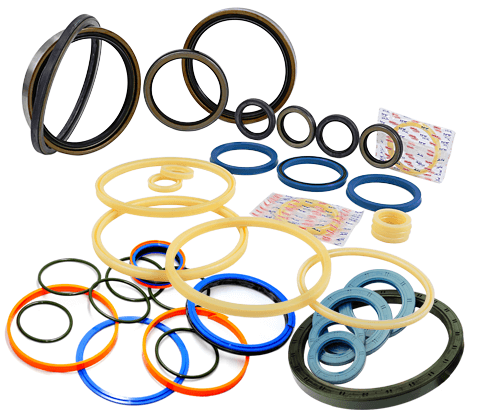
A cylinder seal kit includes the piston seal that blocks oil between the two chambers, the rod seal that wipes oil at the rod end, and the guide rings. Each has its job, but the one most tied to lift power is the piston seal. A bad rod seal leaks outside, while a bad piston seal bypasses inside.
When you rebuild a cylinder, replace the whole kit rather than single parts, because the pieces share the same age. You can look over the range of hydraulic seals matched to your cylinder line to pick the right fit, and avoid a leak returning within days.
When to rebuild and when to replace the rotary group?
If you have ruled out every circuit and the machine is still weak overall, a pump fault is a real possibility. A lightly worn pump can be rebuilt, but when the swash plate and the pump pistons are deeply worn, a new rotary group usually lasts longer than a patch job.
The cost of replacing or rebuilding varies with condition and supply source, depending on machine age and pump line such as K3V or K5V. Do not act on a quote alone; let a mechanic check the real wear first. A decision based on actual pump condition saves money over the long run.
Common mistakes when doing it yourself
Mistake one is replacing the pump when the real fault is in a cylinder or valve. People see weakness and think pump right away, spend the money, and the problem stays. Mistake two is winding up the relief valve spring for higher pressure to make the machine feel strong for now, which hides the fault and harms the whole system.
Mistake three is fitting a seal of the wrong grade just because the size fits. A wrong-material seal bypasses early when hot, and you end up tearing it down and doing it over. Care at the parts-selection stage saves labor later.
Choosing the right seals and replacement parts
Seal choice must match size, material, and profile to the exact cylinder line. Genuine parts tend to be consistent in material, while good aftermarket parts still work well if you pick a reliable source. What to avoid is loose, unlabeled stock of unclear grade.
If you are unsure which type to pick, cross-reference the hydraulic seal parts range and ask the seller about material and working temperature range. One correct seal kit up front saves far more than a second cylinder rebuild.
A fault-finding routine in order
Follow the order below so you miss nothing and swap nothing by mistake.
- Compare lift against other functions to tell local weakness from whole-machine weakness.
- Hold a load up high for a few minutes and see if the boom sinks.
- Feel the cylinder body and return line heat after holding the load.
- Change between heavy and light loads to see if power sags under resistance.
- If only lift is weak and the held load sinks, suspect the piston seal first.
- If lift fades but a held load stays put, suspect the boom relief valve.
- Only if every function is weak and oil heats fast should you turn to the pump.
When does the machine need the shop?
Field tests help you zone the fault, but some conclusions must happen in the shop. Measuring pressure per circuit, checking the spool, and surveying rotary-group wear all need proper equipment and skill.
If you have zoned the fault but lack the tools to confirm it, taking the machine to an experienced shop is faster and surer. Good zoning before the shop saves labor hours and avoids swapping parts for nothing.
Wrapping up the approach
A weak excavator boom is not always the pump. Separate the fault step by step, lean on hold behavior, heat, and how the machine reacts to load, and you will zone it right before you tear down. Piston seal bypass, a weak circuit relief, a worn spool, and the pump are four groups of causes, each with its own signs.
Once you have confirmed a seal replacement or a boom-group rebuild, you can preview the range of hydraulic seals for your machine line, or call the Việt Trung Hải technical team for help choosing the right part from the start. Getting it right the first time is always cheaper than doing it twice.
Key takeaways
- Boom-only weakness is usually a local fault, not the pump.
- The load-hold test separates seal bypass from other faults.
- A weak boom relief valve still holds the load once the lever is locked.
- Fast heat on the line and cylinder points to where oil leaks.
- Turn to the pump only when every function is weak and oil heats fast.
- Pick the right seal material and size to avoid a second cylinder rebuild.
Written by
Nguyễn Văn Hùng
Nguyễn Văn Hùng diagnoses excavator faults by symptom — sounds, heat and how the machine responds. He writes the guides that separate causes and lay out repairs from cheap to expensive, based on hands-on workshop experience.
Related parts
The exact parts discussed above — send your machine model or pump code to match.