Quick answer
The price of a hydraulic pump rotary group depends on the pump family, whether the parts are genuine or aftermarket, whether they are new or rebuilt, and how well the group is matched. There is no fixed figure for every machine; the price moves with supply and timing. For an accurate quote, give the machine model and the full pump number.
The price of a hydraulic pump rotary group is never a single fixed figure. It depends on the pump family, the origin of the parts, the condition of the group, and how well the internal components are matched. For the same excavator, the price can swing widely depending on whether you choose genuine or aftermarket parts, new or rebuilt. Understanding these factors helps you ask for the right quote and avoid overpaying.
What makes up the price of a hydraulic pump rotary group?
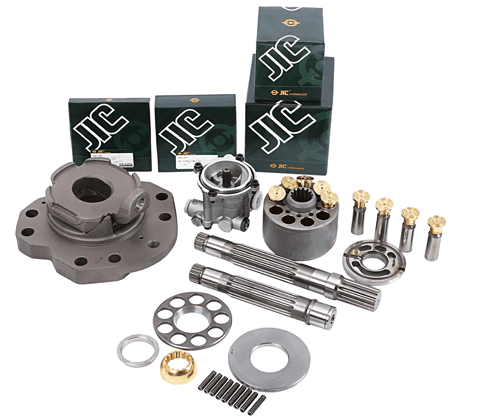
The rotary group is the moving core inside the main pump. It includes the cylinder block, the pistons, the ball guide, the valve plate, and the swash plate. The price of the whole set depends on whether each of those parts is still good or must be replaced. When one part wears, the others usually suffer too, so a quote is almost always for the whole assembly rather than single pieces.
Think of the price as more than the cost of the material. It also covers inspection labour, rebuild labour, and the risk the seller carries when offering a warranty. That is why two sellers offering the same type of group can still land on two different prices.
The pump family drives most of the price
The biggest factor is the pump family fitted to your machine. A pump for a mini excavator is very different from one for a large digger in part size and rarity. The more common the pump family, the more plentiful the supply of hydraulic rotary groups and the friendlier the price. A rare pump family usually means longer lead time and a higher price.
That is why the first question a seller asks is always the machine model and the pump number. Without that information, any figure given is only a rough guess.
How do K3V and K5V rotary groups differ in price?
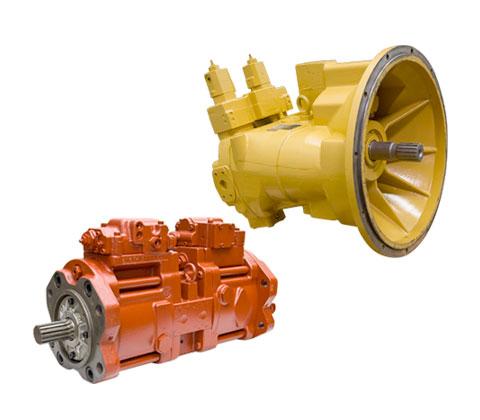
K3V and K5V are two very familiar piston pump families on tracked excavators. K3V covers many mid-size machines, so stock and K3V pump parts are relatively available. K5V usually goes with larger machines, with bigger and heavier parts, so the rotary group tends to cost more.
Within one family there are still many variants by machine size. A single different digit in the number can change the whole internal assembly. So do not just name the pump family; read the full number stamped on the pump body.
How does genuine versus aftermarket affect the price?
This is where the price gap shows most clearly. Genuine parts come with high machining precision and long-term stability, so they cost noticeably more. Aftermarket parts come in many quality tiers, from good ones close to genuine down to cheap ones for temporary use. Among the high-quality options, we favour JIC Hydraulics parts distributed by Việt Trung Hải, with consistent materials and machining precision backed by a clear warranty.
You need to ask the seller exactly which tier they are quoting. An unusually cheap group is often a low-tier aftermarket part with a short life. For a machine that runs many rental hours a day, picking too low a tier can cost more over time.
Rotary group condition: new, rebuilt, or pulled from a machine
A brand-new rotary group has the highest and most stable price. A rebuilt group is an old set that has been bored, ground, had worn parts replaced, and re-shimmed; it is cheaper but depends on the rebuilder's skill. A group pulled from a scrapped machine is the cheapest but carries the highest risk.
For rebuilt and pulled parts, the price only means something when it comes with honest condition details. A pulled set that looks clean on the outside can still be full of metal debris inside.
Why does the matching of the group matter so much?
A rotary group works well when the parts have worn in together as a working pair. The block and pistons wear together over time, so dropping a few new pistons into an old block usually does not last. A matched group, replaced as a whole assembly, costs more but runs quieter and lasts longer.
When someone quotes a very low price, ask whether they sell the whole set or just a few loose pieces. Mixing loose parts from many sources easily causes uneven clearances and early pressure loss.
How do machine age and year of manufacture affect the price?
Older machines can be hard to find genuine rotary groups for, because the maker has stopped producing that part. At that point you must use aftermarket or rebuilt parts, and the price moves with how scarce the item is. Newer machines have parts more readily, but the group itself also costs more due to advanced technology.
The year of manufacture also affects the connection standard and the internal valves. Two machines that look the same but differ in year may still need two different rotary groups.
How do supply and stock affect the price?
Parts already in stock are always easier to quote and quicker to deliver. Parts that must be ordered from abroad add shipping cost, waiting time, and exchange-rate risk. When you need the machine running again urgently, this rush cost can sometimes exceed the material difference itself.
This is also where choosing a reputable seller pays off. A supplier of hydraulic-pump parts with good stock helps you avoid days of machine downtime.
Exchange rate and timing of the order
Most quality rotary groups are imported. So the exchange rate and the timing of the order directly affect the final price. For the same group, a quote this month and next month can differ due to import fluctuations.
You do not need to track the exchange rate daily. But understand that a quote usually holds only for a certain period, not forever.
Why does every seller quote a different price?
Many machine owners are confused when three calls give three prices. The difference comes from the quality tier, the level of matching, the warranty terms, and the seller's reputation. A high quote may cover a full genuine set with a long warranty. A low quote may cover loose parts with no warranty.
So comparing price without comparing the conditions attached is a false comparison. Give every seller the same description so they quote on the same basis.
Signs that the rotary group needs replacing
Before talking price, be sure the fault really is in the rotary group. The machine weakening as it heats up, slow lifting under load, and an unusual whine or growl from the pump are familiar signs. If you see metal debris in the hydraulic oil, the group is likely heavily worn. A common example on the K3V112 pump fitted to 20-ton class excavators: as the piston shoes and valve plate begin to wear, the pump loses flow once the oil is hot, showing up as the boom lifting more slowly under heavy load even though the machine still feels strong on cold oil. When we open these up we usually find the shoes loose on the pistons and a hazed, scored valve plate; at that point re-shimming is not enough and the matched block-and-piston set has to be replaced to cure it fully.
Do not rush to replace before ruling out cheaper causes such as a dirty filter, poor oil, or a misadjusted relief valve. A wrong diagnosis makes you pay for a group while the machine is still weak.
Information to prepare when asking for a rotary group quote
A realistic quote needs you to supply enough data. The clearer you are, the more accurate the figure and the less likely you are to overpay.
- Machine model and make, taken from the plate or serial number.
- The full number stamped on the pump body.
- Current condition: symptoms and what has been checked.
- Whether you want genuine, aftermarket, or rebuilt.
- How urgent it is and the delivery location.
With all five items, a seller can give a trustworthy price instead of guessing.
A table of factors that determine the price
The table below summarises the main factors and the direction in which they push the price. It is a quick way to estimate for yourself before you call.
| Factor | Price rises when | Price falls when |
|---|---|---|
| Pump family | Rare, hard to find | Common, in stock |
| Origin | Genuine parts | Low-tier aftermarket |
| Condition | Brand-new full set | Rebuilt or pulled |
| Matching | Whole matched set | Mixed loose parts |
| Supply | Must order, long wait | Available in stock |
| Warranty | Long warranty | No warranty |
How to read a quote correctly
A good quote must state what is sold, which tier, how matched, and how long the warranty runs. If it is just a bare number, you do not yet have enough to decide. Ask for the material and the labour to be split out if labour is included.
The lowest number is not always the cheapest. Cheap that has to be redone after a few months ends up costing much more in total.
Is it better to rebuild the rotary group or buy a new pump?
In many cases rebuilding the group is cheaper than replacing the whole pump, but not always. If the pump housing and shaft are still good, rebuilding is the economical choice. If the housing is deeply scored or the shaft is loose, fitting a new group into a bad housing just costs you twice.
This trade-off deserves careful thought before you settle on a price. You can read more in our guide on rebuild vs a new pump to compare each situation.
Costs that come alongside the rotary group price
The price of the group is only part of the total repair cost. You also spend on fresh hydraulic oil, new filters, seals, and the labour to remove, fit, and set up. On a large machine, the oil for a full system change alone is no small amount.
When you budget, add these items so nothing surprises you. A low group quote that ignores the supporting costs easily blows the budget.
Warranty and long-term value
Warranty is an invisible but very real part of the value. A group that costs a little more but carries a clear warranty is often worth more than a cheap one with no commitment. According to the technical documentation from Caterpillar, the life of hydraulic parts depends heavily on oil cleanliness and a proper break-in procedure.
That is why a good seller usually includes post-installation operating guidance. It is value you do not see on the invoice but feel through the durability.
Mistakes that make you pay too much
The most common mistake is looking only at the lowest number while ignoring the tier. The second is describing the machine vaguely so the seller quotes the wrong type. The third is buying loose parts from many sources to save money, then paying in rebuild labour and early pressure loss.
Avoid these three and you are already ahead of most owners on cost. Choosing right from the start is always cheaper than fixing it a second time.
Checking quality before installation
When the parts arrive, inspect the block and piston surfaces closely for scoring, pitting, or heat discolouration. The ball guide must turn smoothly, with no play or catching. For rebuilt parts, ask exactly how they were bored, ground, and shimmed to spec.
A careful inspection before fitting is far cheaper than pulling it back out to redo. Do not hesitate to ask the seller to show you the actual parts.
Where to buy for a good price and peace of mind?
A good price is not the lowest price, but a fair price that comes with the right parts and a clear warranty. A reputable seller asks carefully about your machine before quoting, rather than reading off a price over the phone. You can also see our guide on where to buy excavator parts to learn how to choose a supplier.
A long-term business will not sell you the wrong group just to close the order. They know that if your machine fails again, their reputation fails with it.
Wrapping up and next steps
The price of a hydraulic pump rotary group is the sum of many factors, not a single fixed number. Once you grasp the pump family, origin, condition, and matching, you will read quotes with far more confidence. Preparing enough information before you ask always gets you a closer and faster quote.
If you need a rotary group for your machine, see hydraulic rotary groups and message our technical team with the pump number for advice on the right part.
Key takeaways
- A rotary group price is not fixed; it is the sum of many factors.
- The pump family and part rarity drive most of the price.
- Genuine parts cost more but are stable; aftermarket has many tiers.
- A matched, whole-set group lasts longer than mixed loose parts.
- Prepare the machine model and full pump number for a close quote.
- The lowest price is not the cheapest if it must be redone soon.
Written by
Hoàng Anh Dũng
Hoàng Anh Dũng tracks sourcing, pricing and brands for heavy-equipment parts. He writes about what drives price, buying smart and telling apart part origins and quality.
Related parts
The exact parts discussed above — send your machine model or pump code to match.
Related products
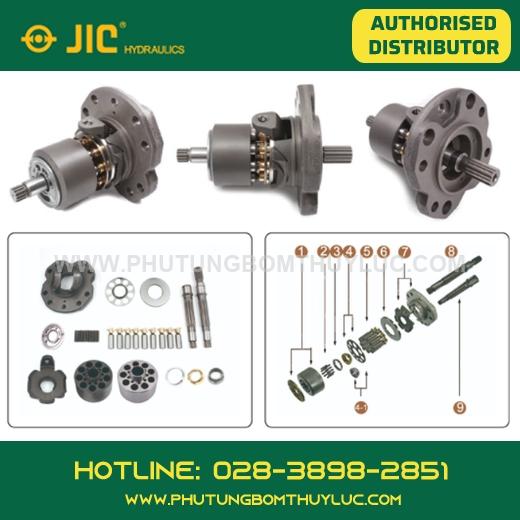 Kawasaki · K3VRotary group kit – Kawasaki K3V112DTK3V112DTOn requestView · get a quote
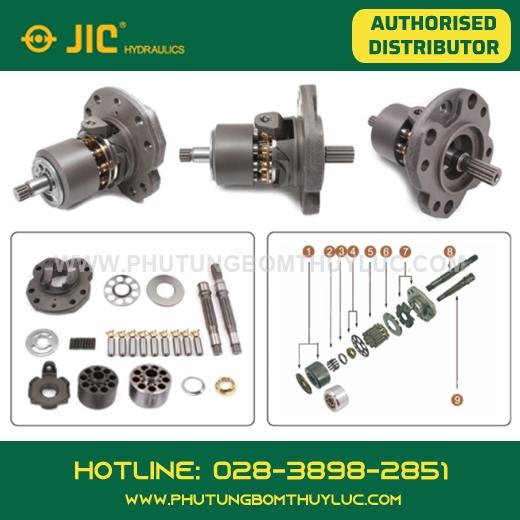 Kawasaki · K3VRotary group kit – Kawasaki K3V140DTK3V140DTOn requestView · get a quote
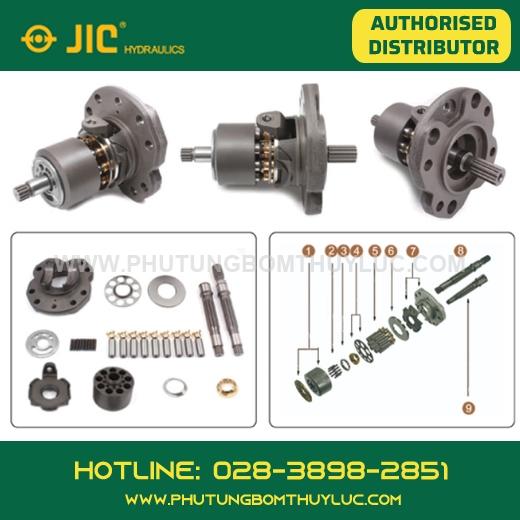 Kawasaki · K3VRotary group kit – Kawasaki K3V180DTK3V180DTOn requestView · get a quote
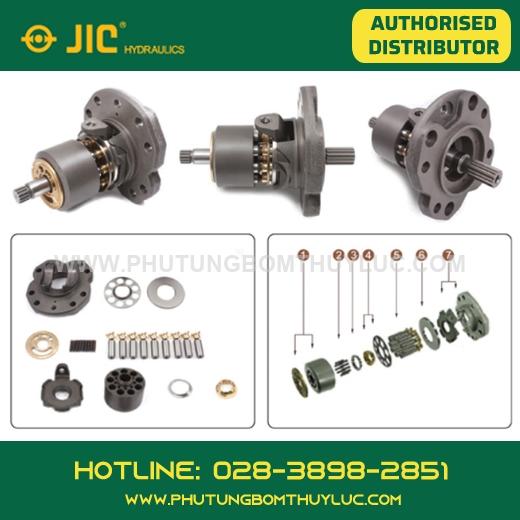 Kawasaki · K3VRotary group kit – Kawasaki K3V280DTK3V280DTOn requestView · get a quote