Quick answer
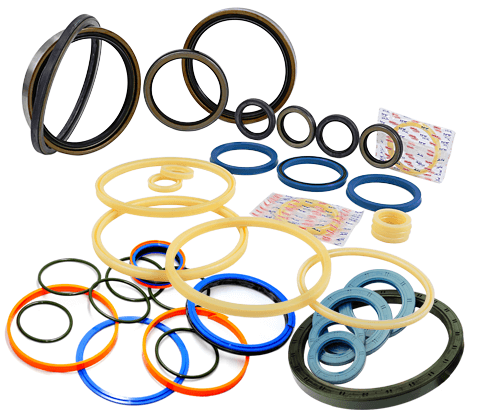
A cylinder seal kit is the full set of sealing parts for one hydraulic cylinder: the rod (gland) seal, piston seal, dust wiper, guide rings, O-rings and back-up rings. When you rebuild, replace the whole set for that cylinder, not one worn piece. Match the rod bore and machine model correctly and the cylinder stops leaking and holds load again.
A cylinder seal kit is the complete set of sealing parts for one hydraulic cylinder: the rod (gland) seal, piston seal, dust wiper, guide rings and the O-rings. When a cylinder leaks, drifts, or loses force, the cause is usually these rubber parts rather than the whole cylinder body. So knowing what a cylinder seal kit contains and how to buy the full, correctly sized set is the first thing an owner should learn. This guide walks through each part, how to read the sizes, and how to match the right kit for each cylinder on an excavator.
What is a cylinder seal kit?
A hydraulic cylinder works by pressurized oil pushing the piston back and forth. To keep oil from leaking out and from crossing between the two chambers, several sealing parts made of rubber, PU and engineering plastic are fitted. The set of those parts for one cylinder is called a cylinder seal kit. Every cylinder on an excavator, from bucket to boom to arm, has its own kit.
What parts make up a cylinder seal kit?
A standard kit usually has six main groups of parts. These are the rod (gland) seal, the piston seal, the dust wiper, the rod guide ring, the piston guide ring, and the O-rings with their back-up rings. Cylinder design changes how many of each you get, but missing one group means the cylinder still leaks or wears out fast. That is why technicians always say buy the full set instead of single pieces.
What does the rod (gland) seal do?
The rod seal sits at the head of the cylinder and wraps around the rod. Its job is to hold the pressurized oil inside the chamber and stop it from weeping out along the rod as it strokes in and out. This is the most heavily loaded part and the one that fails most often. When you see oil wetting the cylinder head, the rod seal is almost certainly due for replacement.
What role does the piston seal play?
The piston seal sits on the piston head and runs against the bore wall. It stops oil from crossing from one chamber to the other. When the piston seal wears, the rod drifts down slowly even with the control held steady, or the bucket cannot hold a heavy load. This is the classic sign that the internal sealing has weakened and needs a new kit.
O-rings and back-up rings — the small parts people forget
The O-rings and back-up rings sit at the joints between parts, for example between the piston head and the rod. They are small and cheap, but skip them and oil still weeps through the gap. Many less experienced hands change only the rod and piston seals and ignore these rings. The result is a cylinder that leaks again right out of the shop, and has to come apart a second time.
Are guide rings really necessary?
Guide rings, or wear rings, are made of engineering plastic and keep the rod and piston running on center, metal not touching metal. If they wear, the rod goes off center and the sealing lip wears unevenly and quickly on one side. So even though they do not block oil directly, guide rings are a required part of a complete kit. Leaving them out shortens the life of every other seal in the kit.
The dust wiper — the first line of defense
The dust wiper sits at the very outside of the cylinder head and scrapes soil and water off the rod each time it retracts. On muddy, dusty Vietnamese sites, this part works hard. If the wiper tears, grit gets inside, scores the rod and kills the rod seal within weeks. This is why you should also read our guide on replacing cylinder seals to fit the wiper the right way round.
Why buy the full set instead of single pieces?
The parts inside one cylinder wear at almost the same rate because they share the same running hours. Replace only the rod seal and a few weeks later the piston seal or wiper fails, and the cylinder must come apart again. Every teardown costs labor, costs oil, and raises the risk of letting grit in. Buying the full kit for one cylinder means you open the machine once, and the new parts age together.
How do you know which kit your cylinder needs?
The surest way is to identify the exact machine model and cylinder position, then measure the rod and bore. Many common excavators use familiar pump and cylinder families such as K3V and K5V, so an experienced hand knows them on sight. But a machine repaired many times may have a non-original rod or bore fitted. In that case, measuring the old part directly is still safest, and our guide on choosing the right seal size covers that measuring in detail.
Reading seal sizes: inner, outer diameter and thickness
Each seal is described by three numbers: inner diameter, outer diameter and thickness. For a rod seal, the inner diameter equals the rod diameter. For a piston seal, the outer diameter equals the bore diameter. Get one of the three wrong and the seal is either loose or too tight to fit. Measure the old part while it is clean, at the least worn spot, to get the original figure.
How do bucket, boom and arm cylinder kits differ?
On the same machine, each cylinder has a different rod and bore diameter, so the kits differ too. The bucket cylinder is usually smaller and cycles the most. The boom cylinder is larger and carries heavy load when lifting. So you cannot buy one kit and share it across all three; you must identify each cylinder correctly. When you buy, browsing our hydraulic seals catalog by cylinder type is faster.
Seal materials: how PU, NBR rubber and PTFE differ
Dust wipers and rod seals often use PU because it is tough and wears well. Static sealing O-rings often use NBR rubber because it is soft and grips the groove well. High-pressure piston seals may use a PTFE ring with a rubber energizer behind it. A maker such as NOK publishes material property documents that explain why you should not swap materials carelessly. Pick the wrong material and the seal can swell or turn brittle early.
Seal quality: which source can you trust?
For seals, Việt Trung Hải is an authorized distributor of PET Seals, made from stable material, machined to accurate sizes and holding up well in the dust and mud of the job site. This is the quality option to consider before you look at loose aftermarket sources of unknown origin. A good seal has a smooth surface, clean sharp lips and even elasticity. You can also compare directly in our hydraulic seal parts range.
Genuine or aftermarket — how to choose?
Genuine kits matched to the machine give the tightest fit, but price and lead time can run longer. A good-quality aftermarket kit still runs long if the size and material are correct. The real issue is the source: loose seals with tolerances off by a few hundredths of a millimeter will leak once fitted. Choose a seller with clear origin, a size guarantee, and a warranty when a seal is faulty.
Signs your cylinder seal kit is due
There are a few familiar signs any operator can spot. A rod wet with oil, a bucket that drifts down while parked, or a rod that moves in jerks are early warnings. When you see oil running in a stream around the cylinder head, do not wait. Left too long, heavy leakage heats the system and can harm the pump.
Reference table of kit parts
The table below lists the groups of parts usually found in a kit and their role, so you can check them when your new seal pouch arrives.
| Part | Location | Main role |
|---|---|---|
| Rod seal | Head, around rod | Stops oil leaking along the rod |
| Piston seal | On the piston head | Stops oil crossing between chambers |
| Dust wiper | Outermost at head | Scrapes mud, grit, water |
| Guide ring | Rod and piston | Keeps center, stops metal contact |
| O-rings, back-up rings | The joints | Static sealing, supports seals |
Steps to check before ordering a kit
Before you call to order, gather enough information to avoid buying the wrong kit. Follow this order to be safe:
- Identify the exact machine model, serial and cylinder position to replace.
- Measure the rod diameter and bore diameter and write them down clearly.
- Count and photograph the old parts before you take them apart.
- Compare sizes against the sample part, do not guess from memory.
- Order the full kit for the whole cylinder, plus a few spare O-rings.
Common mistakes when fitting a new kit
The most common mistake is fitting a seal the wrong way round, so the lip does not face the oil correctly. Next is nicking the seal lip while sliding it over threads or sharp grooves. Many people forget to lubricate the seal and rod before assembly, which twists the seal. Work slowly, keep it clean, and get the direction right, and the new kit runs long.
Storing and transporting a kit correctly
Rubber seals left in the sun or near strange oils will harden and deform. Keep the seals in a sealed bag, in a cool place, out of direct sun until you fit them. Do not fold them or hang them on a nail, as the edges dent easily. A good kit stored carelessly still fails before you get to use it.
When to call a technician, when to do it yourself?
If you have a puller, a press and a clean space, changing a bucket cylinder kit is doable in a small shop. But large boom cylinders are heavy with stiff threads, so hand them to a technician with proper tools. Wrong teardown easily bends the rod or scores the bore, costing far more than labor. Knowing your limit is the real saving.
What makes the cost of a kit vary?
The price of a kit depends on cylinder size, brand and source, so there is no fixed figure. A kit for a large cylinder with many parts costs more than a small one. Genuine kits matched to the machine usually cost more than aftermarket of the same size. It is best to give the exact machine model and cylinder position so the seller quotes correctly, rather than asking a general price.
Choosing a trustworthy source for kits
A good seller will ask you back for the machine model, position and sizes before quoting a kit. They keep stock of clear origin, pack the full set, and stand ready to swap when a size is wrong. Avoid buying by just giving a machine name and taking any pouch handed over. The right kit from the start saves you a whole day of teardown labor.
The bottom line on choosing a cylinder seal kit
Knowing what a kit contains, measuring the three sizes correctly, and always buying the full set for one cylinder are the three things that keep your repair clean and lasting. Do not replace single pieces, do not guess sizes, and keep new seals clean until you fit them. If you need help matching the right kit for your machine, see Việt Trung Hải's hydraulic seals catalog and send the machine model and cylinder position, and we will help you choose right the first time.
Key takeaways
- A cylinder seal kit has the rod seal, piston seal, dust wiper, guide rings and O-rings.
- Always buy the full set for one cylinder instead of replacing single parts.
- Measure the three numbers right: inner and outer diameter and thickness of the old seal.
- Bucket, boom and arm cylinders each have their own kit and cannot be shared.
- A torn dust wiper kills the rod seal within weeks on a dusty, muddy site.
- Give the exact machine model and cylinder position so the seller picks the right kit.
Written by
Đỗ Thị Hương
Đỗ Thị Hương handles parts lookup and fitment, especially hydraulic seals. She writes about choosing the right seal size, spotting genuine parts and matching parts to the machine by code.
Related parts
The exact parts discussed above — send your machine model or pump code to match.