Quick answer
A hydraulic cylinder is made of the barrel, the rod, the piston head, the gland seal set and the piston seal set, plus wear rings and a dust seal. The barrel and rod carry the load, while the seal sets keep the oil chambers apart. Of all these parts, the seal set fails most often because it takes hot oil, high pressure and grit all day.
A hydraulic cylinder turns oil pressure into the push and pull force that moves the boom, arm and bucket of an excavator. In terms of build, a hydraulic cylinder is made of the barrel, the rod, the piston head, the gland seal set and the piston seal set, plus a few guiding and dust-blocking parts. Of all these parts, the seal set is the one that fails most often, because it works right against hot oil, high pressure and grit all day long. Understanding each part helps you read the real fault when the cylinder goes weak, leaks, or drifts, instead of swapping parts blindly and wasting money.
What a hydraulic cylinder is and how it works
A hydraulic cylinder is a sealed steel tube with a rod that slides in and out inside it. Oil is pumped into one chamber, pushing the piston and rod to one side to make force. When the valve reverses, oil enters the other chamber and the rod travels back. All the force that lifts the bucket, curls the arm or swings the linkage comes from the pressure difference between these two oil chambers. Once you grasp this, you see why a single small leak makes the whole cylinder lose power.
An overview of what a hydraulic cylinder is built from
Looking from outside in, a cylinder splits into a few groups of parts. The pressure body group is the barrel and the base cap. The moving group is the rod and the piston head. The sealing group is the gland seal set and the piston seal set. Last is the guiding and dust group, made of the wear rings and the dust seal. Each group gives its own kind of fault when it goes bad, so grouping like this helps you narrow down the problem faster.
The barrel carries all the pressure
The barrel, which mechanics call the bore, is a thick steel tube honed smooth on the inside. The inner face must be truly smooth so the piston seal can hold tight as the rod slides back and forth. If the bore gets scored lengthwise, oil slips past the piston seal and the cylinder clearly loses power. A barrel dented or bulged by a hard hit also makes the piston seal open up over that spot, causing a jerky feel under load.
The rod is the moving heart of the cylinder
The rod, also called the piston rod, is a chrome-plated steel bar that runs out through the gland. The chrome plating hardens the surface, resisting scratches and rust when the machine sits out in rain and sun. The rod touches the gland seal directly, so a single pit on its surface will nick the seal and start a leak. This is why mechanics hate letting the rod touch the ground or knock against rocks during teardown.
The piston head keeps the two oil chambers apart
The piston head is a steel block fixed at the end of the rod, sitting inside the barrel. It splits the bore into two separate oil chambers and carries the piston seal set. When oil enters one chamber, the piston head takes the force and pulls the whole rod along with it. If the thread holding the piston to the rod loosens, you hear a light knock each time the direction changes, a sign it needs retorquing.
What the gland seal set contains
The gland seal set sits at the open end of the cylinder, where the rod pokes out. Inside it you usually find the main rod seal, a secondary seal, a dust seal and a wear ring for the rod. The rod seal keeps high-pressure oil from leaking out along the rod. The dust seal does the opposite job, wiping grit off the rod so it cannot get inside. The gland is the first place you see oil when something goes wrong.
What the piston seal set contains
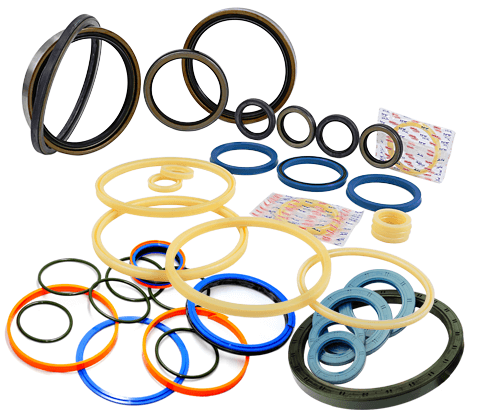
The piston seal set sits around the piston head, sealing between the two chambers inside the barrel. It usually has the main piston seal, a backup ring and a piston wear ring. When this set wears, oil slips from the high-pressure chamber to the low-pressure one right inside the bore, so you see no external leak, only a weak, drifting cylinder. This is the hardest fault to spot because it happens quietly inside. When it is time to replace them, pick the right hydraulic seals for your machine model so the seals fit snugly, rather than guessing by a rough diameter.
Why is the seal set the part that fails most often?
The seal set is made of rubber or polyurethane, far softer than steel, so it is the wear part that gives way instead of the metal. It must hug the rod and the bore while those two surfaces slide constantly under pressure and heat. Hot oil slowly hardens the rubber, while grit wears the seal lip away bit by bit. Add the rod vibrating and drifting slightly off-center over time, and the seal is always the first to reach its life limit. That is why replacing seals on schedule is cheaper and faster than letting damage spread to the rod and barrel.
The wear ring keeps the rod running straight
The wear ring, also called the guide bushing, is a hard plastic ring set in the gland and around the piston. Its job is to keep the rod and piston centered so metal never touches metal. When the wear ring wears down, the rod starts to rock slightly and press unevenly on the seal lip, wearing the seal out on one side. In many cases a cylinder still leaks soon after a reseal, and the real cause is a worn wear ring the mechanic overlooked.
The dust seal matters more than many think
The dust seal sits at the very outside of the gland, the first thing to meet the dirty world. Each time the rod retracts, it wipes mud and grit off the rod so they do not ride inside. If the dust seal tears, grit gets in, scores the rod and destroys the main rod seal in a short time. In other words, a cheap part like the dust seal protects the whole expensive seal set behind it. Ignoring it is a common mistake on dusty sites.
The backup ring stops the seal from extruding
The backup ring is a hard plastic ring set right behind the main seal on the low-pressure side. Under high pressure, soft rubber tends to squeeze into the gap between metal parts. The backup ring plugs that gap, keeping the seal lip from being pushed out and bitten off. When you see small frayed shreds of rubber at the edge of an old seal, it is often from a missing backup ring or a gap that has grown too wide.
The mounting pins and bushings at both ends
Both ends of the cylinder have eyes that mount to the machine through pins and bushings. The bushing here takes rocking load every time the cylinder works, so over time it develops play. When the eye bushing wears loose, you hear a clunk each time the load reverses, and the rod takes extra side load it should not. Greasing the mounting pins fully is a simple step many forget, which wears the bushing out early.
Signs the rod is scratched or pitted
A bad rod usually shows itself as a thin oil film running along the rod as the cylinder extends. Run a finger along the rod body; if you feel ridges or tiny pits, the surface is already harmed. A slightly bent rod shows up when fully extended as uneven travel or a sticking spot. A deeply pitted rod will only seal for a short while after a reseal, because the rod surface itself is cutting the seal every stroke.
Signs the seal set is starting to fail
A bad gland seal gives the clearest sign: oil pooling and dripping at the head of the cylinder. A bad piston seal stays dry outside but the cylinder is weak, lifting heavy loads slowly and drifting down when held. A quick check is to raise the bucket and hold it; if the cylinder drifts down slowly with no external leak, the piston seal is likely bypassing. This drift-under-load behavior is covered in more detail in the cylinder drift guide, which is worth reading to tell it apart from a valve fault.
A quick reference table of parts and common faults
The table below helps you narrow things down fast when the machine shows a symptom, before you open the cylinder for a close look.
| Part | Main role | Common fault | Outside sign |
|---|---|---|---|
| Barrel | Holds pressure, guides piston | Scoring, dents, bulge | Weak power, jerky feel |
| Rod | Transmits force, slides through seal | Scratches, pits, bend | Oil film along rod |
| Gland seal | Blocks oil from leaking out | Hardening, tears, worn lip | Oil dripping at head |
| Piston seal | Blocks oil between chambers | Wear, extrusion | Weak, drifts under load |
| Wear ring | Keeps parts centered | Play, wear | Rod rocks, uneven seal wear |
| Dust seal | Wipes off grit | Tears, hardening | Dirty rod, fast inner seal wear |
Seal materials and when to choose which
Cylinder seals are usually made from nitrile rubber, polyurethane or PTFE-based materials depending on position and working conditions. Polyurethane resists abrasion well and suits the main rod seal that takes pressure and friction. Nitrile rubber is softer and cheaper, often used for static sealing rings. According to the technical documentation from SKF, choosing the right material for the oil temperature and fluid type largely decides how long the seal set lasts. When the machine runs heavy loads with constantly hot oil, picking a more heat-tolerant material saves you from early reseals.
Genuine versus aftermarket, how to choose
You can buy a genuine seal kit matched to the machine maker, or pick an aftermarket kit from a reputable seal maker. Genuine kits fit snugly with reliable tolerances, but the price is usually notably higher and sometimes you must wait for stock. A good aftermarket kit still runs long if you choose the right size and the right material for that position. Prices for both swing with the machine model and the supply source, so it is best to ask specifically for your model. The hydraulic seal parts store can look up a kit by machine model so you do not have to measure and guess.
The workshop inspection routine
When a cylinder comes into the shop, mechanics follow a sequence so nothing is missed. The basic steps are as follows.
- Drain all oil and remove the gland seal set from the barrel.
- Pull the rod out, wipe it clean, then inspect the rod surface for scratches and pits.
- Check the bore by eye and by hand for lengthwise scoring or dents.
- Measure the play of the wear ring and piston against the bore.
- Replace all seals as a full kit; never reuse old seals even if they look fine.
- Reassemble, add oil and bench-test with no load before mounting on the machine.
Do all these steps and the chance of having to open it up a second time drops sharply. The hands-on seal-fitting steps are covered in the replacing cylinder seals guide.
How to extend the life of seals and rod
Keeping the hydraulic oil clean is the single most important thing, because grit in the oil wears both the seal and the rod. Change the oil filter on time and keep water out of the tank. When the machine sits idle for long, retract the rod so the plating is not exposed to rain and sun and start to pit. Wiping the rod clean before retracting also spares the dust seal from heavy work. These small habits noticeably lengthen the gap between reseals.
When to reseal only, and when to rebuild the whole unit
If the rod and bore are still smooth and only the seals are worn, a reseal kit is enough and cheap. If the rod is deeply pitted or bent, it must be reworked or replaced, because a new seal on a bad rod will leak again fast. A heavily scored bore must be re-honed or replaced, and the cost then climbs a lot. Weighing repair against a full rebuild depends on the state of the rod and bore, not just the seal. An experienced mechanic will tell you clearly before deciding.
A few notes for do-it-yourself work on site
If you work on site yourself, set the cylinder on something clean and keep sand off the new seals. Do not pry seals into their grooves with anything sharp, as it tears the seal lip right at fitting. Wipe a thin film of oil on the seal and rod before fitting to cut friction on the first run. Tighten the gland and piston evenly, avoiding a crooked pull that seats the seal unevenly. Careful work from the start saves you from tearing it down again over an early leak.
Get the right seal kit for your machine
Choosing the right seal kit by machine model is the deciding step for a repair that lasts. If you are unsure which kit fits your model, message Việt Trung Hải with the machine model and cylinder type to have the right kit looked up. You can preview the hydraulic seals in stock and ask about an aftermarket option that fits your budget. Getting the repair right the first time is always cheaper than swapping parts over and over.
Key takeaways
- A hydraulic cylinder has the barrel, rod, piston and two seal sets at gland and piston.
- The seal set fails most often because it takes hot oil, high pressure and grit.
- A bad gland seal leaks outside, while a bad piston seal makes the cylinder weak and drift.
- A worn wear ring wears the seal unevenly, so it leaks again soon after a reseal.
- A pitted rod or scored bore means a reseal will only hold for a short while.
- Choosing the right kit by machine model and keeping oil clean extends seal life.
Written by
Phạm Đức Thắng
Phạm Đức Thắng focuses on the undercarriage, tracks and the travel and swing systems of excavators. He writes about how these systems are built, travel and swing motors, and protecting the undercarriage from wear.
Related parts
The exact parts discussed above — send your machine model or pump code to match.