Quick answer
To choose the right replacement swing motor, go by the machine generation and the assembly code stamped on the body, not by the machine name. Match the reduction ratio, output tooth count, flange style, swing brake and valve block against the old unit. Get all these points right and the house swings with correct force and speed, with no leaks.
Choosing the right replacement swing motor for an excavator starts with one plain question: does the new unit match the exact machine generation and the exact assembly code. A swing motor does not stand alone. It comes joined to the reduction gearbox, the swing brake, and the valve block on top. If you pick a swing motor by machine name alone and ignore the assembly code, you can easily end up with an off-standard unit: bolt holes that do not line up, oil ports that do not match, or a wrong reduction ratio that makes the house swing jerky or weak.
What the swing motor does on an excavator
The swing motor takes high-pressure oil from the main pump and turns that pressure into rotating force for the whole upper structure. When you move the swing lever, oil enters the motor, the motor shaft turns, and the force passes through the reduction gearbox down to a pinion that meshes with the swing bearing ring gear.
Because it carries the heavy upper body, this motor works under constant load and takes a shock every time it reverses. That is why a durable swing motor unit has to balance rotating force, holding brake, and the ability to absorb hydraulic shock.
Why the wrong swing motor choice gets expensive
Picking the wrong swing motor costs more than the price of the unit. You also lose the labour to fit it, lose the days the machine sits idle, and sometimes damage the swing bearing as well. A unit with the wrong reduction ratio makes the house swing at the wrong speed, draws more flow, and heats the pump.
If the mounting flange is off, the mechanic has to redrill holes or make shims. That patch breaks the concentric fit, so seals leak sooner and bearings wear loose. Choosing right from the start is always cheaper than fixing the fallout.
Confirm the exact machine generation before buying
Before you ask a price, be sure of the machine generation. The same model line can use different swing units on early and later builds. The maker changes the gearbox, changes the valve style, or changes port layout across generations while the machine name stays the same.
Read the frame number and machine number, and check the accompanying paperwork. If the machine has passed through several owners, do not fully trust the story you are told. The numbers stamped on the unit are the reliable basis. When in doubt, checking the swing motor on the machine before you order will save you from mistakes.
Read the assembly code and stamped numbers
On the swing motor body and on the gearbox housing there is usually a label or a recessed stamp. This is the original assembly code, and it matters more than the machine name. Wipe off the oil and grime, photograph the whole unit clearly, and write down every character.
If the label has faded, look for the stamp on the flange or around the oil ports. A full assembly code lets the seller match the correct type, ratio, and direction of rotation. Without it, any advice is guesswork.
The swing motor comes joined to the reduction gearbox
Most excavators use a swing motor unit with an integrated planetary reduction gearbox. The motor spins fast, and the gearbox reduces speed and multiplies force to give enough swing torque. So you are not choosing a motor alone, you are choosing a motor and gearbox that match each other.
When you replace it, watch the reduction ratio and the output pinion tooth count. A wrong ratio gives the wrong swing speed, and a wrong tooth count will not mesh with the swing bearing ring gear. Both details must match the old unit.
The swing brake sits inside the motor unit
Inside the swing motor unit there is a normally-closed disc brake. When you are not swinging, springs clamp the discs to hold the house still, even parked on a slope. When you move the swing lever, oil releases the brake first, and only then does the motor turn.
If you pick a unit with no brake or a different brake style, the house will drift when you stop on a slope, or swing with a jerk on start. Ask clearly whether the replacement has the same brake type and the same brake-release oil feed.
Control valve and anti-shock valve on the unit
On top of many swing motor units there is a valve block with anti-shock valves and make-up valves. The anti-shock valve bleeds off pressure when the house reverses suddenly, sparing the lines from shock. The make-up valve tops up oil when the motor tends to draw a vacuum as it stops.
When choosing a new unit, check whether this valve block comes with it or is sold separately. Some units are sold bare, with no valves. If so, you must move the old valves over and be sure the valve seats match. This is the easiest place to end up off-standard.
The Kawasaki K3V and K5V motor and pump families
Many mid-size and large excavators use pump and motor families marked K3V or K5V. These are common product families, so parts and replacement units are widely available. Even so, within one family there are many variants by machine generation.
When you need to match the technical standard of a unit, refer to the maker's documentation, for example the technical documentation from Kawasaki. Original documents help confirm rotation direction, flange type, and valve configuration, instead of guessing from outward shape.
Should you choose genuine or aftermarket?
The answer depends on budget and machine age. Genuine parts give steady fit and durability, suited to machines still working hard for the long haul. Good-quality aftermarket units can save money, suited to older machines or lighter duty.
Whichever way you go, put flange fit, correct ratio, and correct valve configuration first. A well-matched aftermarket unit still beats a genuine unit for the wrong generation. Unit prices swing with condition and supply source, so compare the warranty too, not just the number.
Signs the swing motor has failed
Before you rush to buy a new unit, read the symptoms correctly. A failing swing motor often makes a whine or a metallic knock when it reverses. The house may swing weakly, swing with a jerk, or drift to a stop on a slope.
If the unit housing runs unusually hot after a few minutes of work, there is likely an internal leak or a brake not fully releasing. When you meet a weak swing, do not conclude the motor is dead straight away. Often the fault lies in the pump, the valves, or a wrongly set pressure.
Check carefully before deciding to replace
A weak swing does not always mean replacing the whole unit. Rule out external causes first. Check pump pressure, check the relief valve, and check leak-back to tank. If the pump is weak, replacing the motor is pointless.
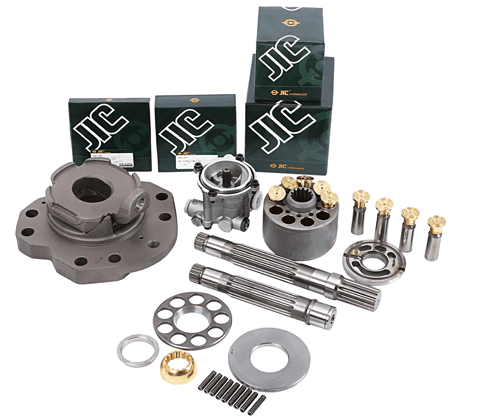
If you suspect the oil supply, also look at the hydraulic-pump parts feeding the swing circuit. Only when you have ruled out pump and valves and the swing is still weak does replacing the swing motor truly earn its cost.
A quick checklist for choosing the swing motor
Use the table below to run through each fit point before you place the order.
| Point to check | Why it matters | What to ask or measure |
|---|---|---|
| Generation and code | Same name, different unit by build | Frame number, stamp on body |
| Reduction ratio | Wrong ratio, wrong swing speed | Compare with old unit |
| Output tooth count | Must mesh the swing ring gear | Count teeth, measure diameter |
| Flange style | Wrong flange, bolts will not fit | Match holes and centre line |
| Swing brake | Holds the house on a slope | Same type, same oil feed |
| Valve block | Anti-shock and make-up | Included or sold separately |
| Rotation direction | Wrong direction reverses function | Confirm against documentation |
Match the flange and bolt pattern
The unit flange must match the swing bearing in diameter, hole count, and hole centre line. Off by a little and the bolts will not enter, or enter off-centre. Off-centre mounting makes the output pinion mesh unevenly, causing play and noise.
Before ordering, measure the bolt-hole centre line and the pilot diameter. Compare these figures with the old unit. Do not trust the eye, because many flanges look alike but differ in small details.
Oil ports, feeds, and hoses
The inlet and outlet port positions on the new unit must suit the existing hose routing. If a port faces the wrong way, the hose has to bend sharply or pull tight, and it breaks and leaks. Match the position and thread size of each port.
Also check the drain-to-tank port, the brake-release feed port, and the port for the valve block. A single missing port and the whole circuit will not run right. This is an easy detail to miss when you only look at photos online.
Sensors, electric brake, and connectors
Some machine generations have a swing speed sensor or an electrically controlled swing brake. If the new unit lacks a sensor boss or uses a different connector style, the electrical system will flag a fault. The machine may drop into a limited mode and not swing with full force.
Match the electrical side too, not just the mechanical and hydraulic sides. Ask clearly whether the replacement has a sensor boss and a connector of the same standard. This small detail decides whether the machine runs smoothly or throws faults constantly.
Check bearings and seals on delivery
When you receive a new or rebuilt unit, turn the shaft by hand. It should turn smoothly, with no axial play and no hard catch. A gritty sound is a sign of poor bearings.
Inspect the shaft seal and the flange seal for cracks or misalignment. A new unit with a poor seal will leak oil in the first week. If it is a rebuilt unit, ask clearly whether new seals and bearings were fitted.
Fitting and running-in the new motor
When fitting, tighten the flange bolts evenly in a cross pattern so the flange seats flat. Fill the gearbox housing with oil before running so the gears do not run dry. Bleed the brake-release line so the brake lets go cleanly.
Run the machine with no load and swing slowly a few turns each way. Listen, feel the housing temperature, and watch for leaks. If it is quiet and dry, raise the load gradually. A careful run-in lets the gears and seals bed in before heavy work.
Common mistakes when buying off-standard
The most common mistake is buying by machine name and ignoring the assembly code. The second is forgetting to compare the reduction ratio. The third is buying a bare unit and only then finding it lacks valves or a brake.
- Buying by machine name alone, not reading the stamped number.
- Not comparing the reduction ratio and output tooth count.
- Skipping the valve block, assuming every unit has one.
- Not checking the electrical side and sensors.
- Not measuring the flange and oil ports before ordering.
Avoid these five and you have avoided most of the risk of an off-standard purchase.
Questions to ask the seller before you commit
Ask directly and specifically. Which exact machine generation does this unit fit, and what is the assembly code. Does it come with the valve block and brake. What are the reduction ratio and output tooth count compared to the old unit.
Also ask about warranty, about origin, and about returns if it does not fit. A seller who knows the trade will answer clearly. If you only get vague answers, be careful. You can compare against the correct swing motors for reference.
Maintenance to keep the swing motor durable
Whether a swing motor unit lasts depends heavily on oil and filters. Dirty oil wears the pump, valves, and motor far faster. Change oil and filters on schedule, and keep the oil clean.
Check the gearbox oil level regularly, because low oil makes the gears run hot and wear. When you hear an odd sound or feel a weak swing, deal with it early instead of pushing the machine. Steady maintenance is always cheaper than replacing the whole unit.
Need help choosing the right swing motor
If you are still unsure between units, send us the machine generation, the assembly code, and a photo of the stamp on the body. Our technical team will match the correct ratio, the correct flange, and the correct valve configuration, so you do not buy off-standard. See the swing motors suited to each machine generation, and get in touch when you need to choose the right replacement unit the first time.
Key takeaways
- Go by machine generation and the assembly code stamped on the body, not the machine name.
- Match the reduction ratio and output tooth count against the old unit.
- Check the flange style and oil port positions before ordering.
- Confirm the swing brake and valve block are the same type, included or sold separately.
- Rule out the pump and valves before concluding the motor has failed.
- Run it in and keep the oil clean so the swing unit lasts.
Written by
Đỗ Thị Hương
Đỗ Thị Hương handles parts lookup and fitment, especially hydraulic seals. She writes about choosing the right seal size, spotting genuine parts and matching parts to the machine by code.
Related parts
The exact parts discussed above — send your machine model or pump code to match.
Related products
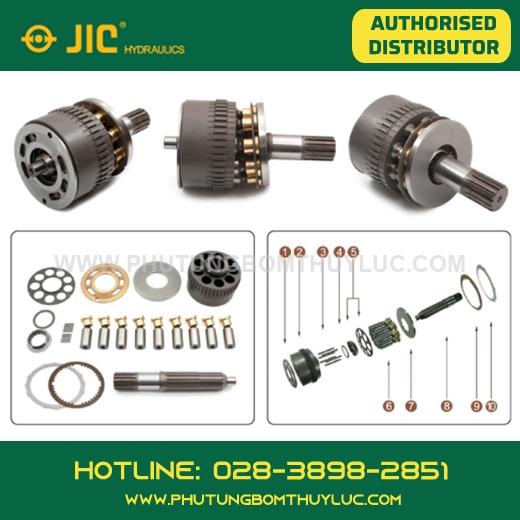
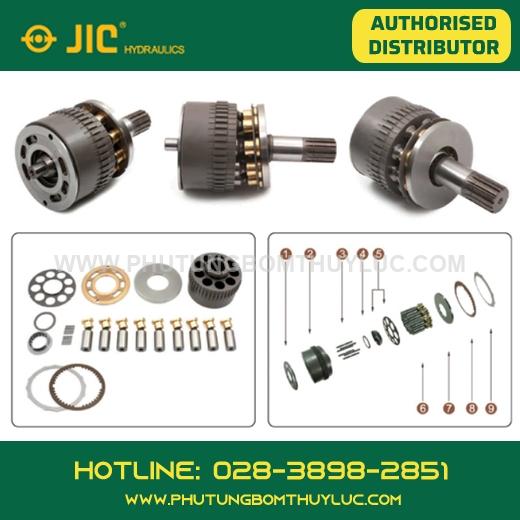 Kawasaki · M2XSwing motor rotary group – Kawasaki M2X120M2X120On requestView · get a quote
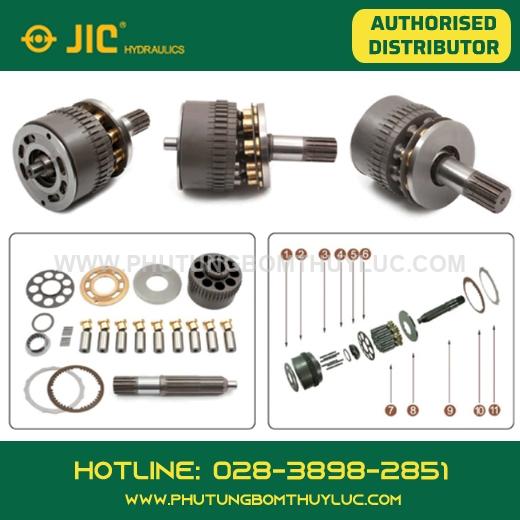
 Kawasaki · M2XSwing motor rotary group – Kawasaki M2X146M2X146On requestView · get a quote
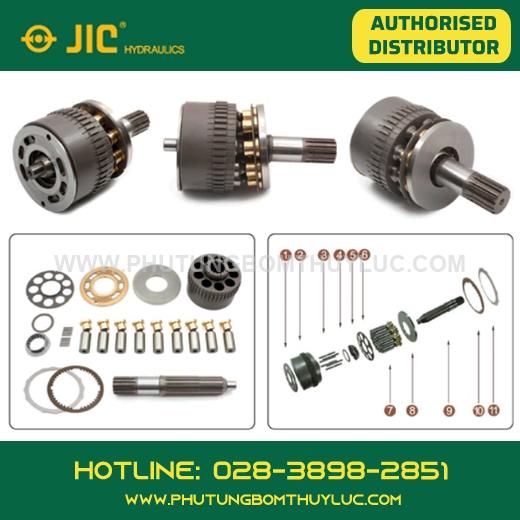
 Kawasaki · M2XSwing motor rotary group – Kawasaki M2X150M2X150On requestView · get a quote
 Kawasaki · M2XSwing motor rotary group – Kawasaki M2X170M2X170On requestView · get a quote