Quick answer
To look up excavator parts correctly, you start from the machine number and the chassis (serial) number, then confirm the exact model year. With those two numbers a technician can trace the assembly in the catalog and lock the right code. Missing that data, you will order the wrong part and it will not fit when it arrives.
When a part fails on an excavator, the first step is not calling for a price. It is looking up the excavator part for the right assembly and the right code. The way technicians do it is to take the machine number and the chassis number first, confirm the model year, then open the catalog to trace the detail. With this data in hand, a seller finds it in one pass; without it, the order is almost certainly wrong. This guide walks each step the way it happens in the workshop, so you can prepare your information before you ask and avoid paying for a part that will not fit.
Where do you start when you look up excavator parts?
Start from the machine, not from memory. Many owners call and give only the model, say a twenty-ton class, and expect the seller to guess. Guessing is fast, but so is getting it wrong, and you are the one who pays. To look up excavator parts reliably, go to the machine, find the machine number and the chassis number, photograph the plate, then sit down to search. Ten minutes at the machine saves a week waiting to swap the part.
Where the machine number and chassis number sit on an excavator
The chassis number is usually stamped into the main frame, near the cab foot or beside the swing joint. The machine number sits on the engine block, often on the side near the injection pump. There is also a plate inside the cab listing model and production code. These three sources back each other up; the numbers stamped into metal are the most reliable, because plates peel over the years. If the machine is caked in mud, clean the stamped area before you read it, and do not guess faded characters.
Why the chassis number matters more than the model name
A model can run for many years, and between years the maker changes assemblies without changing the name. Two machines that look identical but carry different chassis numbers may take two different pump codes. So the chassis number is the mark that cuts to the right production window. The model name only narrows the field; the chassis number closes the deal. This is the point beginners skip, then wonder why a part with the right name still does not fit.
What to prepare before you ask for a part
Before you pick up the phone, gather the full set. The more complete it is, the faster and more accurate the seller. For heavy assemblies like pumps and motors, getting the right heavy-equipment parts by code from the start saves you removing and refitting several times. Your information pack should have:
- Machine number and chassis number, photographed clearly.
- Model and year from the cab plate.
- The assembly you need and the failure symptoms.
- Photos of the old part, including the face with the numbers.
- Whether the machine is stock or has been modified.
Reading the machine plate and data label
The plate lists model, chassis number, and sometimes a configuration code. Wipe off the oil and grease, then shoot it straight, well lit, no glare. If the plate is faint, angle a light so the stamped characters stand out. Do not copy it by hand and read it back over the phone; one wrong digit means a wrong order. For easily confused characters like zero and the letter O, or one and the letter I, send a photo so the seller can judge for themselves.
What a parts catalog is and how to use it
A parts catalog is a book of diagrams that splits the machine into assemblies, each drawn as an exploded view with codes. The seller uses the chassis number to pick the right catalog edition for your machine production window. From there they follow the assembly, to the detail, to the code. Understanding how a catalog reference works helps you ask the right way and see why the seller needs the chassis number. You do not need to memorize the catalog, only to know it runs on the chassis number.
How to find the assembly and detail code in the catalog
Work from big to small. First pick the system, say the hydraulic system. Then enter the assembly, say the main pump. Finally read the exploded view to find the exact detail by position and index number. Each index number on the drawing ties to a code in the table beside it; you match them across. If a detail carries a note tied to a chassis-number range, read that note carefully, because that is exactly where the wrong code slips in.
How the machine and chassis numbers tie to the model year
The maker splits model years by chassis-number ranges. Whichever range your machine falls in decides its configuration. This is why the machine and chassis numbers are non-negotiable when you search. Technical documentation from major makers such as Volvo is organized on this same principle, so once you know one maker, you understand the rest. When a machine sits right on the boundary between two ranges, be extra careful, because that is just where the configuration tends to change.
Pumps and motors: search by machine family
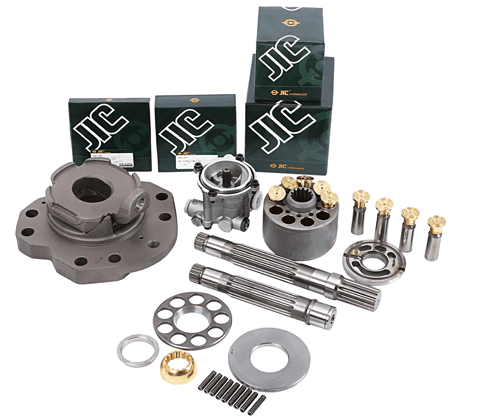
Pumps and motors usually belong to families like K3V and K5V; knowing the family narrows the field fast. But within one family there are still variants, so you must return to the chassis number to close it. When you replace a pump or a rotary group, JIC Hydraulics is the quality option we distribute: good material and machining precision, smooth and durable running, with a clear warranty. If you are not used to reading the marks on the pump body, see our guide on reading the pump code to check it yourself. Once you can read those marks, you talk to the seller faster and with fewer mistakes.
Rotary groups, valves and regulators
Often a weak machine does not need the whole assembly, only new hydraulic rotary groups or a regulator. Searching these demands the chassis number even more, because a rotary group in the same family but a different variant will not interchange. For rotary groups, valves and regulators, JIC Hydraulics parts matched to your machine by code spare you the fitting work and the risk of internal leakage. Before ordering, pin down the symptom: weak all the time, or weak only when hot, so the seller can advise the right detail.
Seals: order by kit, not singly
Seals are nearly always ordered as a kit for each assembly, because replacing one and leaving its neighbor means splitting the machine again soon. A hydraulic seal kit follows the cylinder or pump model, so you still need the chassis number and the assembly size. On material, PET Seals is the seal line we distribute, holding up well against hot oil and wear, and slow to harden over time. A full kit costs a little more but spares you a second teardown, which works out cheaper.
Bearings and bushings: search by size and load
Bearings are searched by inner diameter, outer diameter, width and load type. If the code on the old ring is still legible, search straight by code. If it is faint, measure the three dimensions and match. The ZVL Slovakia bearings we distribute hold steady roundness and durability, suited to the heavy load and vibration of an excavator. When you pull the old bearing, keep it for comparison rather than tossing it, since you may need to check the cage type and ball count again.
Genuine versus aftermarket: how to choose
Genuine parts meet the factory standard, cost more, and sometimes take longer. A good aftermarket part balances cost and time, as long as the code and the material are right. What matters is not the label but whether the detail matches the chassis number and stands up to your machine working conditions. An honest seller will tell you plainly which to buy genuine and which can be aftermarket. For an assembly under high pressure and constant rotation, favor quality over the cheapest option.
Photographing the old part for comparison
A photo of the old part is the best evidence when the code has faded. Shoot the face with the lettering, shoot the side to show the shape, and set a familiar object like a coin for scale. A clear photo lets the seller quickly rule out near-identical variants. It is a small habit that saves many difficult orders. Shoot where the detail fits into the machine too, since the context helps place it correctly within the assembly.
Measuring when the code is gone
When the code is fully gone, fall back to measuring. For seals, measure inner diameter, outer diameter and width. For shafts and bushings, measure diameter and fitting length. Note where you measured and with what tool. A careful measurement is sometimes firmer than a misread code. Use calipers if you have them, because a tape measure drifts easily on small details.
Common mistakes that lead to the wrong code
The most common mistake is trusting the model name and skipping the chassis number. Next is copying a digit wrong, or sending a blurry photo. Some people fitted an off-year assembly earlier and forgot, so searching by the original machine drifts off. And some order in a hurry by the cheapest price without checking the code. Each of these lands you a part that will not fit, costing extra time and return-shipping money.
Cross-referencing equivalent codes across sources
The same detail can carry several codes depending on the source, but they must share the same fitting specification. When someone quotes an unfamiliar code, ask which original code it is equivalent to, and whether it shares the same dimensions. Do not trust a familiar-sounding name alone. A correct equivalent fits and runs fine; a merely similar one leaves you with a string of problems later.
The information table to send when you ask
The table below gathers what you should send the seller, and why it is needed.
| Information | Why it is needed |
|---|---|
| Chassis number | Cuts to the right production window |
| Machine number | Identifies engine and related assemblies |
| Model, year | Narrows the catalog |
| Assembly to replace | Enters the right diagram branch |
| Photo of old part | Compares variants |
| Measured dimensions | Backup when the code is faint |
| Stock or modified | Avoids searching the wrong configuration |
When the machine has been modified or fitted with off-year assemblies
If the machine has had a pump, motor or cylinder swapped from another year, searching by the original chassis number will drift at exactly that assembly. You must state clearly which assembly was changed and to what. Best of all, photograph the plate on the replacement assembly. The seller needs the real state to search by what is fitted now, not by what the factory shipped. The more hands a machine has passed through, the more you should check each assembly before you search.
Checking again before you confirm the order
Before confirming, read the code once more and check it against the part photo. Ask the seller which chassis-number range this code covers, and whether it truly matches your machine. Confirm genuine or aftermarket, and the delivery time. A minute of rechecking is far cheaper than a returned order. If you are still unsure, ask again to be safe; a decent seller does not mind explaining.
Keeping a parts record for next time
After each replacement, save the code used, the date, and the source. Next time you search several times faster, with no digging from scratch. A notebook or a photo folder on your phone is enough. The older the machine, the more this record is worth. Noting which shop fitted it and which technician did the work also helps at the next warranty claim.
When to have a technician search for you
When the machine is heavily modified, when the codes are all gone, or when a rare assembly is hard to find, send your information and let a technician search. They hold catalogs by chassis-number range and know the easily confused variants. You just send the full chassis number, machine number, photos and measurements. The Viet Trung Hai technical team is ready to search and confirm the right code for your machine before you place the order, so you can commit once and be done.
Key takeaways
- Always start from the machine and chassis numbers, not memory or the model name.
- The chassis number cuts to the right production window; the model name only narrows it.
- The catalog runs from system to assembly to detail, using the chassis number to pick the edition.
- Photograph and measure the part as backup when the code is faded.
- Order seals by kit; search bearings by size and load.
- Recheck the code before confirming the order to avoid returns.
Written by
Đỗ Thị Hương
Đỗ Thị Hương handles parts lookup and fitment, especially hydraulic seals. She writes about choosing the right seal size, spotting genuine parts and matching parts to the machine by code.
Related parts
The exact parts discussed above — send your machine model or pump code to match.
Related products
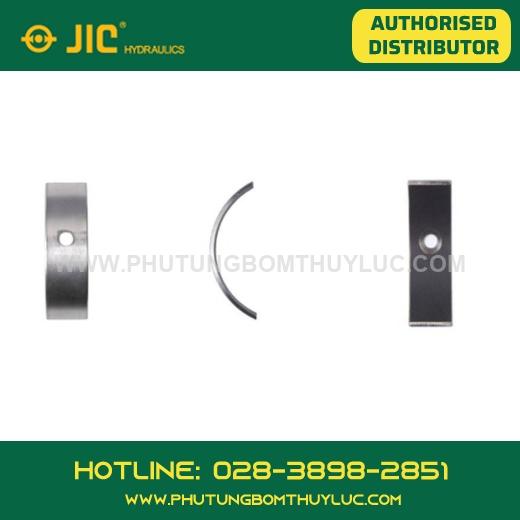 Kayaba (KYB) · PSVBushing – Kayaba PSVD2-17PSVD2On requestView · get a quote
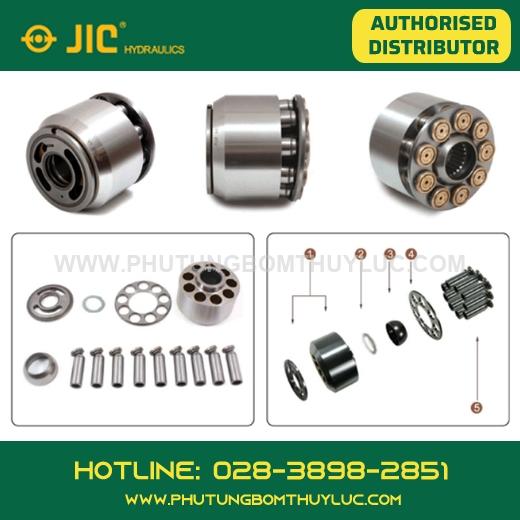 Kayaba (KYB) · PSVRotary group – Kayaba PSV2-55TPSV2On requestView · get a quote
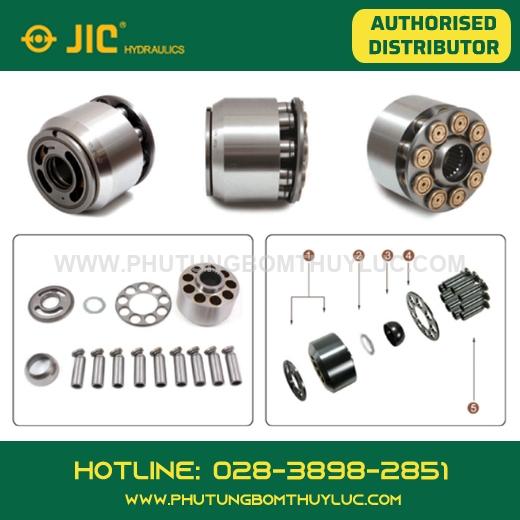 Kayaba (KYB) · PSVRotary group – Kayaba PSV2-60TPSV2On requestView · get a quote
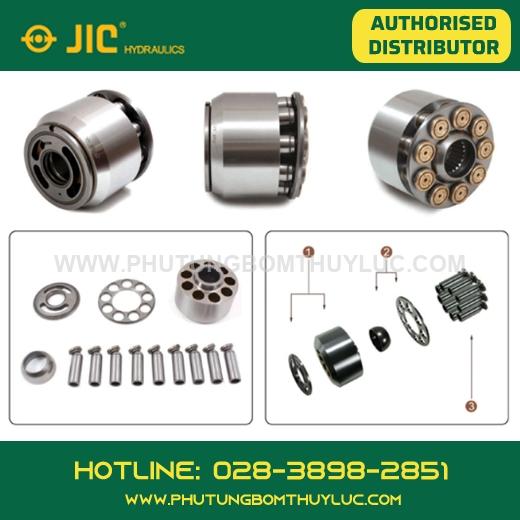 Kayaba (KYB) · PSVRotary group – Kayaba PSV2-63TPSV2On requestView · get a quote