Quick answer
Greasing an excavator right means pumping enough grease into the bucket, arm, boom, boom-foot and swing-ring points at a pace that suits the site, so the grease film always covers the metal. Pump until clean new grease shows at the edge of the bushing, wipe the nipple before you start, and grease more often in mud, water or rock. Done steadily, the pins and bushings run quiet, stay cool and wear slowly.
Greasing an excavator right means pumping enough grease into every pin, bushing, boom joint, arm joint and swing ring at a sensible pace, so the grease film always covers the metal. Done right, the pins and bushings run quiet, do not squeal, do not run unusually hot, and wear far more slowly. Greasing an excavator should not follow one generic number; it should follow the load, the dirt and the water on the real site. Rush it and you waste grease while the pin stays dry; do it well and you use less grease yet the pin lasts longer. This guide walks through every grease point, how to pump grease steadily, and how to set a schedule that fits how the machine runs.
What greasing an excavator is and why it matters
The pins and bushings on the arm carry heavy loads all day. Every time the bucket presses down or pries at rock, the pin surface slides on the bushing under real pressure. Without grease, two metal faces rub directly, build heat and grind each other away. That thin film of grease squeezed between them is what keeps the pin from biting straight into the bushing. Skip this for a few weeks and a good pin starts to develop play.
The grease points on an excavator
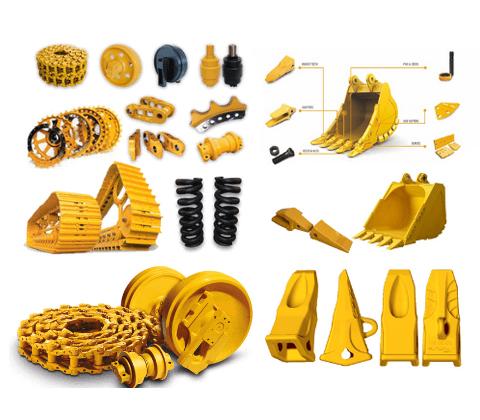
A digging machine has many grease nipples spread along the boom, arm and bucket. Miss one nipple and you forget one pin, and that pin fails first. Follow a fixed order, usually from the bucket back toward the body, so every round is complete. The main groups are the bucket pins, arm pins, boom pins, boom foot and the swing ring. When you need replacement pins and bushings, look over our heavy-equipment parts range to pick the right type for your machine.
Bucket pins and bushings take the heaviest load
The bucket pins sit at the very end of the tool, close to soil, mud and rock. This is the dirtiest spot and wears fastest on the whole arm set. Dust and sand slip into the gap, push grease out, then replace that grease with grinding paste. So the bucket pins usually need grease more often than the pins set deeper in. If one pin always needs more grease, that is your bucket pin.
Arm pins and the mid joints
The arm pins link the bucket to the arm and the arm to the guide links. These joints redirect force constantly as the bucket curls and extends. A creaking sound when you curl the arm means the film has thinned. Do not wait until the pin squeals loudly, because by then the bushing face is already scoring. The mid joints are small but carry concentrated load, so never treat them lightly.
Boom pins and the boom foot
The boom pins hold the whole weight of boom, arm and bucket when it reaches out. The boom foot, where the boom mounts to the body, takes twisting force when the machine lifts and swings at once. The nipples here are sometimes hidden and easy to skip when you rush. Take the time to get under and check each one, wipe it, then grease. A dry boom-foot pin can put play into the whole boom.
The swing ring and its bearing
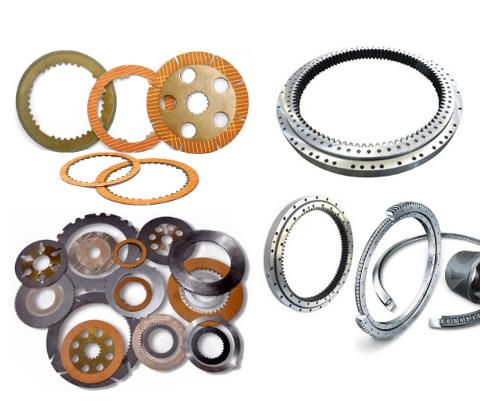
The swing ring is a large bearing that carries the entire upper body of the machine. It has its own nipple for the ball track, and usually a separate grease bath for the swing gear set. Starve it of grease and you get play, a rumbling sound when it turns, and slow tooth wear. The good way is to pump grease into the track while slowly swinging the upper body, so grease spreads all around the ring. This is an expensive part, and repairing it costs a lot.
How often should you grease an excavator?
There is no single right number for every machine and every site. The pace depends on load, dirt, water and the hours run each day. A machine digging in flooded mud needs grease far more often than one on dry ground. The sure way is to follow the machine manual, then adjust by what you see at the pins. Pairing this with the daily walk-around check helps you catch a dry pin before it starts to squeal.
How to pump grease correctly
Greasing sounds simple, but a sloppy job wastes grease and harms the pin. The hard part is not the effort; it is the attention. Follow this order for each nipple:
- Wipe the nipple clean before fitting the gun, so you do not push outside dirt inward.
- Pump slowly, count the strokes, and watch the old grease come out.
- Stop when clean new grease pushes out at the edge of the bushing.
- Wipe the excess on the outside so sand and soil do not stick to it.
- Mark or note the nipple you finished so you neither repeat nor skip it.
How much grease is enough at a pin?
Enough is when the old grease, usually dark and full of dirt, is pushed fully out and clean new grease appears at the bushing edge. That shows the grease path is clear and the pin cavity is full. Pumping more just spills grease that then collects soil, wasting your work. But too little is worse, because the pin stays dry inside even when the outside looks greased.
Signs a pin is running short of grease
A pin will tell you if you are willing to listen. A squeal or creak when the arm curls and extends is the first warning. Feel the area around the pin after running; if it is unusually hot, friction is high. A reddish-brown weep around the pin means metal dust has mixed into the grease and the pin is wearing. Catch these three signs early and you save the pin.
Choosing the right grease for excavator pins
Bucket pins need a high-load grease that clings well so it is not squeezed out of the gap. A lithium-base extreme-pressure grease is a common choice for the arm and bucket joints. Where the machine sits in water, favour a water-resistant grease so the film is not washed away. A bearing maker like SKF publishes guidance on choosing grease by load and environment, well worth reading before you switch the grease you use.
Should you mix two different greases?
Do not carelessly mix two greases with different soap bases. They can be incompatible, bleed their oil and lose their ability to cling. When you want to switch to a new grease, pump until the old grease is fully driven out before calling it done. If you are unsure what is already in the machine, ask your grease supplier before adding more. A careless mix can do more harm than leaving the old type alone.
Hand grease gun or an automatic system?
A hand gun is cheap and direct, but it depends on whether the operator is diligent. An automatic greasing system meters grease to each point on a cycle, which suits a machine running many shifts. Whichever you choose, you still need a periodic visual check. An automatic system can block one line without anyone noticing, letting a single pin quietly run dry.
A grease schedule by working conditions
Instead of memorising a fixed number, adjust the pace to the real environment. The table below is a way of thinking, not a hard rule:
| Working condition | Bucket and arm pin pace | Note |
|---|---|---|
| Dry ground, light load | Less often | Still listen for noise |
| Mud, silt, damp | More often | Water drives grease out fast |
| Rock, heavy load | More often | Pins take hard shocks |
| Frequently in water | Very often | Check every shift |
Common mistakes when greasing
The most common mistake is pumping fast to finish without watching the grease come out. The second is forgetting the hidden nipples at the boom foot and swing ring. The third is not wiping the nipple, so you push dirt straight into the pin. The fourth is letting many days pile up between rounds, leaving the pin dry in between. Avoid these four and you are ahead of most machine owners.
Protecting the seals that keep grease in
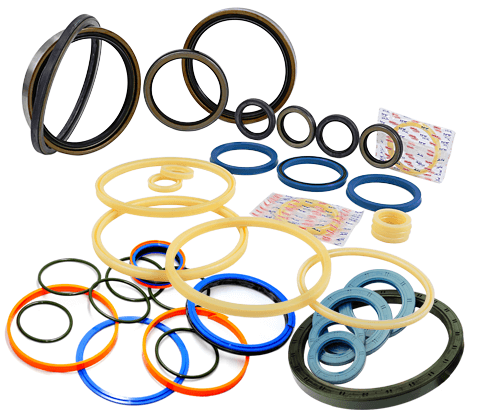
The seals at each end of the bushing hold grease inside and block dirt outside. A torn seal lets grease run out and soil come in, and the pin fails fast after that. When you replace a pin and bushing, replace the seal set at the same time to be safe. A quality seal like PET Seals holds tighter thanks to its material and machining precision, worth considering when you rebuild a joint.
Checking play in the pin and bushing
Rest the bucket lightly on the ground, then rock the boom back and forth and watch the gap at the pin. Heavy play means the bushing is worn, not simply short of grease. At that point extra grease is only a temporary relief; a replacement is coming. Note which pins have play so you can plan one replacement round. Fixing them together saves repeating the teardown many times.
When to fit new pins and bushings?
When the play is large, the pin still knocks even after fresh grease, or the grease is full of metal dust, it is time to replace. Choose bushings and bearings of the right material and hardness so the new pin lasts. ZVL Slovakia bearings are a quality choice here thanks to good steel and precise machining that limits early play. A poor-quality bushing often wears out again within a few months, which costs more in the end.
Greasing the swing ring and swing gear properly
The swing gear set usually runs in its own grease or oil bath. Check the level and condition of the grease in the bath regularly. Thick black grease full of dust is the point to flush and refill. Do not let the teeth run dry, because replacing the whole swing set is a large expense. A little attention here saves a great deal later.
Fitting greasing into overall maintenance
Greasing does not stand alone; it goes hand in hand with other jobs. It ties in with checking the bucket, teeth, cylinders and hydraulic lines. Read our guide to bucket maintenance to fold greasing into one tidy routine. Once it becomes a morning habit, your pins and bushings will last much longer.
Logging the grease schedule so nothing is missed
A small notebook or a sheet on your phone is enough. Record the date, machine hours and which pins you greased each round. That lets you spot which pin takes grease unusually fast, a sign the bushing is failing. The habit of logging is cheap yet saves a lot in repair costs. A logbook also helps the next operator know which pins to watch.
Next steps and where to get parts
Greasing an excavator is not hard; it just needs steady hands and attention. Cover every nipple, pump until clean grease shows, choose the right grease, and adjust the pace to the site. When you need replacement pins, bushings, seals or bearings, look over our heavy-equipment parts range for advice on the right type for your machine.
Key takeaways
- Cover every grease nipple in a fixed order, and do not skip the hidden ones at the boom foot and swing ring.
- Pump until clean new grease shows at the bushing edge before you stop, not just for show.
- Wipe the nipple before greasing so you do not push dirt into the pin.
- Grease more often when the machine works in mud, water and rock.
- Listen for noise and feel for heat to catch a drying pin early.
- Heavy play despite enough grease means it is time for quality bushings and bearings.
Written by
Lê Minh Tuấn
Lê Minh Tuấn handles scheduled maintenance and machine longevity at Việt Trung Hải. He writes about oil, filters, service intervals and the habits that keep machines running reliably.
Related parts
The exact parts discussed above — send your machine model or pump code to match.