Quick answer
A K3V rotary group is the set of parts inside a Kawasaki K3V piston pump — cylinder block, pistons, swash plate, valve plate, drive shaft and regulator. Weak controls, pressure loss or overheating oil usually mean the rotary group is worn and needs replacing as a matched set by pump code.
A K3V rotary group is the set of internal parts inside a Kawasaki K3V piston pump — a hydraulic pump series very common as the main pump on mid-size excavators in Vietnam. When the rotary group wears, the machine gets weak, loses pressure and overheats the oil even though the engine is fine. This guide explains what a K3V rotary group contains, how to read the pump code, the wear signs, how to check, and how to pick the right set.
What is a K3V rotary group?
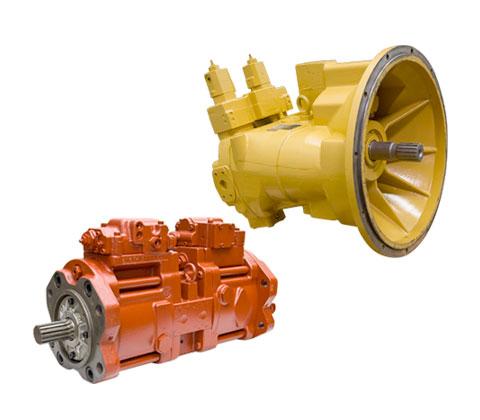
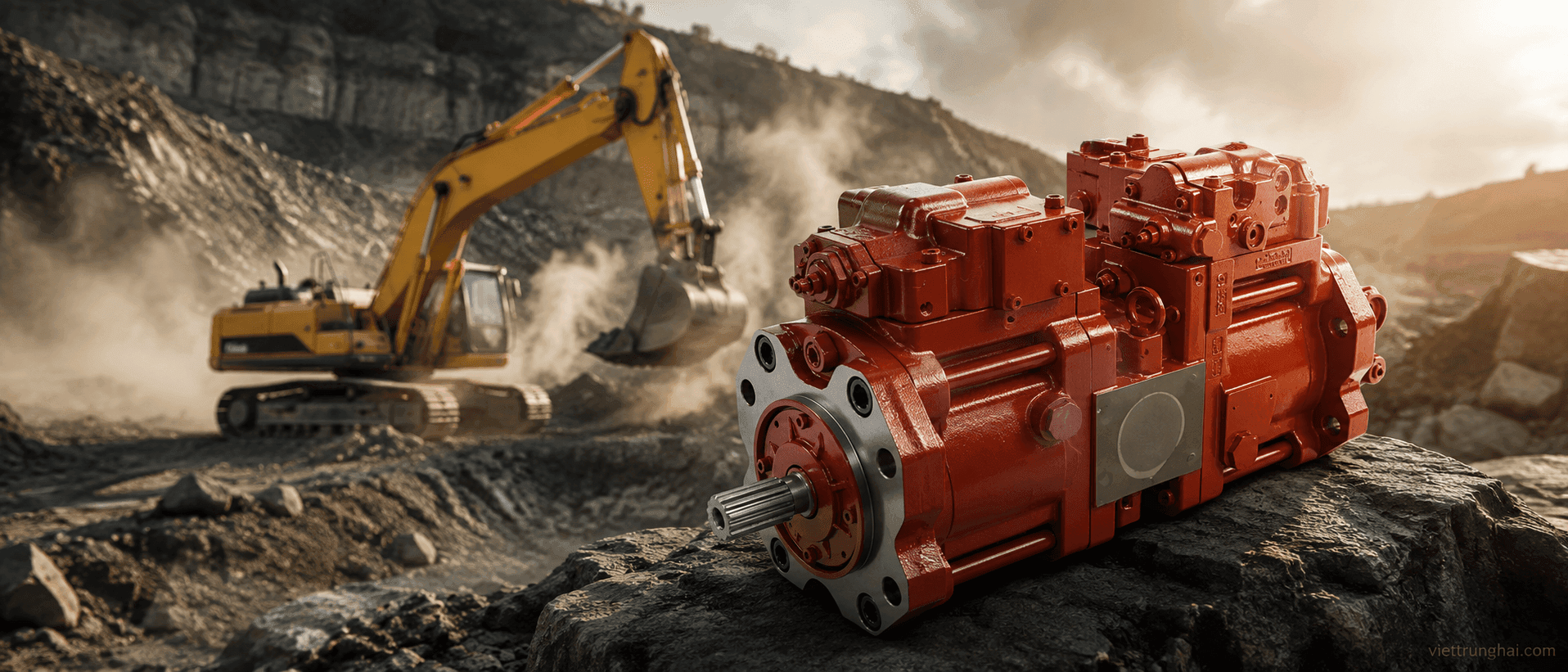
The K3V is Kawasaki's axial-piston pump series, used as the main pump on many excavators. The "rotary group" is the set of internal parts that create flow and pressure — replacing a K3V rotary group means changing this set while keeping the housing. Because the K3V is the main pump, the rotary group's condition directly affects the force and speed of every function: lift, dig, arm curl and swing.
What parts make up a K3V rotary group?
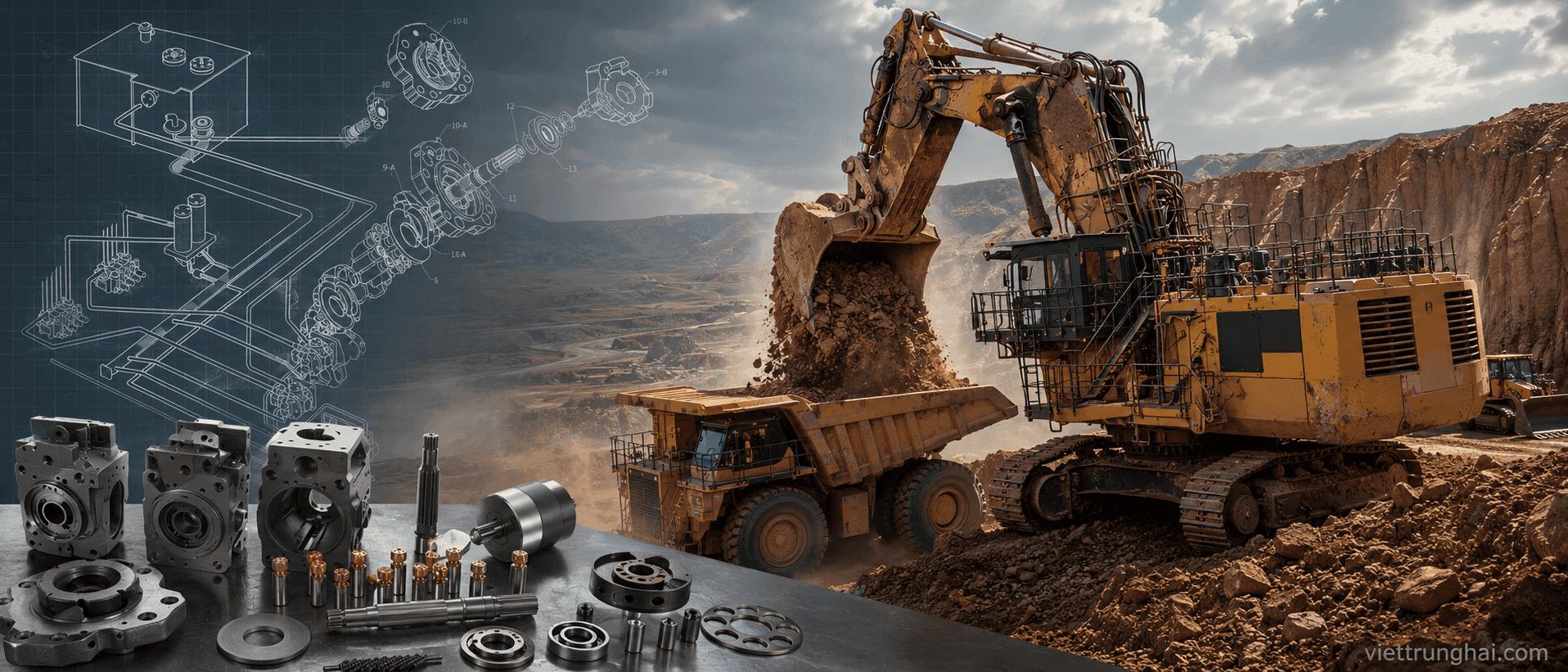
A standard K3V rotary group set includes the main parts, each with a role:
- Cylinder block: houses the pistons and turns with the drive shaft; the central part of the group.
- Pistons and shoes: draw and push oil; worn shoes are a common cause of pressure loss.
- Swash plate: sets the tilt angle, and so the pump flow under load.
- Valve plate: routes oil in and out; a scored valve plate causes internal leakage.
- Drive shaft: transmits power from the engine into the cylinder block.
- Regulator: controls the swash-plate angle from pressure signals.
These parts mesh to very fine tolerances, so fit a matched set by pump code rather than piecemeal, to avoid tolerance drift and fast wear.
How to read a K3V pump code to choose correctly
A K3V code usually reads as K3V with numbers and letters, e.g. K3V112DT. "K3V" is the series; the number (such as 112, 140, 63) reflects the pump's displacement; the trailing letters denote a variant in regulator type, rotation or shaft. Reading the code correctly picks the right rotary group, because variants in the same series can differ inside. The surest way is to photograph the code stamped on the pump body and send it to the supplier to match, rather than guessing from the machine. Learn more about the K3V series.
Which machines use a K3V?
The K3V is common on many mid-size excavators, typically machines around 20–50 tonnes from makers such as Kobelco, Doosan, Hyundai, Hitachi and Volvo. Displacement and variant vary by maker and generation. Since one maker can use several K3V variants across generations, the right way is to send the machine model and pump code to match exactly — do not choose on the machine name alone.
Signs a K3V rotary group is worn
In the cases we see, three signs show up earliest when a K3V rotary group wears:
- Weak controls under load — slow lift and dig even at full throttle.
- Pressure loss when the oil is hot — strong at start-up, fading after 30–40 minutes.
- Unusual oil heating with a whine — internal leakage turns pressure into heat.
A typical case on a 20-tonne class excavator running a K3V112: once the piston shoes wear and the oil film between shoe and swash plate weakens, the pump starts losing flow as the oil warms — boom lift and arm curl fade under heavy load even though it felt strong at cold start. If the valve plate is lightly scored as well, internal leakage turns pressure into heat and warms the oil faster than normal.
If all three appear together, it is most likely the rotary group rather than a valve or motor. Even so, measure to be sure before teardown.
How to check before deciding to replace
Before opening the pump, rule out cheaper causes and measure pressure to be sure the fault is the rotary group:
- Check oil level, oil colour and the suction filter — dirty or low oil also causes weakness.
- Measure main and pilot pressure with a gauge, against the maker's spec for the model.
- Check the regulator and relief valve before blaming the rotary group.
If all of these are fine and the pump is still weak with hot oil, that is when a K3V rotary group is truly worth replacing. See weak hydraulic pump: 7 causes for a full diagnosis.
Repair piecemeal or replace the whole set?
| Option | Upfront cost | Risk | Best when |
|---|---|---|---|
| Replace a few parts | Low | High — tolerance mismatch, fails again | Light wear, one exact part |
| Replace the whole set | Higher | Low | Primary machine, multiple worn parts |
For the main pump on a primary machine, replacing the set is usually cheaper long-term because it avoids opening the pump repeatedly. If you are torn between rebuild and a new pump, read replace the rotary group or the whole pump.
Replacing and calibrating a K3V rotary group
Replace a K3V rotary group in a clean environment, in order:
- Remove the pump from the machine and clean the outside before opening to keep dirt out.
- Open the pump, remove the old group, noting the order and direction of each part.
- Inspect the housing, shaft and mounting face — if the housing or shaft is damaged, consider a new pump.
- Fit the new matched-set group by code, oil it, and assemble the right way round.
- Calibrate pressure and flow to the maker's spec after fitting.
- Refit the pump, bleed the air and run unloaded before working.
The calibration step matters: fitted correctly but uncalibrated, the machine still runs off its design point.
How to choose the right K3V rotary group
To choose correctly, send the pump code stamped on the body (starting with K3V) or the machine model to the supplier. The technical team will check the shaft spline count, regulator type and drawing before quoting, reducing wrong orders. Prefer a complete matched set with clear provenance over the cheapest option, because one out-of-tolerance part can damage the whole set.
Maintenance to make a K3V rotary group last
Rotary-group life depends heavily on oil cleanliness and operating habits. Changing oil and filters on schedule, keeping the oil clean, not running with overheated oil, and acting early on small signs all extend life. Dirty oil with metal debris is the number-one cause of fast valve-plate and shoe wear.
Common mistakes when replacing a K3V rotary group
- Fitting the rotary group piecemeal, not a matched set by code, causing tolerance drift.
- Skipping the housing and shaft check, fitting a new group onto a damaged housing.
- Not calibrating pressure and flow after fitting.
- Working in a dirty environment, causing the new group to wear early.
- Replacing the rotary group when the real fault is a valve, filter or the oil supply.
Why does a K3V rotary group wear faster than normal?
A K3V rotary group is built to last, but a few factors can wear it out early. The leading cause is dirty oil: metal debris and dust in the oil abrade the valve plate, swash plate and shoes quickly. Water in the oil causes rust and surface corrosion. Running with overheated oil thins the lubricating film and increases metal-to-metal friction. Cavitation at the suction port, from a clogged suction filter or low oil, creates bubbles that erode the surfaces. Finally, the wrong oil or over-age oil pushes the pump beyond its design conditions. Controlling these factors helps a K3V rotary group reach close to its full life.
Genuine vs aftermarket K3V rotary groups
The market has genuine K3V rotary groups, sets from reputable parts makers, and cheap aftermarket ones. Good-quality sets have stable dimensions, proper machined surfaces and wear-resistant materials, so they calibrate easily and last. Very cheap sets often have poor tolerances and surfaces, making them hard to calibrate and quick to fail — no real saving. For the main pump on a primary machine, prefer a complete matched set with clear provenance. Việt Trung Hải is an authorized JIC Hydraulics distributor, supplying rotary groups for the common K3V series with stable specs that calibrate easily after fitting.
The K3V and related piston-pump series
The K3V is one of the most common piston-pump series on excavators, alongside series like the K5V (often on larger machines) and the Komatsu/Hitachi HPV. Though they differ in name and detail, these axial-piston pumps share a common principle: pistons draw and push oil across a valve plate, and the swash plate meters flow to the load. So the diagnosis of weakness, the checks, and the matched-set-by-code rule all apply across them. Understanding this common ground helps you handle machines with a non-K3V pump more flexibly, and describe symptoms to a mechanic more clearly.
What drives the cost and time of a K3V rotary-group job?
The cost and time of a K3V rotary-group job depend on the pump variant, the housing and shaft condition, and parts availability. For common K3V variants, sets are usually in stock and quick. If the housing or shaft needs work, time and cost rise. Calibrating pressure and flow after fitting is an important part too — do not skip it to save money, as it decides whether the machine runs correctly. When getting a quote, send the pump code and describe the symptoms so the supplier prepares the right parts and estimates realistically, avoiding mid-job surprises.
When should a K3V pump go to a professional workshop?
Checking oil, filters and measuring pressure can be done in the field. But opening a K3V, checking the housing and shaft, fitting a new group and calibrating need a clean environment, proper tools and experience. Dirt entering during assembly is a common reason a new group fails early. So unless you have a clean workshop and the right tools, take the pump to a specialist hydraulic-pump repairer to ensure quality and durability after the repair.
When you need a K3V hydraulic rotary group or other hydraulic-pump parts, send the pump code or machine model and the Việt Trung Hải technical team will match it exactly. For the pump series' specifications, refer to the maker's documentation such as Kawasaki.
Key takeaways
- A K3V rotary group is the cylinder block, pistons, swash plate, valve plate, drive shaft and regulator.
- Code K3V112DT: K3V is the series, the number is displacement, letters are the variant — send the code to match.
- Weak controls under load and pressure loss when hot signal a worn rotary group.
- Measure pressure and check oil, filter and valves before blaming the rotary group.
- Fit a matched set by code and calibrate pressure and flow after fitting.
- Clean oil and on-schedule filter changes make the rotary group last.
Written by
Trần Quốc Bảo
Trần Quốc Bảo works on hydraulic pumps and rotary groups at the Việt Trung Hải workshop. He measures pressure, overhauls and load-tests pumps across many excavator generations, and writes about pump principles, K3V rotary groups and fixing weak pumps from real cases.
Related parts
The exact parts discussed above — send your machine model or pump code to match.
Related products
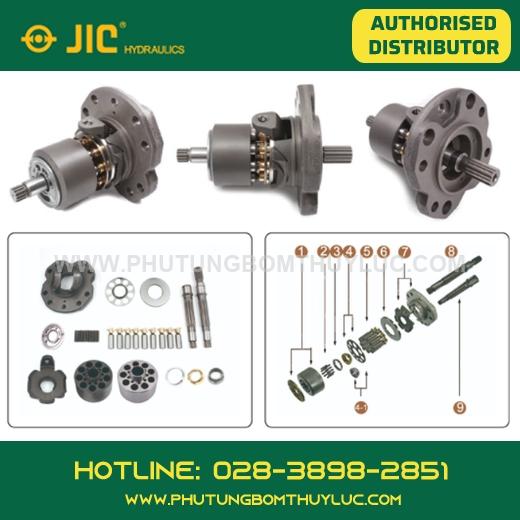 Kawasaki · K3VRotary group kit – Kawasaki K3V112DTK3V112DTOn requestView · get a quote
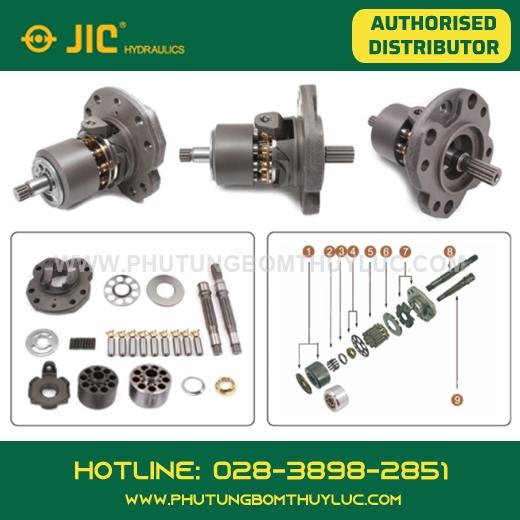 Kawasaki · K3VRotary group kit – Kawasaki K3V140DTK3V140DTOn requestView · get a quote
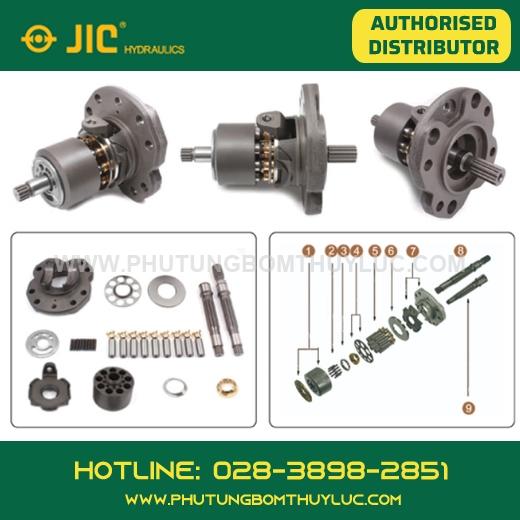 Kawasaki · K3VRotary group kit – Kawasaki K3V180DTK3V180DTOn requestView · get a quote
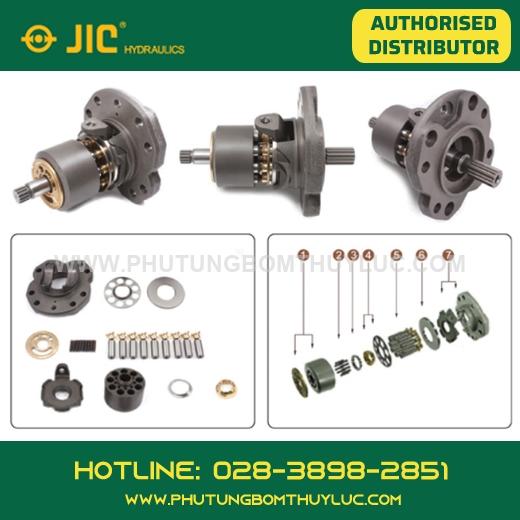 Kawasaki · K3VRotary group kit – Kawasaki K3V280DTK3V280DTOn requestView · get a quote