Quick answer
A hydraulic motor turns oil pressure and flow into rotating force: pressure makes torque, flow makes speed. On an excavator, both the swing and travel motors use an axial piston design with a swash plate. When the rotating group wears, the internal leak grows, the motor weakens, and the case drain runs hot, which is the sign to check.
A hydraulic motor is the part that turns oil pressure and flow into rotating force so the machine can work. In plain terms, the pump makes a stream of pressurized oil, that oil flows into the motor, pushes the pistons inside, and the motor shaft turns. On an excavator, the two places that use motors most are the swing and the travel. This article covers the working principle, the basic construction, and the wear signs a mechanic or machine owner should know to read trouble early.
What is a hydraulic motor and how does it work?
A hydraulic motor does the reverse of a pump. A pump turns rotating force into pressurized oil. A motor takes that oil and turns it back into rotating force. Oil enters one port, pushes the parts inside, then leaves through the other port. The output shaft connects to a gear, a gearbox, or the swing bearing depending on where it is mounted.
The key point is that the motor does not create force by itself. It only converts oil energy into mechanical energy. For a strong motor, the pump must supply enough pressure. For a fast motor, the pump must supply enough flow. Both travel through lines, valves, and the regulator before reaching the motor.
Pressure and flow: the two things that make torque and speed
This is the root idea. Grasp it and the rest becomes easy. Oil pressure sets torque, meaning the twisting force at the output shaft. Oil flow sets rotation speed. The heavier the load, the higher the pressure inside the motor. To spin faster, the motor needs more oil each second.
These two quantities always travel together. When the swing is heavily loaded but turns slowly, pressure has usually climbed to the relief valve setting while flow is being shared away. When the machine moves fast on flat ground but struggles on a slope, torque is being demanded beyond the available pressure. Understanding the pressure and flow pair helps you tell a pump fault from a motor fault.
Basic construction of a hydraulic motor
A hydraulic motor on an excavator usually has a few familiar groups of parts. There is the housing, the rotating group with its pistons and cylinder block, the swash plate or tapered face, the port plate, the seals, and the bearings that support the shaft. A travel motor also adds a planetary gearset and an integrated parking brake.
Each part has a clear job. The rotating group is where force is made. The valves handle distribution and protection. The seals keep oil from leaking out. The bearings hold the shaft true and turning freely. When one group wears, the others usually suffer too, so reading trouble means looking at the whole system, not just one spot.
Axial piston motors — the heart of swing and travel
Most swing and travel motors on excavators use the axial piston type. Inside sits a cylinder block carrying many small pistons lined up parallel to the shaft. Pressurized oil pushes the pistons against a tilted swash plate. Because the plate is tilted, the axial push is bent into rotation, and the block and shaft turn with it.
This type runs smoothly, handles pressure well, and gives high torque in a compact size. That is why the well known rotating groups such as K3V, K5V, and their equivalent families all follow the axial piston principle. Technical documentation from major manufacturers such as Bosch Rexroth describes in detail how the swash plate and its tilt angle affect torque and displacement.
How does a swing motor work?
The swing motor takes pressurized oil and turns the platform under the cab. The motor shaft meshes with a small pinion gear, and that pinion meshes with the large ring gear of the swing bearing. When you move the swing lever, the valve sends oil into one port and the motor turns one way. Move it the other way, oil switches ports, and the platform turns the other way.
The nature of swinging is constant stopping and reversing. That is why a swing motor always comes with anti shock valves and a parking brake. If you want to understand how the whole group works together, read more about the excavator swing system. When it is time to replace, look at the right swing motors for your machine model.
Travel motors and the planetary gearbox
Travel motors sit on both sides of the undercarriage, one per side, driving the sprocket of the track. Because the sprocket needs very high torque at low speed, the motor does not drive the track directly. It spins fast, then the planetary gearbox reduces speed and multiplies torque many times before it reaches the sprocket.
Many travel motors have two speed ranges. The slow range gives high torque for climbing or wading through mud. The fast range is for moving on firm ground. To understand this group and how it fails, read the guide on the travel motor. When you need parts, look at the travel motors that match your model.
Relief, anti drop, and check valves
A motor contains several small but important valves. The relief valve dumps oil when pressure passes its limit, avoiding burst lines and protecting the rotating group. The anti drop valve keeps the load from falling freely when you release the lever. The check valve handles make up oil so no air bubbles form when the motor reverses.
When these valves weaken or stick with dirt, the symptoms are easy to confuse with a worn rotating group. The platform may drift slightly when it stops, or the machine may move in jerks. So before concluding you need a new rotating group, a mechanic should rule out the valves and the oil condition first. Dirty oil is the number one cause of stuck valves.
The parking brake and why the platform does not drift
Both swing and travel motors use a spring applied, oil released parking brake. When the machine is off or gets no signal, the spring presses the brake disc and holds the shaft still. When you move the lever, a pilot oil line pushes a piston that compresses the spring and releases the brake, and only then can the motor turn.
Thanks to this, the platform does not drift when parked on a slope, and the machine does not slide when it stops on a hill. If the brake does not release cleanly, the motor turns while the brake drags, making heat and fast wear. If the brake does not hold, the platform drifts when it stops. Both cases call for checking the pilot line and the brake disc.
What does the case drain flow tell you?
Every piston motor has a small internal leak, oil that flows through the lubricating clearances and returns to the tank through the case drain line. That leak is normal and needed to cool and lubricate the rotating group. The problem starts when the clearances wear open and the internal leak grows large.
This is one of the most reliable ways to read trouble. When the rotating group wears, most of the pressurized oil slips through the clearances instead of making force, so the motor gets noticeably weaker and the case drain runs hot and heavier than usual. An experienced mechanic often feels and watches the case drain line to judge wear before opening anything.
Signs the motor rotating group is worn
A worn rotating group does not fail suddenly. It goes down slowly and leaves clues. The familiar signs include:
- Swing or travel gets clearly weak under heavy load, even when the pump is still good.
- The case drain heats up quickly and flows more than normal.
- The machine tracks to one side because the two travel motors wear unevenly.
- A whine or a growl comes from the motor when the load builds.
- The swing lags a beat behind the lever movement.
A single sign is not enough to conclude. But when several signs show up together, the rotating group has most likely worn to the point that needs attention.
Why is the swing weak or jerky?
A weak swing may come from a worn rotating group, but it can also come from the anti shock valve, from low oil, or from a failing pump. A jerky swing usually relates to the make up valve, trapped air, or a brake that releases unevenly. So do not blame the motor too quickly.
The way to tell them apart is to watch under heavy and light load. If a light swing is still smooth and only weak under heavy load, think about a worn rotating group or the relief valve. If it jerks even under light load, think about air, the make up valve, or the brake. Checking oil and filters first is always the cheapest step.
Why does the machine track to one side?
This is a very common question on site. Tracking to one side means the two tracks do not pull equally. The common cause is one travel motor being more worn than the other, so with the same oil the weaker side turns slower. It can also come from a valve, uneven track tension, or the regulator.
A rough check is to change the load and watch. If it always drifts to the same side regardless of terrain, the motor or the oil line on that side likely has a problem. Measuring the internal leak on both sides, if you can open them, gives a clearer answer. Do not forget to check the pump and valves before opening the motor.
Temperature and noise — reading the motor by feel
A good mechanic reads a motor by hand and ear, not just by gauge. A healthy motor runs with an even sound and moderate warmth. When the rotating group wears, it runs hotter than the rest of the system because energy turns into heat instead of force. Touching the housing and the case drain line will feel unusual.
Noise is also an indicator. A high whine usually means low oil or trapped air. A heavy growl as the load builds usually means the rotating group or the bearings. Combining heat, sound, and the feel of the control lever, you build a fairly accurate picture before removing anything.
Seals and the story of oil leaks
Seals keep oil inside and keep dirt outside. When the shaft seal hardens or tears, oil weeps out of the motor housing, and you see an oily, dust caked shaft. A small leak wastes oil, a large leak drops pressure and can draw air into the system.
When you replace seals, the material quality decides the service life. A good seal must handle heat, resist oil, and hold its elasticity for a long time. In this group, the PET Seals line that Việt Trung Hải distributes is a quality option worth considering, thanks to stable material and good durability under continuous work. Replacing the full seal kit matters more than swapping single pieces.
Bearings and bushings in the motor
The motor bearings support the shaft so it turns smoothly and stays centered. When a bearing goes loose, the shaft shifts slightly and the rotating group rubs unevenly, leading to fast wear and noise. That is why a motor stays noisy after a rebuild, when the real root was a bearing that had already gone loose.
Bearings and bushings need high precision and load bearing material. For this group, the ZVL Slovakia bearings that Việt Trung Hải distributes are a durable option, precisely machined and stable over long runs. Fitting the right bearing with the right clearance helps a freshly rebuilt motor run quietly and hold its service life longer.
When to repair, when to replace the rotating group, when to replace the whole unit?
Not every motor needs a full replacement. If it only leaks at the seal, a seal kit fixes it. If the rotating group is worn but the housing and shaft are still good, replacing the rotating group is sensible and economical. Only when the housing is cracked, the shaft is bent, or wear is too severe should you replace the whole unit.
The decision should rest on the real condition after opening, not on guesswork. The mechanic opens it, measures the clearances, inspects the block face and the port plate, then settles the plan. Fixing the right spot saves money and still lasts. Forcing a whole unit swap before it is needed just wastes money.
Genuine parts or aftermarket?
Genuine parts are usually durable and fit exactly, but they cost more and sometimes take long to arrive. Aftermarket parts vary in quality, with good ones and poor ones. What matters is choosing a trusted source and the right type for the machine model, rather than looking only at price.
For pump rotating groups, motor rotating groups, valves, and regulators, the JIC Hydraulics line that Việt Trung Hải distributes is a quality option to consider first. Its strengths are the material, the machining precision, the durability, and a clear warranty policy. If you need to match the pump and motor as a set, look at the hydraulic-pump parts group to fit them together.
A quick table of signs and next steps
The table below gathers a few common symptoms and the first line of thinking. It is a guide to narrow things down, not a replacement for actually opening and inspecting.
| Sign | First line of thinking | What to do |
|---|---|---|
| Weak under heavy load | Worn group or relief valve | Check internal leak, valve |
| Case drain hot, heavy flow | Worn group, wide clearance | Measure leak, inspect block |
| Machine tracks to one side | Two motors worn unevenly | Compare leak on both sides |
| Oil leak around the shaft | Seal hardened or torn | Replace the seal kit |
| Growl under load | Rotating group or bearing | Open and inspect bearing and block |
How do oil and filters affect motor life?
Most early motor failures come from dirty oil. Abrasive particles in the oil scratch the block face and the port plate, widening clearances over time. Water mixed in the oil causes rust and corrosion. So clean oil and on time filters are the cheapest way to keep a motor durable.
Change oil and filters on schedule, and use the right oil for the climate and the working load. After every major repair, flush the system so no metal debris remains. A filter is far cheaper than a new motor rotating group.
Maintenance to keep the motor durable
Motor maintenance is not complex, but it needs a steady hand. Keep the oil clean, change filters on time, and watch temperature and noise every day. When you notice something unusual, check it early rather than pushing the machine until it fails hard.
A good habit is to record the condition over time. The case drain temperature, the response of the swing lever, the amount of drift if any. When the numbers change gradually, you catch a worn rotating group early and plan the repair on your own terms, not stranded on site.
Where to buy a motor and rotating group with peace of mind?
Choosing a seller who understands machines and advises by model matters as much as part quality. A good source asks for the model, the serial, and the symptoms before quoting parts, rather than selling blindly. That helps you fit it right the first time and avoid taking it apart again and again.
Việt Trung Hải distributes JIC Hydraulics pump and motor rotating groups, valves, and regulators, PET Seals seals, and ZVL bearings, with advice matched to the real machine condition. If you need a replacement, look at the swing motors and travel motors for your model, or message the technical team to get the trouble diagnosed before you buy.
Key takeaways
- A hydraulic motor turns oil pressure into torque and oil flow into rotation speed.
- Excavator swing and travel motors mostly use the axial piston type with a swash plate.
- The travel motor spins fast, then a planetary gearbox reduces speed and multiplies torque to the sprocket.
- A hot, heavy case drain flow signals a worn rotating group with wide clearances.
- Valves, the parking brake, and dirty oil can mimic worn group symptoms and must be ruled out first.
- Fixing the right spot based on the real condition after opening saves money and still lasts.
Written by
Trần Quốc Bảo
Trần Quốc Bảo works on hydraulic pumps and rotary groups at the Việt Trung Hải workshop. He measures pressure, overhauls and load-tests pumps across many excavator generations, and writes about pump principles, K3V rotary groups and fixing weak pumps from real cases.
Related parts
The exact parts discussed above — send your machine model or pump code to match.
Related products
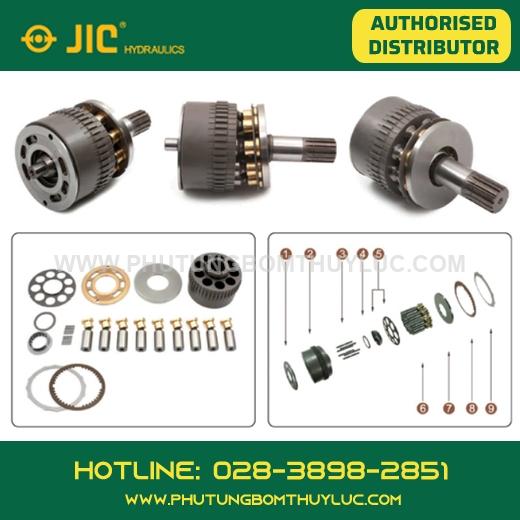 Kawasaki · M2XSwing motor rotary group – Kawasaki M2X120M2X120On requestView · get a quote
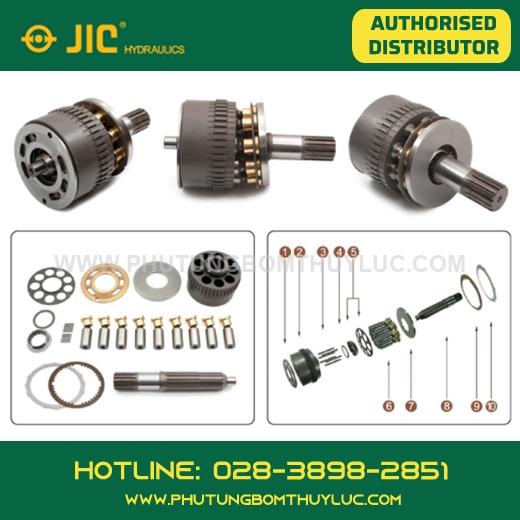 Kawasaki · M2XSwing motor rotary group – Kawasaki M2X146M2X146On requestView · get a quote
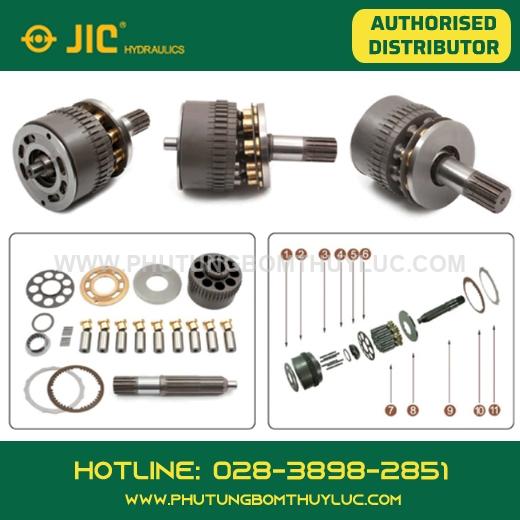 Kawasaki · M2XSwing motor rotary group – Kawasaki M2X150M2X150On requestView · get a quote
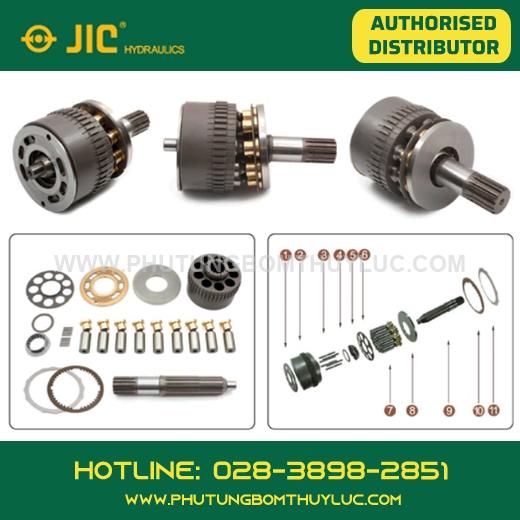 Kawasaki · M2XSwing motor rotary group – Kawasaki M2X170M2X170On requestView · get a quote