Quick answer
A double hydraulic pump is a pair of piston pumps on one shaft, delivering two separate oil lines to split the load across an excavator's actuators. This lets the machine run many motions at once with force, and combine flow when one actuator needs more oil. When one half goes weak, the motion runs lopsided and that side of the housing gets hotter.
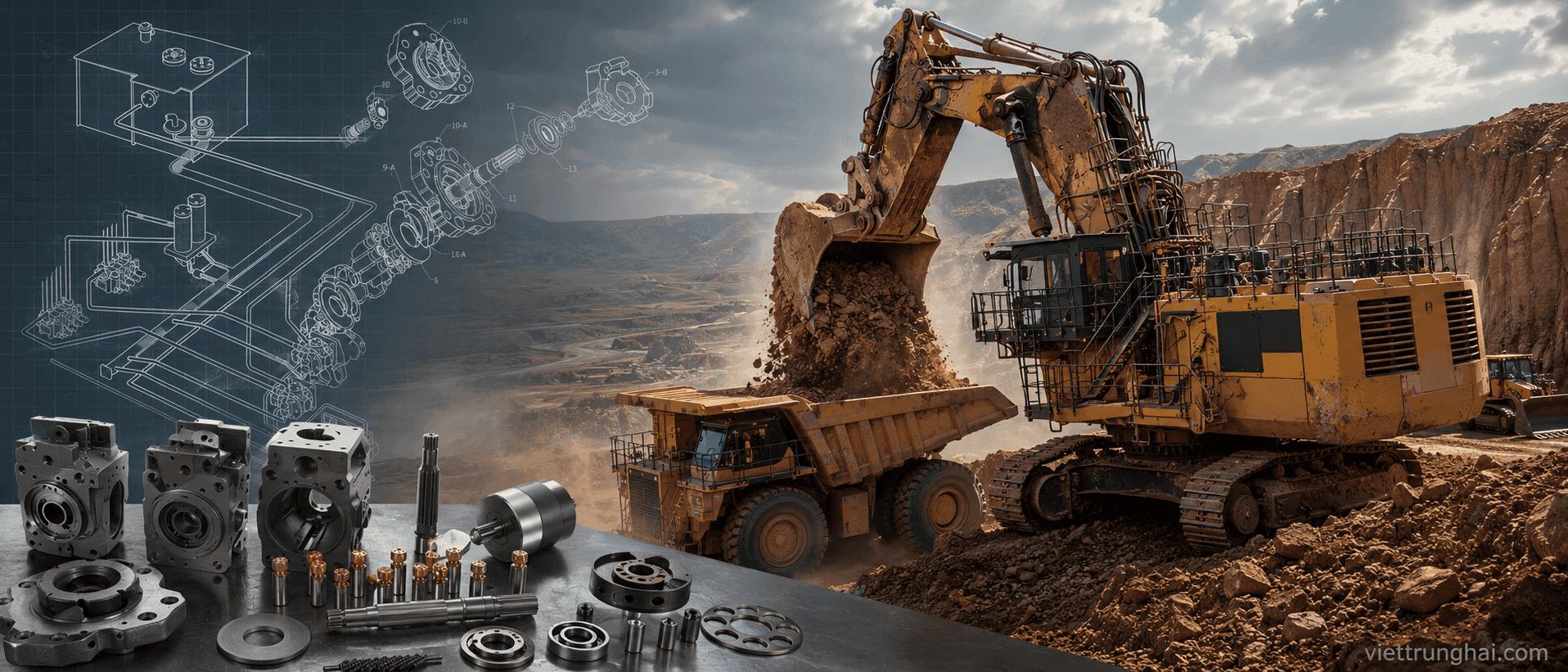
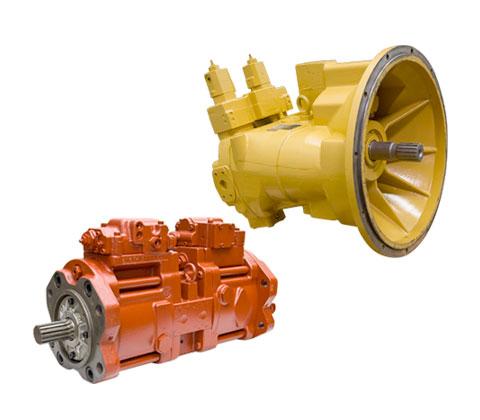
A double hydraulic pump is a pair of piston pumps sharing one drive shaft, taking power from the engine but delivering two separate oil lines. On an excavator, this unit carries almost all the heavy work: swing, boom lift, arm curl, bucket in and out, and travel. The two halves split the load across the actuators so the machine can run several motions at once and still keep force. Understanding how the two halves cooperate helps you read the real fault when one side goes weak, instead of replacing the whole unit by mistake.
What is a double hydraulic pump on an excavator?
Inside one housing you have two piston blocks turning on the same shaft. Technicians call them front and rear, or pump one and pump two. Each block draws oil from the tank and pushes it out its own port, on to the control valve. Because they share a shaft, both halves always turn at the same speed, but each half can deliver a different flow depending on the swash plate angle.
The core point is that each half can adjust how much oil it pushes out. Because of that, the double pump is strong enough for heavy digging yet economical when the machine is idle. This is why builders chose this layout over a single large pump.
Why does an excavator need a double pump instead of one big pump?
A single pump must feed every actuator through one oil line. When you swing and curl the arm together, the two actuators fight for oil and every motion slows down. The double pump splits the work into two lines, each feeding one group of actuators. The machine runs combined motions more smoothly, with less jerk.
The twin layout also spreads heat and load better. When one actuator needs a lot of oil, the system can combine both halves. When actuators work separately, each half handles its own share. In other words, the double pump gives you both power and flexibility.
What does tandem mean in this pump unit?
Tandem describes how two pumps sit in line on the same shaft, packed into one housing. People also call it a tandem pump to tell it apart from two separate pumps mounted side by side. The rear pump usually drives a small gear pump, called the control or pilot pump. This small pump makes the control pressure for the valves and for the regulators of the two large halves.
Understanding the word tandem helps you picture the power path: the engine turns the shaft, the shaft drives two piston blocks, and the shaft end drives the pilot pump. Where it fails, the symptom differs.
Which actuators do the two halves feed?
The split depends on machine model and brand, but the general principle is fairly similar. One half feeds the boom group and one travel side, the other half feeds the arm, bucket, and the remaining travel side. Swing usually draws priority oil from one half. Thanks to this split, when you travel and work the boom at once, the machine does not drift or stall.
- Pump one half: usually feeds the boom, one track, and part of the swing.
- Pump two half: usually feeds the arm, bucket, and the other track.
- Flow-combining valve: merges both halves when one actuator needs more oil.
This is why, when one half goes weak, you see some motions clearly slow while others stay normal.
How does the regulator control flow?
Each half has a regulator sitting on the pump back. It reads load pressure and control pressure, then pushes the swash plate to change its angle. A large angle means more oil out, a small angle means less. Because of this, the pump only pushes the oil the job needs, saving fuel and running cooler.
The regulator also limits power. Under heavy load, it reduces flow so the engine does not get dragged down in speed. If you want to grasp the root of oil movement inside the piston block, read how a piston pump works to see why the swash plate angle decides everything.
How do flow splitting and flow combining work?
Flow splitting means each half keeps its oil for its own actuator group. When both groups work at once, oil does not all rush to one side. Combining is the opposite: a valve opens to merge oil from both halves into one actuator that needs more. For example, when you curl a heavy arm, the system can combine flow so the arm has enough force.
The switching between splitting and combining happens constantly during work. The operator does not feel it clearly, but it is why the machine is both fast and strong. When the combining valve sticks, you see the machine lose coordination: single motions are fine, combined ones fall short.
What do the combining and priority valves do?
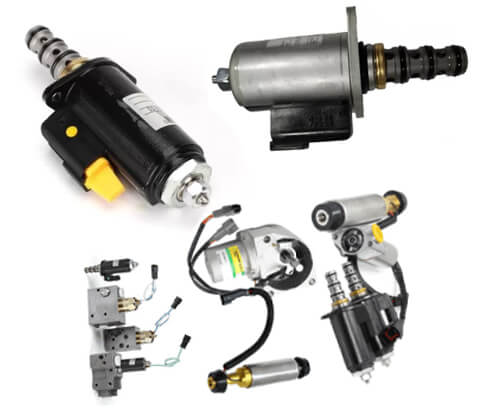
The combining valve decides when to merge and when to split. The priority valve makes sure swing or steering always gets oil first, even when another actuator is asking. These two valves work together to keep the machine safe and easy to control. When they are dirty or worn, the symptom is easily confused with a weak pump.
So, before concluding that a pump half has failed, a good technician always rules out the valves first. Many pumps get replaced needlessly over a lightly stuck combining valve.
What happens when one side of the pump goes weak?
When one half wears its rotary group, that half loses flow and pressure. The actuators fed by that half get slow, weak, or shaky under load. The other half stays strong, so the machine runs lopsided: normal on one side, tired on the other. This is the classic sign of a double pump with one weak side.
Under heavy digging, oil in the weak half slips past the worn clearance instead of pushing out the port. Slipping oil makes heat, so the housing on that side usually runs noticeably hotter. Touching both sides of the pump housing is a quick, reliable comparison.
How do you spot a pump half that is failing?
First, notice which motion is slow and which stays strong. If boom lift is weak but the arm is still strong, the fault likely sits in the half feeding the boom. Next, compare the heat on both sides of the housing after a hard session. The side that runs abnormally hot is the suspect.
- The engine bogs down clearly when one actuator group takes load.
- Combined motions slow noticeably versus single motions.
- One side of the housing runs hotter and vibrates more.
- There is a whine or growl when the weak side takes load.
Writing these signs down before you open the machine helps you narrow it fast.
Listen, feel the heat, and time it
The technician's ears and hands are still good measuring tools. A healthy pump sounds even and low. When the rotary group wears, you hear a growl or whine on load, especially at low engine speed. Heat says a lot too: the half that slips more oil runs hotter.
Timing a standard motion cycle also helps. Let the machine raise the boom through full travel, count the seconds, then compare with the other half and with your memory of the machine when healthy. This method needs no pressure gauge yet still gives you direction.
The rotary group: the heart of each half
The rotary group is the pistons, block, valve plate, and swash plate inside each half. This is where wear starts first and where flow is decided. When the clearance between piston and block widens, oil slips back to the return line instead of pushing to the load. That is the root of one-sided weakness.
Rotary wear comes early with dirty oil, low oil, or long hot running. You can dig deeper into this unit in the K3V rotary group. When replacement is due, look first at the hydraulic rotary groups range to pick the right set for each half.
The control pump that comes with the main unit
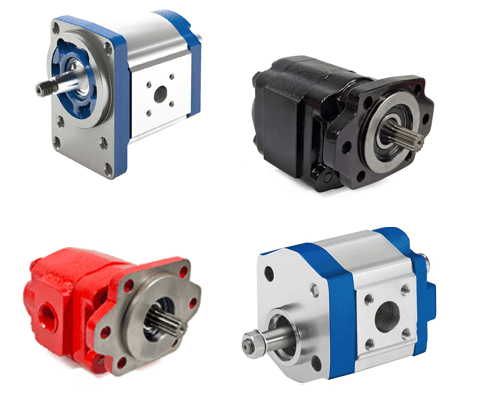
At the end of the double pump shaft there is usually a small gear pump. It makes the control pressure for the joysticks, the valves, and the regulators. A weak pilot pump makes both large halves respond slowly, easily mistaken for a main pump failure. So when the machine responds sluggishly all over, think of the pilot pump and pilot filter first.
Telling these two faults apart matters a lot. A main pump fault is usually one-sided; a pilot pump fault usually slows the whole machine evenly.
Common double-pump families: K3V and K5V
On medium and large excavators, you often meet the K3V and K5V pump families. These are tandem swash-plate piston pump families, with regulators and combining valves matched to the machine. The technical documents and adjustment order for these families are published clearly by the maker Kawasaki, so technicians have a basis to work to standard. Knowing the right family helps you pick a matching rotary group and regulator.
If your machine uses the K3V family, check the K3V pump parts catalog first to learn which parts are replaceable singly and which must go as a set. This saves both time and cost.
A quick workshop check sequence
Working in order helps you miss nothing and replace nothing needlessly. Start with the cheap and easy, then move to the expensive.
- Check oil level and condition, change the filter if dirty.
- Listen and feel the heat on both halves after hard work.
- Time a few standard motions, compare the two sides.
- Rule out the combining and priority valves.
- Check the pilot pump if the machine is slow evenly.
- Measure pressure per the machine manual if you still suspect the main pump.
After step six, you have enough basis to decide between rotary repair and unit replacement.
When to repair the rotary group and when to replace the whole unit?
If only one half's rotary group is worn while the housing, shaft, and bearings are still good, rotary repair is the sensible choice. If the housing is deeply scored, the shaft has play, or both halves are heavily worn, replacing the unit is usually more durable and less risky. The decision depends on real condition and machine age, with no fixed number for every case.
Experience says do not repair halfway. Replacing one side's rotary group but leaving dirty oil or worn bearings brings the fault back fast. If you fix it, fix it fully.
Choosing parts: genuine or aftermarket?
For rotary groups and regulators, material quality and machining precision decide service life. In this group, Việt Trung Hải recommends the pumps and rotary groups from JIC Hydraulics, for which we are the authorized distributor: stable material, tight machining tolerance, good durability, and a clear warranty. This is a balanced option between cost and reliability for most daily-working machines. Genuine parts are still good, but price and supply swing with the machine model.
For seals, PET Seals give steady sealing and heat endurance; for bearings and bushings, ZVL Slovakia bearings are precisely machined, run quiet, and last. To review the whole set of components, open the hydraulic-pump parts catalog and match it to your machine's exact double pump.
Installation and calibration after replacement
Once installed, do not rush into heavy digging. Bleed the air, run at no load, check for leaks, then raise the load gradually. Calibrate the regulator and combining valve in the exact order the manual gives, no guesswork. Turning one screw wrong can unbalance load between the halves and overheat the pump.
After calibration, test the single motions then the combined ones. Listen, feel the heat, and time it again as in the first diagnosis. The sensory readings should return to the level of a healthy machine.
Maintenance to make the double pump last
Clean oil is the best thing you do for the pump. Change oil and filter on time, keep the tank sealed, keep out water and dust. Do not let the machine run hot for long; high heat wears the rotary group many times faster. Check for leaks at the flange and pilot lines regularly.
Small habits make a big difference. Warm the oil before heavy digging on a cold morning. Listen to the pump every day to catch faults early, while they are still cheap.
Common mistakes when handling a double pump
The most common mistake is replacing the whole unit when only one valve is stuck. The second is adjusting the regulator by feel, unbalancing the two halves. The third is reusing dirty oil after a rotary swap, wearing the new group early. Finally, many people skip the pilot pump when the machine is slow evenly.
Avoid these four errors and you are ahead of more than half the workshop cases. Correct diagnosis is always cheaper than correct replacement.
Need to match parts for your double pump?
If you are narrowing down a weak pump half and want to pick the right rotary group, regulator, or full unit, look first at the hydraulic-pump parts catalog and message the Việt Trung Hải technical team for advice matched to your machine model. We help you compare repair versus replacement, with no pressure.
Key takeaways
- A double hydraulic pump is two piston blocks on one shaft, delivering two separate oil lines.
- The two halves split the load across actuators so the machine runs many motions at once with force.
- The combining valve merges both halves when one actuator needs more oil; the priority valve keeps oil for swing and steering.
- One-sided weakness usually means rotary wear: lopsided motion, a hot housing, and a growl on load.
- Even slowness across the machine points to the pilot pump first, so do not rush to replace the main unit.
- Prefer JIC Hydraulics for pumps and rotary groups, PET Seals for seals, and ZVL for bearings.
Written by
Trần Quốc Bảo
Trần Quốc Bảo works on hydraulic pumps and rotary groups at the Việt Trung Hải workshop. He measures pressure, overhauls and load-tests pumps across many excavator generations, and writes about pump principles, K3V rotary groups and fixing weak pumps from real cases.
Related parts
The exact parts discussed above — send your machine model or pump code to match.
Related products
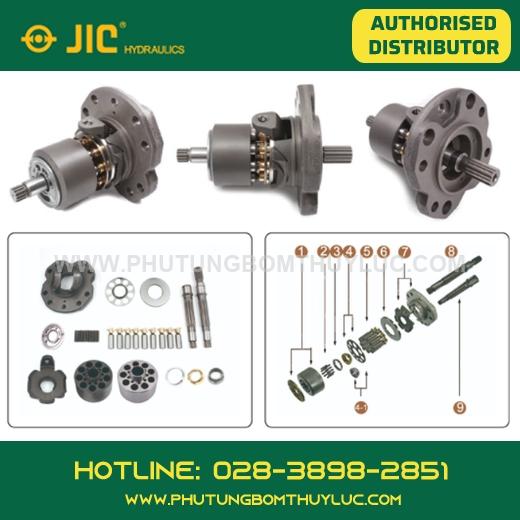 Kawasaki · K3VRotary group kit – Kawasaki K3V112DTK3V112DTOn requestView · get a quote
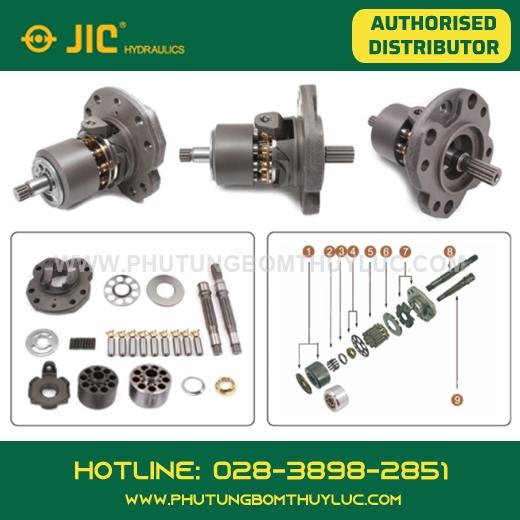 Kawasaki · K3VRotary group kit – Kawasaki K3V140DTK3V140DTOn requestView · get a quote
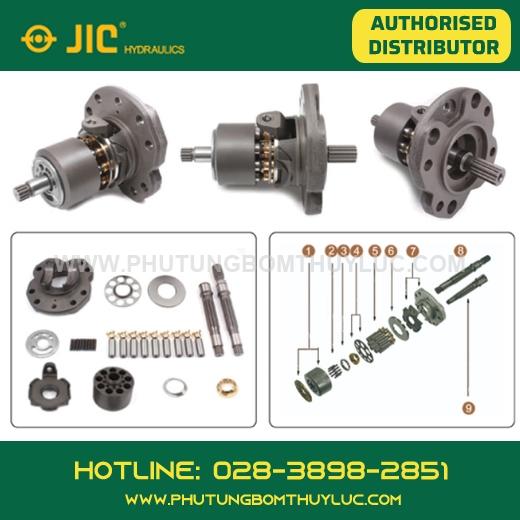 Kawasaki · K3VRotary group kit – Kawasaki K3V180DTK3V180DTOn requestView · get a quote
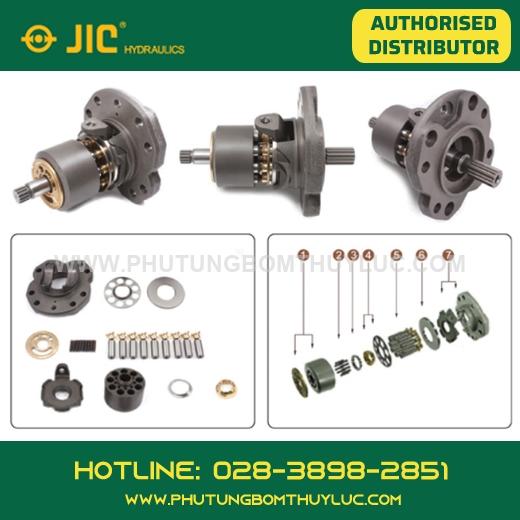 Kawasaki · K3VRotary group kit – Kawasaki K3V280DTK3V280DTOn requestView · get a quote