Quick answer
Hydraulic pumps for mini excavators are usually a single variable-displacement piston pump paired with a small gear pump for pilot and charge duty, sized well below the 20-ton class. When you replace one, four things must match — displacement, mounting flange and shaft, control type, and rotation direction — because getting any one wrong means the pump builds no pressure or fails quickly. Matching the cartridge to the exact machine model matters more than chasing the lowest price.
On a mini excavator, all the hydraulic power comes out of a pump group far more compact than the one on a full-size digger, yet the metering principle is the same. Hydraulic pumps for mini excavators are usually a single variable-displacement piston pump paired with a small gear pump that handles pilot and charge duty, sized well below the 20-ton class. When you replace one, four things must match — displacement, mounting flange and shaft, control type, and rotation direction — because getting any one wrong means the pump builds no pressure or fails quickly. Matching the pump cartridge to the exact machine model matters more than chasing the lowest price.
What follows moves from the layout of the pump group, through how it meters flow on a small machine, to the four points people most often get wrong when ordering a cartridge or a complete pump.
Hydraulic pumps for mini excavators vs a 20-ton machine: what differs?
The biggest difference is the number of pumping sections and how flow is combined. A large excavator almost always runs a tandem piston pump: two pumping halves in one housing, each feeding one circuit branch, from familiar families such as K3V, K5V or Kawasaki HPV. That twin layout lets the machine split load between the two sides and cut total power when needed.
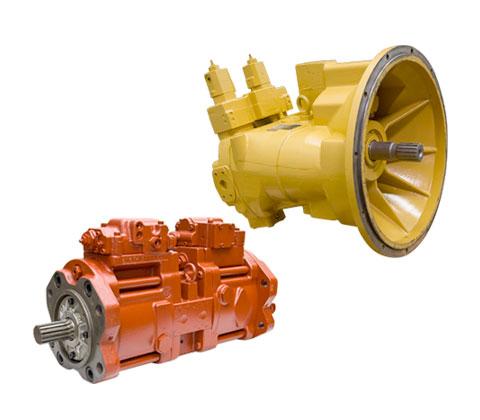
A mini machine strips that idea down. Most compact models use a single variable-displacement piston pump in a small housing, from families such as Nachi PVD, KYB (Kayaba) PSVL, Kawasaki K3SP or Rexroth A10VSO. Bolted behind it is a small gear pump whose job is not to lift the boom but to create the pilot control flow and make up oil for the circuit. Because there is only one main pump, a flow divider (priority valve, main valve) takes on the flow-splitting role that the two pump halves handle on a big machine. Understanding this keeps you from hunting for a "tandem pump" for a machine designed around a single pump.
In size, the displacement of a mini pump is several times smaller than a K3V112 group on a 20-ton machine. That is why you cannot drop a large-machine cartridge into a small one even when the flange looks similar: the swashplate, cylinder block and regulator are all sized for a different flow range.
The layout of a mini excavator pump group
A typical mini pump group has three working blocks that mesh together. Separate those three in your head and you have already diagnosed most pump faults.
The variable-displacement piston pump — the heart of the circuit
This is the main pump, where the swashplate changes angle to raise or lower flow with load and control signal. The principle is identical to a piston pump on a big machine, only the scale differs; for the fundamentals, see the guide on how piston hydraulic pumps work. When the joystick returns to center, the pump swings the swashplate to a small angle to reduce flow, saving fuel and keeping the oil cool. Wear on the piston-block pair or on the valve plate is the common reason a pump loses pressure and runs hot.
The gear pump that handles pilot and charge
The gear pump at the back is small but essential: it feeds a steady low-pressure flow to the pilot circuit (joystick and main-valve control) and makes up oil. Without enough pilot pressure the main valve will not open fully, and the machine feels weak even when the main pump is healthy. The construction and testing of this pump type are covered in the guide on gear hydraulic pumps. On many minis a failing pilot supply gets misdiagnosed as a bad main pump, which leads to replacing the expensive part by mistake.
The control valve and load sensing
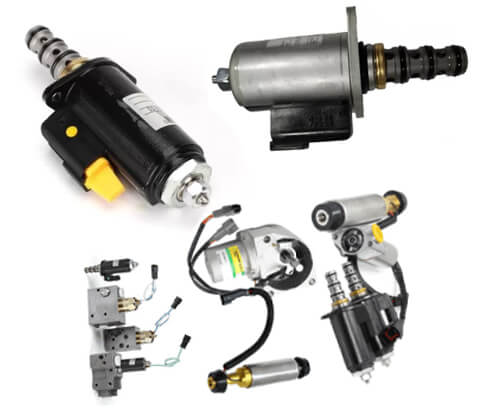
Some mini models use load-sensing control: the pump delivers only the flow the load actually needs, based on the pressure difference between the load line and the pump line. This is smooth and efficient, but fussier about parts — the compensator valve and the signal spring must match the model. Fitting a cartridge with a different control type into a load-sensing machine is a reliable recipe for a jerky or overheating machine.
Pump control type — the easiest thing to get wrong
Within one pump family — say the same Nachi PVD or KYB PSVL — the maker still builds several control variants: hydraulic control by pilot flow, proportional electric control (proportional solenoid), or load-sensing control. From the outside the pump housing looks nearly identical; the difference is in the regulator mounted on the pump end and the number of signal ports.
Why is the wrong control type fatal? The regulator decides how the swashplate reacts to the signal. If the machine sends a proportional electric signal but the pump is a pure hydraulic-control type, the swashplate never gets the right command, so the pump either runs at full flow continuously (hot, thirsty) or never loads up. This is a very common mistake when buying a pump with the "same family code" but ignoring the control suffix. When you request parts, always state the machine model, the machine number (PIN) and a photo of the regulator — do not just read off the pump family name.
Rotation direction — fit it backwards and it fails almost at once
Both piston and gear pumps have a defined rotation direction viewed from the shaft end. A mini excavator takes power from the engine through a coupling, and that direction is fixed by design. Fitting a cartridge or pump that turns the wrong way swaps the suction and delivery ports: the pump builds no pressure, entrains air, and the friction pairs run dry very quickly.
On a gear pump, rotation direction also sets the position of the suction and delivery ports and the chamfer of the bushings; reverse it and the bushings fail within a short time. Before ordering, confirm CW or CCW as seen from the drive shaft, and check it against the mark on the old pump housing. How the two halves of a tandem pump coordinate, and the rotation of each half, is analyzed in the guide on tandem hydraulic pumps, worth a read if your machine is a two-section design.
Reading pump cartridge specs for a small machine
Three specs must match when choosing a cartridge for a mini machine, ahead of any brand.
Displacement
This is the volume of oil pushed per revolution, deciding how strong and fast the machine is at a given engine speed. A cartridge with more displacement than designed overloads the engine, causing smoke and rpm droop; less, and the machine digs weak and slow. This figure is tied to the machine model, not guessed by feel. How to read and match it is covered in the guide on choosing a hydraulic pump cartridge.
Mounting flange and shaft
The flange (pilot diameter, bolt count, hole spacing) and the shaft (splined, tapered or keyed) must match the old housing or the engine coupling. A cartridge with the right displacement but the wrong spline will not fit, or will fit under strain and then destroy the shaft.
Control type and signal ports
As said above, this is the point to inspect most closely: the number of pilot ports, whether there is a load-sensing port, and whether the regulator is hydraulic or electric. Photograph the regulator face and every port on the housing before you disassemble anything.
4 replacement tips for hydraulic pumps for mini excavators
Boiled down to four checks before you spend money:
- Match displacement to the exact machine model — do not borrow a larger or smaller machine's cartridge because it "looks the same".
- Right flange and shaft — pilot diameter, bolt-hole count and spline type must match the engine coupling.
- Right control type — hydraulic, proportional electric or load sensing; check the regulator and signal-port count, not just the family name.
- Right rotation as seen from the drive shaft; check the CW/CCW mark on the old housing before ordering.
Get these four right and you avoid most cases of a pump that builds no pressure on start-up or dies young.
Quick comparison: mini pump group vs 20-ton group
| Criterion | Mini excavator (compact) | 20-ton excavator |
|---|---|---|
| Main pump | A single variable-displacement piston pump | Tandem piston pump in one housing |
| Common pump families | Nachi PVD, KYB PSVL, Kawasaki K3SP, Rexroth A10VSO | K3V, K5V, K3V112, Kawasaki HPV |
| Auxiliary pump | Gear pump for pilot and charge | Integrated or separate charge/pilot pump |
| Flow splitting | Via priority and main valves | Handled by the two pump halves |
| Common control type | Hydraulic, proportional electric, some load sensing | Proportional electric, total power cut |
| Easiest to get wrong | Control type and rotation | Power-cut calibration |
Should you replace the cartridge or the whole pump?
On a mini, the parts that wear (pistons, block, swashplate, valve plate) live inside the cartridge; the housing and regulator are usually still good. Fitting the right hydraulic pump cartridge is both cheaper than a complete pump and keeps the regulator that already matches the machine — avoiding the control-type risk. Only when the housing is cracked, the pilot bore is worn oversize or the shaft is badly damaged should you consider the whole pump.
When sourcing a cartridge, check the internal details (piston count, block bore) rather than trusting the outer label — labels can have been swapped over several repairs. A hydraulic pump parts catalogue organized by machine family helps you narrow it down before disassembly.
Signs a mini excavator pump is failing
A mini pump rarely dies suddenly; it warns you through a few fairly clear symptoms:
- Weak and slow to dig once the oil is hot: internal leakage rises with temperature, usually a worn valve plate or piston-block pair.
- Oil temperature climbing fast: oil leaking inside the pump turns pressure energy into heat; the tank runs abnormally hot.
- A whine or growl under load: starved charge flow, cavitation from a clogged suction filter or a weak charge supply.
- Vibration or jerk while holding load: suspect the pilot circuit or regulator, not necessarily the main pump.
Before concluding the pump is done, measure pressure at the test port and rule out a clogged filter, wrong-grade oil, or a relief valve dumping early. Many "weak pump" cases are really a choked suction filter or oil thinned by water contamination.
Why favor genuine-quality JIC Hydraulics
For a mini cartridge, material and machining accuracy decide service life more than any marketing claim. JIC Hydraulics builds replacement cartridges to stay close to genuine spec: block and pistons machined to the right tolerance so the working clearance stays stable when the oil is hot, a flat and hard valve plate to resist early wear, and a surface-treated swashplate to take repeated load. Those are exactly the areas cheap no-name parts cut, and exactly the areas that make a pump lose pressure after a short run.
Choosing a cartridge by the correct displacement and control type for the model, plus consistent machining quality, is the cheapest option measured per machine hour. For popular compact lines such as the Hitachi ZAXIS, model and pump-group data on the manufacturer site Hitachi Construction Machinery helps pin down the right variant before ordering parts.
Replacement and run-in procedure
Replacing a mini pump is not hard if you work in order and keep it clean:
- Drain and filter the oil; if the old pump shed metal debris, flush the circuit and change filters so the debris does not kill the new pump.
- Match the new cartridge to the old: displacement, flange, shaft, rotation, signal ports.
- Torque the bolts per spec and prime the pump chamber full of oil before start-up to avoid a dry run.
- Start with no load, bleed the pilot circuit, and check for leaks.
- Raise load gradually, watching temperature and pressure at the test port; run it in gently before heavy work.
Priming and bleeding are the two steps most often skipped, and the number-one reason a new pump fails in its first hour.
Common mistakes when buying a pump for a small machine
Three errors repeat in practice: buying by pump family name while ignoring the control suffix; taking a larger machine's cartridge "to be safe, for more power" and overloading the engine; and ignoring rotation direction. A quieter fourth is not fixing the root cause of the failure — a clogged suction filter, water in the oil, a bad relief valve — so the new pump gets fitted and then dies the same way.
The cleanest way to avoid all this: start from the machine model and number, check the four specs above, and if you are unsure of the control type, send a photo of the regulator to the seller to inspect together. To see the whole hydraulic system on construction machines, follow the cluster of guides in the hydraulics section to connect the pieces.
Key takeaways
- A mini excavator pump is usually one variable-displacement piston pump plus a gear pump for pilot and charge.
- Four things must match when replacing: displacement, flange and shaft, control type, and rotation.
- Control type (hydraulic, proportional electric, load sensing) is the easiest to get wrong — inspect the regulator, not just the family name.
- Wrong rotation means the pump builds no pressure and fails almost immediately.
- Usually you replace just the right cartridge, not the whole pump, keeping the regulator that matches the machine.
- Favor genuine-quality JIC Hydraulics cartridges and fix the root cause before fitting a new pump.
Written by
Trần Quốc Bảo
Trần Quốc Bảo works on hydraulic pumps and rotary groups at the Việt Trung Hải workshop. He measures pressure, overhauls and load-tests pumps across many excavator generations, and writes about pump principles, K3V rotary groups and fixing weak pumps from real cases.
Related parts
The exact parts discussed above — send your machine model or pump code to match.
Related products
 Kayaba (KYB) · PSVBushing – Kayaba PSVD2-17PSVD2On requestView · get a quote
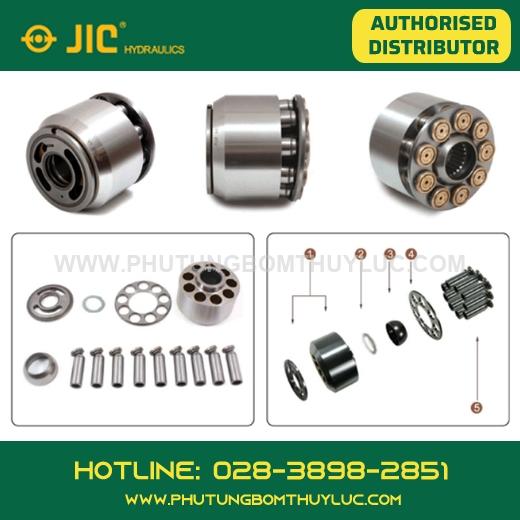 Kayaba (KYB) · PSVRotary group – Kayaba PSV2-55TPSV2On requestView · get a quote
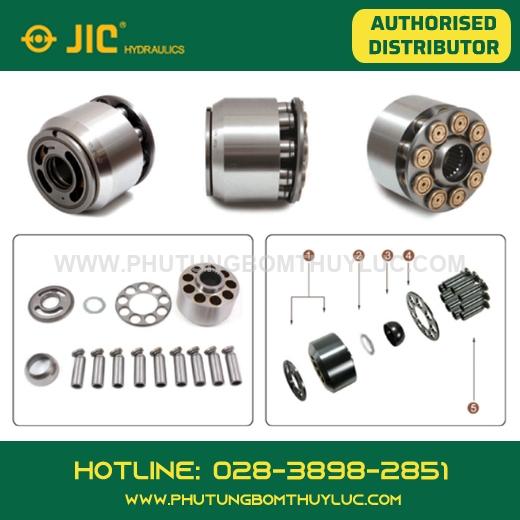 Kayaba (KYB) · PSVRotary group – Kayaba PSV2-60TPSV2On requestView · get a quote
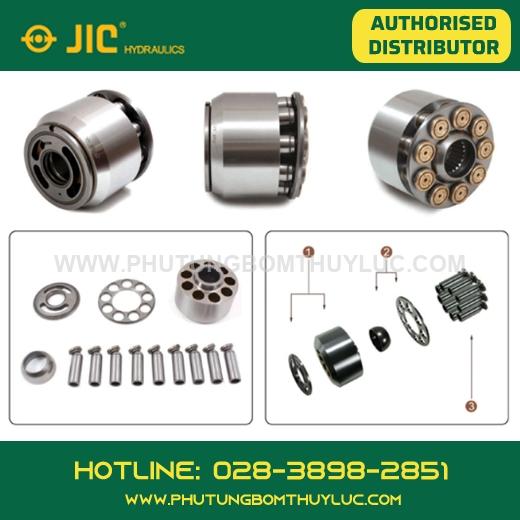 Kayaba (KYB) · PSVRotary group – Kayaba PSV2-63TPSV2On requestView · get a quote