Quick answer
A gear hydraulic pump usually sits in a support role on an excavator, working as the pilot pump that supplies control oil or as a charge pump, running at low pressure and lasting a long time. The piston pump is the main pump, carrying high pressure to move the bucket, swing the house and travel. Matching the right pump to the right circuit keeps you from swapping the wrong part and wasting money.
On an excavator, a gear hydraulic pump and a piston pump do two different jobs, and understanding each role keeps you from swapping the wrong part and wasting money. The piston pump is the main pump, carrying high pressure to move the bucket, swing the house and travel. A gear hydraulic pump usually sits in a support role, working as the pilot pump that supplies control oil or as a charge pump, running at lower pressure but staying reliable every time you start the machine. Matching the right pump to the right spot is the first step to a smooth hydraulic system with fewer small failures.
What a gear hydraulic pump is and where it works on the machine
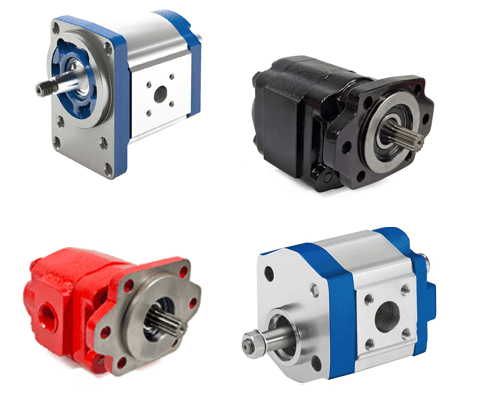
A gear pump is a positive-displacement pump that uses two meshing gears to push oil. As the gears turn, oil is carried in the tooth gaps from the inlet to the outlet. The build is compact with few parts, so it is cheaper and easier to make than a piston pump. On an excavator you often find it as the pilot pump, the charge pump for the main pump, or the pump feeding the cooling fan and a few support circuits.
Gear pump build: few parts, durable in its own way
A basic gear pump has a housing, two gears, bushings and sealing gaskets. The drive gear connects to the input shaft and turns the driven gear. Because it has few moving parts, a gear pump tolerates dirty oil slightly better than a piston pump and is less fussy about oil. In return, the clearance between the tooth tips and the housing decides its efficiency, and that clearance wears over time.
How the main piston pump differs in principle
A piston pump uses many small pistons running inside cylinder bores, riding on a swash plate to draw and push oil. The swash plate angle can change, so a piston pump adjusts flow to load, saving fuel and giving high pressure. That is why it serves as the main pump on most hydraulic excavators. If you want to go deeper here, review how a piston pump works to grasp how the swash plate changes flow.
Why a gear pump usually serves as the pilot pump
The pilot circuit needs a steady oil flow at moderate pressure to control the main valves and the joysticks. A gear pump fits this role because it gives even flow, a simple build and a low price. It does not need the complex control the main pump has, so a gear pump is both enough and economical. When the pilot pump weakens, the whole control system turns sluggish.
How the machine behaves when the pilot pump is weak
The first sign is usually heavy joysticks, slow response, and the bucket and swing lagging behind your input. The machine can still run but feels indecisive, especially at start-up when the oil is still cold. If the pilot pump is badly worn, control pressure drops and the main valves do not open fully, leaving the machine weak all around. Many mechanics mistake this for a valve fault, so check pilot pressure before drawing conclusions.
Working pressure: who carries the heavy load, who carries the light one
The main piston pump carries the highest pressure in the system, since it directly makes force for the working cylinders. The gear pump in the pilot circuit runs at much lower pressure, so the stress on its parts is lighter too. Because the pressure levels differ, the lifespan and failure modes of the two pumps differ as well. According to the technical documentation from Bosch Rexroth, pump selection must follow the pressure and flow range of each circuit, with no mixing.
Durability and lifespan: seen from real workshop life
A gear pump usually lasts a long time if the oil is clean and it never runs dry. Its main enemy is abrasive particles in the oil, which wear the tooth tips and the bushings. A piston pump is durable but more sensitive to dirt and to a starved inlet. When a piston pump fails, the cost and effort to fix it are usually far greater than for a gear pump.
In the workshop, I often see a gear pump run steadily for years with only a seal change, as long as the owner keeps up with oil changes. A neglected piston pump on dirty oil, by contrast, can decay fast in a single heavy season. Lifespan here depends more on care than on the pump type itself.
When should you use a gear pump, and when do you need a piston pump?
The answer lies in what the circuit needs. If the circuit needs high pressure and flow that adjusts to load, that is piston pump territory. If the circuit only needs steady flow at moderate pressure, like the pilot or cooling circuit, a gear pump is the sensible and economical choice. Do not force a gear pump into the main pump spot just because it is cheap, since it cannot make enough pressure and will die early.
Quick comparison table: gear pump vs piston pump
| Criteria | Gear pump | Piston pump |
|---|---|---|
| Typical position | Pilot pump, charge pump, support circuits | Main pump for bucket, swing, travel |
| Pressure handled | Low to medium | High |
| Flow control | Fixed with shaft speed | Varies with load via swash plate |
| Build | Simple, few parts | Complex, many pistons |
| Dirty-oil tolerance | Better | Worse, fussy about oil |
| Replacement cost | Lower | Notably higher |
| Common failure mode | Worn gears, worn bushings, low pilot pressure | Scored pistons, worn plate, flow loss |
The table is only a quick frame. On a real machine you still measure and read the specific symptoms before deciding.
Signs a gear pump is about to fail
As a gear pump wears, flow drops gradually and control actions start to slow. You may notice the machine weakening when the oil is hot, because worn clearances let more oil leak back as viscosity falls. A loose shaft or a leaking seal is also a signal to watch. The longer you leave it, the more metal debris travels through the system and drags other parts down with it.
Sound and heat: reading the fault through your senses
A healthy gear pump runs smoothly with an even note. When it whines, howls or rattles, it is usually from a starved inlet, air ingress or worn bushings. A housing that is unusually hot compared with normal days also points to rising friction or internal leakage. If you are not used to telling the sounds apart, read more about a noisy hydraulic pump to match each note with its cause.
Oil contamination: the silent pump killer
Most early pump failures have the shadow of dirty oil behind them. Fine abrasive particles travel with the oil, grinding the tooth tips and bushings and widening the clearance bit by bit. A clogged filter or a late filter change makes the system run on unclean oil, and the pump takes the hit. Keeping oil clean and changing filters on time is the cheapest way to make a pump last.
Water in the oil is just as dangerous as abrasive grit, since it breaks down the oil film and causes rust inside. When the tank oil turns cloudy like milky coffee, that is a sign it has taken in water or air. If you see that, deal with it early and do not let the pump keep running on such oil.
Genuine and aftermarket parts: how to choose right
Genuine parts usually match the standard dimensions and materials, so they fit and run as designed. Aftermarket parts range from good to ordinary, with quality that varies by source. For a pilot pump at light pressure, some reputable aftermarket lines still last well if chosen in the right spot. You can look at the hydraulic-pump parts options to compare material and origin before deciding.
Rotary groups and the choice between whole unit or single part
Often a pump is not fully dead, only worn in the inner core. For a piston pump, replacing the hydraulic rotary groups is usually cheaper and faster than the whole unit, if the housing and shaft are still good. For a gear pump, sometimes swapping the whole unit is more economical since there are few separate parts. What to replace must rest on the real state of the housing, shaft and wear, not a guess.
Maintaining a gear pump to extend its life
Proper maintenance makes a gear pump last markedly longer. A few things worth doing regularly:
- Change oil and filters on time, using the correct oil for the machine.
- Check oil level and the inlet line before each shift to avoid a starved pump.
- Listen to the pump at start-up to catch odd sounds early.
- Feel the housing heat after a load run and compare with your usual sense of it.
- Deal with any shaft-seal leak right away, and do not let air in.
These tasks are simple, but skipping them for long is paid back with a pump replacement.
Correct installation and priming
A new pump run dry is the fastest way to kill it. Before starting, prime the pump so its chamber is full, bleed air from the inlet line, and check that the bolts are torqued evenly. For a pilot pump, also make sure the return line is clean and clear. Run it lightly for a few minutes, listen and watch the heat before putting it under heavy load.
Common mistakes when replacing a pilot pump
The most common mistake is replacing the pilot pump without finding the root cause. Sometimes the machine is weak because a pilot valve is stuck or a pilot filter is dirty, not the pump. Fitting a new pump and still finding the machine weak wastes both money and effort. Before pulling the pump, check pilot pressure, the oil lines and the filter to be sure the pump is truly the culprit.
Choosing parts by machine year and pump family K3V, K5V
Many main pumps on excavators belong to families like K3V and K5V, and each machine year has different details. The matching pilot pump also changes with that main pump unit. When buying parts, give the exact machine year, pump unit code and serial number to avoid a wrong fit. One small difference in shaft size or mounting flange means the pump will not fit, or fits but runs wrong.
Cost: why you should not look at price alone
The price of a pump set varies with machine year, condition and supply source, so a fixed figure is hard to state. A gear pump used as a pilot is usually much cheaper than the main piston pump. But a part chosen too cheap that wears fast ends up costly, since labor and machine downtime both add up. Balance price, quality and availability rather than looking only at the first number.
When to call a mechanic, and when you can handle it yourself
Checking oil level, changing filters, listening and feeling heat are things a machine owner can do. But measuring pressure, pulling the pump unit or adjusting a piston pump swash plate is best left to a mechanic with the right tools and experience. Removing a pump the wrong way can damage seals, the shaft or let dirt in. Knowing your own limit is also a way to save money.
Choosing the right pump for the right spot
A gear hydraulic pump and a piston pump are not better or worse than each other, they simply fit different jobs. Understanding each role helps you diagnose right, replace in the right place and keep the machine running long. If you need to replace a pump or find parts that suit your machine year, look at the hydraulic-pump parts options and talk it over to pick the right pump for the right circuit.
Key takeaways
- A gear hydraulic pump usually serves as the pilot or charge pump, at low pressure and long-lasting.
- The piston pump is the main pump, carrying high pressure and adjusting flow to load via the swash plate.
- Do not fit a gear pump in the main pump spot, since it cannot make enough pressure and dies early.
- Dirty oil and dry running kill pumps fastest, so keeping oil clean is the cheapest protection.
- A weak pilot pump makes joysticks heavy and the machine lag; check pilot pressure before replacing the pump.
- Choose parts by the exact machine year, pump unit code and serial number to avoid a wrong fit.
Written by
Trần Quốc Bảo
Trần Quốc Bảo works on hydraulic pumps and rotary groups at the Việt Trung Hải workshop. He measures pressure, overhauls and load-tests pumps across many excavator generations, and writes about pump principles, K3V rotary groups and fixing weak pumps from real cases.
Related parts
The exact parts discussed above — send your machine model or pump code to match.
Related products
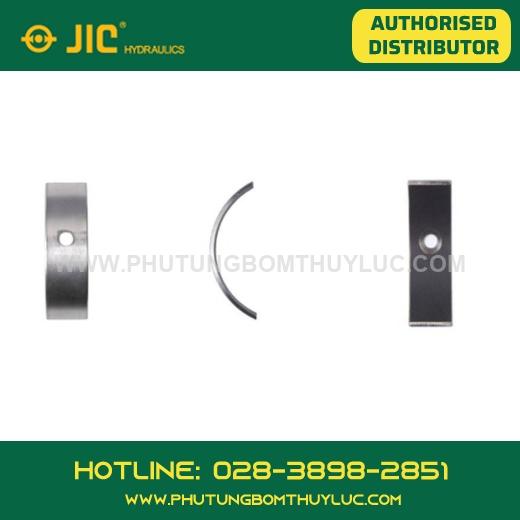 Kayaba (KYB) · PSVBushing – Kayaba PSVD2-17PSVD2On requestView · get a quote
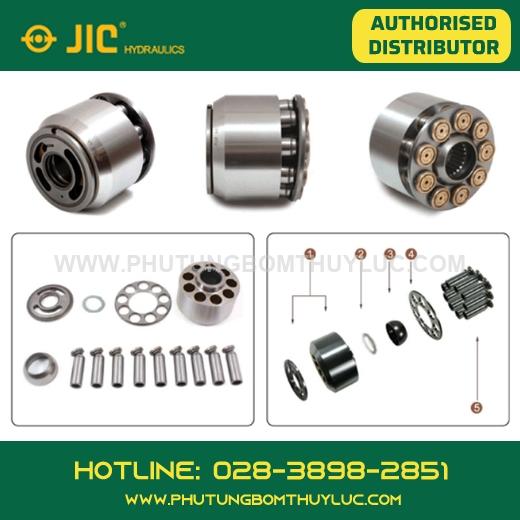 Kayaba (KYB) · PSVRotary group – Kayaba PSV2-55TPSV2On requestView · get a quote
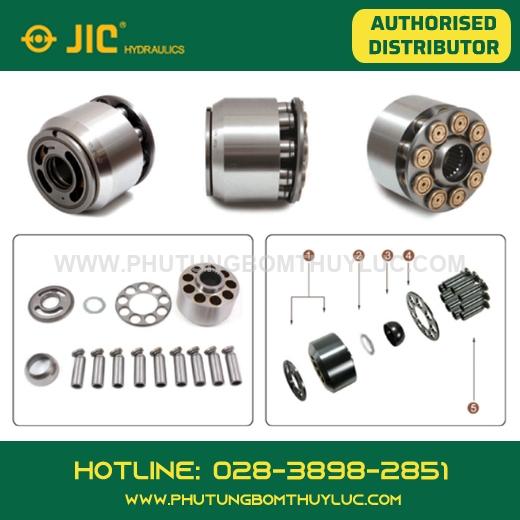 Kayaba (KYB) · PSVRotary group – Kayaba PSV2-60TPSV2On requestView · get a quote
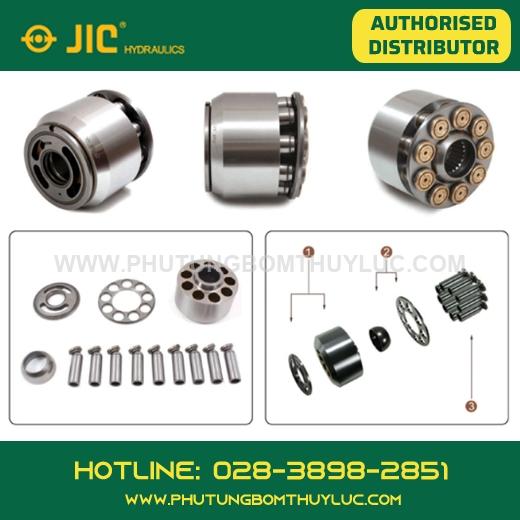 Kayaba (KYB) · PSVRotary group – Kayaba PSV2-63TPSV2On requestView · get a quote