Quick answer
Excavator black smoke means the engine is not burning fuel completely, from too little air or too much fuel: a clogged air filter, weak turbo, faulty injectors, overload or a worn engine. The right approach is to read the smoke colour, check air and filters first, then injectors and compression. Diagnosing cheap-to-expensive avoids opening injectors or an overhaul before it is needed.
Excavator black smoke is a sign the engine is not burning fuel completely: too much fuel or too little air. Black smoke is very different from white and blue smoke, and each colour points to its own group of faults. This guide helps you read the smoke colour, narrow the cause from cheap to expensive, and know when a new air filter is enough and when to check injectors or the turbo.
What does excavator black smoke mean?
Excavator black smoke is when the exhaust puffs thick, dark smoke on throttle-up or under load. That black smoke is soot and unburnt fuel pushed out of the stack. A diesel engine needs the right ratio of air to fuel to burn clean. When more fuel enters the chamber than the air can burn, the extra fuel burns partway and makes black smoke. So black smoke always comes down to two roots: too much fuel or too little air. Getting this right sends you in the correct direction instead of swapping parts at random.
How is black smoke different from white and blue smoke?
Before any repair, read the smoke colour, because each colour points to a different group of faults. A wrong reading often leads to fitting the wrong part.
| Smoke colour | What it is | Common cause group |
|---|---|---|
| Black smoke | Fuel burning incompletely | Too little air, too much fuel, injectors, overload |
| White smoke | Unburnt fuel or steam | Cold engine, late injection, coolant leaking in |
| Blue-grey smoke | Lubricating oil being burnt | Worn bearings, worn rings, valve-guide wear |
Use this table for a first pass only. A machine can show a mix of colours when several things are wrong at once.
8 causes of excavator black smoke
Here are the causes of excavator black smoke, ordered cheapest to check first:
- Dirty or clogged air filter: short intake air makes fuel burn incompletely.
- Leaking intake or weak turbo: not enough boost air, starving under load.
- Dirty, watery or wrong fuel: poor burn and soot.
- Clogged fuel filter: unsteady flow, uneven injection.
- Worn, stuck or leaking injectors: wrong spray, fuel not atomised.
- Wrong injection timing or a drifted injection pump: early or late both smoke.
- Overload, forcing throttle when bogging: chamber over-fuelled versus air.
- Low compression from a worn engine: weak burn, black smoke with oil use.
The list shows why you should not open injectors first: most black-smoke cases start with air and filters.
Dirty air filter: the cheapest and most common cause
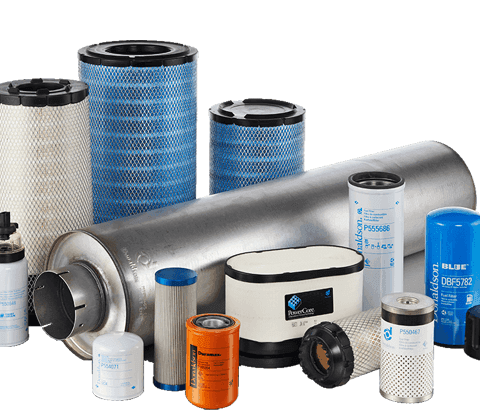
An excavator works in dust, so the air filter is what fouls fastest. When it clogs, the engine draws too little air, the air-fuel ratio tips toward too much fuel, and the machine smokes black as soon as you throttle up. This is the cheapest and most common cause, so always check it first. Pull the element and hold it to the light; if it is packed with dust, clean or replace it by condition. Do not bang it hard and tear the paper, since a torn filter is worse than a dirty one because it lets dust straight into the engine. The air filter is a cheap heavy-equipment part with a big effect on smoke and power. Check the seal and the pipe after the filter for leaks drawing in dust.
How do faulty injectors cause black smoke?
Injectors atomise fuel into a fine mist so it burns clean. When an injector is worn, stuck or leaking, fuel comes out as a stream or drips instead of a mist. Fuel that is not atomised burns incompletely and makes black soot. A leaking injector also dumps extra fuel into the chamber, giving heavy black smoke with a burnt smell. The usual signs are rough running, a shaking engine, oil use and clear black smoke under load. Testing injectors needs proper equipment, so this is a workshop step after air and filters are ruled out. Any injector calibration or replacement must follow the maker's spec for the model.
Injection pump and wrong injection timing
The injection pump sets how much fuel goes in and when. When the pump wears or is set wrong, fuel injected early or late against the piston stroke burns poorly and smokes black. Over-fuelling, sometimes called an over-rich setting, also pushes the engine into too much fuel. On older machines with a mechanical pump, timing can drift after long service. On newer machines with electronic injection, a faulty sensor or wrong data causes the same effect. Adjusting the injection pump is specialist work; it needs an experienced hand and the maker's spec, not guesswork on the screw.
Weak turbo or intake air leak
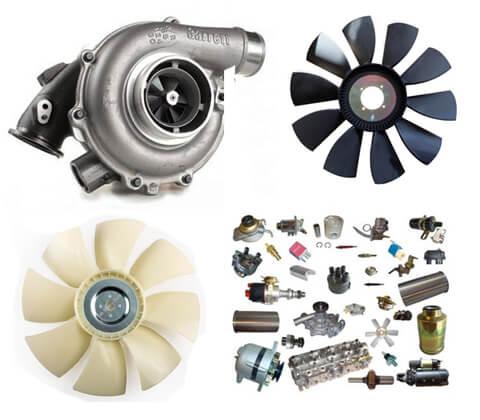
The turbo compresses air to pack more of it into the chamber. When the turbo wears or sticks, or the intake leaks, boost air falls short and the engine again runs short of air with too much fuel. The signs are black smoke with a loss of pull under load, sometimes an odd whistle from the turbo. Check the clamps, hoses and charge-air cooler for cracks, leaks or oil traces. Even a small leak in the intake after the turbo is enough to lose boost and make smoke. Do not rush to replace the turbo before ruling out a pipe leak, which is far cheaper.
Overload and working the machine wrong
Many black-smoke cases are not a fault but a way of working. Forcing the throttle into hard ground, lifting beyond capacity, or holding on while the engine bogs feeds the chamber more fuel than the air can burn. The result is black smoke every time you strain the machine. This style also heats the oil and engine fast and can drag other faults behind it. Sustained overload can also lead to an overheating engine. If the machine smokes black only under heavy strain and clears when working light, it is mostly the load rather than a fault. Running at the right revs and load keeps the burn clean and the machine lasting longer.
Dirty or wrong fuel
Fuel that is dirty, watery or full of debris makes the burn poorer and creates soot. Low-grade diesel or fuel left in a dirty tank tends to cause black smoke and clog the fuel filter. A clogged fuel filter makes the flow to the injectors flicker, giving uneven injection and a poor burn. Check and drain water at the sediment bowl, and change the fuel filter on schedule by machine hours. Buy fuel from a trusted source and avoid unknown, loose supply. Keeping the tank and cans clean is a cheap way to avoid fuel-related black smoke.
Low compression and a worn engine
After many hours, the rings, liners and valves wear and compression drops. Weak compression means the compression heat is too low to burn the fuel clean, so the machine smokes black with hard starting and oil use. This is the heaviest and most expensive cause, and usually comes with other signs of age. Measuring compression on each cylinder gauges the condition against the maker's spec for the model. If compression is low across several cylinders, the engine may need an overhaul. Do not jump to an overhaul before ruling out every cheaper cause above.
Excavator black smoke triage table by situation
The table below helps narrow excavator black smoke fast, based on when and how it smokes:
| Situation | Suspect | Check |
|---|---|---|
| Black smoke on throttle-up, heavy load | Short air, air filter, turbo | Air filter, intake, turbo |
| Constant black smoke even when light | Injectors, injection pump | Injectors, injection timing |
| Black smoke with shake, rough running | Leaking or stuck injector | Injectors per cylinder |
| Black smoke with oil use, hard starting | Low compression, worn engine | Compression test |
| Black smoke only under heavy strain | Overload, wrong revs | Operating style, load |
The table is for direction only; the final call still needs a real check on the machine.
How to diagnose excavator black smoke step by step
Correct diagnosis rules out causes in order, without guessing:
- Read the smoke colour and note when it appears: throttle-up, heavy load, or even when light.
- Check and clean or replace the air filter; inspect the paper and the seal.
- Check the intake, clamps and turbo for leaks or oil traces.
- Change the fuel filter, drain the sediment bowl, check fuel quality.
- If it still smokes, test the injectors and injection timing at a workshop.
- Last, when a worn engine is suspected, measure compression on each cylinder.
This order stops you opening injectors or overhauling when the real fault is just the air filter or fuel.
When is black smoke normal and when is it a fault?
Not every trace of black smoke is a fault. On a cold start, a sharp throttle-up or the start of a heavy strain, a brief puff of black smoke that clears is normal. What worries you is thick black smoke that lasts, shows even at light work, or grows heavier over time. Black smoke with low power, oil use or hard starting is also a sign to check soon. Telling a brief puff from abnormal smoke keeps you from needless worry while not missing a real fault.
Should an excavator with black smoke keep working?
With light, brief black smoke, the machine can still work, but arrange a check soon. With thick, lasting black smoke, do not force it through heavy work. An incomplete burn cakes soot onto the chamber, injectors and turbo, spreading damage and wasting fuel. A machine that smokes black usually burns more fuel, so the longer it runs the more it costs. If you must use it, cut the load, run at the right revs and avoid heavy strain. An early fix is always cheaper than repairing a badly damaged machine later.
What does black smoke with oil and fuel use tell you?
Black smoke almost always comes with high fuel use, because it is fuel burnt incompletely and wasted. If the machine smokes black and also burns lubricating oil, the engine is likely heavily worn or the turbo is leaking oil. Tracking oil and fuel use by machine hours catches a bad trend early. When the use climbs while the smoke grows darker, that is the time for a deeper check. Logging these figures over time is a cheap way to know whether the machine is improving or getting worse.
The effect of black smoke on the engine and cost
Black smoke is more than pollution; it also signals an engine working inefficiently. Soot caking onto injectors, valves and turbo blades wears those parts fast. A partial burn also dilutes the lubricating oil, cutting its protection of the engine. Over time, sustained black smoke tends to lead to big, costly repairs. The cost of an early fix, when it is just the air filter or fuel, is very low next to an engine overhaul. That is why black smoke should be treated as a signal to act, not something to ignore.
Quick field checks before calling a mechanic
Before calling a mechanic, an owner can run a few quick checks. Watch the smoke colour and when it appears on throttle-up and under load. Pull the air filter and hold it to the light to see if it is packed with dust. Check the fuel sediment bowl for water or debris. Feel and listen to the turbo and intake for leaks or odd noise. Read the lubricating oil level and its colour on the dipstick. These simple observations help describe the symptoms accurately to the mechanic, shorten diagnosis and avoid a wrong call from afar.
How to prevent excavator black smoke
Most black-smoke cases come from dirty filters, poor fuel and late servicing. To prevent it: clean and change the air filter on schedule by machine hours and by working environment. Change the fuel filter, drain the sediment bowl and use clean fuel. Check the intake and turbo regularly, and keep injectors tested on schedule. Following an excavator maintenance schedule catches problems early before black smoke turns into heavy damage. When changing filters, do not forget the others such as hydraulic filters so the whole machine stays clean. Running at the right revs and load also cuts smoke noticeably.
Common mistakes when dealing with black smoke
- Opening or replacing injectors before checking the air filter and fuel.
- Blaming the engine when the fault is just short air.
- Banging the air filter hard, tearing the paper and letting dust in.
- Turning the injection-pump screw without the maker's spec.
- Ignoring an intake leak after the turbo and suspecting the turbo instead.
- Forcing a smoking machine under heavy load until damage spreads.
When should the machine go to a workshop?
Many steps such as cleaning the air filter, changing the fuel filter or re-tightening the intake can be done on site. But when you need to test injectors, adjust the injection pump or measure compression, take it to a workshop with proper equipment and a clean environment. Pulling injectors in a dusty field easily contaminates precision parts and causes fresh faults. If you have ruled out every cheap cause and the machine still smokes black, that is when to bring it in for an exact diagnosis. Trying part after part on site with poor tools usually wastes time and goes wrong.
Keep a machine history for faster diagnosis
Noting when the machine began to smoke, when the smoke appears, whether it comes with oil use or lost pull, and what was changed recently helps a mechanic diagnose far faster. A small logbook tracking machine hours, filter and fuel changes and past repairs is a cheap, effective tool. With a clear history, the mechanic pins the right cause from the start and avoids costly trial and error. The habit is especially useful for rented machines or ones with several operators, where symptoms are easily missed.
When you need air filters, fuel filters, injectors or other engine parts to deal with excavator black smoke, send the machine model and pump code so the Việt Trung Hải technical team can match the right one. For operating documentation, refer to the maker such as Caterpillar for the correct model.
Key takeaways
- Black smoke always comes down to two roots: too little air or too much fuel.
- Check the air filter and intake before suspecting injectors or the engine.
- Read the smoke colour: black is fuel, blue is oil, white is steam or unburnt fuel.
- A brief puff under heavy load is usually the load, not a fault.
- Black smoke with oil use and hard starting points to a worn engine and low compression.
- Diagnosing cheap-to-expensive avoids opening injectors or an overhaul before it is needed.
Written by
Nguyễn Văn Hùng
Nguyễn Văn Hùng diagnoses excavator faults by symptom — sounds, heat and how the machine responds. He writes the guides that separate causes and lay out repairs from cheap to expensive, based on hands-on workshop experience.
Related parts
The exact parts discussed above — send your machine model or pump code to match.