Quick answer
An excavator hydraulic system is a closed oil loop: the main pump draws oil from the tank, raises it to high pressure, sends it through the control valve to the cylinders and motors, then the oil returns through a filter and cooler back to the tank. Following the oil path from source to work end lets you locate faults fast and fix the right part instead of guessing.
An excavator hydraulic system is the whole network of pressurised oil that makes the bucket, arm, boom, swing and travel work. In short, the pump draws oil from the tank, raises it to high pressure, pushes it through the control valve, then splits it out to cylinders and motors; once the work is done, the oil returns through a filter and cooler back to the tank. Once you can picture where the oil goes and comes from, almost every fault becomes easier to pin down. This guide follows that exact oil path, from the tank out to the work end and back, so you can see the whole system as one closed loop.
What does an excavator hydraulic system contain?
Whether a machine runs on tracks or wheels, it turns around a few core groups. The tank stores and cools the oil; the main pump creates flow and pressure; the main control valve splits oil to each function. After that come the cylinders for boom, arm and bucket, the swing motor, and the two travel motors. Woven between them are the pilot pump, safety valves, the return line, filters and the cooler.
Each group has its own job, yet they all depend on each other. A weak part upstream, such as a worn rotary group, drags the whole set of movements down with it. That is why a good technician always views the excavator hydraulic system as a chain, never fixing one spot while ignoring the source.
Where the oil goes and comes from
Picture yourself sitting on the oil and drifting along with it. You start in the tank, get drawn through the large suction line, and enter the main pump. Inside the pump the oil is compressed, leaves at high pressure, and runs to the main control valve. There, depending on which lever you pull, the valve opens a path to the right cylinder or motor.
After pushing a piston or turning a motor, the oil loses much of its energy and becomes return oil. It travels back through the return line, passes through a filter to leave behind metal particles and dirt, through the cooler to shed heat, then drops back into the tank. This loop repeats constantly while the machine runs. Grasp those six stages and you already understand more than half the system.
The tank and suction line
The tank is more than a container. It gives the oil time to settle out foam, separate water and shed heat before the pump draws it again. Inside there are usually baffles so return oil does not rush straight into the suction mouth and drag air with it.
The suction line is a sensitive spot many people forget. If the suction strainer is dirty, a flange gasket leaks, or the oil level is low, the pump will draw in air. You then hear the pump whine, the oil foams, and movements become jerky. This is why, after opening the system, bleeding the hydraulic system is almost mandatory; skip it and trapped air will slowly destroy the pump and valves.
The main pump: heart of the system
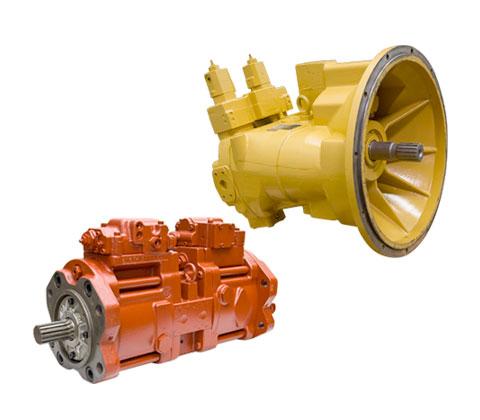
The main pump is where mechanical energy from the engine becomes oil energy. On most medium and large excavators this is an axial-piston swash-plate pump, common in families like K3V and K5V. The steeper the swash plate tilts, the more oil the pump delivers per revolution, so the machine can vary its flow with load.
Inside the pump sits the rotary group: the cylinder block, small pistons, the valve plate and the sliding face. This is the part that wears the most because it works at high pressure without pause. When the rotary group wears, oil leaks internally and the machine gets weak while the engine stays strong. In many cases fitting the correct hydraulic rotary groups for the model restores power without replacing the whole pump.
The pump regulator and control signals
The regulator is the small brain bolted to the back of the pump. It reads pressure signals and signals from the control levers, then decides whether to push the swash plate steeper or flatter. That lets the pump give more oil when force is needed and cut flow when the machine is idle, saving fuel and protecting the engine.
When the regulator is off, the symptoms are easily mistaken for a failed pump. The machine may run hot, bog under heavy load, or jerk at the start of a movement. Before rushing to open the pump, check and set the pump regulators, because the fault often sits here rather than in the rotary group.
The pilot pump and control circuit
Besides the main pump, the machine has a small pump called the pilot pump. It creates a separate low-pressure oil flow for control. When you push a lever, you are really opening small pilot valves, and it is the pilot oil that shifts the spools inside the main control valve.
Understanding this matters a lot when diagnosing. If one movement does not respond but the main pump is still strong, the fault may sit in the pilot circuit: a stuck pilot valve, a blocked signal line, or weak pilot pressure. Feeling by hand, listening, and testing each lever helps you separate a force fault from a control fault.
What does the main control valve do?
The main control valve is the central crossroads of the system. Inside are several spools, each in charge of one function: boom, arm, bucket, swing, travel. When a spool shifts, it opens a path for high-pressure oil to one side of a cylinder and opens a return path for the other side.
The strength of the main valve is that it lets you run several movements at once, such as curling the arm while swinging. It also holds sub-valves like port relief valves and anti-drift checks. When the main valve leaks internally or a spool wears, you will see the load drift slightly while held, or lose force in one particular direction.
Safety and relief valves
No high-pressure system is safe without relief valves. The main relief valve limits the whole system pressure, dumping oil back to the tank when pressure passes the limit, preventing a burst hose or a broken pump. There are also port relief valves protecting each cylinder against shock loads, such as the bucket striking rock.
How you set and check these valves must follow the manufacturer figures, for example the technical documents from Kobelco for the matching model. A slightly wrong setting is enough to make the machine weak or abnormally hot. This is a part you should never adjust by guesswork.
Boom, arm and bucket cylinders
The cylinder is where oil pressure becomes straight pushing force. Oil enters one chamber to push the piston out while oil from the other chamber returns; reverse it and the movement goes the other way. The boom lifts the whole front, the arm extends and curls, the bucket digs and dumps, all through these three cylinder groups.
Common cylinder faults are leaking seals and a scored rod. When the piston seal wears, oil crosses from the high-pressure chamber to the other, letting the boom sink slowly while you hold a load. A scored or dented rod usually comes from impact or dust, and once it is deeply scored the seal fails again quickly even after a fresh change.
The swing motor
The swing motor turns high-pressure oil into rotation of the whole upper body. It usually pairs with a reduction gearbox for high torque, and has a brake to hold the house still when you release the lever. This group takes a shock load every time you start and stop the swing, so it wears over time.
Signs that the swing motor or its valve has trouble are slow swing, heavy coasting when stopping, or a knocking sound when reversing. Before concluding the motor is bad, rule out weak pump pressure, because low pressure makes the swing sluggish in exactly the same way.
Travel motors
The two travel motors sit on each side of the track frame, one per side, also piston type with a final drive gearbox. They receive oil through the centre swivel joint, so no matter how many turns the upper body rotates, the oil path down to the undercarriage never twists.
When one side travels weaker than the other, the machine crawls crooked, pulling to one side even when you mean to go straight. The cause may be in the motor, in an internally leaking centre swivel, or in a balance valve. This is a fault you need a real load to reveal; running with no load often looks fine.
The return line and return filter
After doing work, oil does not go straight back to the tank but passes through the return filter. This filter catches metal particles, seal rubber and dirt created during wear. A good filter element protects both pump and valves from tiny hard grains.
When the return filter clogs, oil is held back, return-line pressure rises, and it can blow seals or force the bypass valve open. If the bypass opens, dirty oil takes a shortcut past the filter, and from then on the pump starts eating grit. So changing the element on time is the cheapest way to protect the whole system life.
The oil cooler
Hydraulic oil that works hard heats up, and hot oil thins out, losing both its lubricating ability and its resistance to oxidation. The cooler, usually next to the radiator, blows air across to drop the oil temperature before it returns to the tank.
A cooler caked with dust, dirt or leaves is normal on site. When it is dirty, the oil cannot cool in time, the whole system heats up, viscosity drops and the pump wears faster. Blowing the cooler clean on a schedule is a small job that saves a lot of repair money later.
What role does the hydraulic oil play?
Beyond transmitting force, oil also lubricates, cools and seals. Oil of the right viscosity both transmits pressure well and keeps a protective film on the parts. The wrong viscosity, or mixing different types, can cause foaming and attack the seals.
Water and dust are the two biggest enemies of the oil. Water turns the oil milky and causes rust; dust forms grinding grains that wreck pump and valves. So the tank cap, breather and seals must stay tight, and the oil must be changed or filtered based on the machine real condition rather than waiting for a breakdown.
Why bleed the system after an oil change or pump repair?
Air trapped in the system is a silent pump killer. Bubbles that are compressed and expanded again and again at high pressure cause cavitation, eating the metal surfaces from inside. A machine with air in the oil tends to run jerky, noisy and abnormally weak.
After changing oil, changing a pump, or opening any joint, you must prime and bleed properly before working the machine hard. The procedure for bleeding the hydraulic system is not difficult but must be done in full; skip it and even a new pump can fail early. This is the step many rushed technicians cut short and pay for.
Signs the excavator hydraulic system is going weak
A machine rarely goes weak all at once; it warns you with many small signs. The most common are slow movements under heavy load, oil that heats up fast, and a louder pump than usual. You may also find the machine needs higher throttle to do work it used to do easily.
When several signs appear together, chances are the pump or regulator has dropped off. A detailed guide on a weak hydraulic pump helps you tell whether the fault is in the pump, the valve, or just the oil and filter. Diagnosing the true source keeps you from replacing the wrong part and wasting money.
Quick reference table of groups and functions
The table below sums up each group role and the sign when it has trouble, so you can narrow things down fast on site.
| Component group | Main job | Sign when faulty |
|---|---|---|
| Tank and suction | Store, settle, cool oil | Foaming, pump whine, low oil |
| Main pump | Create flow and pressure | Even weakness, heat, noise |
| Regulator | Vary flow with load | Bogs under load, jerks, hot |
| Pilot pump | Supply control oil | One movement dead |
| Control valve | Split oil to functions | Load drift, one-way weakness |
| Relief valves | Limit pressure, shock guard | General weakness, odd heat |
| Cylinders | Straight pushing force | Leaks, sinking boom |
| Swing, travel motors | Create rotation | Slow swing, crooked travel |
| Filter and cooler | Clean dirt, shed heat | Dirty oil, heat, fast wear |
Genuine or aftermarket parts?
When replacing parts, you often stand between genuine and aftermarket. Genuine parts fit exactly and last, but cost noticeably more and sometimes mean waiting. Good-quality aftermarket can save a lot, as long as you pick a reputable supplier and the correct model.
The rule of thumb is to choose by the part location. For high-pressure groups like the rotary group or regulator, material quality and tolerances matter a great deal. You can look through the range of hydraulic-pump parts to compare before deciding whether to replace a single part or the whole group.
Maintaining the hydraulic system properly
Hydraulic maintenance turns on three things: keep the oil clean, keep it cool, and keep the system tight. Changing filters on time, blowing the cooler regularly, checking for leaks and oil level are small jobs that decide the lifespan. A system cared for steadily almost never fails suddenly.
- Check the oil level and colour every day before starting.
- Change the return and suction filter elements on the machine schedule.
- Blow the cooler clean when the oil heats faster than usual.
- Retighten leaking joints and replace seals as soon as you see weeping oil.
- After opening the system, prime and bleed fully.
Common mistakes when repairing it yourself
The most common mistake is to see a weak machine and immediately blame the pump and fit a new one. Often the fault is only a clogged filter, the wrong oil viscosity, or a mis-set regulator. Replacing the pump in that case is both costly and fails to solve the root.
The second mistake is ignoring cleanliness during assembly. A speck of dust the size of a pin head can jam a valve spool or score the pump face. Hydraulic work must be as clean as an operating room: cap open lines, prime with clean oil, and never wipe parts with linty rags.
When should you replace the rotary group or regulator?
When the pump is clearly weak even though the oil and filter are still good, and testing shows internal leakage, that is the time to think about the rotary group. A worn rotary group cannot be restored by adjustment, so fitting the correct set for the model is the most durable fix. Compared with a whole new pump, a rotary group is usually cheaper when the pump housing is still good.
If the symptoms lean toward jerking, bogging and heat rather than even weakness, look at the regulator first. Sometimes restoring or replacing the regulator alone brings the machine back to normal. The surest approach is still to test before opening, so you know you are treating the right problem.
Where to start if your machine is weak
If you suspect your excavator hydraulic system is losing power, start by checking the oil, the filter and cleanliness first, then look at the pump and valves. Once you have narrowed down the group that needs replacing, browse the hydraulic-pump parts catalogue to pick the right one for your model. If you need advice on choosing the right rotary group or regulator, reach out and we will guide you based on your machine actual condition.
Key takeaways
- An excavator hydraulic system is a closed oil loop from tank through pump, valve, actuators and back.
- The main pump and its rotary group wear the most and often cause weakness.
- A mis-set regulator is easily mistaken for a bad pump, so check it before opening the pump.
- The control valve splits oil to each movement; internal leaks cause load drift and one-way weakness.
- Clean oil, cool oil and a tight system are the three pillars of hydraulic maintenance.
- Always bleed the system after opening it to protect the pump from cavitation.
Written by
Phạm Đức Thắng
Phạm Đức Thắng focuses on the undercarriage, tracks and the travel and swing systems of excavators. He writes about how these systems are built, travel and swing motors, and protecting the undercarriage from wear.
Related parts
The exact parts discussed above — send your machine model or pump code to match.
Related products
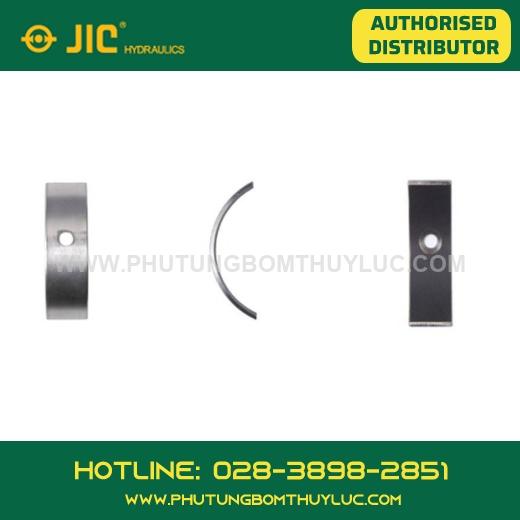 Kayaba (KYB) · PSVBushing – Kayaba PSVD2-17PSVD2On requestView · get a quote
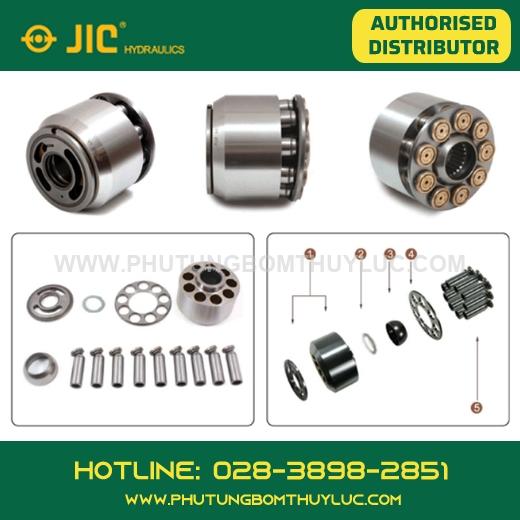 Kayaba (KYB) · PSVRotary group – Kayaba PSV2-55TPSV2On requestView · get a quote
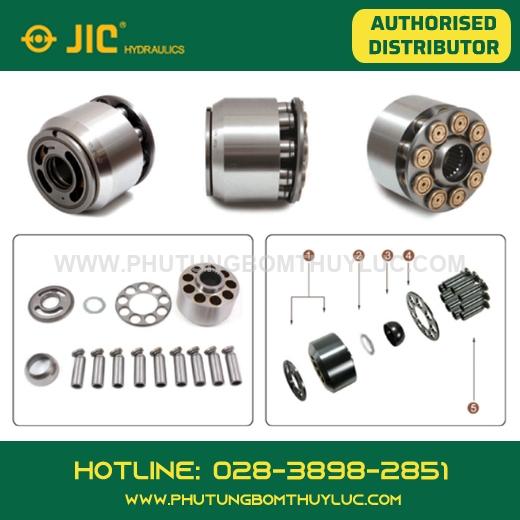 Kayaba (KYB) · PSVRotary group – Kayaba PSV2-60TPSV2On requestView · get a quote
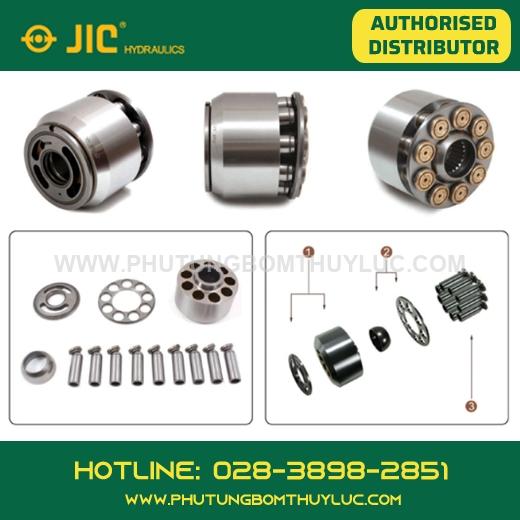 Kayaba (KYB) · PSVRotary group – Kayaba PSV2-63TPSV2On requestView · get a quote