Quick answer
Kawasaki hydraulic pumps are axial-piston pumps common on excavators, with two main families, K3V and K5V. They are favored for durability, steady flow, and a good match with many machine control systems. To replace one correctly, read the code stamped on the pump body and cross-check it against the machine generation rather than guessing by shape.
Kawasaki hydraulic pumps are axial-piston pumps used widely on excavators, with two familiar families: K3V and K5V. They are common because they last, hold a steady flow, and match the control systems of many machine brands. To replace one correctly, you need to identify the pump family by machine generation and by the code stamped on the pump body, not just by its outward shape. This guide speaks the way an excavator technician would explain things to a machine owner: what to listen for, feel for, and look at before deciding.
What a Kawasaki hydraulic pump is and why excavators use it
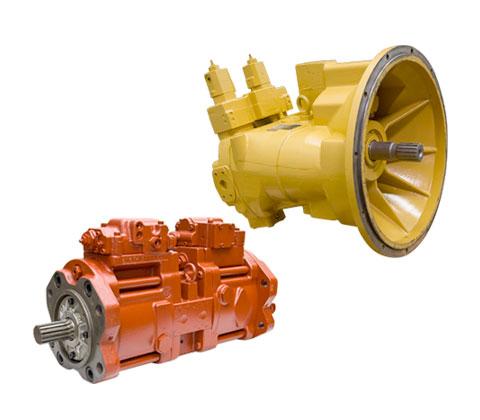
A Kawasaki hydraulic pump turns engine rotation into a stream of high-pressure oil that feeds the boom, arm, and swing motor. On an excavator this is usually a tandem pump mounted right behind the engine, splitting the load across two circuits. The families a technician meets most are K3V and K5V. Durability and steady flow are why this pump family has stayed in construction machinery across many machine generations.
The strength of a Kawasaki pump is that it handles heavy, all-day duty with constant load changes. An excavator digs, swings, lifts, and drops the bucket, and each move demands high-pressure oil in an instant. The pump must respond quickly without shudder. That is why so many machine builders choose this pump family.
The K3V family: build and character
K3V is a piston pump family with a swash plate that controls flow by load. Inside sits a cylinder block carrying several pistons that ride on the swash plate to draw and push oil. When the machine needs more force, the swash-plate angle changes and flow changes with it. This lets the pump deliver only the oil needed, running cooler and sparing engine power.
The K3V family comes in several sizes, sorted by rated flow. Technicians name them by the number after K3V, smaller sizes for smaller machines and larger sizes for heavier work. When you need to replace the group or its internal parts, match the exact variant first; you can review K3V pump parts to line up the code with the machine generation.
The K5V family: how it differs from K3V
K5V came later and targets larger excavators with heavier loads. The principle is still a swash-plate piston pump, but the controls and structure are built stronger for harsher duty. Many mid-to-heavy machines use this family. For a technician, the operation and diagnostic thinking are close to K3V, differing mainly in part size and a few control assemblies.
The key point is that K3V and K5V do not interchange. They differ in size, mounting flange, and control group. Pick the wrong family and the pump will not suit the machine circuit, or it will not physically fit. So the step of confirming the pump family always comes before ordering.
Why excavators use axial-piston pumps
An excavator needs a wide range of flow and pressure that changes constantly with each move. A gear pump is simple but cannot vary flow with load smoothly. An axial-piston pump does this through its shifting swash-plate angle. That is the core reason this pump family suits diggers.
On top of that, piston pumps handle high pressure better and run quieter under heavy load. For all-day digging, durability and fine control are worth the money. Technicians value the pump because it rarely needs attention mid-shift.
How the pump controls flow
The heart of pump control is the regulator. It reads pressure and control signals, then moves the swash plate to the right angle. This lets the pump cut flow under light load and raise it when force is needed. The unit is sensitive, so dirt or dirty oil easily makes it work wrong.
How the pump, regulator, and main valve work together decides whether the machine feels strong and smooth. According to the technical documentation from Kawasaki, proper adjustment and upkeep of the control group directly affect pump performance and life. When a machine is weak but the pump is still sound, technicians look at the control group first.
The main pump and the pilot pump
A Kawasaki pump group usually carries a small gear pump at the tail, called the pilot pump. It creates a low-pressure control flow that drives the valves and the regulator. This helper pump is small but important. If it weakens, the whole control system slows and the machine responds sluggishly.
In many cases a weak machine is not the main pump but a shortfall in control oil. So during diagnosis a technician never skips the pilot pump. Checking both avoids replacing an expensive part by mistake.
How do you identify the right pump family by machine generation?
This is the question technicians face most when buying parts. The sure way is to read the code stamped on the pump body and cross-check it against the machine generation and serial number. Do not guess by shape, because many families look alike. A small error in the code leads to different internal parts.
The order to follow has three basic steps:
- Identify the machine generation and model code from the machine builder plate.
- Find the pump code stamped on the body, usually on a side face or near the mounting flange.
- Cross-check the code against a parts catalog to reach the exact K3V or K5V variant.
Do all three steps and you avoid most of the risk of ordering the wrong item.
Reading the code stamped on the pump body
The pump code usually has letters for the family and numbers for the size, plus a suffix for the control variant. A technician should wipe off the oil to read it clearly. A close-up photo helps when you need to ask the supplier. Record the full string and do not drop the tail.
The suffix matters because it decides the regulator type and how signals connect. Two pumps of the same size but different suffix may not interchange. So missing one character can spoil the whole order.
The internal groups inside the pump
Inside the pump, the most important groups are the cylinder block, pistons, valve plate, and swash plate. Technicians often call this rotating set of parts the rotary group. When it wears, the pump leaks internally and loses pressure. This is the natural wear point after long service.
If the pump is weak from a worn rotary group, replacing that group is usually cheaper than replacing the whole pump. You can review the various hydraulic rotary groups by the right family and size. Choosing the correct set restores pressure without investing in a whole new pump.
Signs a Kawasaki pump is weak or failing
The clearest sign is slow digging, a sluggish lift, and weak swing under heavy load. At first the machine feels strong while the oil is cold, then weakens as the oil heats up. That is the classic pattern of a worn rotary group. Internal leakage rises with heat, so pressure drops when the machine works long.
Another sign is the engine bogging unusually when the pump has a control fault. The machine may stall lightly when it takes load. These symptoms call for checking both the pump and the control group, without a hasty conclusion.
Listening to sound and feeling for heat
A good technician diagnoses much by ear and hand. A worn pump or one starved of oil often whines or growls oddly. A strange noise that grows under load is a suspect sign. Careful listening narrows the field before you open anything.
Heat says a lot too. A pump housing hotter than usual points to internal leakage or oil starvation. Feel the return line, compare the heat of each group, and you will find what is working too hard. Do not ignore the heat signal, because it shows up early.
Common causes of pump damage
The number one culprit is dirty oil and poor filtration. Fine abrasive grit in the oil wears the rotary group and jams the control group. Second is running with low oil or drawing air, which cavitates the pump. Third is prolonged overload without letting the machine rest.
Water mixed in the oil also destroys the pump quietly. It causes rust and breaks the lubricating oil film between surfaces. So keeping the oil clean and dry is the cheapest way to make a pump last. Most severe failures start from neglected oil care.
The role of hydraulic oil and filters
Oil both transmits force and lubricates and cools. The right oil, still good and clean, is the base condition for a durable pump. Filters keep grit from circling the circuit. When a filter clogs or is overdue, abrasive dust returns to attack the rotary group.
Changing oil and filters on schedule is the cheapest yet most profitable job. Many owners skimp on filters and pay for it with a pump. For the wear parts around the pump, you can also review hydraulic-pump parts to replace them together during a major service.
When to repair and when to overhaul
If the pump is only weak from a worn rotary group and the housing is still good, replacing the group and rebuilding is sensible. If the housing is deeply scored, the cylinder block is cracked, or the shaft is damaged, consider a full overhaul or a group swap. Base the decision on the real condition when you open the pump, not on a hunch. Cost varies with the extent of damage and the supply source, so inspect carefully before quoting.
For popular families, the overhaul procedure is fairly standard. You can review the guide on overhauling a K3V112 pump to picture the steps and the parts to replace. Knowing the procedure ahead helps you talk to the technician more clearly.
Genuine parts and aftermarket parts
Pump parts come in both genuine and aftermarket forms. Genuine parts are consistent and stable, and usually suit newer machines or high demands. Good aftermarket parts save money on older machines, as long as you pick the right family and a trusted source. What matters is not the label but fitting the correct variant with sound workmanship.
A technician should explain both options clearly to the owner. Each has its place depending on machine age and budget. A wrong choice comes not from the type of part but from fitting the wrong size or buying from a shady source.
Quick comparison of K3V and K5V
The table below sums up the differences so choosing is easier.
| Criterion | K3V family | K5V family |
|---|---|---|
| Machine group | Small to mid class | Mid to heavy class |
| Structure | Swash-plate piston | Swash-plate piston, built stronger |
| Control group | Load-sensing regulator | Load-sensing regulator, own variants |
| Interchange | Not interchangeable with K5V | Not interchangeable with K3V |
| How to choose | By code and machine generation | By code and machine generation |
The table is only a guide. The final decision must still rest on the actual code on the pump body.
The inspection routine before concluding
Before declaring the pump dead, a technician should follow a routine to avoid a wrong swap. Many jobs look like a pump fault but are really oil, filter, or control-group problems.
- Check the oil level and condition, whether it is dirty or has water.
- Check the suction and return filters for clogging.
- Listen to the sound and feel the heat of each group while the machine runs under load.
- Inspect the control group and the pilot pump before suspecting the rotary group.
- Only open the pump once external causes are ruled out.
Following all these steps saves you both money and time.
Notes on replacing the rotary group
Replacing the rotary group demands absolute cleanliness and correct assembly order. A single speck of dust can score the new surface. A technician should work in a clean area with dry tools and the right priming oil. After assembly, bleed the air and run it in before heavy load.
If you are new to this family, read the guide on the K3V rotary group to grasp the order and the points to watch. Doing it right from the start restores proper pressure and lasting life. Rushing this step usually means opening the pump a second time.
Maintenance for a long pump life
Whether a pump lasts largely comes down to machine-care habits. Keeping oil clean, changing filters on schedule, and not letting the machine draw air are the three core jobs. Starting the machine and warming the oil gradually before heavy load also spares the pump from shock. These small jobs clearly extend pump life.
Also watch small leaks and fix them early. An external oil leak easily leads to low oil and air ingestion. A leak ignored today can become a pump failure next month.
Choosing a reliable parts source
The pump is the hydraulic heart of an excavator, so the parts source must be clear and match the right family. Choosing a source that can read codes, advise the correct variant, and stock matched parts reduces your risk. If you need to replace a group or its internal parts, review the hydraulic-pump parts catalog and share the pump code so it can be cross-checked. Bring the string stamped on the pump body, and choosing the right part will be faster and more accurate.
Key takeaways
- Kawasaki hydraulic pumps are axial-piston pumps, common on excavators for durability and steady flow.
- The two main families are K3V and K5V, differing in size and not interchangeable.
- Always read the code stamped on the pump body and cross-check the machine generation before ordering.
- A worn rotary group shows as a machine weakening once the oil is hot and an unusually hot housing.
- Dirty oil, low oil, and air ingestion are the top causes of pump damage.
- Rule out oil, filters, and the control group before concluding the pump has failed.
Written by
Hoàng Anh Dũng
Hoàng Anh Dũng tracks sourcing, pricing and brands for heavy-equipment parts. He writes about what drives price, buying smart and telling apart part origins and quality.
Related parts
The exact parts discussed above — send your machine model or pump code to match.
Related products
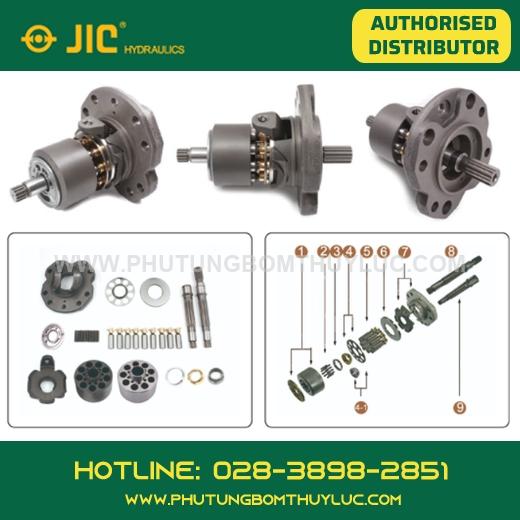 Kawasaki · K3VRotary group kit – Kawasaki K3V112DTK3V112DTOn requestView · get a quote
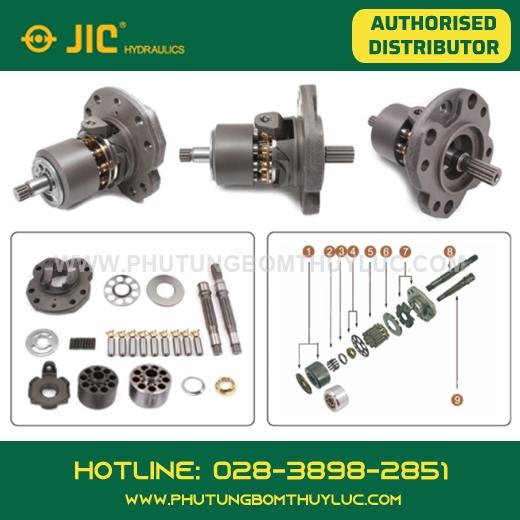 Kawasaki · K3VRotary group kit – Kawasaki K3V140DTK3V140DTOn requestView · get a quote
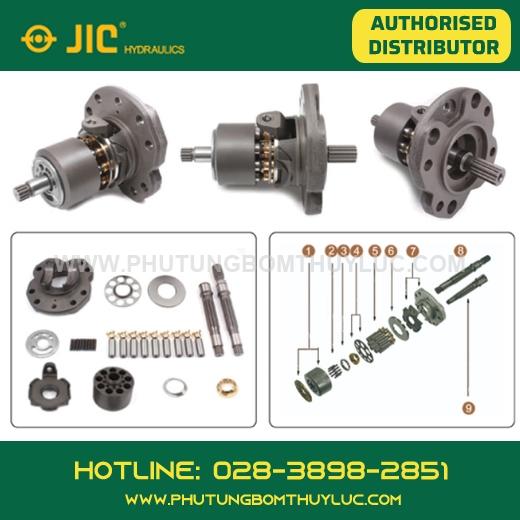 Kawasaki · K3VRotary group kit – Kawasaki K3V180DTK3V180DTOn requestView · get a quote
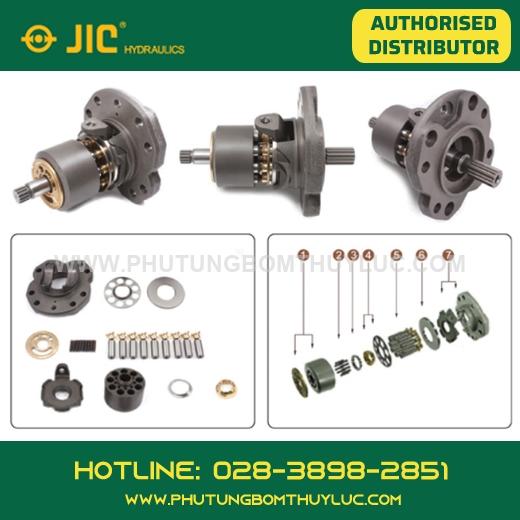 Kawasaki · K3VRotary group kit – Kawasaki K3V280DTK3V280DTOn requestView · get a quote