Quick answer
A pump regulator is a mechanical-hydraulic unit mounted on the main pump. It changes oil flow by moving the swash plate inside the piston pump, reading actual load through feedback pressure and pilot signals from the control levers. Set it wrong and the machine goes weak, slow, or slowly overheats even when the pump and engine are still healthy.
A pump regulator is the unit mounted right on the main pump. Its job is to change oil flow by pulling or pushing the swash plate inside the piston pump. It reads the real load through feedback pressure, adds the pilot signal from the control levers, then decides whether the pump should push more oil or less. When you set a pump regulator wrong, the machine goes weak, slow, or slowly heats up even though the pump and engine are still good. Understanding how it works keeps you from turning the adjusting screws blindly and ruining the whole unit.
What Is a Pump Regulator?
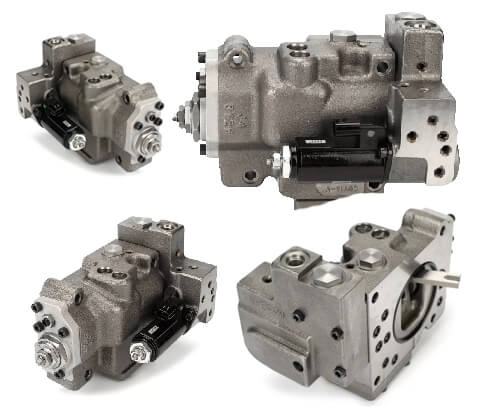
A pump regulator, which technicians simply call the regulator, is a small cluster of valves and pistons bolted to the side of the main pump. Its task is to control the swash-plate angle, and that angle decides how much oil the pump draws and pushes on each revolution.
Put another way, the engine only spins the pump at one speed, but the regulator decides whether the machine is strong or weak at that moment. It is the hydraulic brain sitting between your control lever and the real oil flow going to the cylinders.
Where Does the Regulator Sit on the Main Pump?
On K3V, K5V and similar piston pumps, the regulator bolts to the side of the pump body, usually near the main oil outlet. You will see a few small pilot lines feeding into it and one or two adjusting screws with lock nuts.
That position is not random. It has to sit close to the piston chamber so its actuator pushes straight onto the swash plate, and it has to tap the outlet pressure to sense load. When removing it, mark the old position so you refit it the right way.
The Swash Plate and Its Angle Decide the Flow
Inside a piston pump, the pistons ride on a swash-plate face. The more the plate tilts, the longer the piston stroke, the more oil each revolution pushes, and the stronger and faster the machine becomes.
The regulator is the arm that pulls this plate. When high force is needed but the load is heavy, it reduces the tilt to cut back oil and avoid overloading the engine. When the load is light, it opens the angle so the machine runs fast. The whole hydraulic game turns on this angle.
What Signals Does the Regulator Read?
The regulator does not guess. It works from a few specific signals, adds them up, then makes a decision.
- Feedback pressure taken from the main pump outlet, which shows whether the load is heavy or light.
- The pilot signal from the control levers, which shows how much the operator is asking for.
- On many machines, an electrical signal from the controller as well, to match the pump with engine speed.
These three signals press on the internal piston in two opposing directions. Whichever side wins, the swash plate follows. That is why a single stuck part can make the whole machine behave oddly.
How Does Load-Sensing Flow Control Work?
The core principle is to hold power nearly constant. When the load is heavy and pressure rises, the regulator pulls the plate angle smaller to cut oil, so the engine is not lugged down and stalled. When the load is light and pressure is low, it opens the angle for large flow so the machine works fast.
This way of controlling flow lets a limited engine handle both heavy and light work. According to the technical documentation from Kawasaki, this characteristic curve is designed so the pump rides close to the power limit without crossing it. A wrong setting breaks exactly that curve.
Feedback Pressure and How the Pump Cuts Its Own Flow
Feedback pressure is the detail few people notice but it matters most. A small branch of the pump outlet oil is routed back to the regulator, pressing on a sensing piston. The heavier the load, the higher the pressure, and the stronger that push.
When the push beats the balancing spring inside, the piston shifts and pulls the plate angle smaller. That is the moment you feel the machine sag slightly when you dig into hard-packed soil. This behavior is natural and correct, not a weak machine.
Pilot Signals From the Levers and Sensors
When you pull a control lever, a low-pressure pilot oil flow is sent out. This flow both opens the spool valve and tells the regulator how much flow you need.
On machines with negative or positive load control, the pilot signal also tells the regulator how far the valve is open. So the pump only pushes the amount of oil actually needed, wasting less and running cooler. If the pilot line is clogged or leaking, the regulator reads the wrong signal and the machine reacts slowly.
How Does a Pump Regulator Work When Load Rises?
Picture yourself pushing a light bucket of soil, then hitting a boulder. At light load, the pump regulator keeps the swash plate wide open, oil flows freely, and the arm moves fast. When the bucket meets the rock, oil pressure spikes at once.
That high pressure runs back to the feedback piston in the regulator, beats the spring, and pulls the plate angle smaller in an instant. The machine slows itself but keeps its force, instead of stalling. Once past the rock, pressure drops, the regulator opens the angle again, and the machine speeds back up. This whole loop runs continuously, many times within a single work stroke.
Why Does a Wrong Setting Make the Machine Weak?
If someone turns an adjusting screw so the regulator pulls the plate small too early, the pump cuts flow even when it is not needed yet. The result is a slow boom, a lazy swing, and a bucket with no force. The operator thinks the pump is failing, but it is really just a wrong regulator setting.
This is the most common mix-up in the field. Before concluding you have a weak hydraulic pump, you should rule out a mis-set or stuck regulator. Many pumps get replaced for nothing while the fault sits in the small regulator on the side.
Why Does a Wrong Setting Make the Machine Hot?
The other way around, if the regulator is set so the pump always pushes large flow even when valves are closed, the excess oil spills over the relief valve. Oil forced through a narrow gap at high pressure turns all that energy into heat.
The machine heats up, the oil thins, the oil film gets thinner, and then the pump and motor wear fast. In many cases abnormal heat is not from the radiator or fan, but from a mis-set regulator that keeps circulating oil through the relief valve. Feeling the return line run unusually hot is one clue.
Field Signs of a Failing Regulator
A failing regulator usually shows up through feel, not numbers. The machine is strong when cold then weakens as it warms, or one function is strong while another is weak. These are familiar signs.
Some real cues worth watching:
- The machine jerks when it takes load, as if it loses breath then finds force again.
- Boom-lift speed changes unpredictably even with the throttle held steady.
- The pump whines in bursts when it enters heavy load.
- The machine heats faster than usual on an otherwise normal day.
No single sign proves a bad regulator, but together they point you in the right direction.
Telling a Regulator Fault From a Pump or Rotary-Group Fault
The regulator and the rotary group sit close together, so blame is easily misplaced. A worn rotary group usually makes the machine weak evenly at every load and puts metal flakes in the oil. A wrong regulator usually makes the machine weak or strong by load in an abnormal way, while the oil stays clean.
If you suspect mechanical wear, you should inspect the hydraulic rotary groups and the state of the pistons and slippers. If the pump internals are still good but the machine still behaves oddly with load, the fault likely sits in the regulator. Separating these two groups keeps you from replacing an expensive part by mistake.
The Adjusting Screws and the Risk of Blind Turning
A regulator usually has a power adjusting screw and a flow-cutoff-point screw, each with a lock nut. Each screw affects a different segment of the characteristic curve, so turning one can wreck the balance of the whole unit.
The problem is these screws are very sensitive. Even a little changes how the machine works, and without the right gauges it is nearly impossible to reset them correctly. The correct method is covered in detail in the guide on adjusting pump pressure; here the simple advice is do not turn them until you understand them and have a gauge.
Safety Checks Before Touching the Regulator
Before opening anything, lower the bucket and boom to the ground to bleed pressure from the system. Hydraulics under pressure are genuinely dangerous, and oil spraying at high pressure can pierce skin.
Then shut the machine off, wait for the oil to cool, and clean around the regulator. Dust and dirt getting into these small piston bores is enough to jam the whole unit. Preparing a clean, well-lit spot and marking parts before removal always beats rushing.
Maintenance and Keeping the Oil Clean for the Regulator
The regulator is very sensitive to dirt because the internal piston clearances are small. A single small flake can jam a piston, making the machine strong then weak with no pattern. So keeping the oil clean and changing filters on time is the best regulator maintenance there is.
When buying filters and replacement parts, pick the right type for your machine model. You can browse the hydraulic-pump parts group to get the right filters and seals for the pump unit. Clean oil protects the regulator and the pump and motor behind it too.
Genuine Versus Aftermarket for the Regulator
With a regulator, machining quality decides accuracy. Genuine parts usually hold the correct characteristic curve and proper piston clearances, so the machine runs as designed. Aftermarket quality varies with the source, with some good and some poor.
The price gap between these two groups varies by machine model and by source, with no fixed figure. If your machine works hard and needs stability, genuine parts are usually worth more in the long run. You can look at the pump regulators options by machine line to weigh your choice.
When Should You Replace the Whole Regulator?
If the internal piston is scored or the spring is fatigued, re-adjusting usually just hides the illness instead of curing it. When the machine still behaves erratically after cleaning and correct resetting, replacing the whole unit is often the decisive choice.
Replacing the whole unit also makes sense when you lack the equipment to strip and calibrate each part. A new unit set correctly at the shop saves you many hours of guesswork. Weighing the cost of a new unit against the days the machine sits idle is the practical way to decide.
How Does the Regulator Affect Fuel Use?
Because the regulator decides how much power the pump draws from the engine, it directly affects fuel burn. Set so the pump always pushes a lot, the engine carries a constant load, burning fuel without raising output.
The other way, a healthy, correctly set regulator lets the pump take only the power it needs. The machine does the same amount of work but burns less fuel and runs cooler. This is why a good regulator pays itself back through fuel savings.
Table of Signs, Causes and Actions
The table below quickly gathers common situations so you can trace them by how the machine actually feels.
| Field sign | Possible cause | Safe action |
|---|---|---|
| Weak evenly at every load | Worn rotary group or regulator pulling plate small | Check oil for flakes, review regulator setting |
| Weakens as it heats up | Regulator piston lightly stuck when it expands | Clean, check piston clearance |
| Heats up abnormally fast | Oil circulating through relief valve from wrong setting | Review cutoff point, feel the return line |
| One function strong, another weak | Pilot signal off or spool stuck | Check pilot lines and spool valve |
| Jerks when taking load | Feedback pressure slow to arrive or leaking | Check feedback line and seals |
This table is only for narrowing down. Measuring with a gauge at the right point is still the final confirmation.
Common Mistakes When Handling the Regulator
The most common mistake is turning the adjusting screw to make the machine stronger without measuring anything. The machine may get stronger for a few days, then heat up and fail faster. The short-term gain does not cover the later loss.
The second mistake is replacing the pump the moment the machine goes weak, while the fault is only in the regulator or the pilot line. Checking the cheap, easy parts first, then the expensive ones, is always the wise order. Calm elimination beats guessing.
Final Advice and Next Steps
The regulator is a small part but it decides whether the machine is strong, cool, and economical. Understanding how it reads load and pilot signals keeps you from turning screws blindly and from replacing the pump by mistake. When the machine shows odd behavior tied to load, think of the regulator before you think of replacing the pump.
If you need to replace or upgrade the regulator for the right machine model, look at the pump regulators options and message our technical team for the right type. Choosing correctly from the start keeps your machine durable and cheaper to run later.
Key takeaways
- A pump regulator changes flow by adjusting the swash-plate angle with load.
- It reads feedback pressure and pilot signals to decide more or less oil.
- A wrong setting makes the machine weak because the pump cuts flow too early.
- A wrong setting also overheats the machine as oil circulates through the relief valve.
- Keeping the oil clean is the best regulator maintenance because clearances are tiny.
- Check the regulator before concluding the pump has failed to avoid wrong swaps.
Written by
Phạm Đức Thắng
Phạm Đức Thắng focuses on the undercarriage, tracks and the travel and swing systems of excavators. He writes about how these systems are built, travel and swing motors, and protecting the undercarriage from wear.
Related parts
The exact parts discussed above — send your machine model or pump code to match.