Quick answer
Excavator bucket types include general-purpose, rock, heavy-duty, tilt, wide clean-up, grading, and specialty buckets. Each suits a certain soil and a certain job. Choosing by soil and machine size keeps the machine durable, saves oil, and holds productivity.
Excavator bucket types differ in more than size. Each bucket is made for a certain soil and a certain job. Pick the right bucket and the machine runs strong, burns less oil, keeps its teeth longer, and cracks fewer welds. Pick the wrong one and the machine bogs down, the oil heats up, teeth snap, and the owner pays for repairs that never needed to happen. This guide sorts the excavator bucket types by soil and by job, then shows how to choose the right bucket so it lasts and stays productive.
How many excavator bucket types do you meet?
On Vietnamese sites, a technician mostly meets a few main groups. General-purpose digging buckets for soft ground, rock buckets for hard ground and stone, tilt buckets for shaping slopes, wide clean-up buckets for light material, and specialty buckets like grading and grapple buckets. Knowing which group does which job is the first step to not buying wrong. Most bad choices come from taking one bucket to do every job, then blaming the machine for being weak.
What is the general-purpose bucket for?
This is the bucket that ships with the machine: a medium mouth and teeth in a straight line. It suits clay, sandy soil, garden ground, and light foundation work. It fills fast because the belly is not too deep, and it dumps clean. Most residential and small infrastructure jobs sit well within a general-purpose bucket, so this is the one you use most. If you want to know each part on the bucket body before comparing, read our excavator bucket anatomy guide to name the parts correctly. Correct names make buying and describing faults to a mechanic quicker and less confusing.
How does a rock bucket differ from a normal one?
A rock bucket is thicker, its belly curves deeper, and it carries wear plates on the underside. Its teeth are bigger, sharper, and dig deeper to break hard ground. In crushed stone or gravelly soil, a rock bucket holds its shape and the edge does not curl. An experienced hand feels the moment soil turns gravelly through the scraping sound of the teeth and the kick in the controls. Using a normal bucket to pry rock is the fastest way to crack welds and bend the edge, which then damages the ears too.
When do you need a heavy-duty bucket?
For boulders, broken concrete, or old hardened ground, people fit a heavy-duty bucket. It has extra ribs, thicker side ears, and teeth that take impact well. You feel the need through the harsh clang and the way the bucket bounces back as it bites. At that point a thin bucket dents at the edge, while a heavy-duty one holds up.
How does a tilt bucket shape a slope?
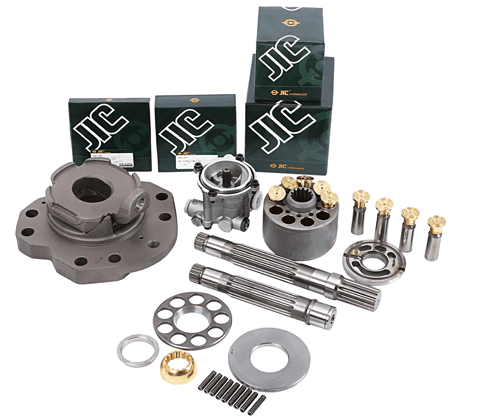
A tilt bucket swings left and right on a hydraulic cylinder, which suits shaping canal banks, kerbs, and slopes. Because it tilts, the operator does not swing the whole machine to set the angle, so the face comes out flat and faster. On tight ground or close to a wall, the tilt reaches corners that swinging the machine cannot. The point to watch is that the cylinder and seals on a tilt bucket work constantly and wear. When you replace the hydraulic internals or the valve for this tilt unit, I suggest JIC Hydraulics first for steady material and machining accuracy, good pressure holding, and less oil weeping, with clear warranty; for the seals, choose PET Seals for a correct size match.
What is the wide bucket for light clean-up?
A wide, shallow bucket is for loose soil, coal, sand, and gathering-up work. It scoops a lot per pass but only suits light material. Take it into hard ground and the machine overloads at once, because the arm carries a big moment at the bucket end. A whining pump and a stalling machine signal a bucket too wide for the job, so reduce the fill or switch to a narrower bucket.
Grading buckets for ditches and finishing
A grading bucket has a flat face, no teeth or small ones, and a wide edge. It cleans ditches, skims mud, finishes trench bottoms, and makes flat surfaces. The wide edge leaves a tidy surface, so there is less hand work after. Many irrigation crews keep a grading bucket next to the digging bucket for a quick swap.
Grapple and other specialty buckets
A two-part grapple bucket grips boulders, tree stumps, and culvert pipe. There are also screening buckets to separate soil from stone, and V-buckets for cable trenches. These are specialty buckets, bought for a real need rather than to complete a set. Every extra specialty bucket adds maintenance cost and a place to store it.
How do you choose a bucket by soil?
The base rule is: the harder the soil, the thicker the bucket, the narrower the belly, and the stronger the teeth. Soft soil is the opposite: wide bucket, shallow belly, to scoop a lot. Here is a quick soil-to-bucket match:
- Mud, sand, coal: wide bucket or grading bucket.
- Clay, mixed soil, light foundations: general-purpose bucket.
- Gravelly soil, crushed stone: rock bucket.
- Boulders, concrete, hard ground: heavy-duty or grapple bucket.
- Slopes, banks, kerbs: tilt bucket.
How do you choose a bucket by machine weight?
The bucket must match the machine. Too big for the machine and the front gets heavy, the machine noses down, pins wear, and oil burns. Too small and you waste power and slow the work. Manufacturers such as Caterpillar publish recommended bucket capacity by machine model and material type; use that table instead of guessing by eye.
Quick comparison of bucket types
The table below helps you remember fast when standing at the yard.
| Bucket type | Soil/job it suits | Main features |
|---|---|---|
| General-purpose | Clay, light foundations | Medium belly, straight teeth |
| Rock bucket | Crushed stone, gravel | Thick, deep belly, big teeth |
| Heavy-duty | Boulders, concrete | Extra ribs, thick ears |
| Tilt bucket | Slopes, kerbs | Tilts on hydraulics |
| Wide bucket | Sand, coal, clean-up | Wide, shallow |
| Grading bucket | Ditches, finishing | Wide edge, few teeth |
How do steel and teeth affect the bucket?
A good bucket body uses wear-resistant steel, while the edge and teeth use harder steel. Thin cheap steel wears fast, bends the edge, and cracks at the tooth roots. If the edge feels as thin as ordinary sheet metal, think again. Teeth and adapters are the parts you change often, so pick the correct nose so they seat tight, without play.
Signs you chose the wrong bucket
A few signs tell you at a glance. The machine noses down and the rear lifts while digging when the bucket is too big or over-filled. Teeth breaking often and a bent edge mean a thin bucket doing heavy work. Oil heating fast and a whining pump mean the bucket is pushing the machine past its limit.
Teeth, adapters, and keeping productivity
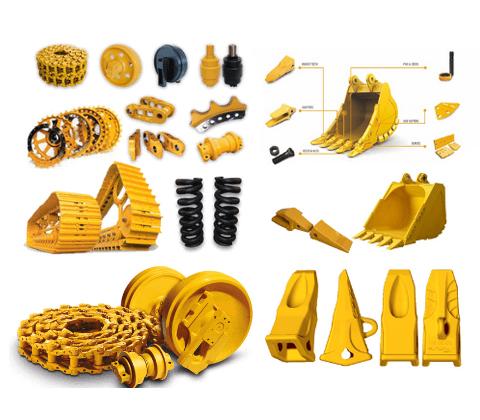
Blunt teeth dig slowly and load the machine harder. Changing teeth on time is far cheaper than repairing the arm and pump. Worn teeth that expose the adapter let the pricier adapter start wearing too, so do not let it reach that point. A loose tooth pin drops a tooth mid-job, which loses productivity and endangers anyone in the pit. Checking pins and tooth play each shift is a habit worth keeping, a few minutes that avoids big damage.
Should you fit a quick coupler?
A quick coupler lets you change buckets in minutes, handy when the work keeps changing. In trade, it adds length and weight at the arm end, cutting a little digging force. For crews that swap between digging, grading, and tilt buckets, a quick coupler is worth fitting. The coupler lock is hydraulic, so the valve and seals must be proper parts so it locks firmly and never releases on its own.
Genuine bucket or aftermarket?
A genuine bucket fits the machine ready-made, with steel and teeth to the maker's standard. An aftermarket bucket costs less, and quality varies with the shop and the steel source. If you go aftermarket, inspect the welds, edge thickness, and tooth nose carefully. For the hydraulic units that come with it, like a tilt bucket or quick coupler, favor JIC Hydraulics for the pump, valve, and internals to hold pressure and last.
Bucket size and load on the machine
A big capacity sounds impressive but drags a big load onto the arm end. That load goes into pins, bushings, cylinders, and the pump, wearing every joint faster. An oversized bucket quietly shortens the life of the hydraulic set, and you only see it months later when the oil runs hot and the pump weakens. Matching capacity to the machine is the cheapest way to keep it durable and productive across seasons.
How to inspect a bucket before buying
Do not just look at the paint. Do a few simple steps before you pay:
- Feel and measure the thickness of the edge and floor.
- Check whether the welds are even, with no pits or root cracks.
- Shake the teeth and adapters to feel for play.
- Check the coupling nose matches your machine model.
- Ask clearly about the steel source and the warranty.
Maintaining a bucket so it lasts
A bucket lasts half from the right choice, half from the right care. Greasing pins evenly, changing teeth on time, and building up the edge when worn are the three basics. Our bucket maintenance guide covers the greasing schedule and edge repair in detail, so read it and follow it. A well-kept bucket holds productivity and pushes the machine less.
When should you buy a second bucket?
If your crew does many kinds of work on one project, a second bucket earns its keep. For example, digging foundations and cleaning ditches together, a digging bucket plus a grading bucket makes sense. The gain is not forcing one bucket into work it is bad at, so teeth and edge last longer. The cost is the upfront price and storage, so weigh it by real workload. If the work repeats one pattern, one right bucket is usually enough and tidier than hoarding rarely used ones.
Rotating buckets and their edge in tight corners
A rotating bucket goes one step past a tilt bucket. A tilt bucket only swings left and right, while a rotating bucket turns a full circle on its axis. This lets the operator set the cutting edge at the right angle without swinging the body or moving the machine. It suits digging alongside an existing ditch, cleaning around a house foundation, or shaping a curved face. The rotating unit runs on hydraulics and has several joints, so it needs clean oil and good seals. In return, a skilled hand makes many digging shapes from one machine position. The point to weigh is that a rotating bucket sits heavier and higher at the arm end, which cuts a little digging force and adds load on the pins. On a small machine that extra weight matters, so a rotating bucket suits mid-size machines and up. The rotation valve and internals are what fail if the oil is dirty, so filtering oil and replacing seals on time is a habit to keep.
How does a demolition bucket differ from a digging bucket?
Many owners think demolition and digging share one bucket, but the two jobs ask for two kinds. A digging bucket needs a deep belly to hold soil and teeth to cut. A demolition bucket needs stiff walls, thick ears, and the ability to take repeated impact. When prying a brick wall, breaking a thin concrete slab, or removing an old footing, a demolition bucket takes the hits without denting. For grabbing and sorting rubble, a grapple or a bucket with a gripping thumb works far faster than a plain digging bucket. The sign that you are forcing the wrong bucket is an edge that curls early, cracked welds, and teeth snapping one after another. One thing owners forget: demolition throws off a lot of vibration, so pins and bushings wear faster than in soft digging. So the greasing and pin-check schedule during demolition has to be tighter. If your crew does both, keeping a separate bucket for demolition keeps the digging bucket sound for longer.
Storing and rotating buckets when idle
An idle bucket still deteriorates, only slowly and unnoticed. A bucket left outdoors with water pooling in its belly rusts inside and corrodes at the tooth roots. The simple fix is to prop the bucket at an angle so it drains, keep it in the dry, and wipe a thin film of oil on the edge and teeth. Pins and bushings on a long-stored bucket should be greased before storage, since dried grease seizes the pin when you refit it. On tilt and rotating buckets, the hydraulic unit needs cover from sun and rain, because seals left in the sun go hard and weep oil. If a crew has several buckets, rotate them into use rather than running one to death while another sits rusting. Rotation wears teeth and edges evenly, and you catch early which bucket is starting to crack. Before returning a long-stored bucket to work, check the welds, tooth play, and the coupling nose once over to be sure.
Where to buy buckets and bucket parts?
Choosing the right one among the excavator bucket types is only the first step; keeping the bucket durable also needs good teeth, pins, and hydraulic units. If you need bucket teeth, adapters, or pump internals and seals for a tilt bucket and quick coupler, see our heavy-equipment parts catalog, with JIC Hydraulics for the hydraulic side and PET Seals for the seals. For advice on choosing a bucket by machine model and soil type, call our technical team to get the right match.
Key takeaways
- Each bucket is made for a certain soil and a certain job.
- The harder the soil, the thicker the bucket, narrower the belly, stronger the teeth.
- The bucket must match the machine to avoid pin wear and oil burn.
- Teeth and adapters wear often; pick the correct nose for a tight seat.
- The hydraulic units on tilt buckets and quick couplers deserve quality parts.
- The right bucket plus proper care keeps productivity and cuts needless repairs.
Written by
Phạm Đức Thắng
Phạm Đức Thắng focuses on the undercarriage, tracks and the travel and swing systems of excavators. He writes about how these systems are built, travel and swing motors, and protecting the undercarriage from wear.
Related parts
The exact parts discussed above — send your machine model or pump code to match.